


October 1, 2026
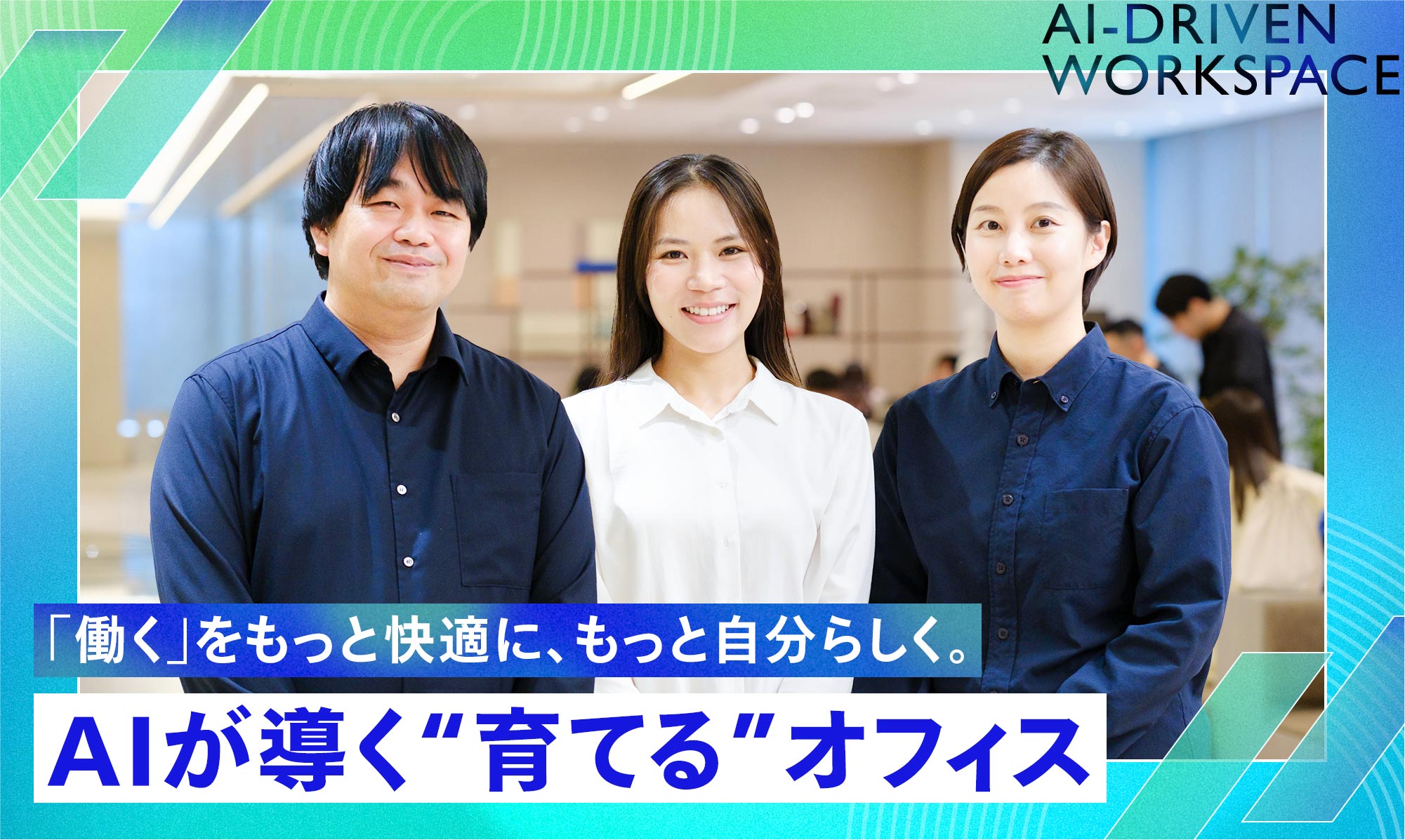
WORK-Style more comfortable and more personal. An AI-driven, nurturing office.


Are we truly able to increase our productivity and perform at our best in our current office? The lack of a place to concentrate, the inability to easily talk to the people we need to—these small inconveniences we experience daily may hold clues to improving our work environment.
Itoki is developing a new solution that utilizes data and AI to continuously optimize offices. We spoke to three developers at the forefront of AI-powered office design about their current work and the future they envision.

Manager, Product Development Department, Solution Development Division, Solution Business Development Headquarters, ITOKI CORPORATION
Kentaro Ito
He has experience in system development at a major SIer (Systems Integrator). After launching a new business in the distribution and retail sector, he joined Itoki in 2024. He is responsible for planning and developing office solutions utilizing AI.

AI Development Team, Product Development Department, Solution Development Division, Solution Business Development Headquarters, ITOKI CORPORATION
Miho Sakai
Joined the company as a new graduate in 2012. After gaining experience in office sales, human resources, ABW consulting, and the development of the data analysis service "Data Trekking," he assumed his current position. He leverages his expertise in the office industry to drive the planning of AI solutions.

AI Development Team, Product Development Department, Solution Development Division, Solution Business Development Headquarters, ITOKI CORPORATION
Pham Nyung
I studied software engineering and data science at Hanoi University of Science and Technology, and joined the company as a new graduate in January 2025. I am responsible for data processing and implementation.
- The departments, positions, and systems mentioned in the text are based on information available at the time of the interview.
Contents
- From "It's done once it's built" to an ever-evolving office.
- Is it true that there aren't enough meeting rooms? Office challenges revealed by data and AI.
- From creating a comfortable work environment to addressing corporate challenges, AI expands the possibilities of the office.
- Selecting "what is truly necessary": The difficulty of developing AI solutions.
- Boosting the industry and making workers happy: The future envisioned by AI.
From "It's done once it's built" to an ever-evolving office.
—With work styles becoming more diverse, are the expectations placed on offices also changing?
Sakai: Up until now, offices were typically used for about 10 years once they were set up, and then relocated or renovated when the office lease was up for renewal, the equipment became outdated, or the number of employees increased.
On the other hand, the cycle of change in businesses, organizations, and work styles is accelerating. The environment surrounding businesses is constantly changing, with the spread of teleworking and hybrid work, the return to working in the office, and the expansion of AI utilization.
These changes are altering the role expected of the office. That's why it's crucial to continuously review and evolve the office to match the evolving work styles and organizational structures, rather than creating it once and being done with it.
However, it's not practical to undertake large-scale renovations every time there's a change. To determine if the current office is suitable for our current work style, what the challenges are, and what needs to be changed, it's more important than ever to understand how the office is actually being used through data, identify problems, and continuously make improvements.
Is it true that there aren't enough meeting rooms? Office challenges revealed by data and AI.
—So, how are you planning to use AI and data to solve these office challenges?
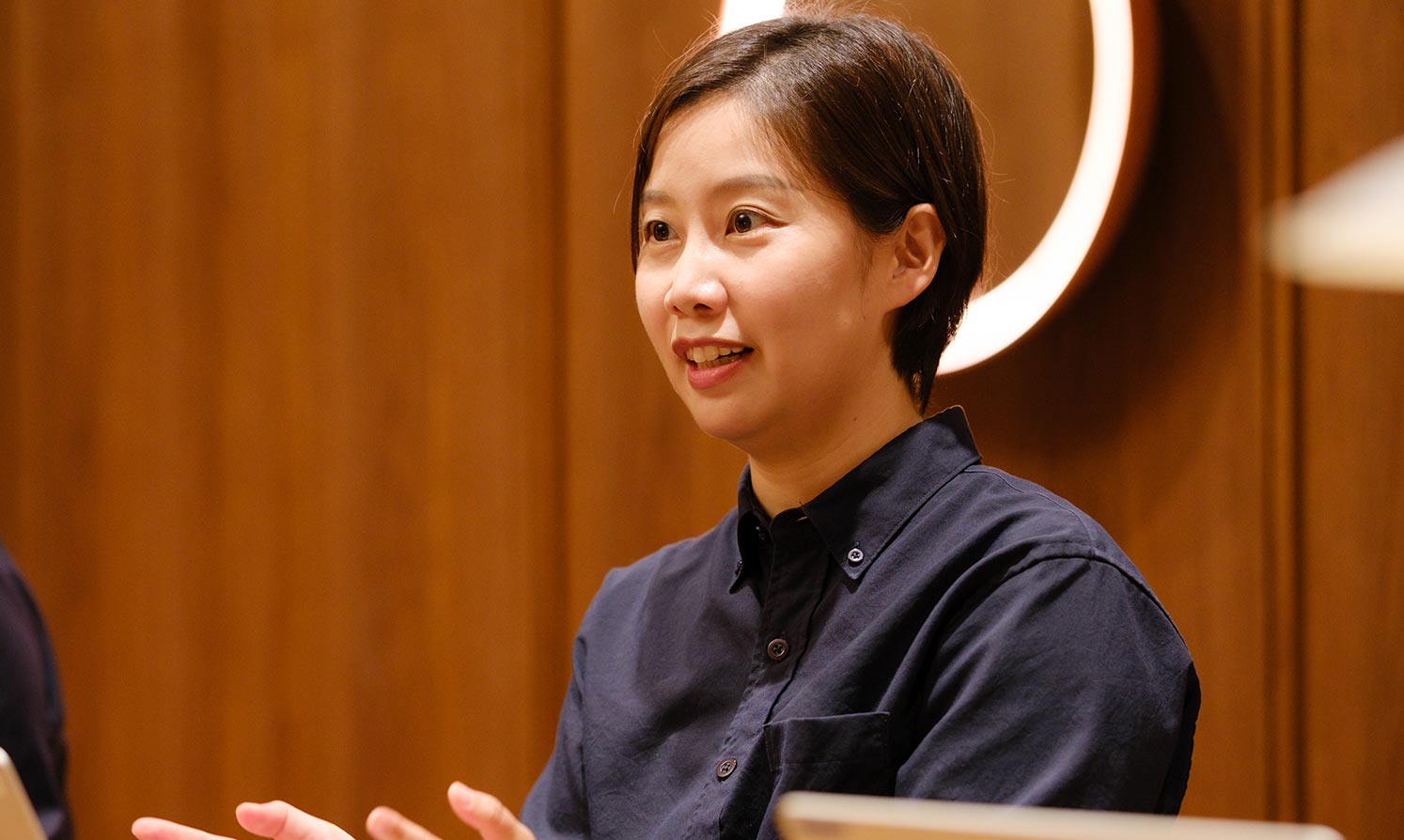
Sakai: What we aim for is to use data and AI to identify challenges and make improvements, from the planning and design of offices to their operation after completion.
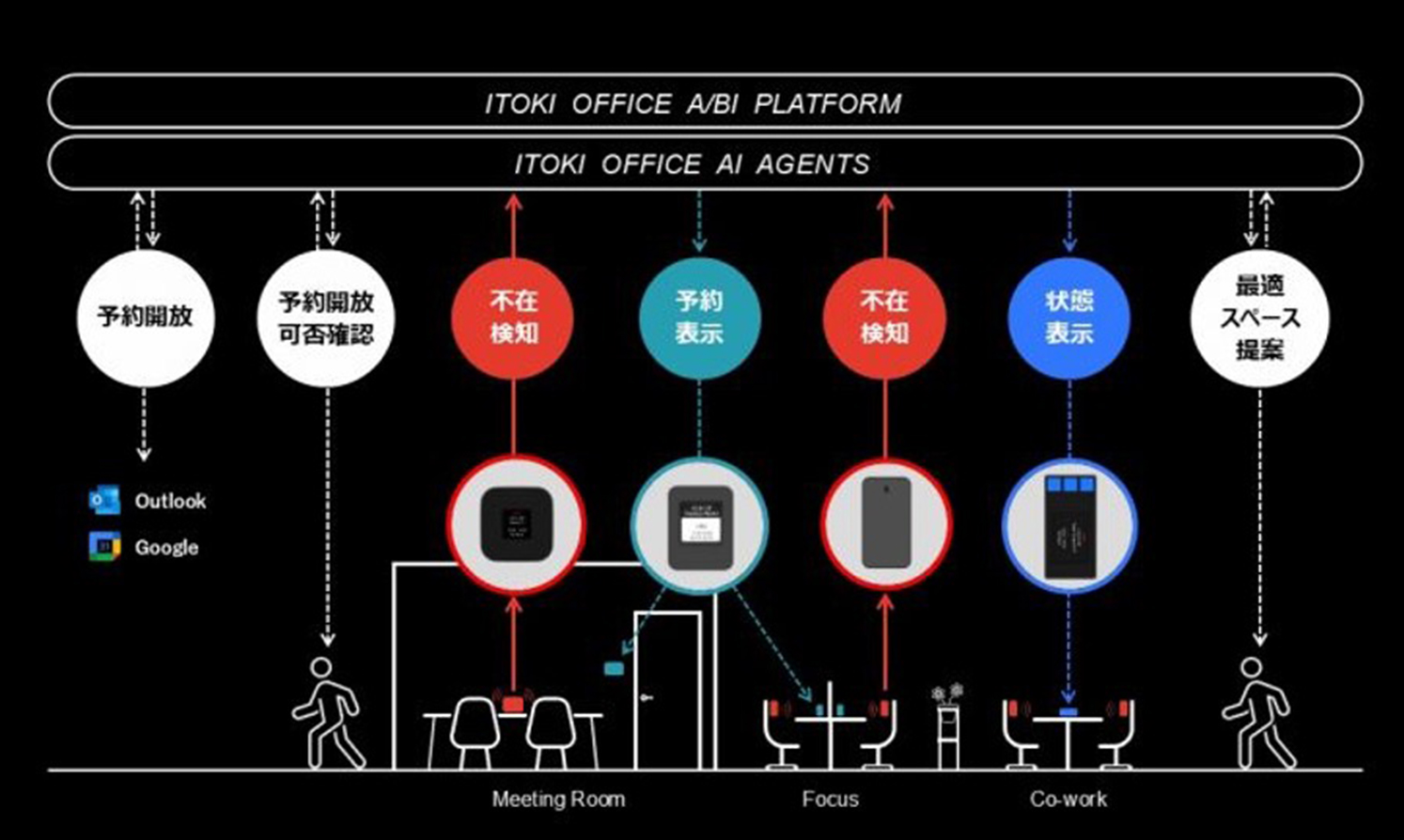
The core system we are developing is "ITOKI OFFICE AI AGENTS".
Ito: For example, I think many people have felt that there aren't enough meeting rooms.
Searching for a meeting room or having to postpone a meeting because none are available are common experiences for many people. However, these small losses, when accumulated, can significantly impact productivity.
But are there really not enough meeting rooms?
When you actually look at the data, you sometimes find that there are meeting rooms that are booked but not being used, or that large meeting rooms are being used by only a few people. Even though it may appear as a "shortage of meeting rooms" on site, in many cases the problem lies not in the number of meeting rooms, but in how they are being used.
Sakai: Up until now, it hasn't been easy to grasp the actual situation of these offices.
Therefore, ITOKI is also developing "ITOKI OFFICE DEVICES," which acquires usage data from sensors installed in furniture and meeting rooms. By combining reservation information with actual usage data, it becomes possible to think about "how to make the most of the existing environment" rather than "how to increase capacity because there isn't enough."
Ito: The role of "ITOKI OFFICE AI AGENTS" is not simply to display data. It is to analyze problems and causes from various data and support the consideration of improvement measures.
The shortage of meeting rooms is just one example. Many assumptions and inefficiencies are hidden within our work environment, even if we're unaware of them. By utilizing data and AI, we can identify previously unseen problems and develop solutions.
From creating a comfortable work environment to addressing corporate challenges, AI expands the possibilities of the office.
—How will AI change the way we work and the office environment in the future?
Sakai: Nowadays, offices are expected to contribute to solving a variety of problems, not only in terms of ease of work and communication, but also in terms of improving productivity, recruiting and retaining talent, and more.
Traditional office design relied on employee surveys and interviews to understand their needs, but now we can also utilize data that shows how the office is actually used, such as reservation information and usage data obtained from sensors. By combining and analyzing this data with AI, we can continuously improve the office to suit each client's unique challenges and desired work style, based on both the challenges perceived by employees and the actual usage patterns.
Ito: Another major factor is the speed at which we can respond to change. By utilizing AI, we can more quickly grasp changes in work styles and organizations, and update the office to suit the current situation. I believe AI will become a tool that supports the decision-making process for that purpose.
—On the other hand, can we create a better office simply by using AI?
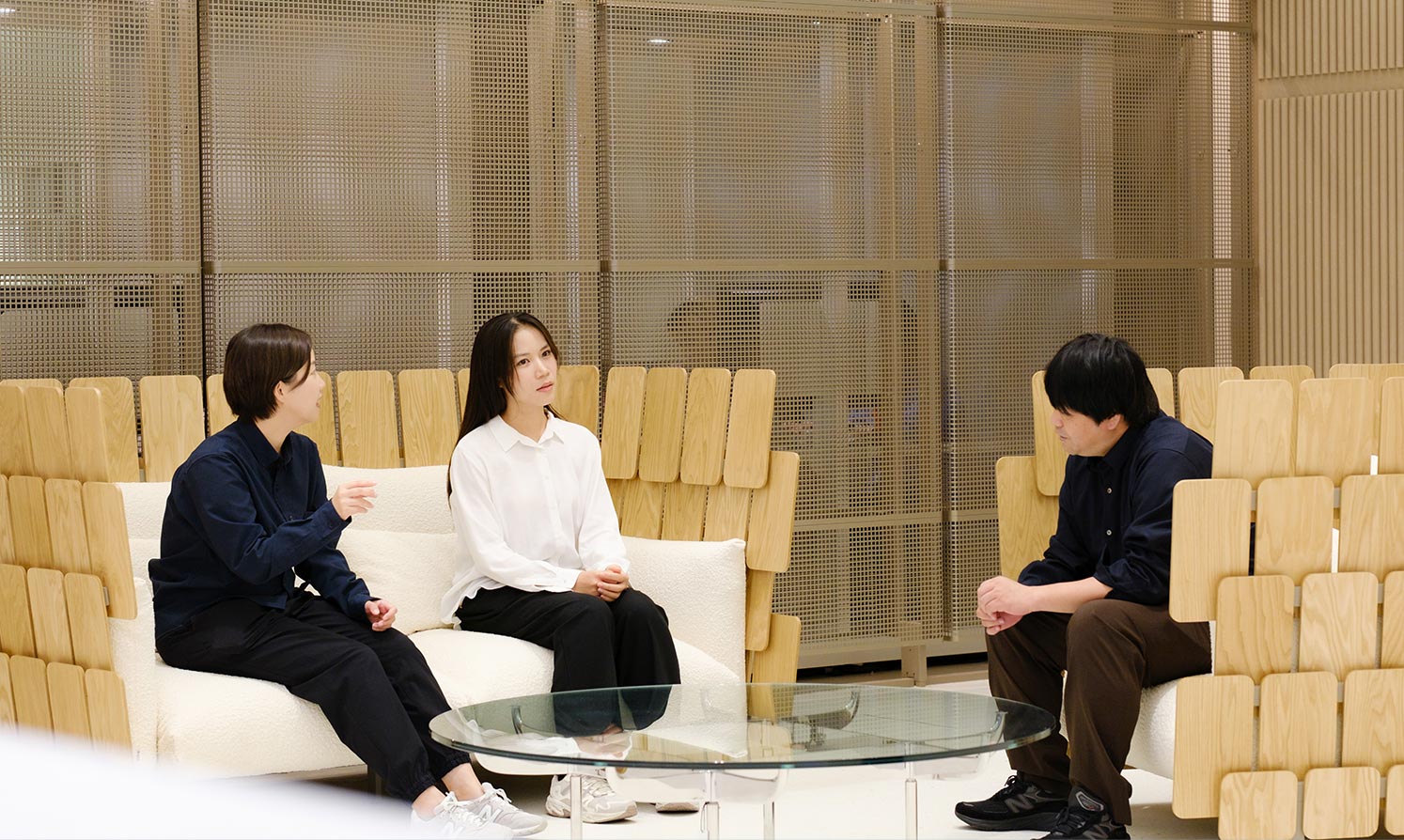
Sakai: AI alone cannot create a better office. Office design is a highly specialized field, and there are many things that cannot be understood from publicly available information alone.
ITOKI has been involved with offices for many years, from furniture manufacturing and space design to research and consulting on work styles. We believe that by combining the knowledge and data we have accumulated with AI, we can translate analysis into actual office improvements.
Ito: People sometimes wonder, "An AI for a furniture manufacturer?"
However, Itoki's unique strength lies in its ability to consider not only the physical elements like furniture and space, but also AI and systems as an integrated whole. Because we understand real-world offices, we believe we can go beyond simply using AI as a technology and connect it to improving the working experience and the office environment.
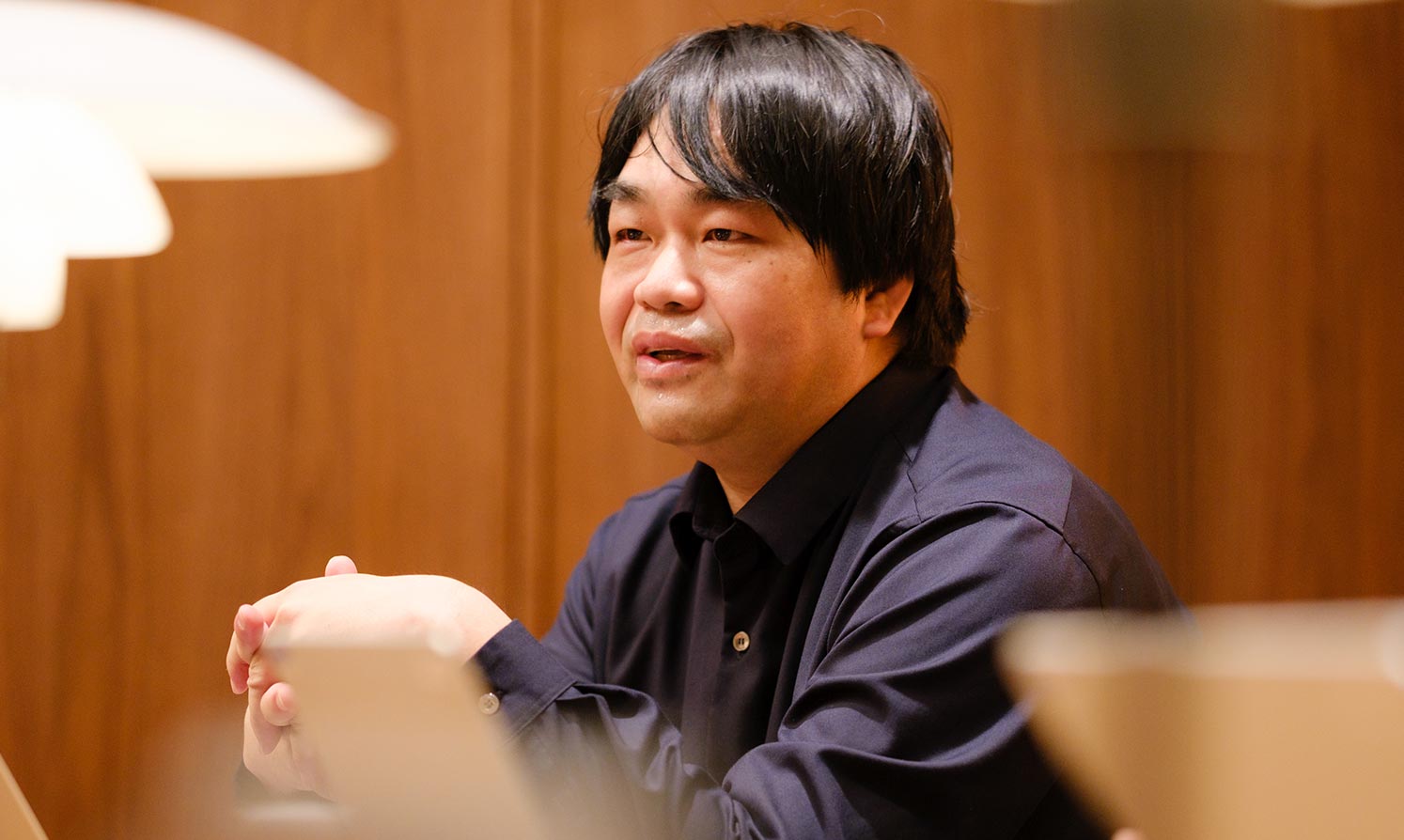
Selecting "what is truly necessary": The difficulty of developing AI solutions.
—While the possibilities of AI are expanding, it seems there are also challenges in turning it into truly useful solutions.
Sakai: Because AI can do so many things, it's difficult to determine "what it should be used to achieve." Right now, we can quickly create a variety of functions, but if we add too many, it becomes complicated to use, and it becomes difficult to see the value that is truly needed.
That's why we start not with "what can AI do?" but with "what problems can we solve for our customers?" We create prototypes, have people actually try them out, and then improve them based on their feedback. We quickly repeat this cycle to identify what is truly needed.
Ito: There is a gap between what is technically feasible and what customers can actually use.
Sales focuses on quickly resolving the immediate customer's problems. On the other hand, development needs to create a service that can be used by many customers. That's why we value the importance of sales and development aligning their efforts by returning to the original objective of "what we want to achieve."
Boosting the industry and making workers happy: The future envisioned by AI.
—What kind of office and work style would you like to realize in the future by utilizing AI?
Nyun: We want to use the data we collect from the office to gain a deeper understanding of how employees behave and how the office is used. We want to identify where the challenges lie and how to change them to make the office a better place to work, and use that to create a better office environment.

Sakai: Currently, there are separate systems for things like visualizing office usage, reservations, and facility management. In the future, we want to connect these systems and use AI to analyze various data, continuously understand the state and challenges of the office, and improve it into a better environment. We want to create a system where the office can continue to change in line with changes in work styles and organizations.
I hope this way of thinking spreads not only within Itoki but throughout the entire industry. Offices are places where many people spend a large portion of their day. That's why new technologies and services can make them more comfortable and allow people to work in a way that suits them. As a company that is creating that future, Itoki wants to continue taking on new challenges.
Related article
Related products/solutions

- The department, position, and system are those at the time of the interview and may differ from the current information.
Recommended Articles
-
July 8, 2026
"This can't go on like this." What was the breakthrough that the sales team found amidst their struggles?
-
June 3, 2026
Work methods that keep the workplace running. A "common language" that everyone can understand drives the whole operation.
-
May 8, 2026
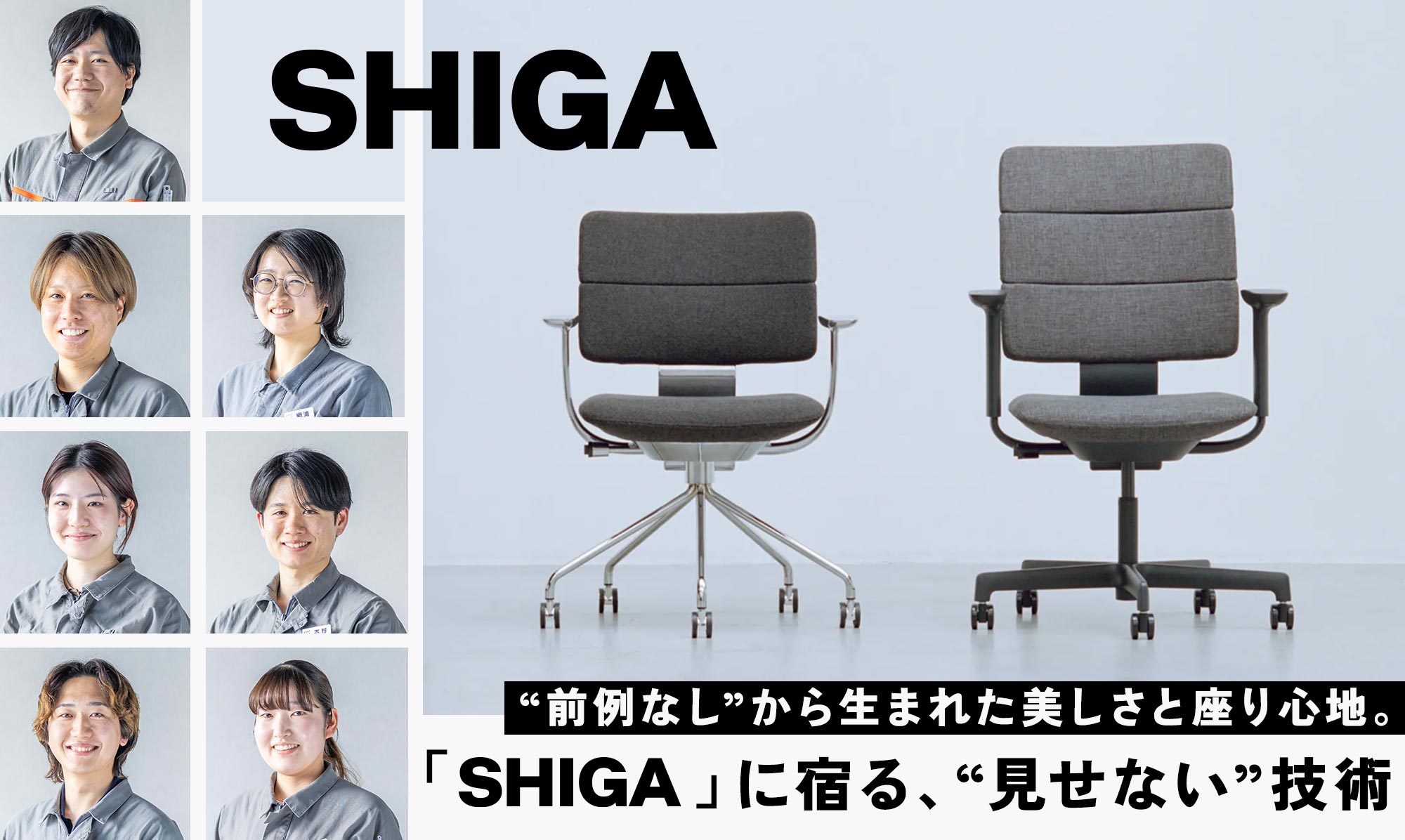
Beauty and comfort born from "unprecedented" design. The hidden technology behind "SHIGA" [Behind the scenes of SHIGA development - Part 1]
-
March 3, 2026
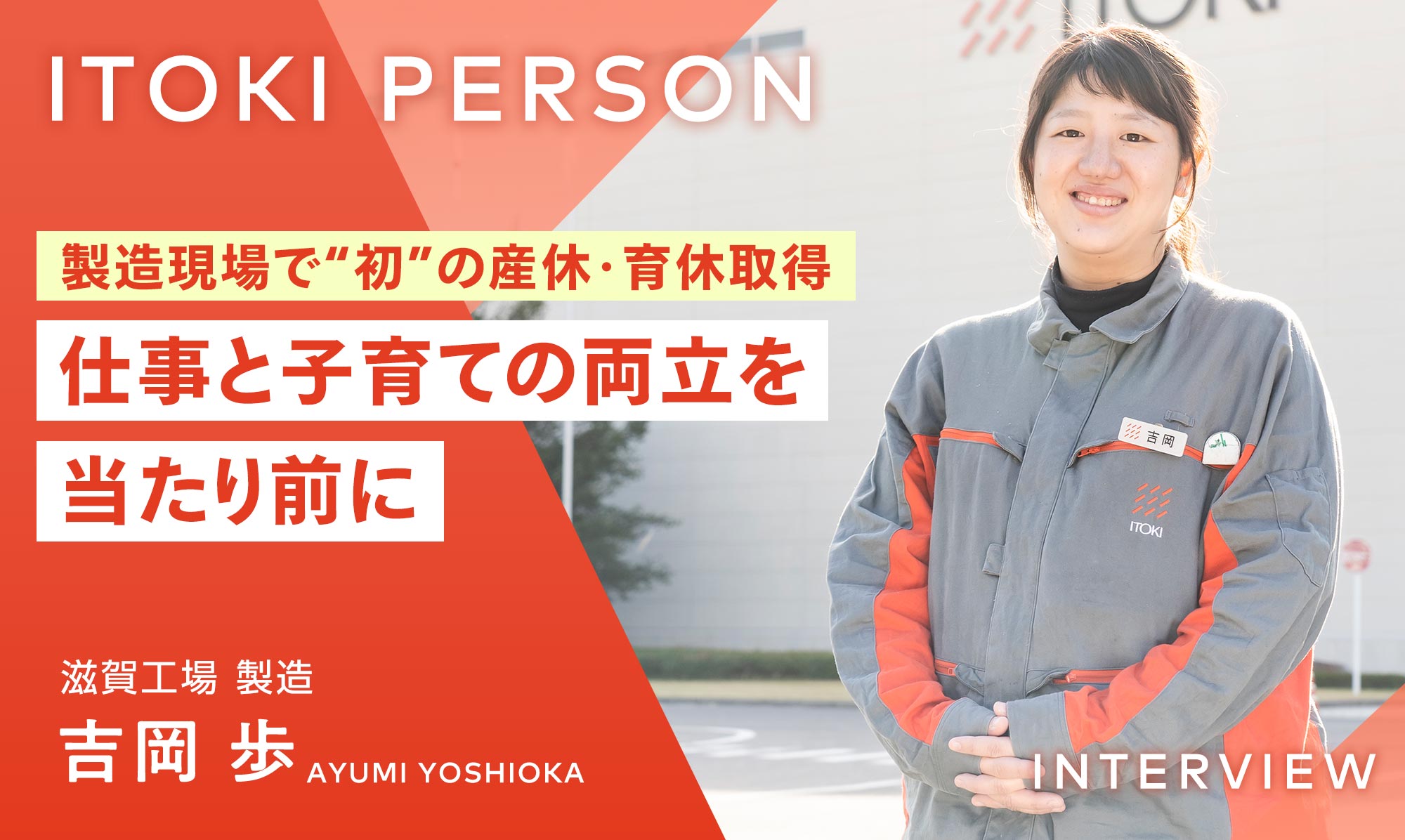
The first to take maternity and childcare leave at a manufacturing site. Creating a workplace where "balancing work and childcare" is the norm.
-
January 29, 2026
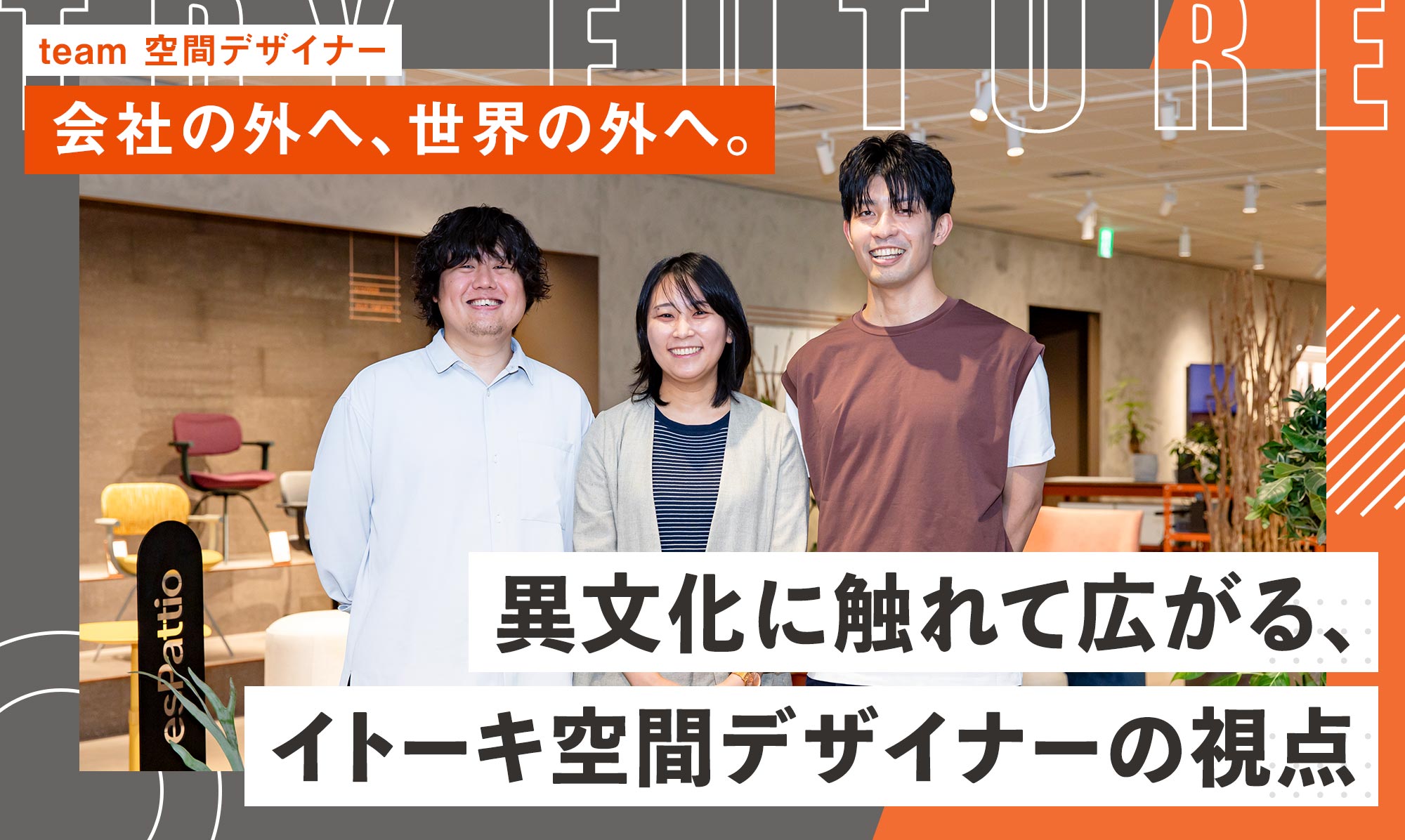
Outside the company, outside the world: The perspective of ITOKI space designers broadens through exposure to different cultures