


May 8, 2026
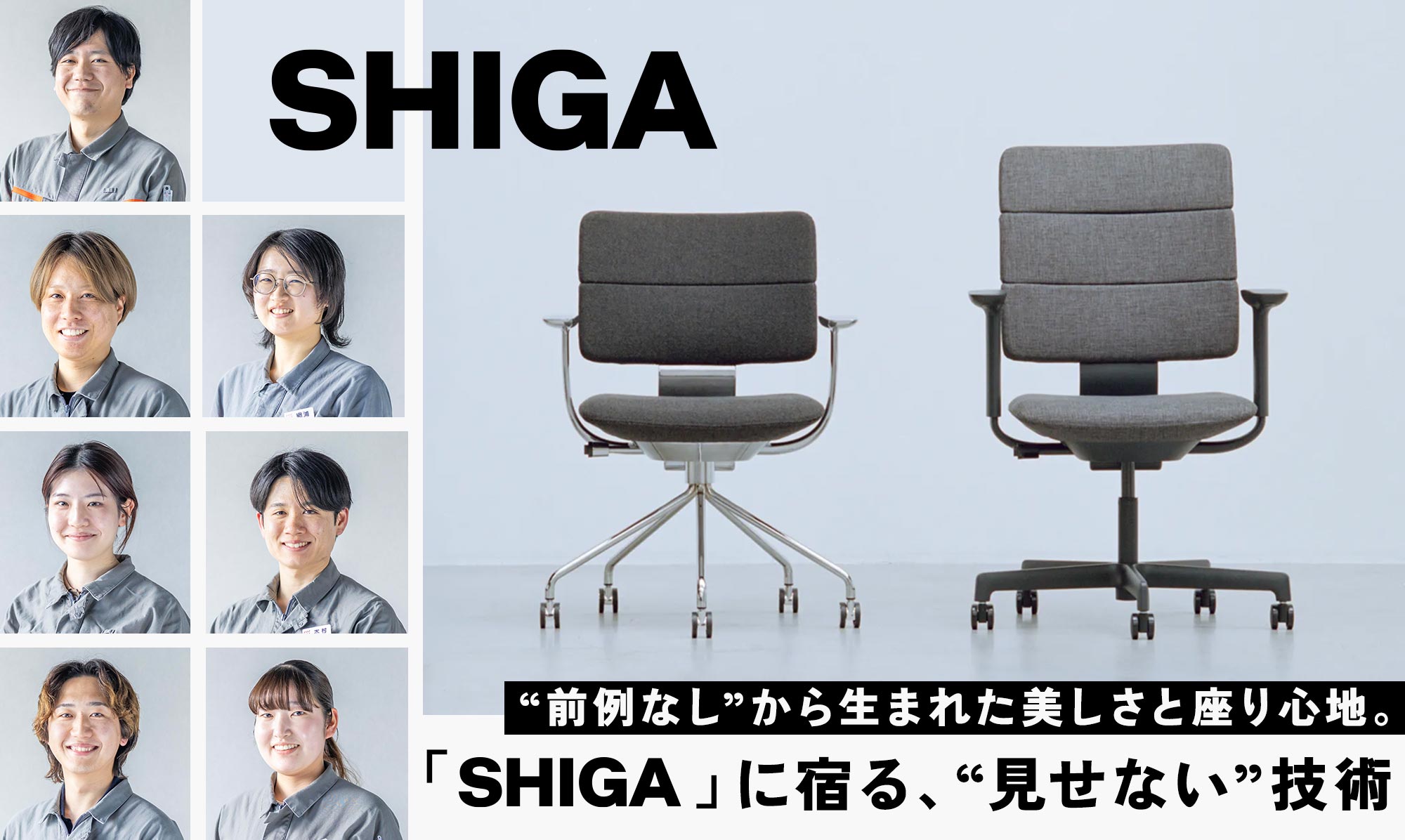
Beauty and comfort born from "unprecedented" design. The hidden technology behind "SHIGA" [Behind the scenes of SHIGA development - Part 1]


As work styles become more diverse and liberalized, and the "value of the office" is being re-evaluated, ITOKI felt there was a need for a chair that combined beauty and comfort. It was in this context that the modern work chair "SHIGA" was born at "ITOKI DESIGN HOUSE SHIGA," where chairs are manufactured. The design was handled by product designer Fumie Shibata. Behind its minimalist and beautiful design were various new attempts that overturned the conventional wisdom of office chair development.
This time, we interviewed seven design members who were involved in the development of "SHIGA" to hear about the behind-the-scenes aspects of its development and their particular points of focus.
Production Headquarters, 1st Development and Design Division, 1st Development and Design Department, Chair 2nd Development and Design Office
Takeshi Yokoyama (Development Leader / Professional Engineer (Mechanical Engineering: Mechanical Design))
Production Headquarters, 1st Development and Design Division, 1st Development and Design Department, Chair 2nd Development and Design Office
Yuriko Nozawa (Za Design)
Production Headquarters, 1st Development and Design Division, 1st Development and Design Department, Chair 2nd Development and Design Office
Ao Yamaoka (Leg Design)
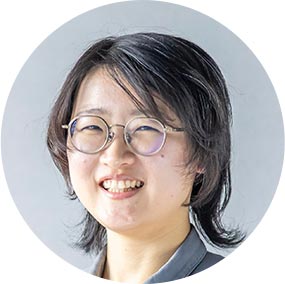
Production Headquarters, 1st Development and Design Division, 1st Development and Design Department, Chair 1st Development and Design Office
Ariko Amiura (back design)
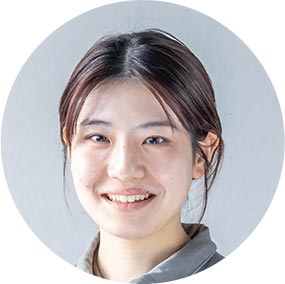
Product Development Division, Product Development Management Department, Design Department, Product Design Office
Kaho Okumura (Hiji Design)
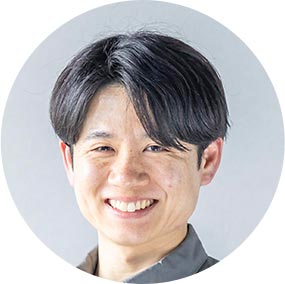
Production Headquarters, 1st Development and Design Division, 1st Development and Design Department, Chair 2nd Development and Design Office
Sho Kimura (Mechanical Design)
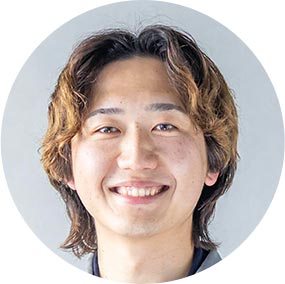
Production Headquarters, 1st Development and Design Division, 1st Development and Design Department, Chair 1st Development and Design Office
Yusuke Ban (Mechanical Design)
- As of May 2026
- The department, position, and system are those at the time of the interview and may differ from the current information.
Contents
- A perfect balance of design and comfort. A revolutionary "thin mechanism" that defies convention.
- Until we achieved the rare rear panel design in the industry
- How can we maintain structural integrity while preserving aesthetic appeal?
- It's natural not to say "it can't be done." ITOKI DESIGN HOUSE SHIGA's uncompromising approach to craftsmanship.
- Attention to detail resides in the "unseen" parts. Key features of "SHIGA" from the perspective of its creators.
A perfect balance of design and comfort. A revolutionary "thin mechanism" that defies convention.
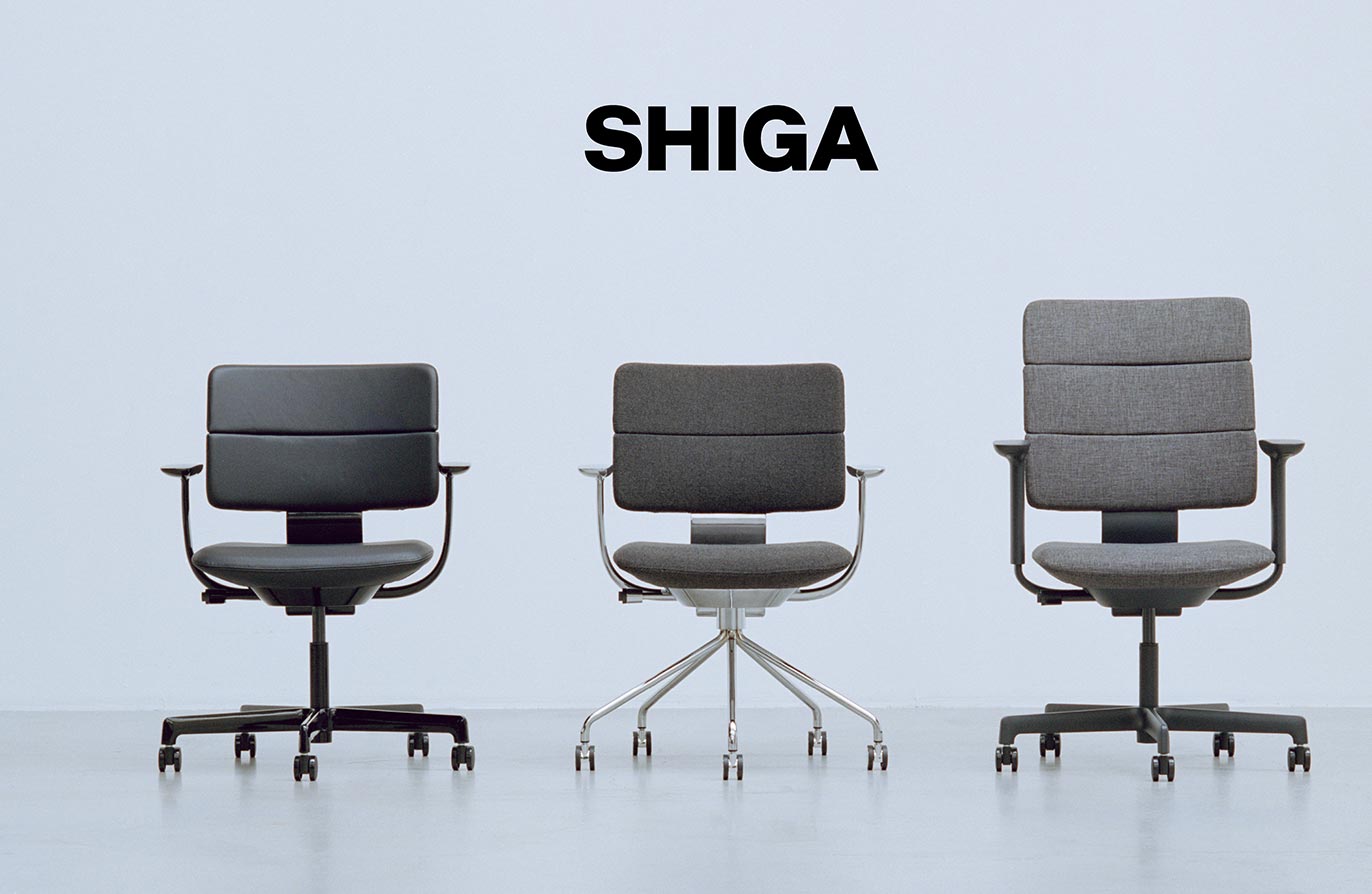
The "SHIGA" is a modern work chair that combines minimalist design with ergonomics.
──「SHIGA」ならではの特長や新しさについて教えてください。
Yokoyama (Leader): The biggest feature is that it maintains a minimalist and beautiful design while also providing excellent seating comfort.
Typical office chairs are characterized by their multi-functional design, allowing for fine adjustments to suit each individual sitter. On the other hand, "SHIGA" prioritizes comfort even in environments with high user turnover, such as open spaces and meeting rooms. Therefore, we aimed for a minimalist chair that anyone can sit in naturally, by minimizing individual settings such as the strength of the backrest recline.
One area we focused on most was "making the gearbox thinner." The gearbox is the central unit located beneath the chair's seat, which controls and integrates movable functions such as adjusting the seat height and reclining the backrest.
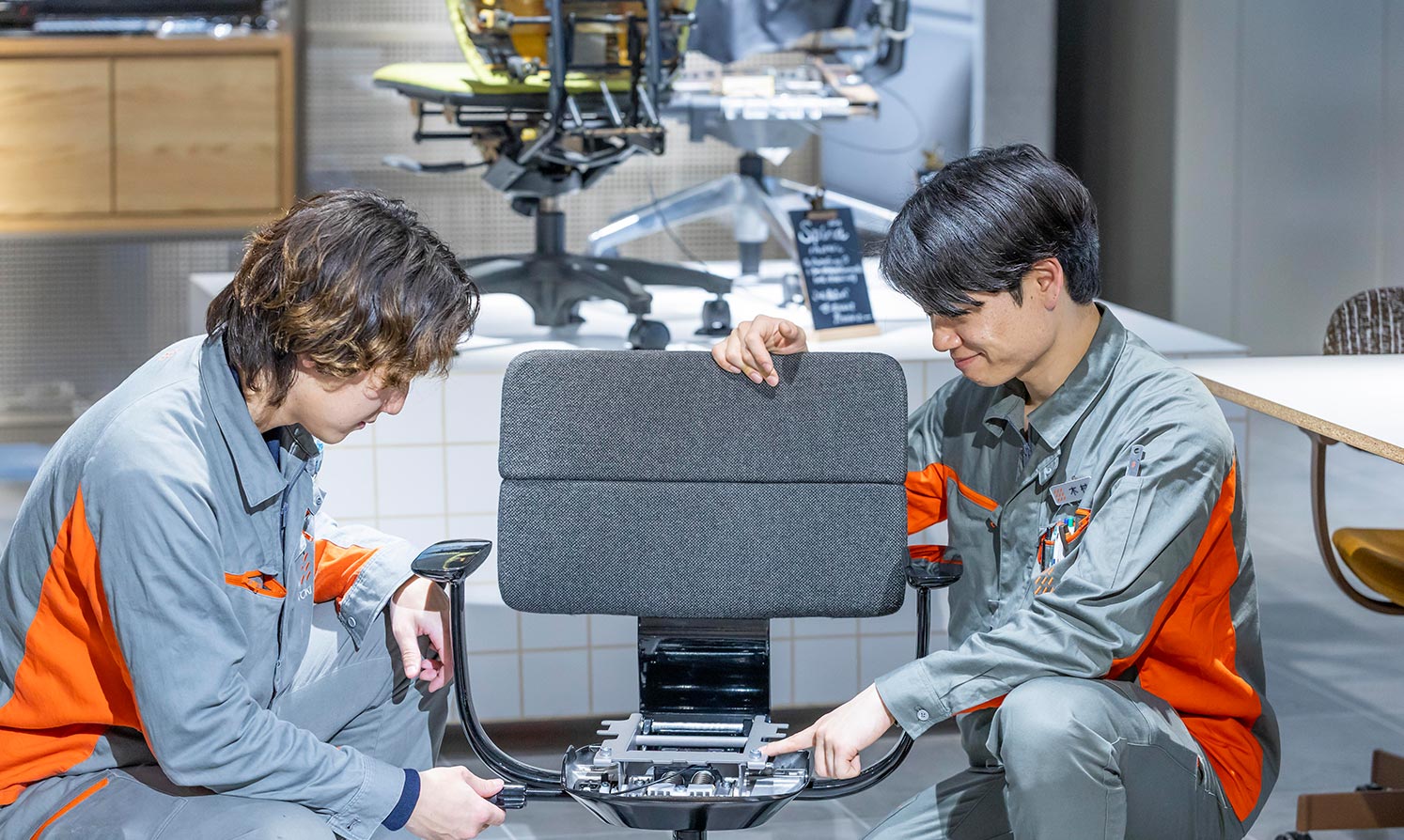
Kimura (Mechanical Design): In typical office chairs, the more functions there are, such as the ability to adjust the degree of back recline and the forward/backward adjustment of the seat, the thicker the mechanical box tends to become.
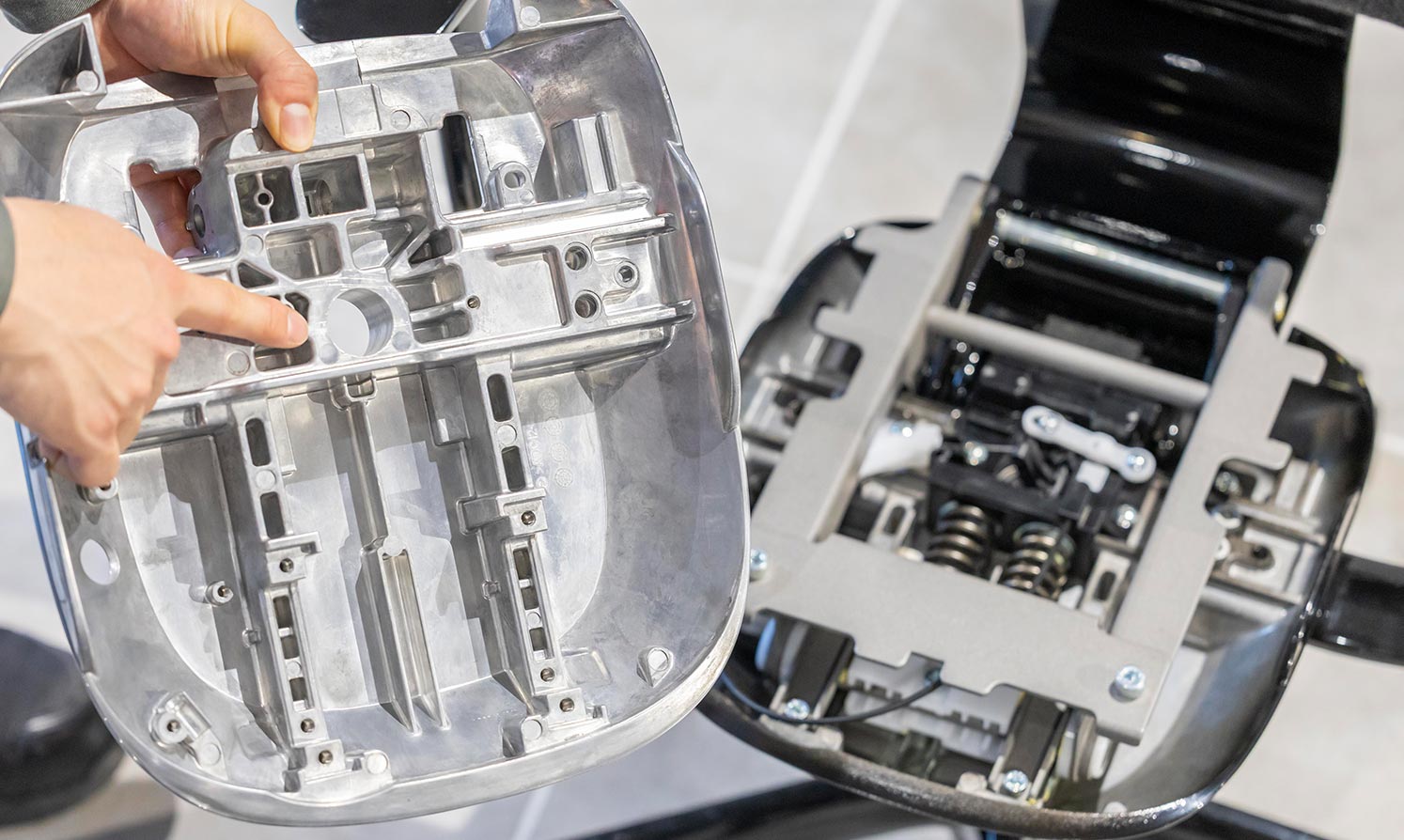
A gearbox that compactly integrates all the necessary functions.
For the "SHIGA," in order to achieve a minimalist design, we narrowed down the functions to just two: initial backrest angle lock and height adjustment, and challenged ourselves to make the mechanism thinner. Furthermore, we delved into the internal structure, and by deliberately splitting the spring, which is usually made up of one, into two and arranging them horizontally, we were able to achieve an even thinner gearbox.
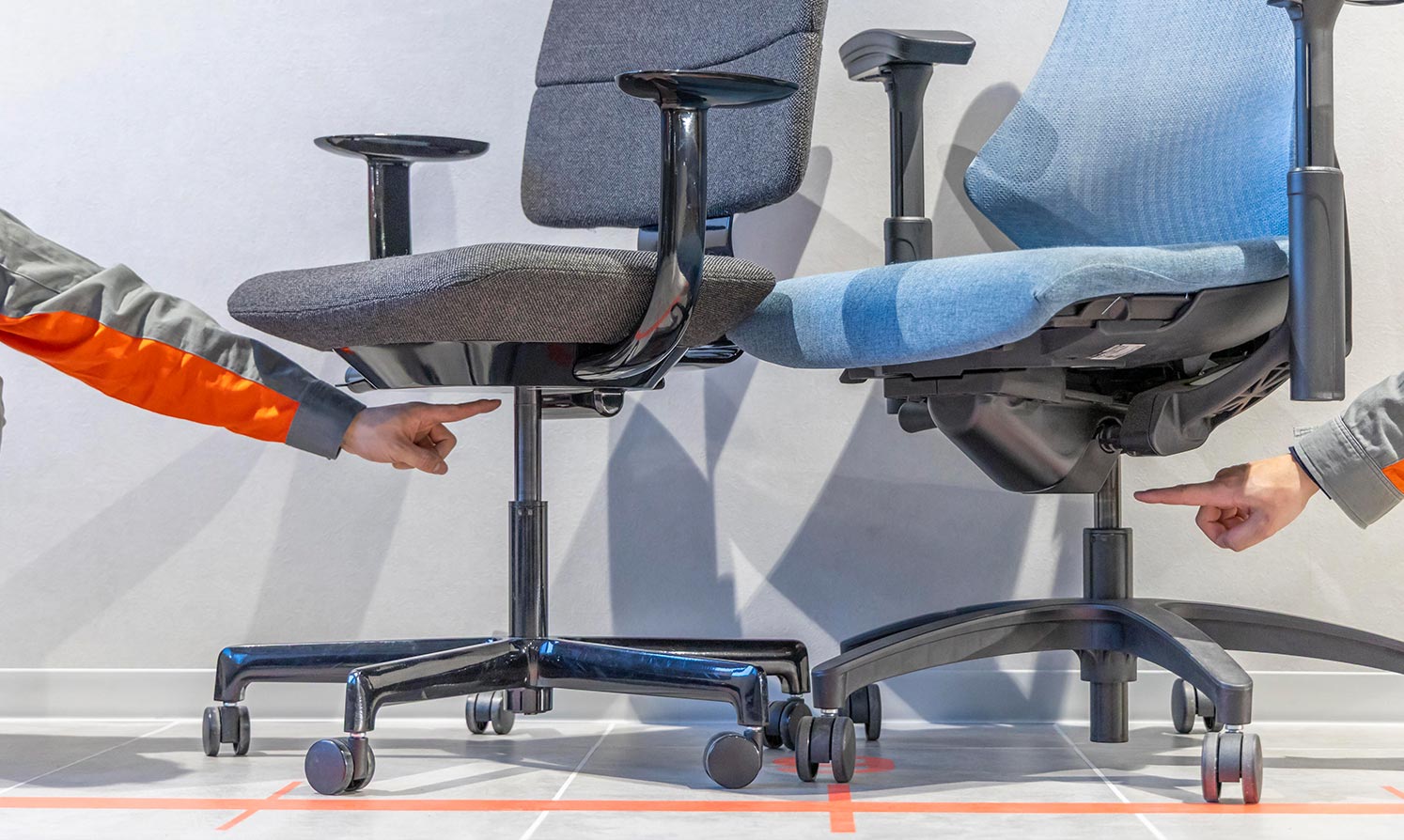
The difference in the size of the gearbox located beneath the seat is immediately obvious.
Ban (Mechanical Design): One of the new features is that it combines two functions into a single lever. Rotating the lever allows you to raise and lower the height, and pressing the button at the tip locks the angle.
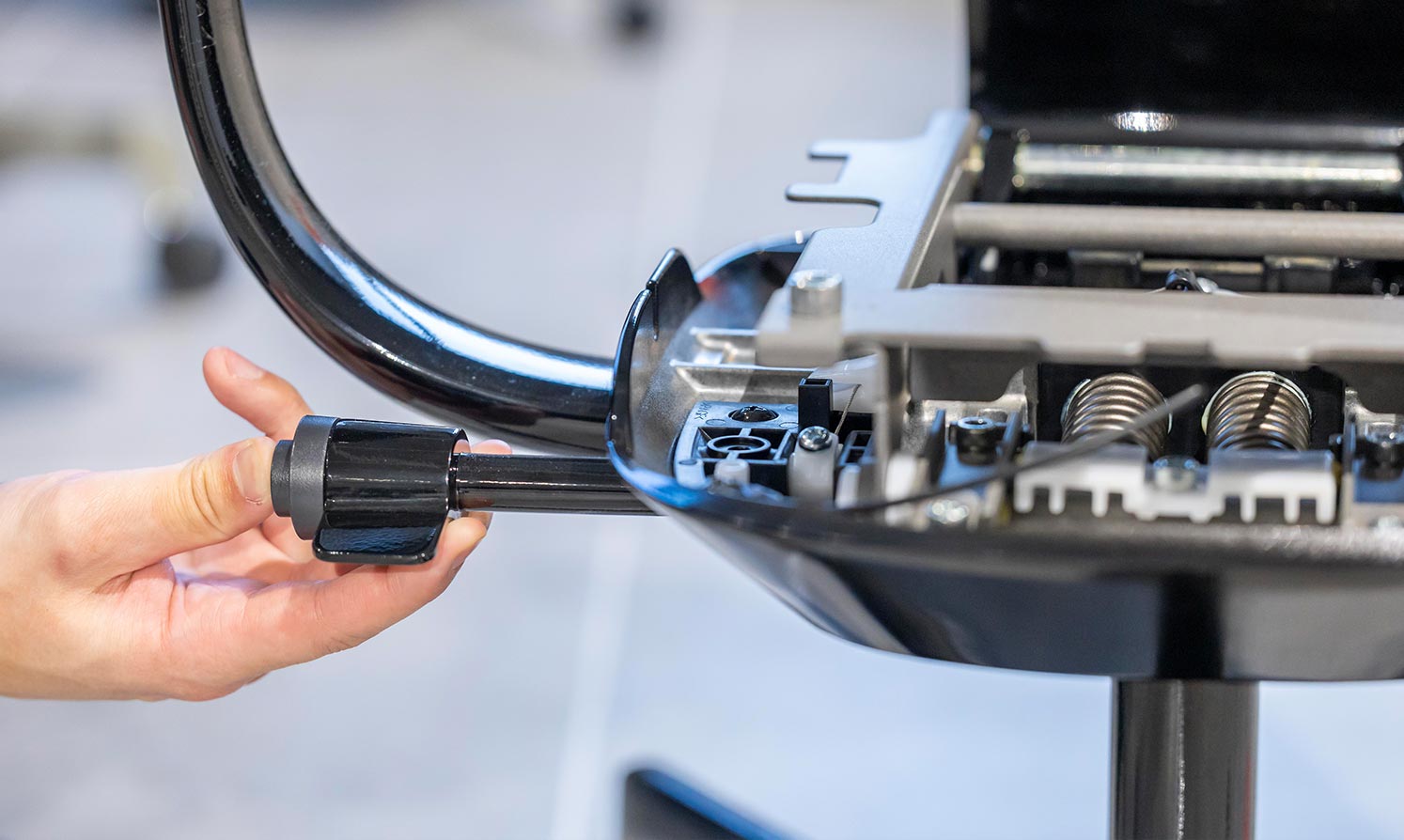
The control levers under the seat have been consolidated into a single unit, resulting in a design that is intuitive and easy for a variety of people to use.
Kimura (Mechanical Design): For the rocking function, we've adopted the "Ankle Move Synchro Rocking" system. This mechanism uses the ankle as a pivot point, allowing the backrest and seat to move in conjunction, which is said to provide a comfortable rocking experience without causing any discomfort to the human body.
In "SHIGA," instead of having a "rebound force adjustment function" that adjusts the strength of the rebound when the backrest tilts, we prioritized a design that provides a comfortable seating experience regardless of body type.
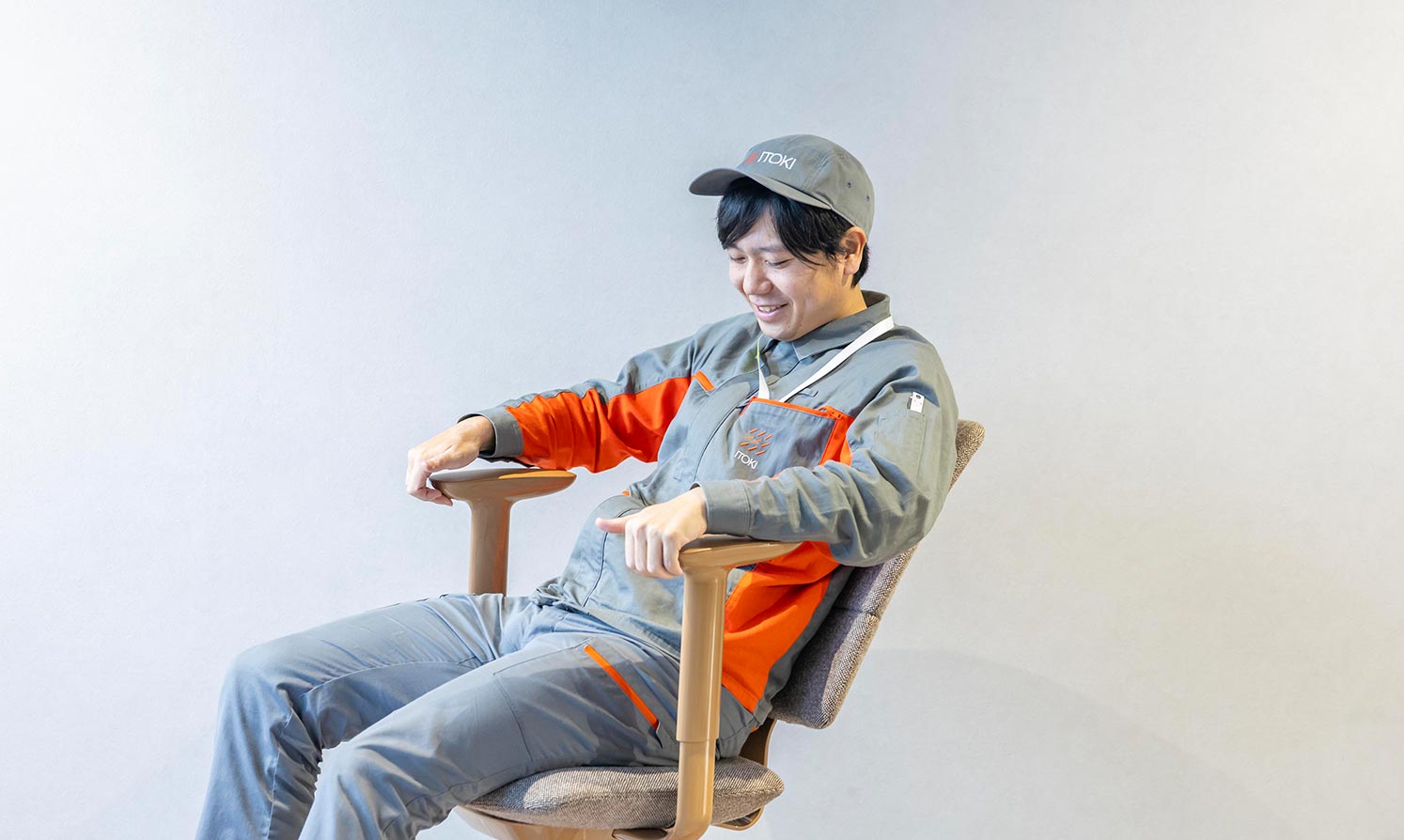
It employs "Ankle Move Synchro-Tock" technology, which flexibly supports natural changes in posture.
Until we achieved the rare rear panel design in the industry
Amiura (Back Design): A distinctive feature of "SHIGA" is the horizontal line on the back, which creates a sense of continuity when the units are lined up in a row. The key points are that the back is actually separate and that the mounting elements are completely invisible from the outside.
A major consideration was whether to assemble separate parts to create the lines, or to simply make it look like there were lines. However, through prototyping, we concluded that actually dividing the parts was better for creating sharp lines.
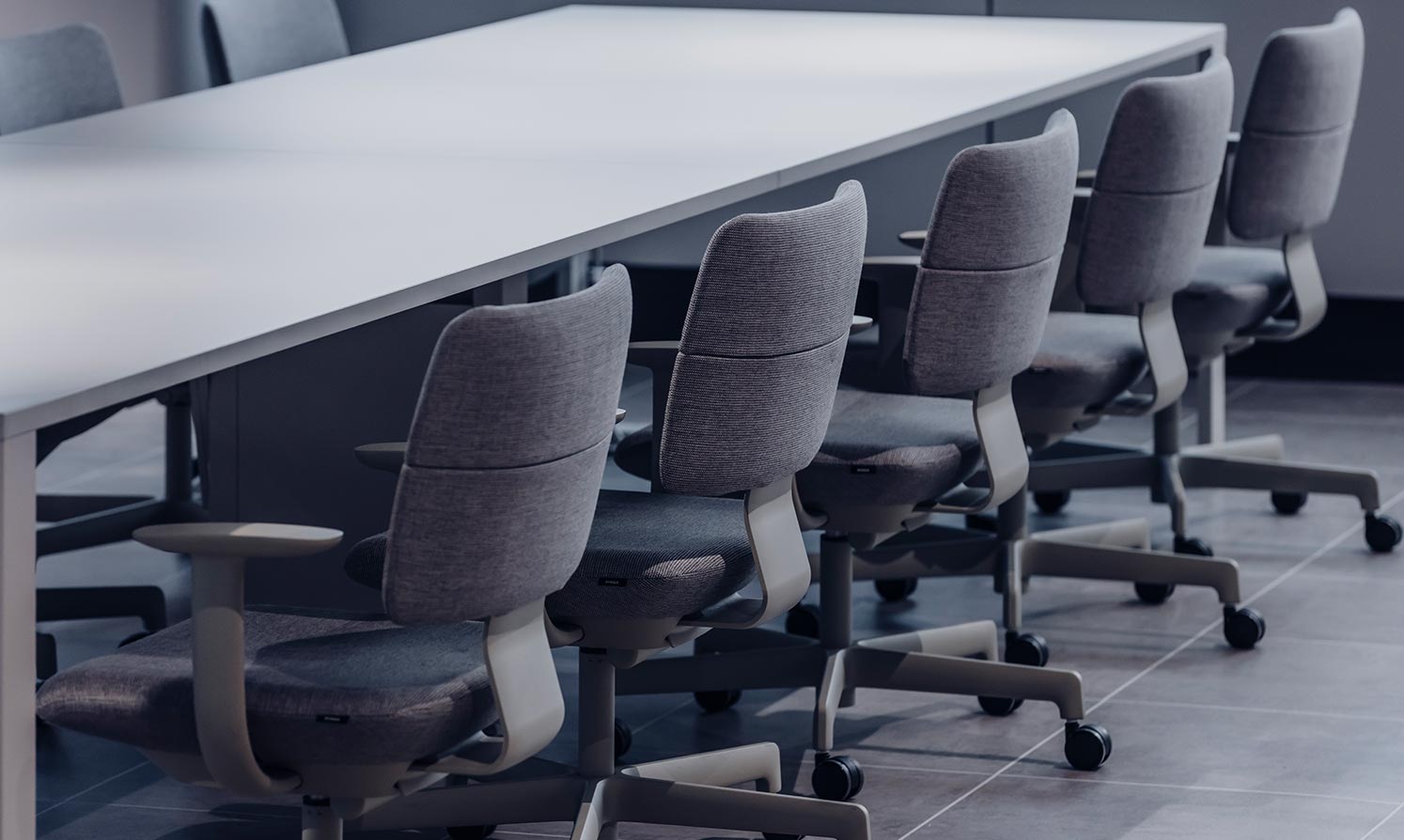
When they are lined up, the continuous horizontal lines create a sense of spaciousness in the space.
The chair's backrest is visible from both the front and back, so it can't simply be attached with screws from the outside. Furthermore, its quality greatly impacts the product's value. The challenge was how to glue the divided parts together without showing the attachment points while ensuring strength. This required a lot of trial and error.
Amiura (Back Design): While it's important that the sewing lines and back panel division lines are straight and neat, this is a mass-produced item, not a one-of-a-kind piece, so we focused on the component configuration to ensure a consistent finish no matter who is doing the work.
While chairs with lines on the back exist, I think chairs with a backrest that is actually divided into sections are very rare.
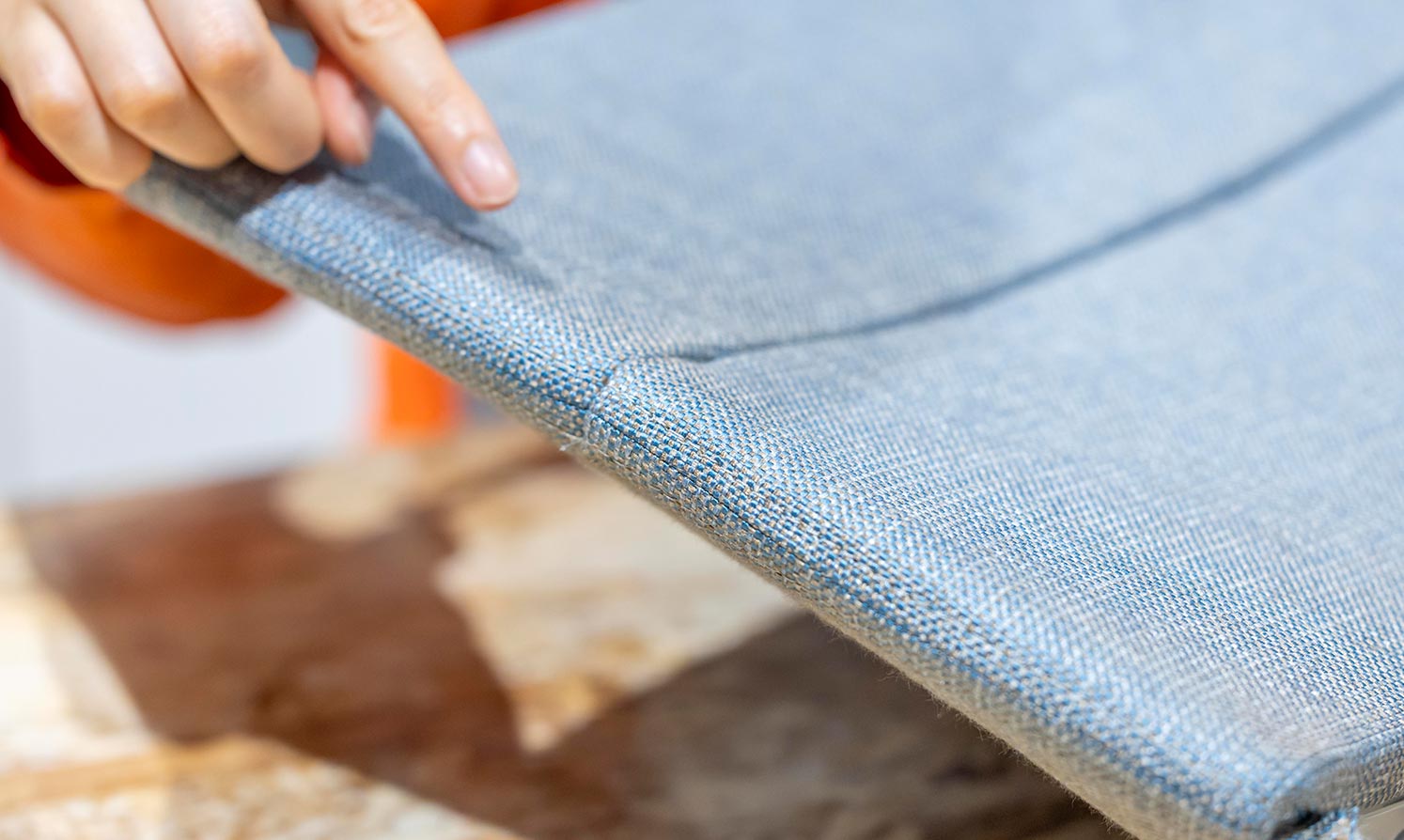
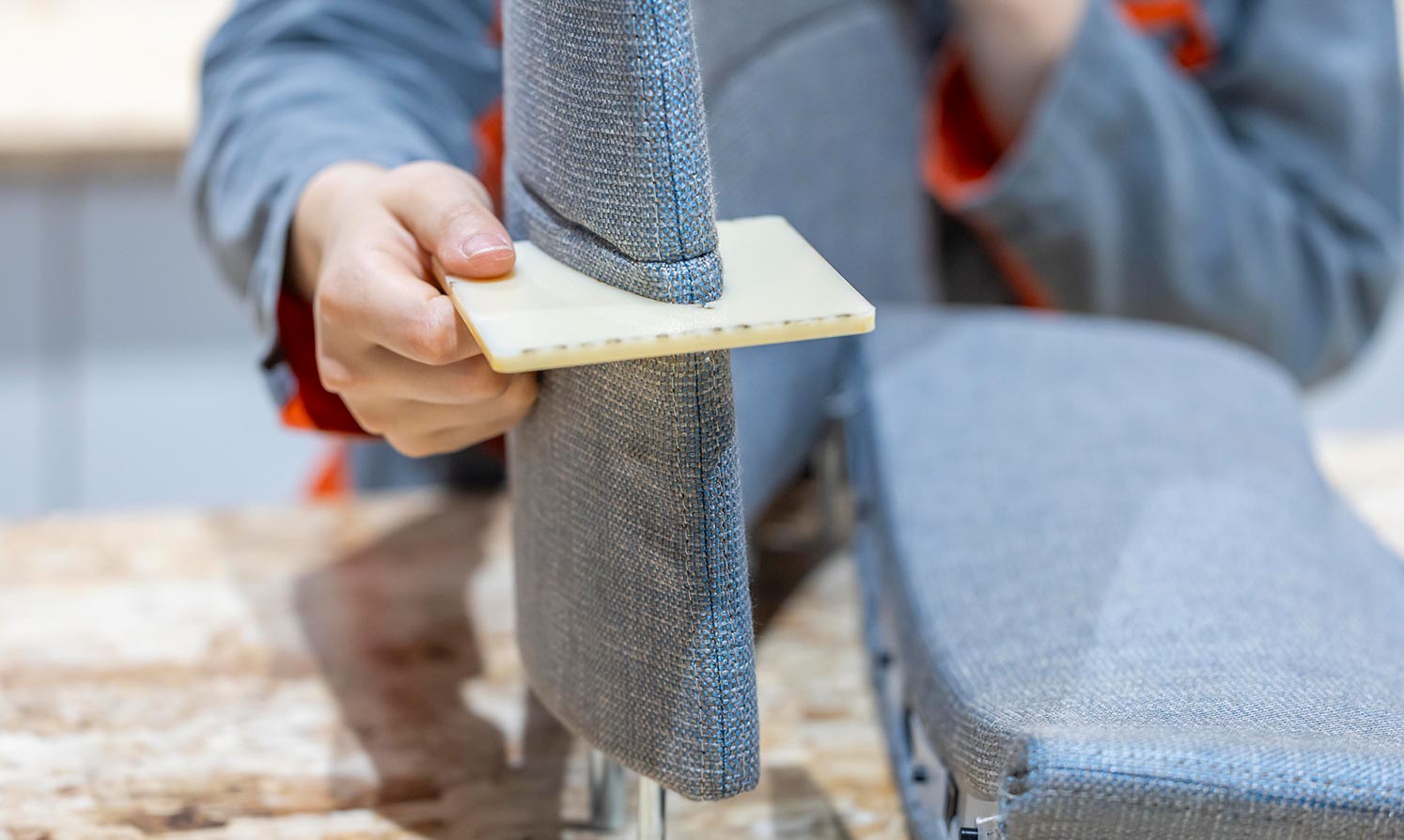
The divided spine is assembled to create a straight line. This requires advanced technology that demands precision in the unseen joints.
Nozawa (Seat Design): The seat surface looks flat from the outside, but the core material inside is shaped like a bowl that firmly cradles your bottom.
To ensure comfort while sitting, we've incorporated an internal design that isn't visible from the outside, preventing pressure on the back of the thighs and impairing blood circulation.
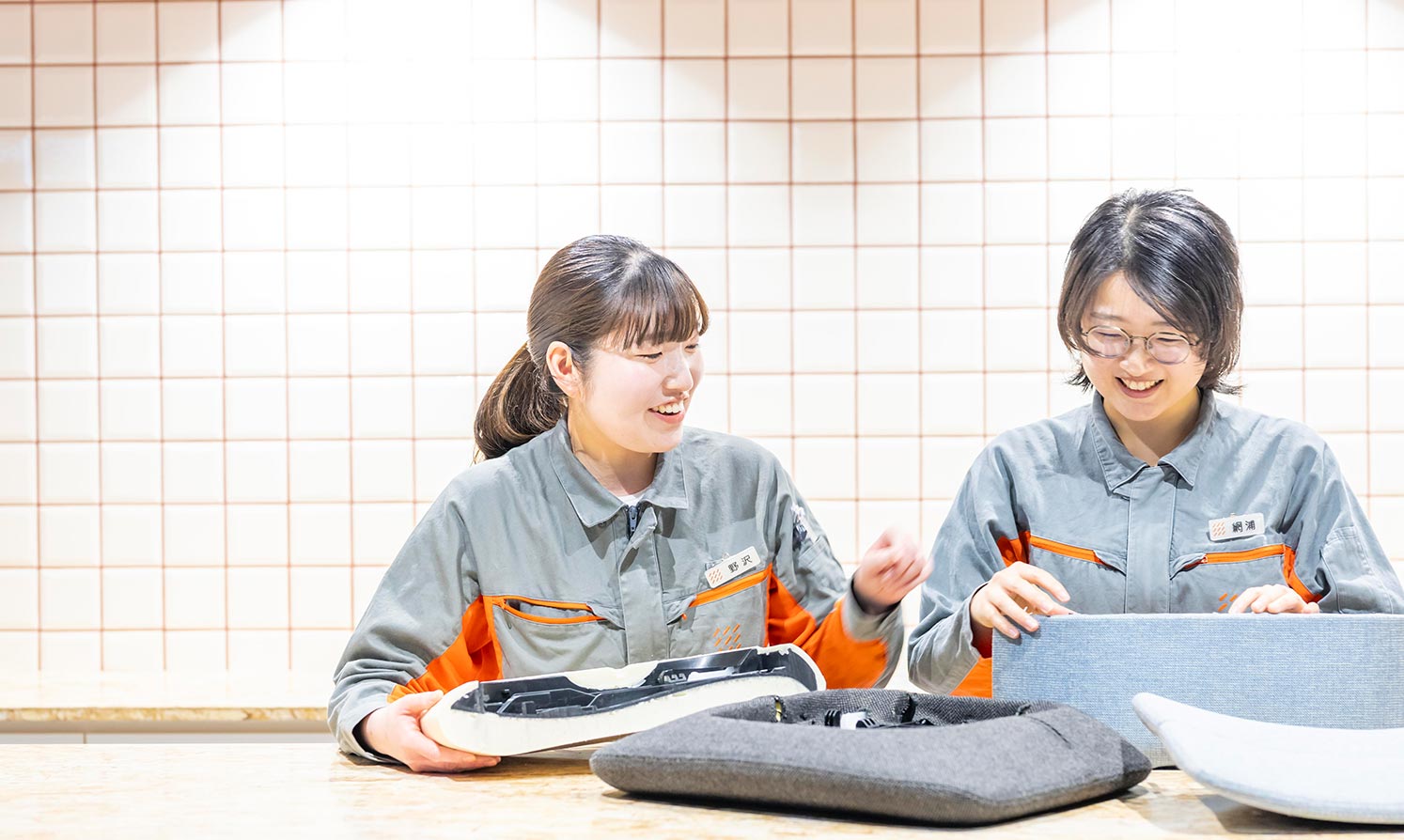
The seat is supported by a core material that firmly cradles your hips, ensuring a comfortable sitting experience.
──デザインを大切にしながら、チェアとしての機能性を保つために、皆さんが試行錯誤しながら設計した様子が伝わってきます。
How can we maintain structural integrity while preserving aesthetic appeal?
──脚と肘の設計においても、さまざまな工夫が凝らされているそうですね。
Yamaoka (Leg Design): There are two types of legs: aluminum legs and pipe legs, and each has its own unique features. With the aluminum legs, we focused on achieving both lightness and strength. Because the legs are horizontal to the ground, the way forces are applied tends to be unfavorable, and since the legs themselves are long and slender, we felt it was difficult to maintain overall strength.
Therefore, we adjusted the thickness of the inner wall of the legs in 0.1mm increments without compromising the exterior design, achieving a balance between lightness and the maximum strength that the aluminum would not break. Furthermore, we actually ensured strength by setting the angle of the top surface of the legs to 92.4 degrees and the bottom surface to 90 degrees.
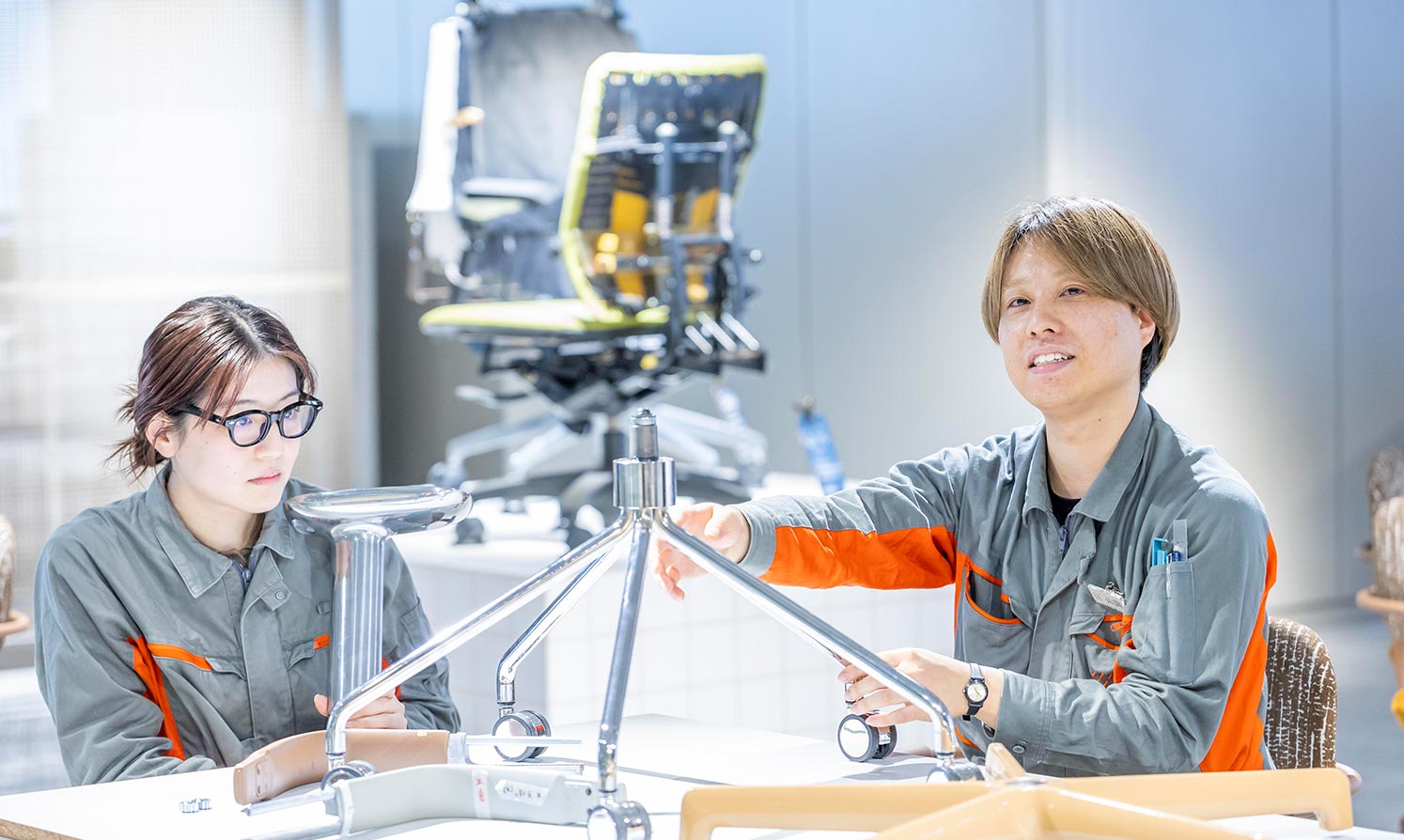
By making the inside of the legs hollow, both lightness and durability are achieved.
Yamaoka (Leg Design): Next, with the pipe legs, the challenge was how to bundle the five sections together. Here too, we focused on the positional relationships and shapes of the parts to increase strength without affecting the appearance. We had many discussions with our manufacturing partner about how to assemble them to realize our concept.
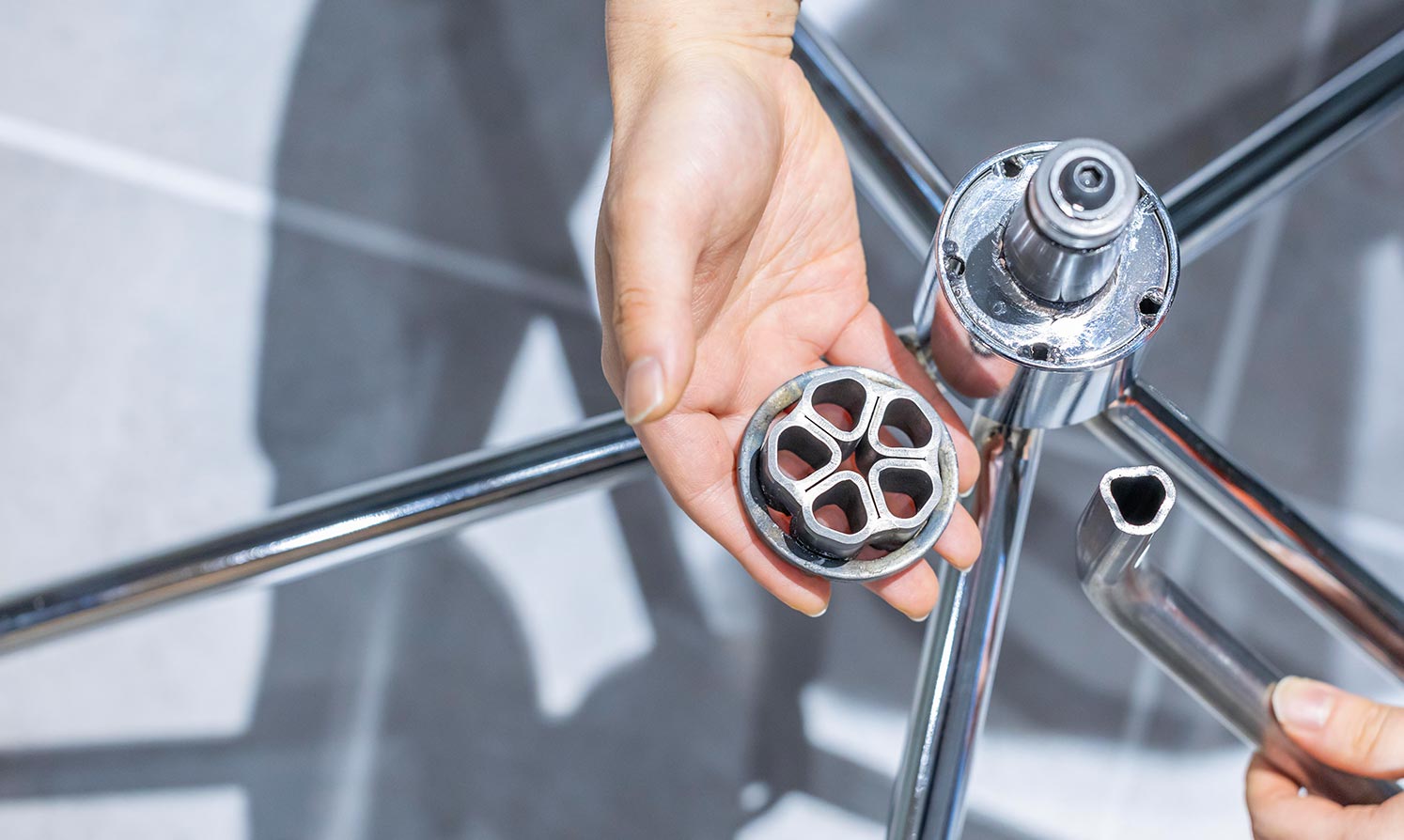
A cross-section of the five legs bundled together with parts for strength testing.
Okumura (Elbow Design): In designing the elbow, I focused on achieving a "smooth texture" when it moves. I tried various methods, but by using gears, which are not usually used, I was able to create a design that doesn't make a rattling sound when locked.
Furthermore, to match the aluminum material of the chair frame, we also challenged ourselves to make the covers for the movable armrests, which are usually made of resin, out of aluminum. This ensures that the overall design and texture are not compromised even with the covers attached. There are many constraints on the shapes that can be made with aluminum, so we had to be very creative to create them.
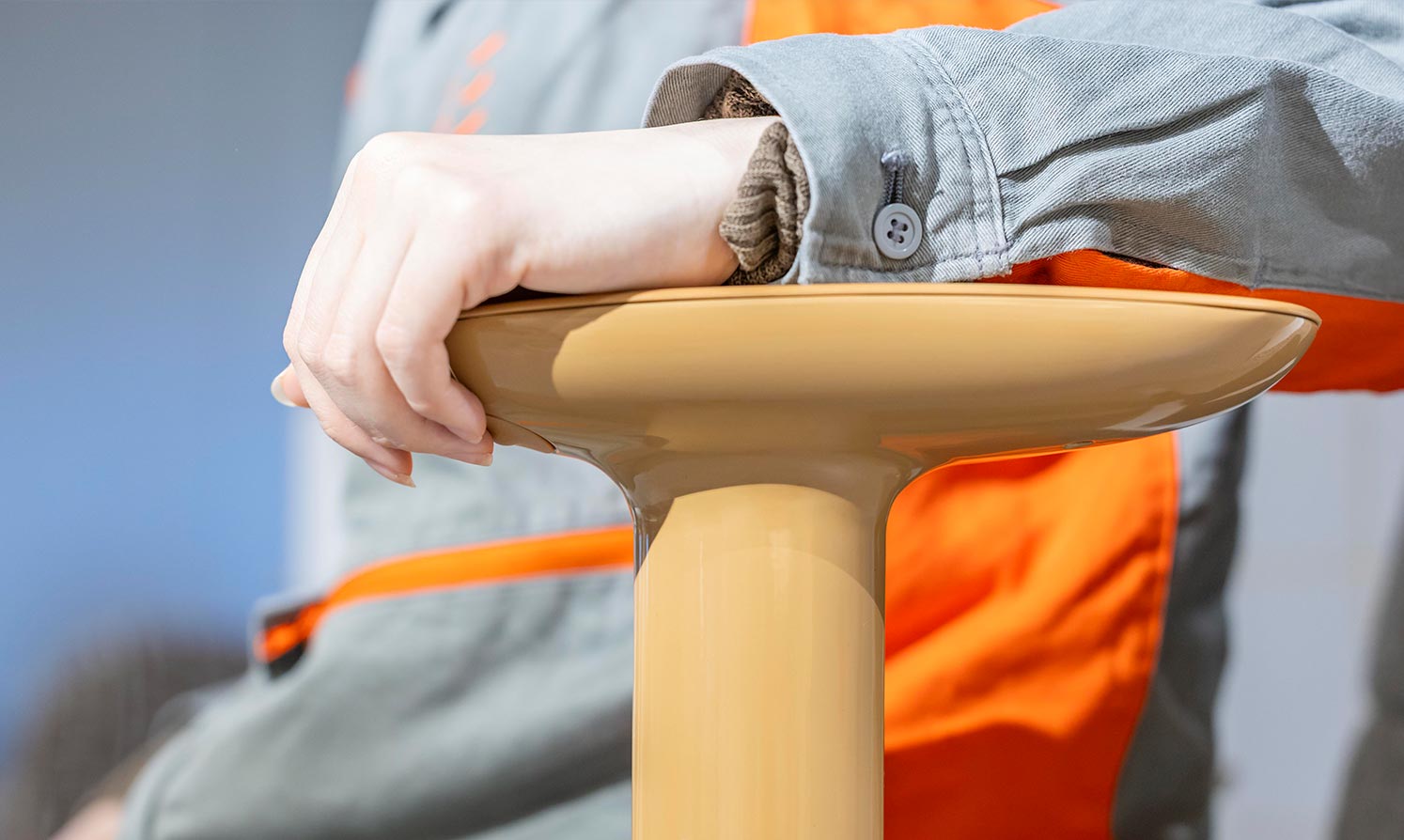
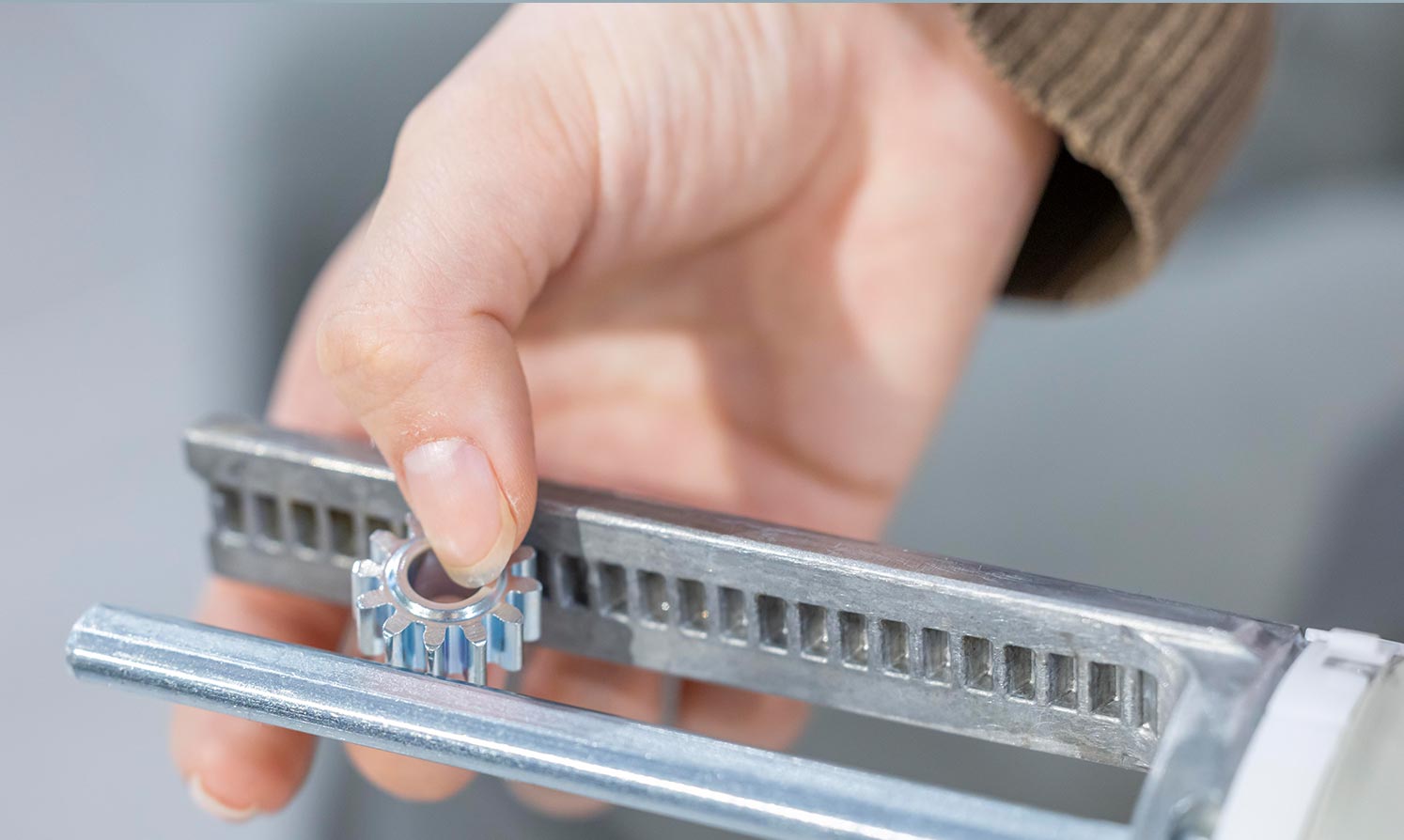
The aluminum construction provides a substantial and high-quality feel. Gears ensure smooth operation.
──外からは見えない部分にこそ、細やかなこだわりが宿っているのですね。
It's natural not to say "it can't be done." ITOKI DESIGN HOUSE SHIGA's uncompromising approach to craftsmanship.
──今回「SHIGA」のデザインを担当されたプロダクトデザイナーの柴田文江さんがイトーキのものづくりの力を絶賛していたそうですが、皆さんが考える、技術力の高さの理由を教えてください。
Yokoyama (Leader): I think the reason is the "people." In manufacturing, you interact with people from various departments, but no one easily says "it can't be done." Everyone is genuinely thinking about how to make it happen. Perhaps because of the background of creating numerous new products so far, I feel that we have gathered reliable senior colleagues who have an even stronger passion than we do.
Ban (Mechanical Design): Nobody compromises. Especially when it comes to quality and safety, we conduct tests so many times that you might think, "Do we really need to go that far?"
Yamaoka (Leg Design): Of course, they have a high standard for quality, but I think their strength lies in their ability to think about and implement ways to further improve usability and appearance, rather than being satisfied once safety is ensured.
Kimura (Mechanical Design): It's great that the design and manufacturing departments are in the same space. I don't feel any power imbalance, either physically or psychologically, so I feel a sense of determination to create something great from a level playing field.
──技術があるというだけではなく、妥協のない強いマインドが質の高いものづくりに繋がっているのですね。
Attention to detail resides in the "unseen" parts. Key features of "SHIGA" from the perspective of its creators.
──作り手側だからこそ注目してほしい、「SHIGA」の魅力はありますか?
Amiura (Back Design): What I find most impressive is that the mounting points, such as screws, are completely invisible. I think it's amazing that we were able to completely hide elements that would otherwise be considered design clutter.
Nozawa (Seat Design): I'm proud of the sharp edges on both the back and seat, even though it's a sewn product. It's a material that tends to become rounded, but I like how it gives a crisp impression.
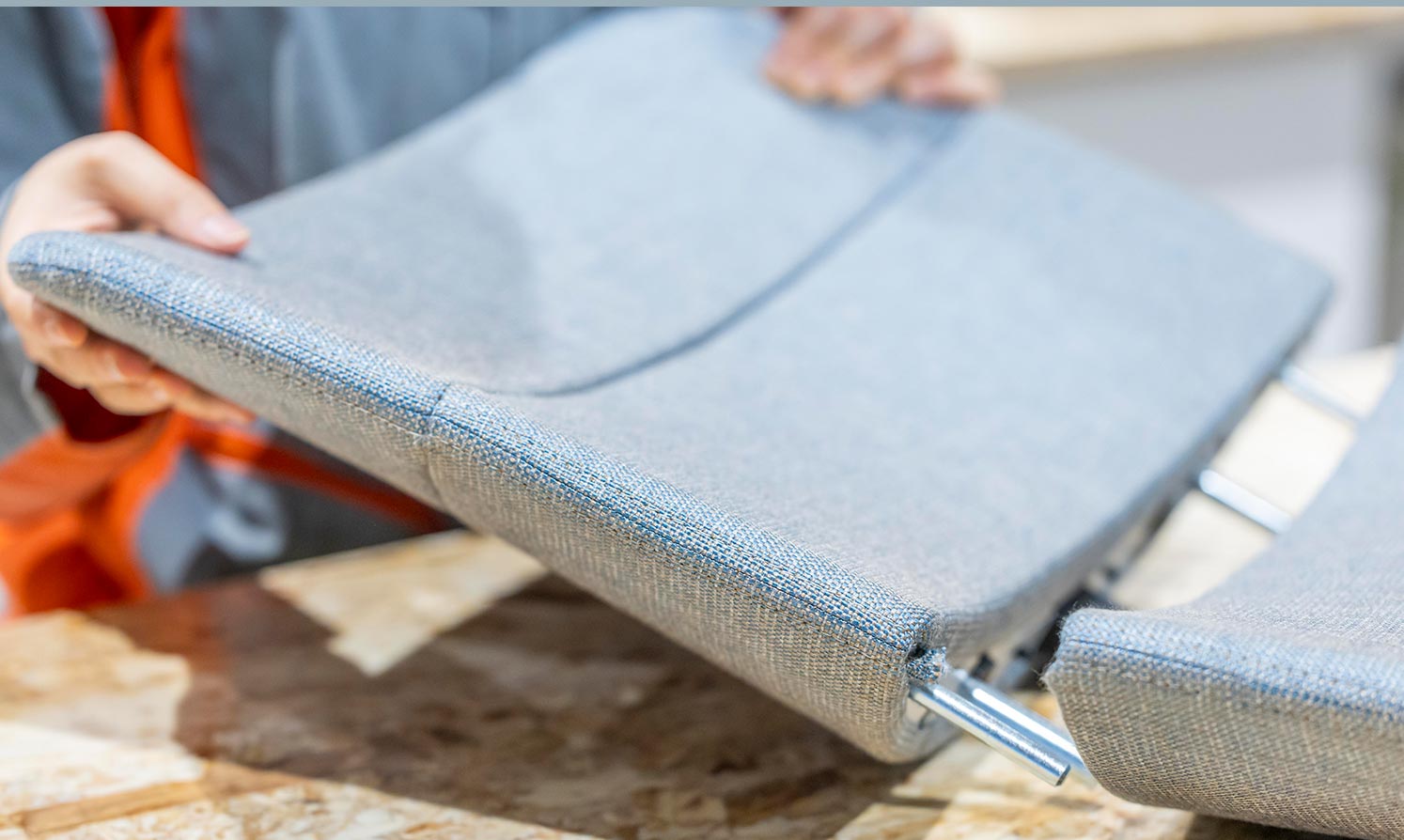
The back is smooth and beautiful, with no visible seams.
Okumura (Elbow Design): I love the texture of the aluminum. I especially like the part where the elbow parts go under the seat and the area around the lever!
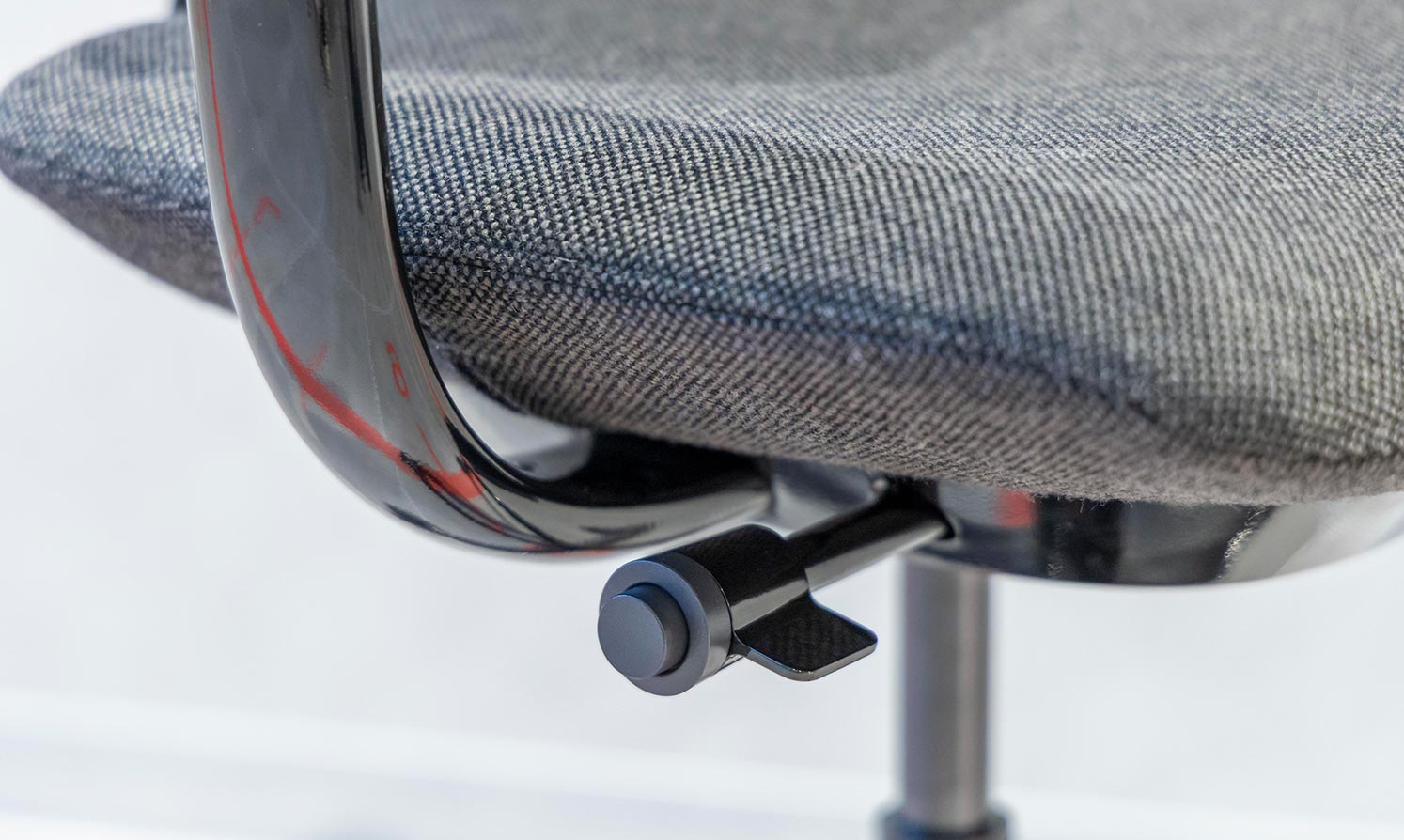
Take a look at the beautiful lines that extend from the elbow down to the seat!
Yamaoka (leg design): For me, it's the beauty of the coloring. I went through many color mixing cycles to get the target color.
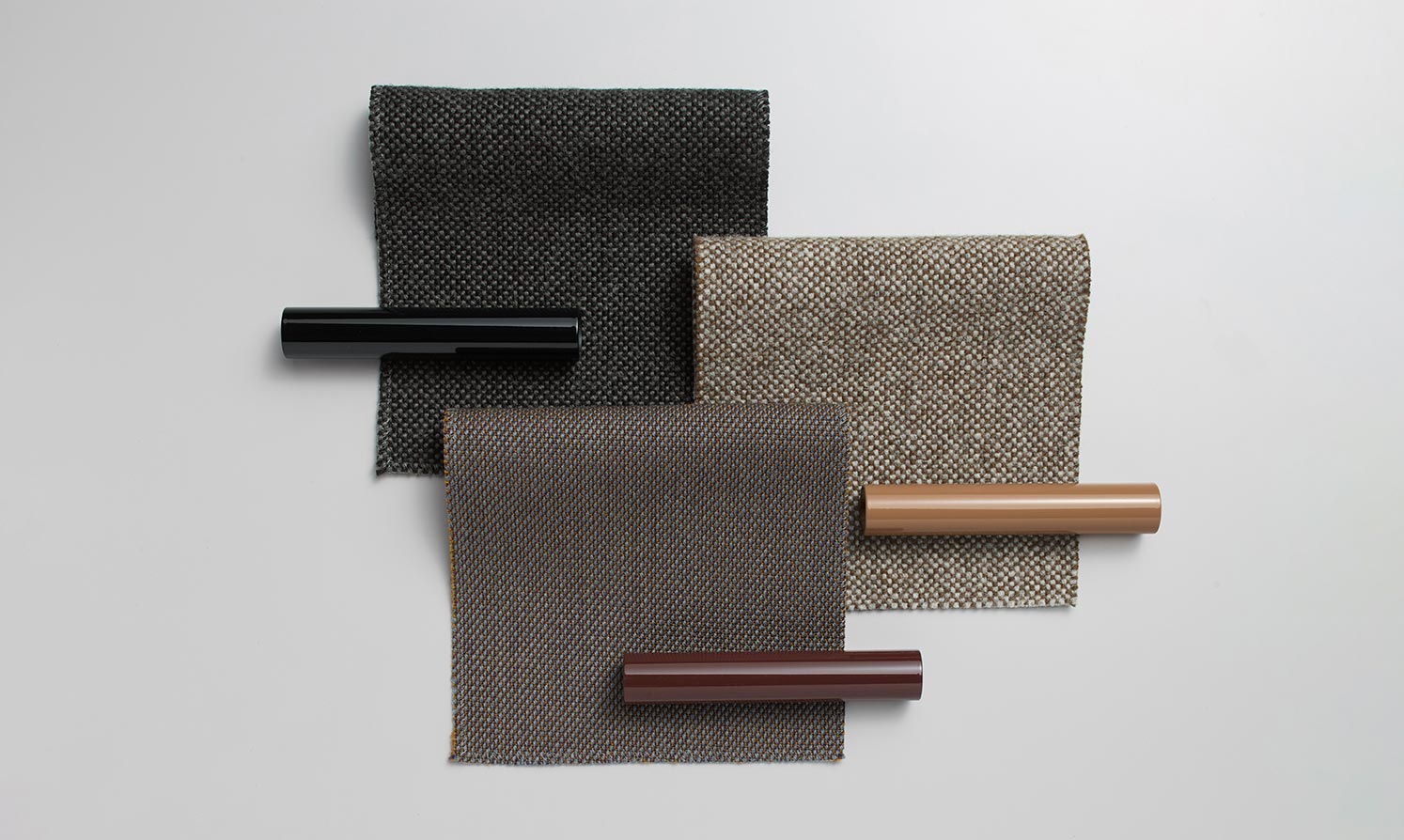
With 7 frame colors and 20 upholstery colors, it offers a wide variety of customizable options.
Ban (Mechanical Design): We are proud not only of the design, but also of the safety features that are unique to Itoki. For example, we have installed a wall in an unseen area to prevent fingers from getting caught in the gap when the seat and backrest move. As a designer, I am proud that we have pursued comfort and design while also ensuring safety.
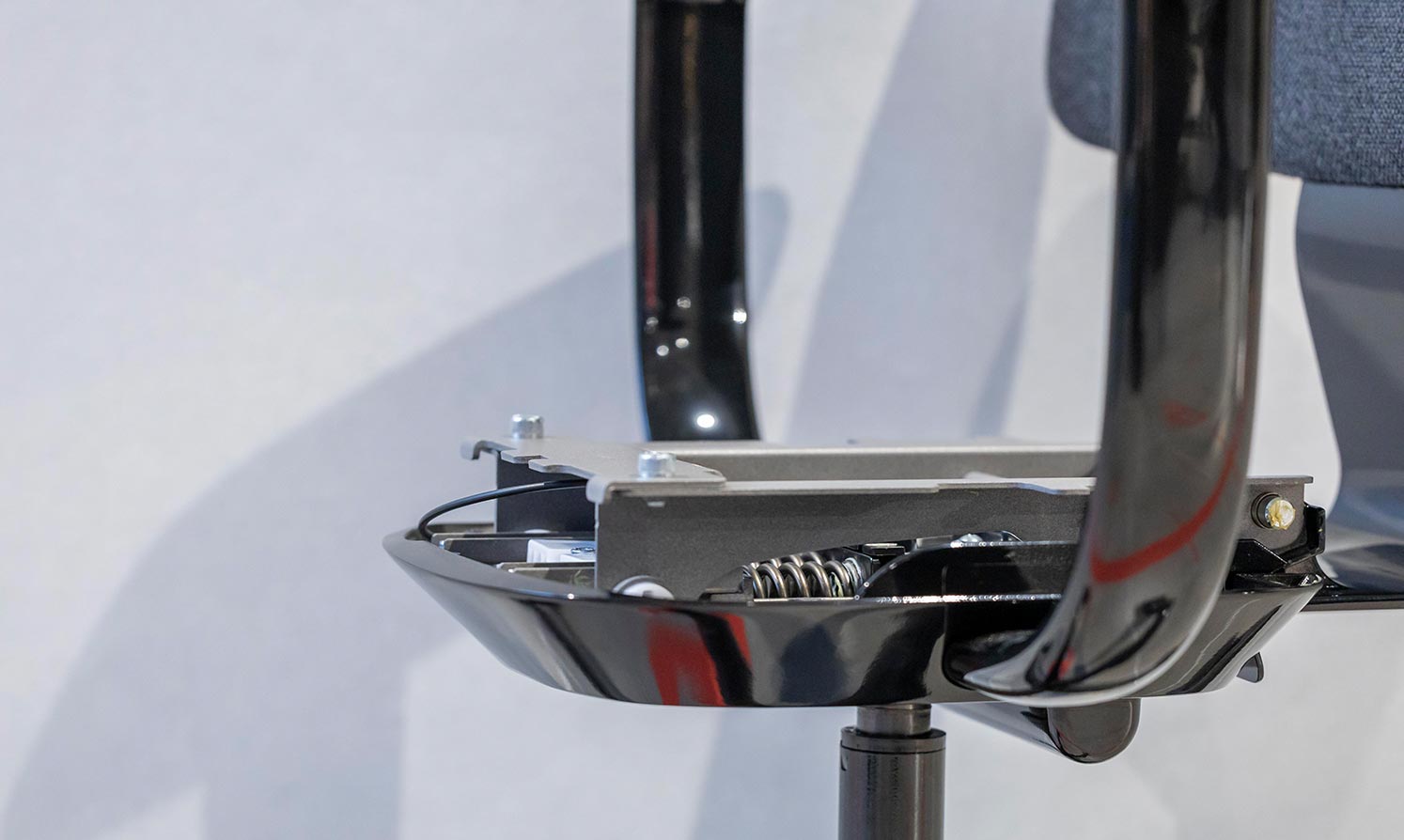
The walls are designed to prevent fingers from getting caught, demonstrating a focus on safety.
──それぞれの担当部位へのこだわりと愛着を感じます。
"SHIGA" was created with the unconventional, flexible thinking and enthusiasm characteristic of a young team. While stripping away unnecessary functions, it pursues comfort, and the meticulous technology that permeates even the unseen parts is filled with ITOKI's pride in manufacturing. In the second part, we ask the members in detail how they tackled the difficult challenge of "designing every part from scratch" and how they grew as a result. Please be sure to check it out as well.
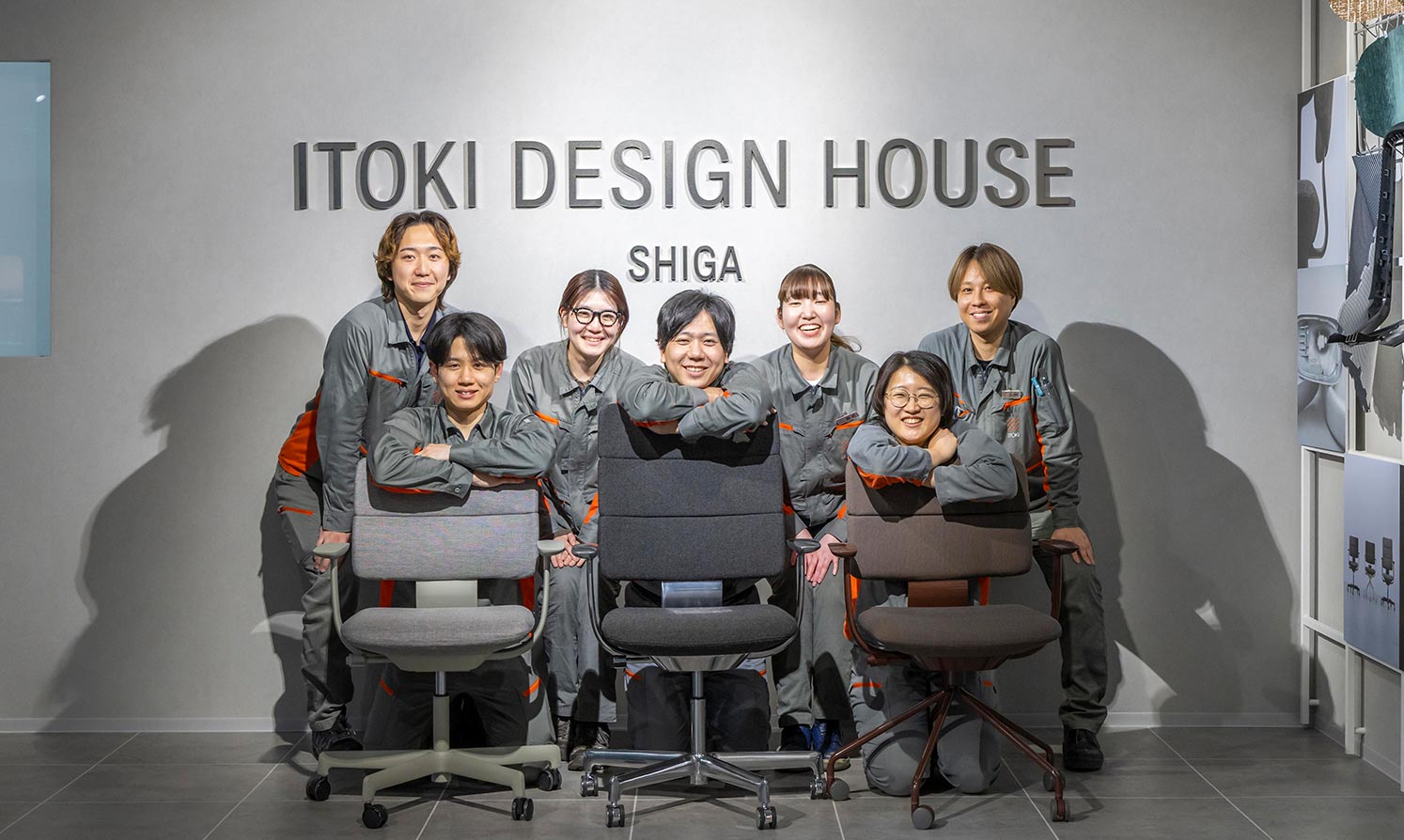
Experience "SHIGA" at the showroom.
Related article

Related products/solutions
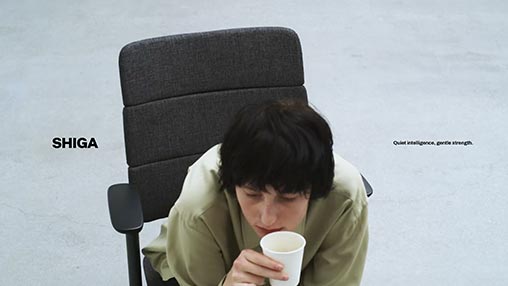
- The department, position, and system are those at the time of the interview and may differ from the current information.
Recommended Articles
-
April 7, 2026
"Great plays don't last": A salesperson's mindset that has turned a lack of confidence into a strength to achieve results.
-
March 31, 2026
"Educational background and years of experience don't matter": The youngest manager at Itoki's career was shaped by a single comment from his boss.
-
December 11, 2025
"I want to deliver what is truly needed" - the designer's philosophy based on the "essence of architecture"
-
September 29, 2025
Continuing to ask "why" and sticking to one's own principles: An office designer discovers "a way of working that suits me"
-
September 29, 2025
It's interesting because I've never done it before. I found fulfillment in an unknown field.