


October 14, 2026
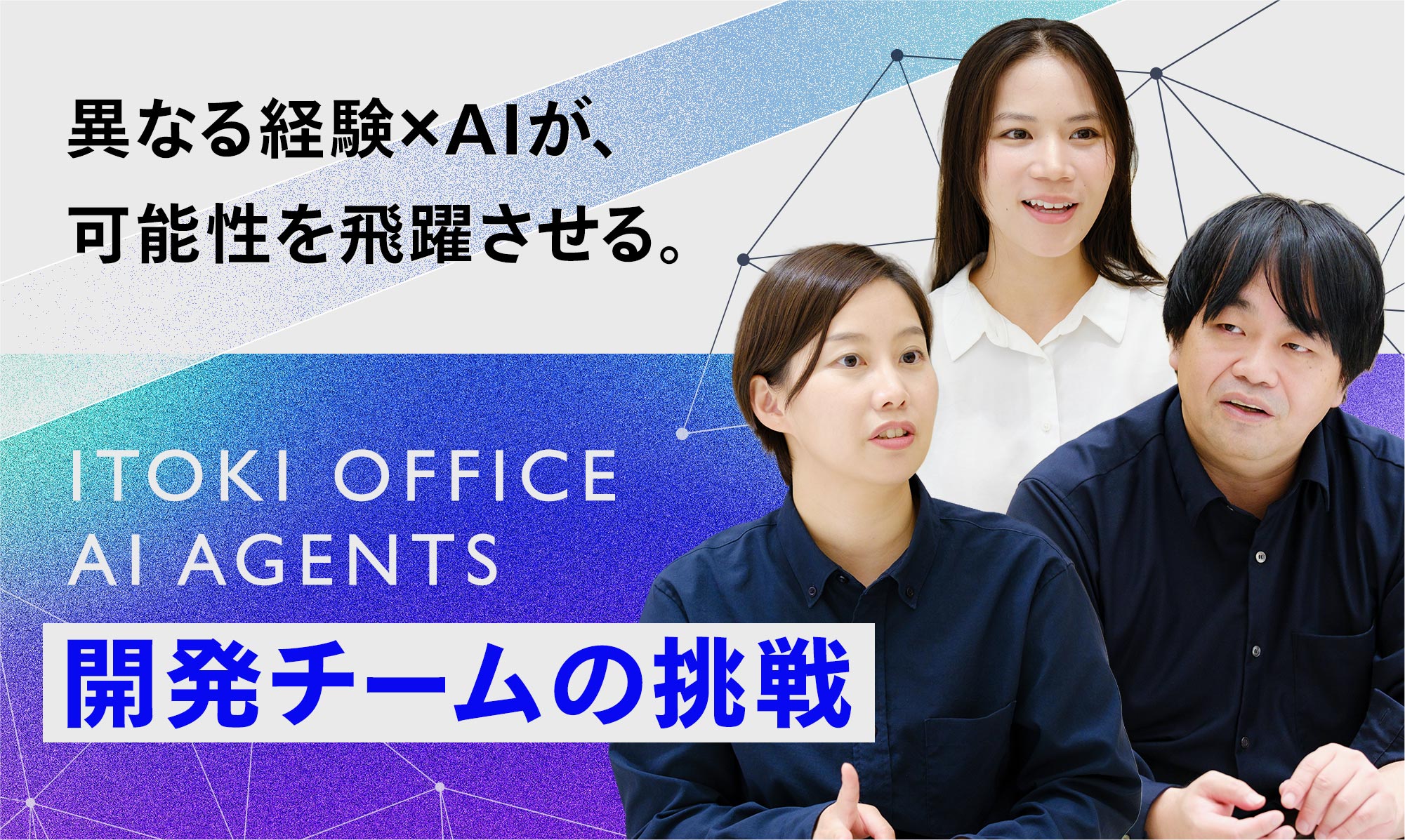
Combining diverse experiences with AI dramatically expands possibilities. The challenge of the 'ITOKI OFFICE AI AGENTS' development team.


The evolution of AI is poised to dramatically change our work and the way we work. In the first part of this series, we explored how AI will transform offices and our work styles, and introduced Itoki's vision for the future of work, along with the challenges they are facing in realizing it.
On the other hand, AI is not just changing the office. By combining AI with the experience and expertise that has been cultivated so far, it is becoming possible to leverage those strengths in new areas and broaden the scope of work.
In 2026, Itoki will officially launch "AI Management," placing AI at the core of its operations. The goal is for AI to be utilized not only by a select few specialists, but by every employee to create new value.
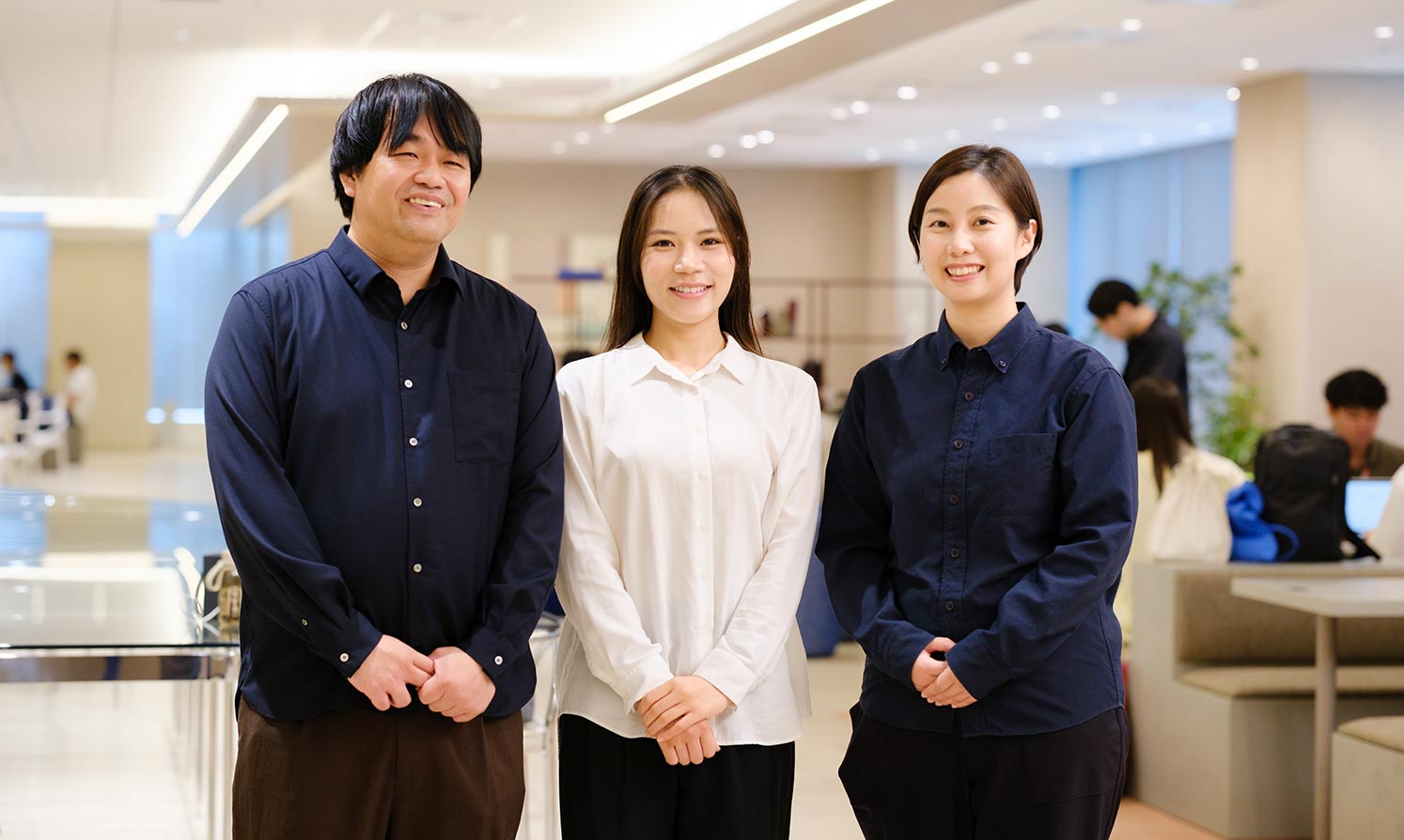
Among them, the three people introduced here are working on the development of "ITOKI OFFICE AI AGENTS," which uses AI to analyze various office-related data and support the resolution of office issues and continuous improvement. Their careers are diverse, including system development, office sales and human resources, and data science. They are bringing together the experience and expertise they have cultivated in their respective fields and working on development by combining it with AI.
How can we expand our capabilities when diverse experiences are combined with AI? We explore hints for taking a new step in the AI era through the careers and trial and error of three individuals.
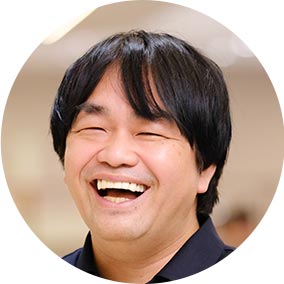
Manager, Product Development Department, Solution Development Division, Solution Business Development Headquarters, ITOKI CORPORATION
Kentaro Ito
He has experience in system development at a major SIer (Systems Integrator). After launching a new business in the distribution and retail sector, he joined Itoki in 2024. He is responsible for planning and developing office solutions utilizing AI.
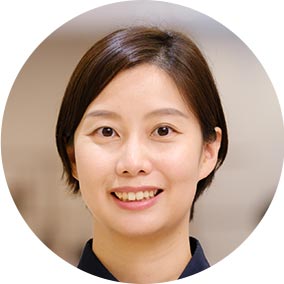
AI Development Team, Product Development Department, Solution Development Division, Solution Business Development Headquarters, ITOKI CORPORATION
Miho Sakai
Joined the company as a new graduate in 2012. After gaining experience in office sales, human resources, ABW consulting, and the development of the data analysis service "Data Trekking," he assumed his current position. He leverages his expertise in the office industry to drive the planning of AI solutions.
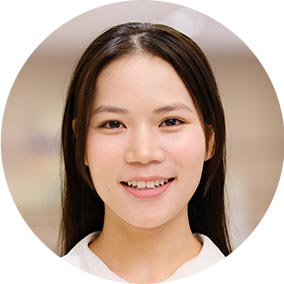
AI Development Team, Product Development Department, Solution Development Division, Solution Business Development Headquarters, ITOKI CORPORATION
Pham Nyung
I studied software engineering and data science at Hanoi University of Science and Technology, and joined the company as a new graduate in January 2025. I am responsible for data processing and implementation.
- The departments, positions, and systems mentioned in the text are based on information available at the time of the interview.
Contents
- First, think for yourself. Using AI to learn about uncharted territory — Kentaro Ito
- Beyond "I can't do it": New challenges opened up by AI — Miho Sakai
- Armed with expertise, Pham Nhung takes on a new challenge in Japan, coming from Vietnam.
- The value of combining different areas of expertise cannot be created by AI alone.
- "Let's just give it a try." To step into uncharted territory.
First, think for yourself. Using AI to learn about uncharted territory — Kentaro Ito
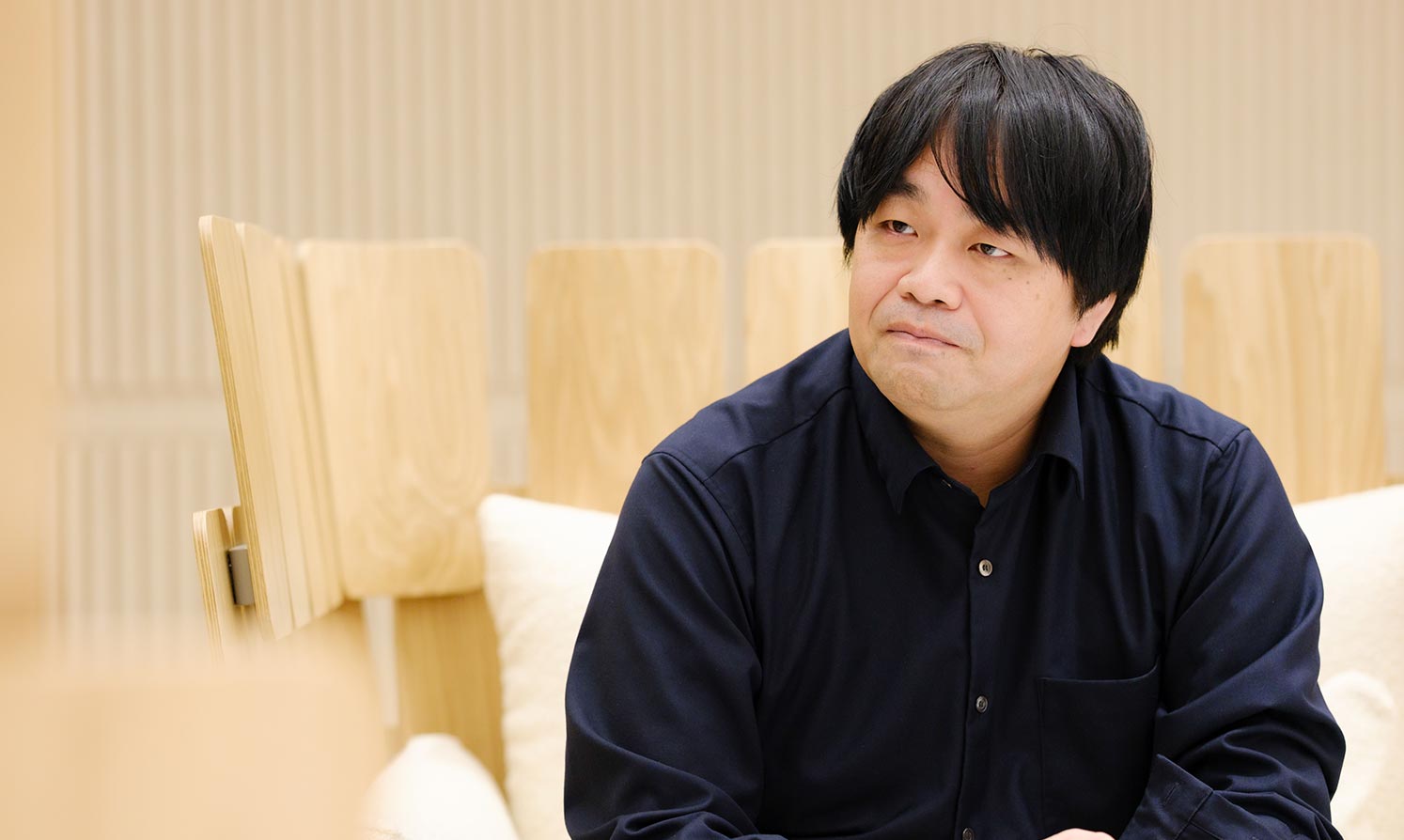
—First of all, what role are you currently playing, Ms. Ito?
Ito: As the head of the product development department, my main role is to listen to customer and internal feedback, think about what we should create as a team, and then translate that into development.
For example, "Facility Portfolio AI" is a solution that incorporates an AI agent to comprehensively analyze the usage patterns of multiple locations, calculate the optimal area, number of seats, departmental layout, and cost structure, and simulate location and floor configurations that take into account organizational changes and changes in work styles. In addition, we are working on developing other solutions such as "Workplace Insight AI," which extracts office challenges and areas for improvement, and "Space Matching AI," which supports the efficient use of space by combining sensors and apps.
Although it's still in the development stage, we've already shown prototypes to customers and are continuously making improvements based on their feedback, such as "In what situations could this be used?" and "What features are needed?".
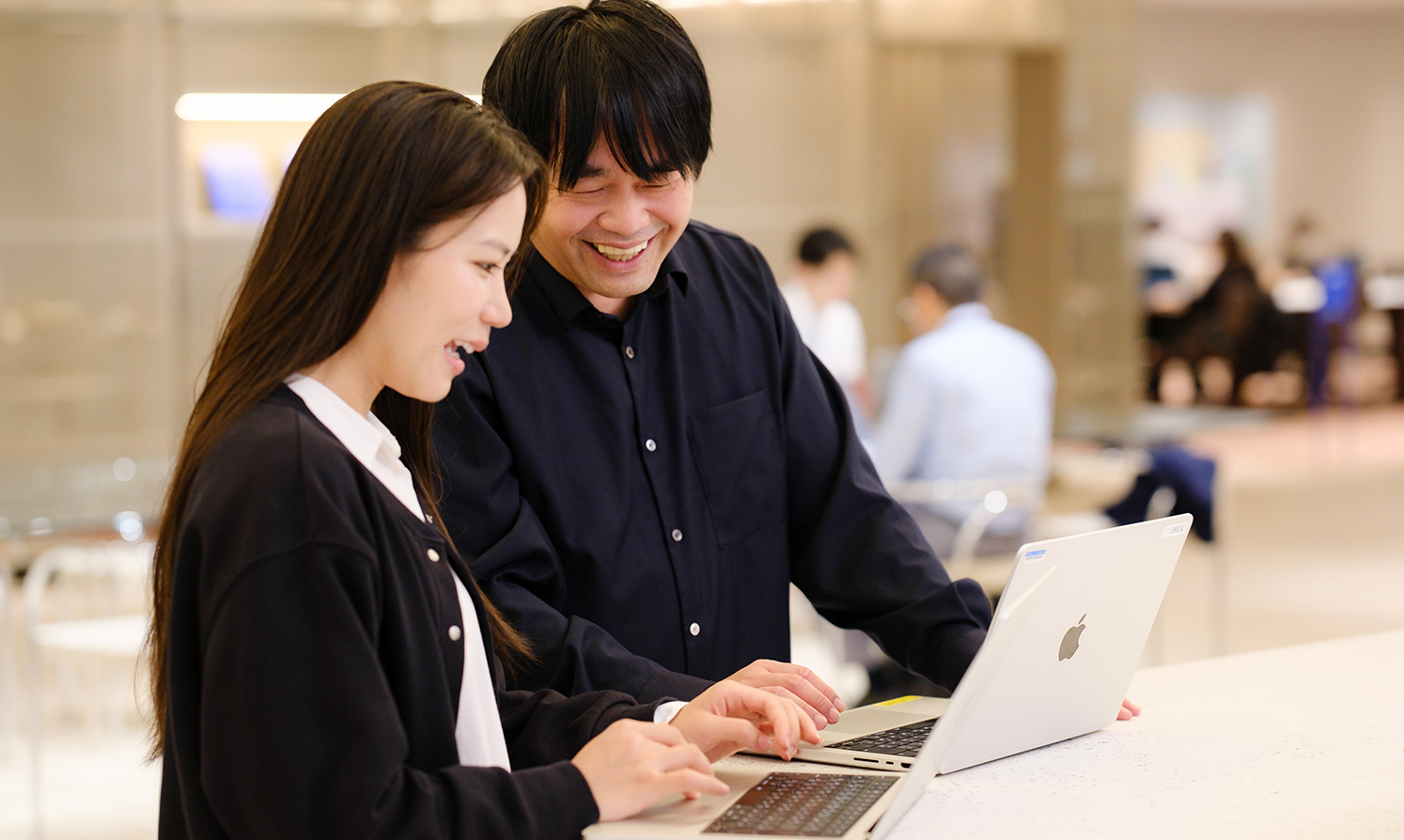
—Were you originally specializing in offices and work styles?
Ito: No, originally I worked at a major SIer*, where I was involved in large-scale system development for finance and retail. After that, while gaining experience in CRM, web marketing, and e-commerce at a distribution and retail company, I became interested in using data to change people's behavior.
My experience was the catalyst for joining Itoki. I felt that the idea of using data as a starting point to change real-world spaces and people's behavior resonated with Itoki's "Office 3.0" concept*.
Although I had experience with systems and data, the office environment was outside my area of expertise. When I first joined the company, I had almost no knowledge, so I learned by talking to people who were knowledgeable and by asking AI questions about things I didn't understand.
—How do you use AI when learning about unfamiliar areas?
Ito: With AI, you can get answers quickly even in areas you don't know. However, the quality of the answers you get back depends greatly on the questions you ask. That's why I believe it's important to think for yourself first, rather than immediately seeking answers from AI.
When asking questions to others, instead of simply being given the answer, I get hints, formulate my own questions, and then use AI to delve deeper into the topic.
AI has dramatically changed the speed at which we can research, understand, and internalize unfamiliar areas of knowledge.
On the other hand, the experience I've gained so far is also proving useful in current development. Although I'm an engineer, I've also been involved in many situations where I directly interact with customers alongside development work. Throughout those experiences, I've always valued thinking from the customer's perspective.
Even if we can technically do more, that doesn't necessarily mean that it's what our customers truly need. No matter how advanced a product we create, it's meaningless if we can't imagine it being used in a real-world scenario or if it doesn't solve the problems they're facing. That's why we consciously think not about "what we can create," but rather "whose problems are we solving, what problems are they, and why?"
- SIer (Systems Integrator): A company that provides support for a company's business systems, from design and development to implementation and operation.
- Office 3.0: A concept that leverages data to continuously optimize work styles and office spaces.
Beyond "I can't do it": New challenges opened up by AI — Miho Sakai
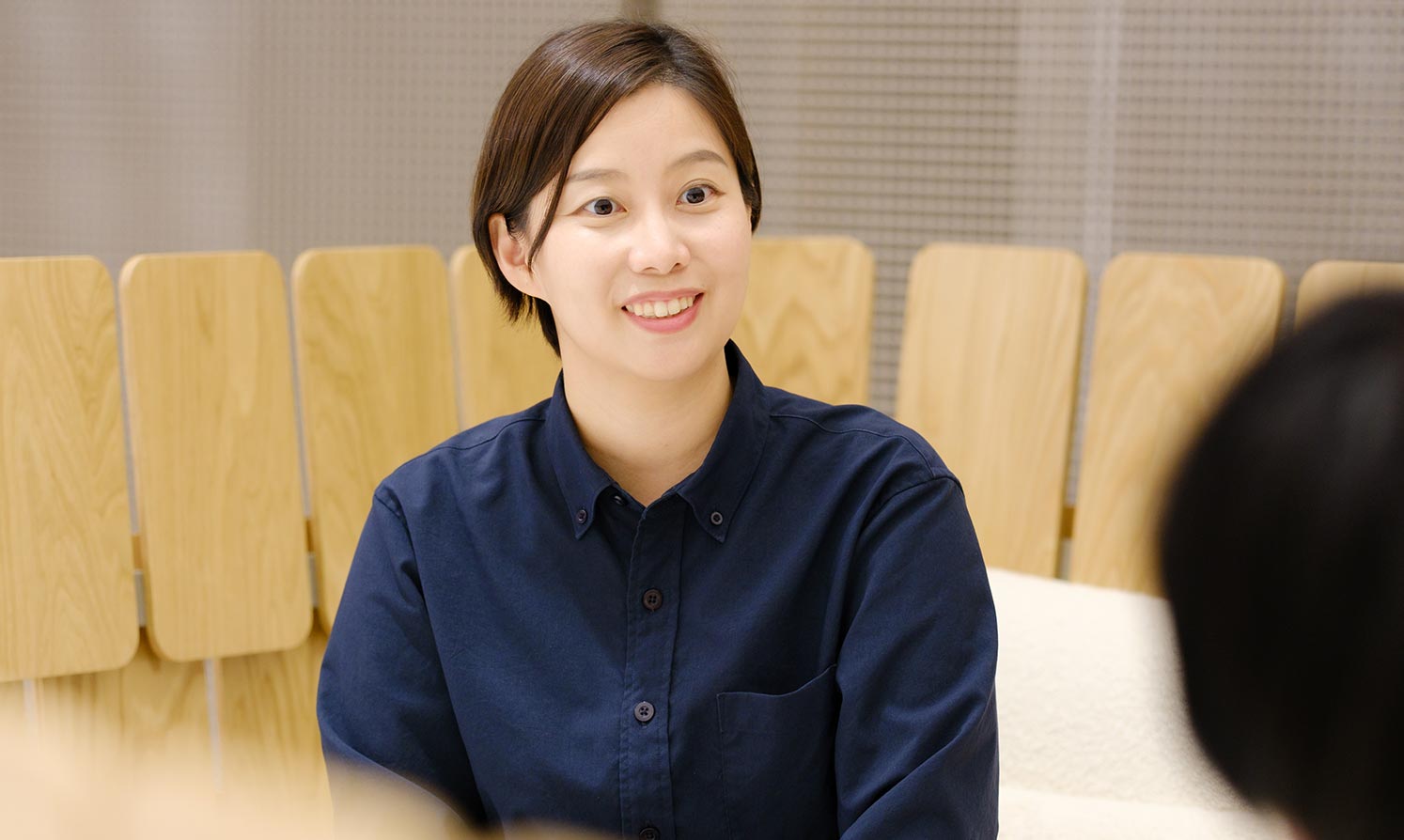
—What role are you currently playing, Ms. Sakai?
Sakai: I'm not an engineer, so I'm more often in charge of planning than actual development work. I leverage my experience in office sales and ABW consulting* to think about "what problems our customers are facing" and "what features they really need," and then work with the development team to shape solutions.
I majored in labor sociology at university and was interested in the working styles of Japanese companies. After joining Itoki, I worked in office sales, human resources, and ABW consulting before moving to the Solutions Development Department, where I was involved in launching the concept of visualizing and analyzing office data (later known as "Data Trekking").
—So development wasn't your area of expertise originally?
Sakai: That's right. I've been interested in programming for a while now, and I've tried studying languages several times, but I always gave up. I felt that writing code myself and creating something was a pretty high hurdle.
But now, if you have an idea for something you want to create, you can have the AI write the code while interacting with it, and actually bring it to life. Even if you don't understand something, you can ask questions on the spot as you go along. I've started to feel like I can try things that I previously thought I couldn't do.
Of course, AI can't do everything. When listening to developers, I try to understand the gist of what they're saying in my own way, rather than just memorizing technical terms.
For example, instead of "IP address," I try replacing it with "address on the internet." By asking AI for help and breaking down concepts to a level I can understand, I'm gradually expanding my knowledge.

—On the other hand, are your previous work experiences proving useful in your current development work?
Sakai: I agree. I don't have any practical development experience, such as system construction, but I've been involved with offices and work styles from various positions, including office sales, human resources, and ABW consulting.
For example, when planning something new, you can imagine it from multiple perspectives, such as "What would the client's general affairs manager think?" or "What would a designer be concerned about?"
I used to feel like my career lacked consistency. But looking back now, those seemingly disparate experiences have become my strengths when I venture into new fields.
- ABW stands for "Activity Based Working." It is a work style in which employees choose the location and time in which they can work most productively, according to the nature of their work.
Armed with expertise, Pham Nhung takes on a new challenge in Japan, coming from Vietnam.
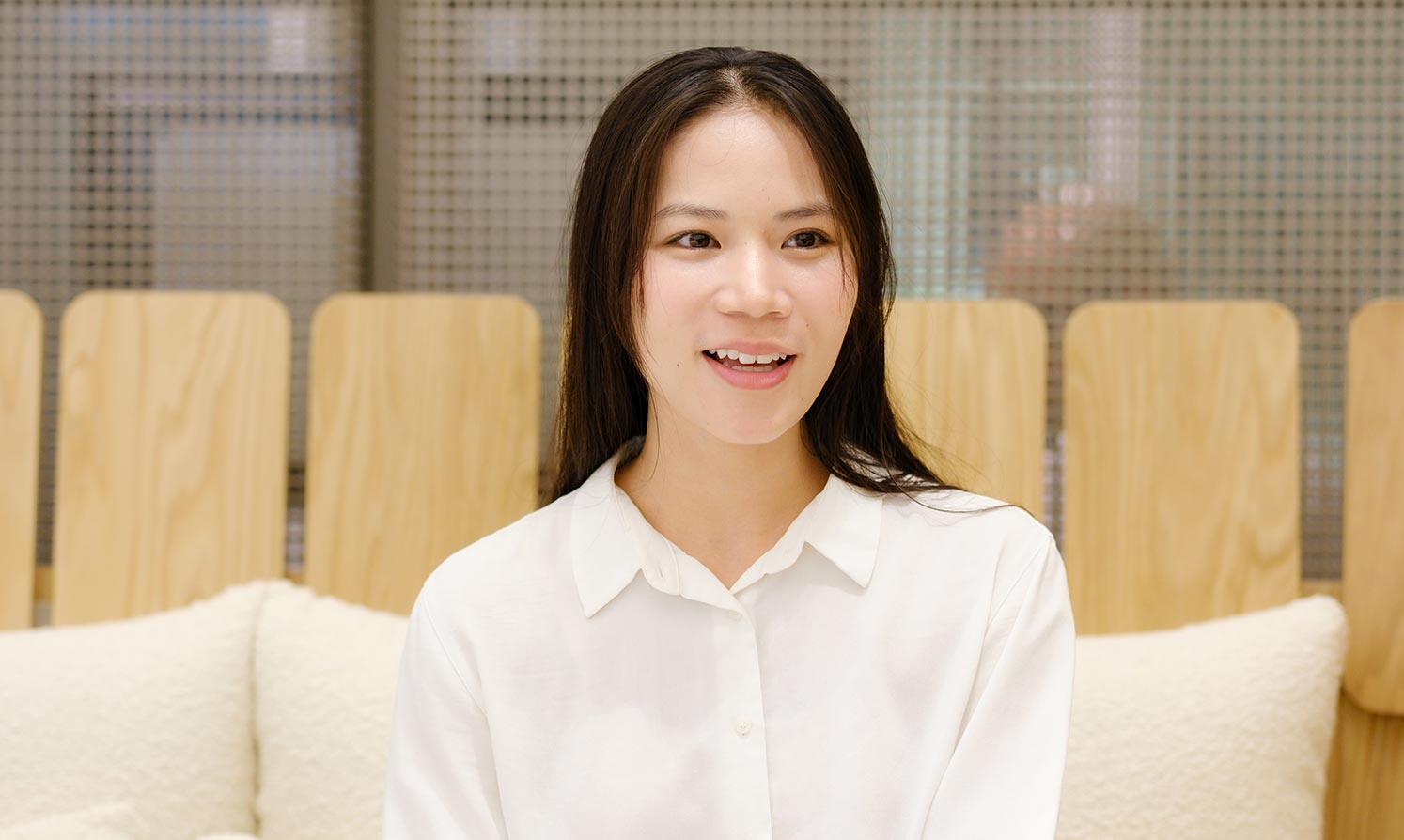
—What role do you play within the team, Nyun?
Nyun: I'm mainly in charge of data processing and implementation. I organize the data we get from the office and think about "what can we learn from this data?" and "how can we use it to solve problems?" and then connect that to analysis and app development.
I graduated from Hanoi University of Science and Technology in Vietnam, where I majored in data science and studied statistics, programming, AI, and other related subjects. Of the three of us, I think I studied at university what is closest to my current job.
—After graduating from university, you chose to leave Vietnam and work in Japan. How did you come across Itoki?
Nhung: I first learned about Itoki at a company information session held in Vietnam. After that, I watched Itoki's videos on YouTube and became more interested in the company as I learned more about it.
After that, I also participated in an internship in Japan. Through interacting with people who actually work at Itoki and experiencing the internship program, I came to want to use the data science knowledge I learned at university to contribute to creating better offices. That's what made me want to work at Itoki.
However, offices and work styles are not areas I specialized in at university. Since joining Itoki, I've learned a lot, and I'm using the data analysis knowledge I gained at university to broaden my knowledge of offices and work on development.

—Do you use AI in your work?
Nyun: Yes. I studied data science and AI at university, but in actual work, there are many things that you can't learn just from what you learned in university.
Previously, if we encountered problems or bugs during development, it took a long time to investigate the cause and resolve them. Now, we can consult with AI to find the cause and gather necessary information, which has significantly increased the speed of our trial-and-error process.
Even so, I think what's important is to think for yourself, "Why does this happen?" Instead of just getting an answer from AI and being done with it, investigate further. When you do that, new questions will arise, and your learning will expand even more.
Furthermore, the data science knowledge I gained at university forms the foundation of my current work.
Data is not valuable simply by being collected. It's necessary to organize the essential information from large amounts of data, interpret the trends and challenges it reveals, and use that information to make decisions and improvements.
I believe my role is to combine the knowledge of statistics, programming, and AI that I learned at university to transform data into "usable information."
The value of combining different areas of expertise cannot be created by AI alone.
—As we've seen, everyone has different careers and areas of expertise. What kind of value is created when members with such diverse experiences and expertise work together on development?
Ito: Because we all have different backgrounds, even when we're talking about the same thing, we can see things from completely different perspectives. As a result, we sometimes clash over things like, "Why can't we do it?" or "What value would there be in doing that?"
But instead of stopping there, if we delve into each other's "why," we'll find points where our thinking overlaps. I believe that it's precisely because engineers, designers, salespeople, consultants, and others each have different perspectives that ideas and solutions that couldn't be reached by one person alone are born.
Sakai: I also believe that having members with different areas of expertise is what allows us to create new value.
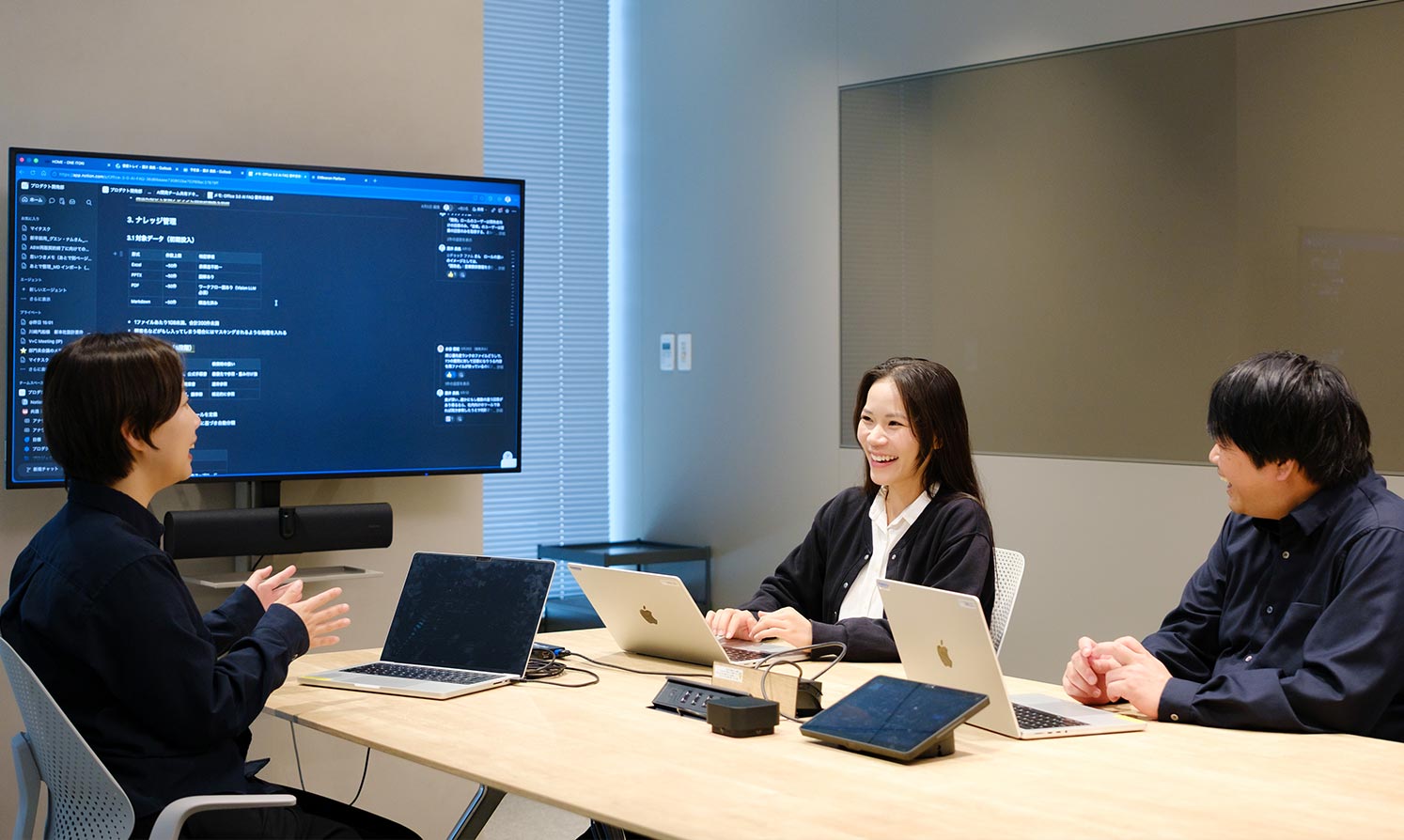
Previously, Itoki outsourced all system development. Now, with engineers in-house, we can collaborate from the planning stage, create prototypes, and test them. This allows us to quickly iterate through the improvement cycle based on feedback.
Furthermore, our team members have diverse backgrounds not only in terms of expertise but also in terms of language and cultural background. That's why, as a team, we make a conscious effort to eliminate the assumption that "they'll understand without me having to say it." Even the same words can be interpreted differently by different people, so we make sure to confirm the underlying intentions and true meanings behind each word. We value the fact that we acknowledge our differences and make it a point to articulate and share each other's thoughts.
Nyun: Working with people who have different areas of expertise often allows me to notice things I wouldn't have noticed on my own.
I realized this when I previously considered an indicator called "ABW implementation level." To evaluate "the state of successful ABW" using data, I utilized my knowledge of data processing and analysis to consider a scoring method for objective evaluation.
However, simply looking at the data doesn't allow us to determine "what should be valued in terms of work style." So, we consulted with Ms. Sakai, who is knowledgeable about offices and work styles, and together we shaped our approach.
Even when I couldn't find the answer using only my own expertise, I realized that I could give shape by combining different knowledge and experiences. From this experience, I truly understood the importance of working with people who have different strengths.
"Let's just give it a try." To step into uncharted territory.
—Based on what we've discussed so far, what do you think is important when venturing into a new field?
Nyun: When you try something new, the difficulty lies in the fact that there isn't just one right answer. Even I sometimes wonder, as I'm working on my projects, "Is this the right approach?" or "Is this the correct way to do things?"
Even so, when I encounter new technologies or methods, I always make it a point to first think, "Why does this happen?" and then investigate or try it myself. Even if I don't know the right answer from the start, I try to think and act on it in my own way. I believe that through that trial and error, I will find clues to move forward.
Sakai: I also feel that what's needed when venturing into a new field is not having specialized knowledge from the start, but rather the ability to think, "Let's just give it a try."
For example, the development screen might seem difficult at first. But just try entering something. If you don't understand something, ask the AI or look it up. As you keep working at it, you'll gradually be able to do more and more.
At Itoki, we have a culture of "maintaining a strong the Pioneering spirit." In AI solution development, we first create a prototype, test it internally, and improve it based on the feedback we receive. Instead of seeking the perfect answer from the start, we first try it, learn from the experience, and make it better. I believe this kind of attitude is essential when venturing into new fields.
Ito: When we actually show the prototypes we've created to our customers and colleagues, and their reactions change to things like, "Wow, you can do that?" or "That's an interesting perspective," it's incredibly rewarding.
We didn't know the answer from the beginning; we thought about it ourselves, created it, observed the reactions, and then improved it. Through this repetition, we feel that our own capabilities are expanding.
AI has made it easier to venture into areas that I previously considered outside my expertise. However, this doesn't mean we should leave everything to AI. We need to leverage the experience we've cultivated so far, ask AI questions when we don't understand something, and seek help from experts, gradually increasing what we can do.
You don't need to know everything from the start. I believe that by taking the first step, starting with what you already have, new areas will gradually become part of your work.
***
AI is making it easier to venture into areas that were previously outside our expertise. On the other hand, the foundation for creating new value lies in the experience and strengths that each individual has cultivated over time.
Starting with your current experiences, and with the help of AI and those around you, just try it out. That first step might be the catalyst for expanding your own possibilities.
Related article
Related products/solutions

- The department, position, and system are those at the time of the interview and may differ from the current information.
Recommended Articles
-
August 18, 2026
"Selling aggressively" isn't the only right answer. The true essence of sales, as taught by setbacks.
-
July 21, 2026
How to overcome growth barriers? Tips for growth discovered by designers.
-
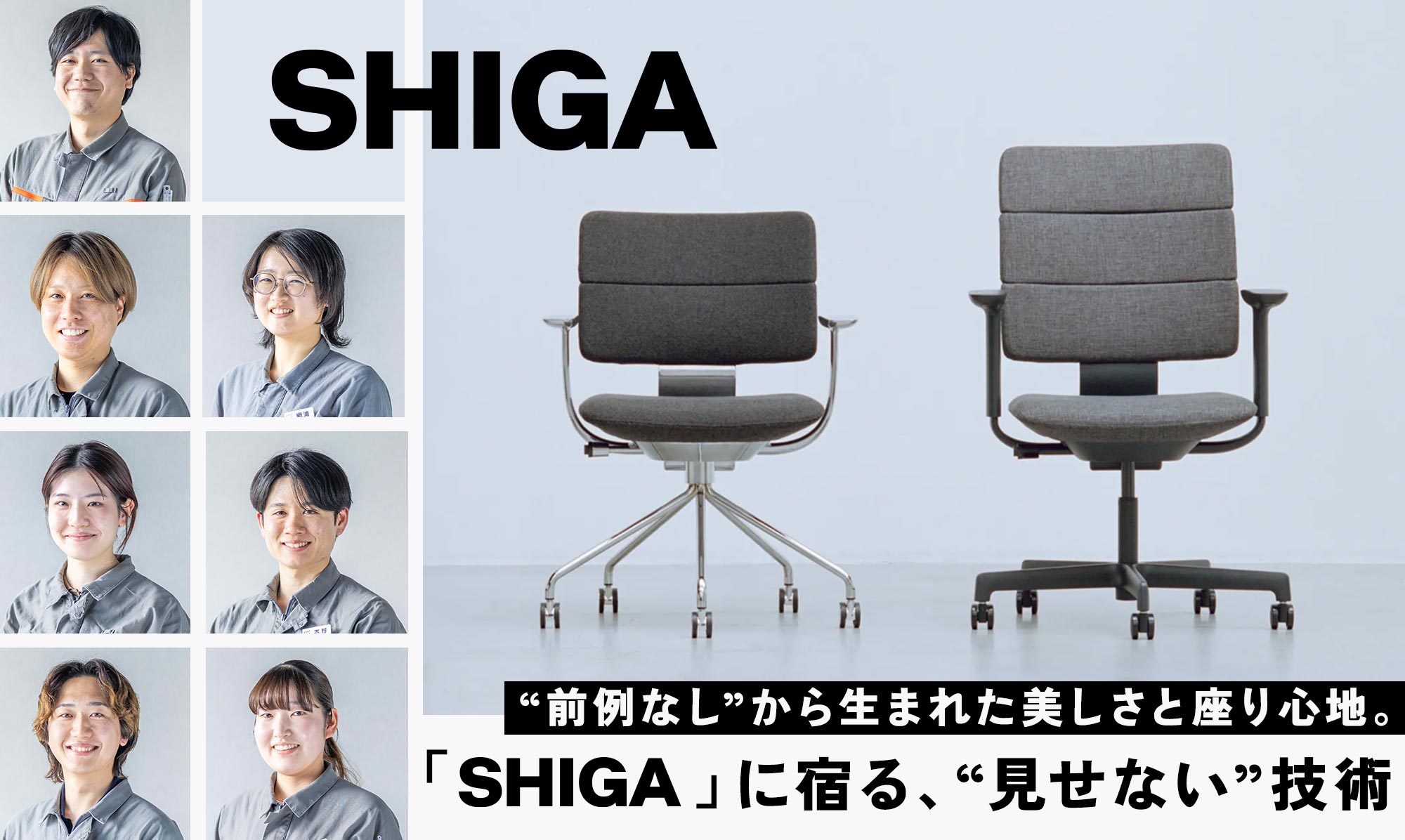
May 8, 2026
Beauty and comfort born from "unprecedented" design. The hidden technology behind "SHIGA" [Behind the scenes of SHIGA development - Part 1]
-
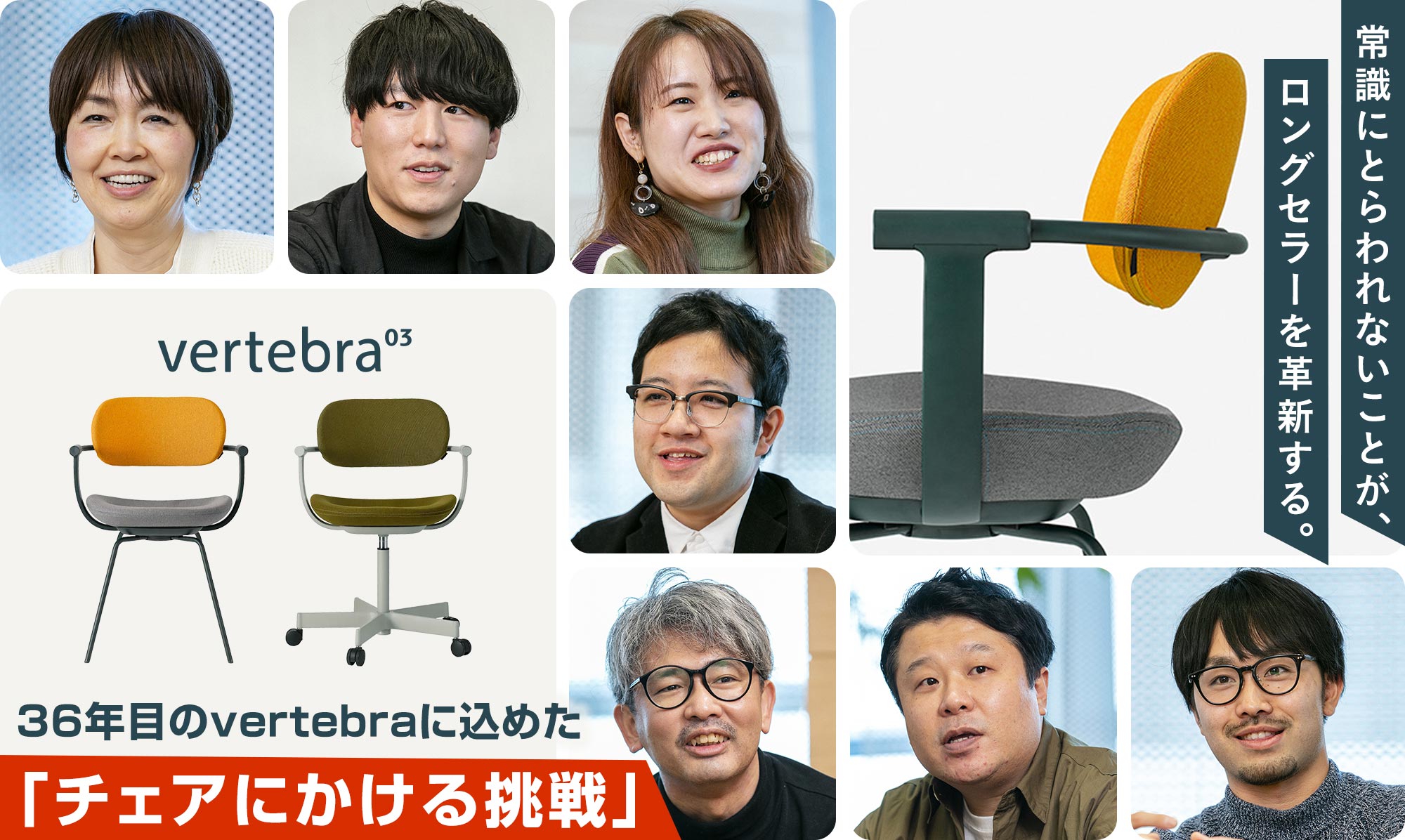
November 26, 2025
Not being bound by conventional wisdom revolutionizes a long-selling product. The "challenge to chairs" that embodies the vertebra in its 36th year
-
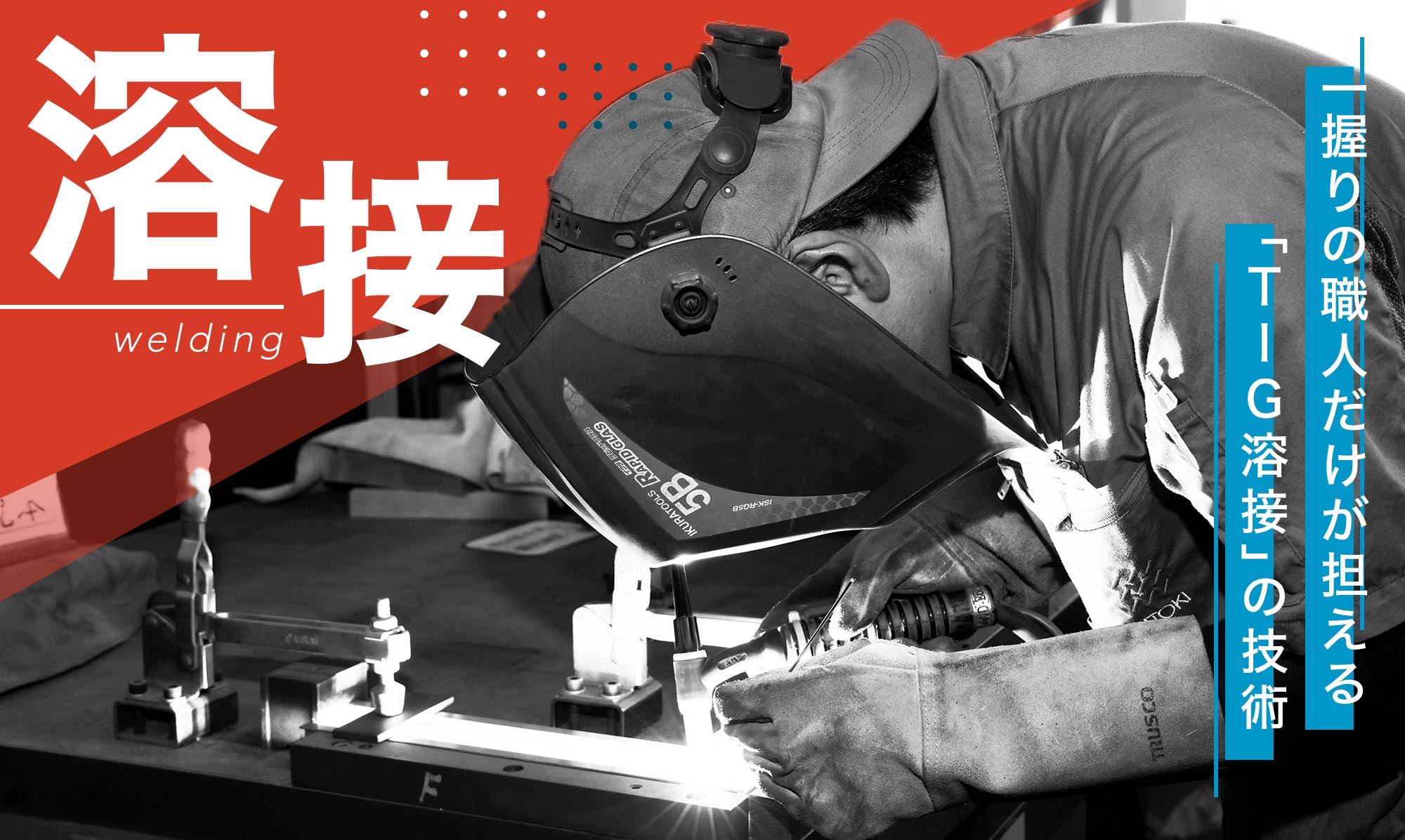
September 29, 2025
Behind the scenes of the skilled techniques that support quality. Manufacturing professionals who are responsible for the advanced TIG welding that cannot fail.