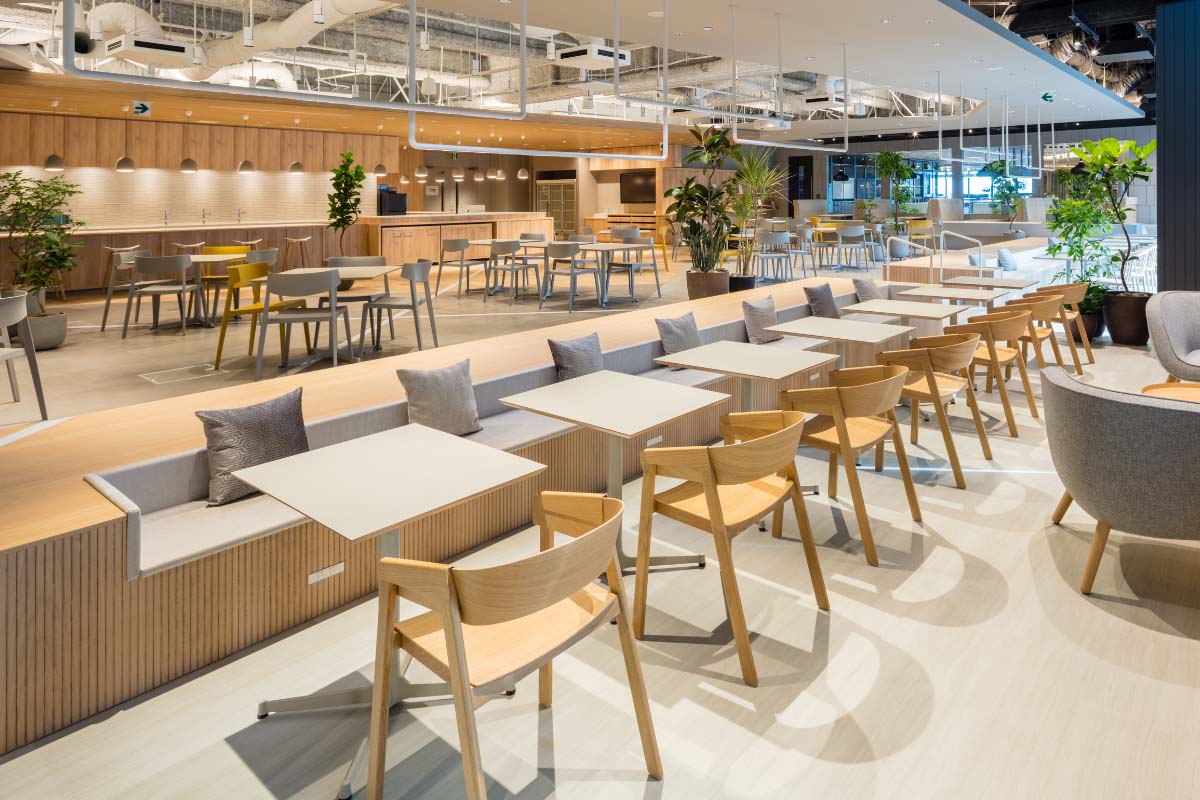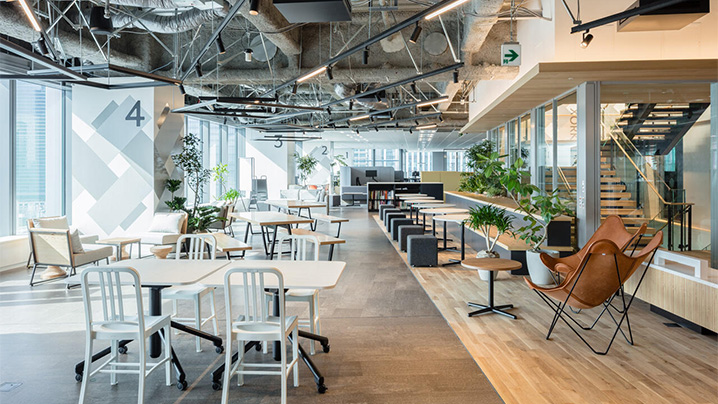




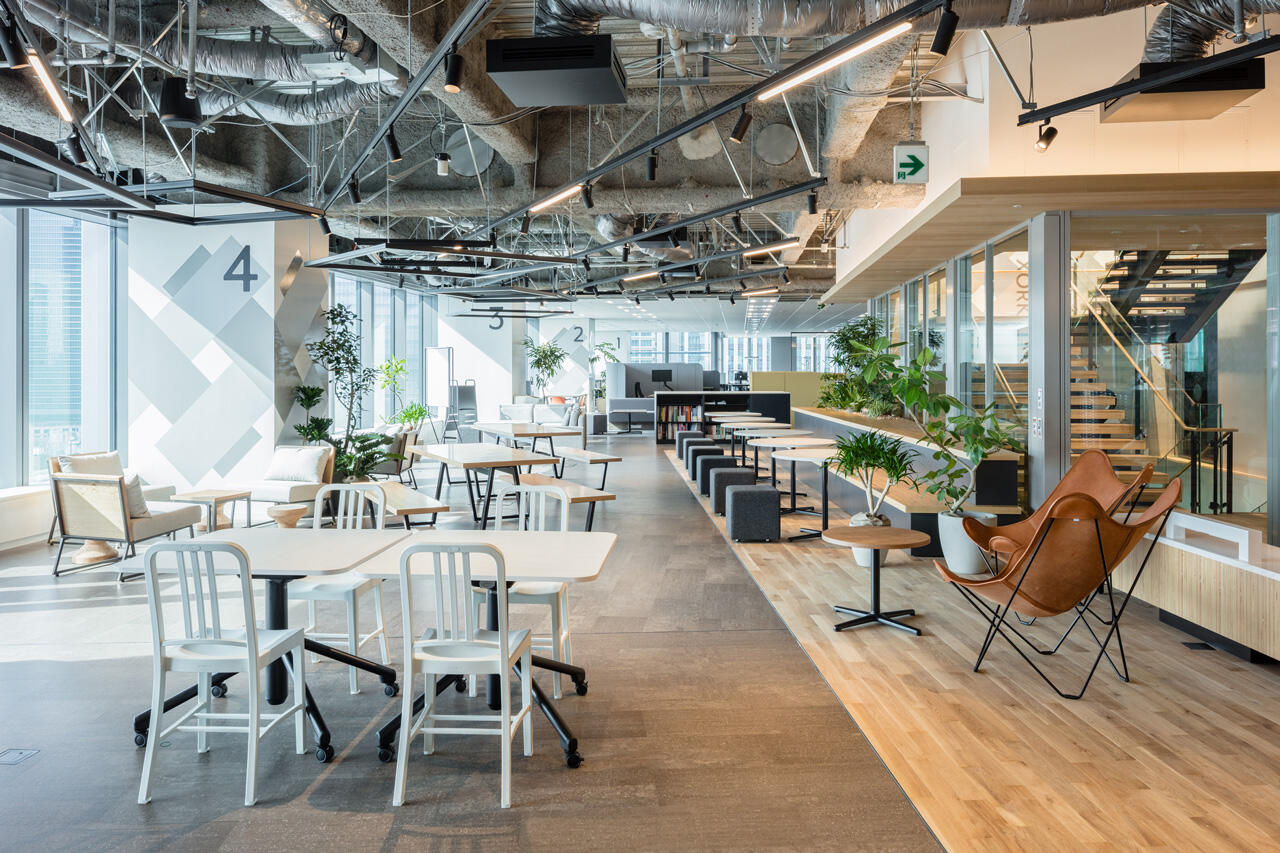
2018年11月、ITOKI TOKYO XORK(現ITOKI DESIGN HOUSE TOKYO)は、WELL Building Standard™水準の空間品質を持ち、またActivity Based Workingを実践できる日本の最先端オフィスとして産声をあげました。約850名の社員がこの場で新たなワークスタイルに挑戦する姿をお客様に見ていただくことを使命とし、この3年間で7,000社・25,000名以上の方に見学にお越しいただきました。ご見学いただいた方の反応はさまざまで、「こんな働き方があるのか!」と驚かれる方、運用面やマネジメントの難しさを懸念される方などもいらっしゃいました。
For visitors, our employees will talk openly about what results we have achieved with this work style and what challenges remain, sharing their own experiences. However, in order to give a wider audience, we would like to use this column to talk about our progress and achievements over the past three years, as well as the challenges we face going forward.
Perception of productivity improves year by year
まずオフィスで自身が生産性高く働けていると実感しているワーカーの割合(以下、生産性実感)については、2021年調査では、ITOKI TOKYO XORK(現ITOKI DESIGN HOUSE TOKYO) 移転前の32.4%から77.0%と、大幅に向上しました。ここで着目していただきたいのが、移転後も年を追うごとに向上しつづけているという点です。オフィス移転を行うと、その直後はオフィスが綺麗・快適になった高揚感から各種指標が大きく改善するものの、その後は数値が伸び悩んだり、低下してしまったりするということが起こりがちです。そういった傾向とは異なり、今なお改善し続けている要因として、私たちは「ABWは習熟を必要とする働き方である」ことがその理由だと考えています。
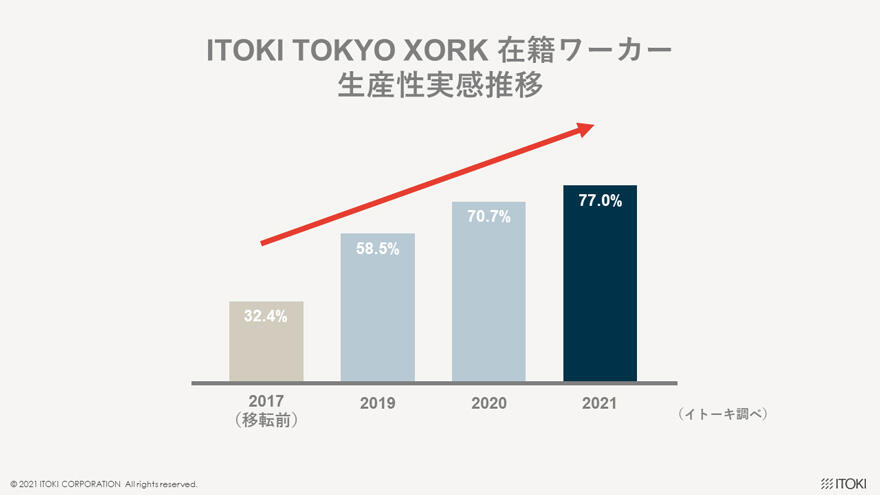
There are many things that workers and managers need to know when practicing ABW. For example, for workers, this may include the process of "breaking down your work and actions into activities*1," the habit of working in a place that suits your activities and its efficiency, etiquette for not interfering with the activities of others, advance scheduling to work efficiently, and how to work paperlessly. For managers, this may include methods to remotely grasp the situation of subordinates and management based on trust. The necessity of these things is explained in advance through e-learning and information sessions, but it is only by actually practicing them that one can understand the method, necessity, and effects. At first, everyone feels confused by the new way of working, and not everyone can do it well. There are individual differences in the speed of adaptation. Patience without expecting immediate results is necessary for the success of ABW.
*1 For details about activities, please see here.
Quickly responded to the pandemic's recommendation to work from home
Another major achievement is that we were able to smoothly respond to the recommendation to work from home following the COVID-19 pandemic that began in 2020. We notified our employees of the recommendation to work from home on February 27, 2020. We were able to transition to a system centered on working from home early on, more than a month before the first state of emergency was declared (April 9 of the same year). Since then, the frequency of office use has changed somewhat due to the infection situation, but we have continued to operate while limiting the number of people in the office.
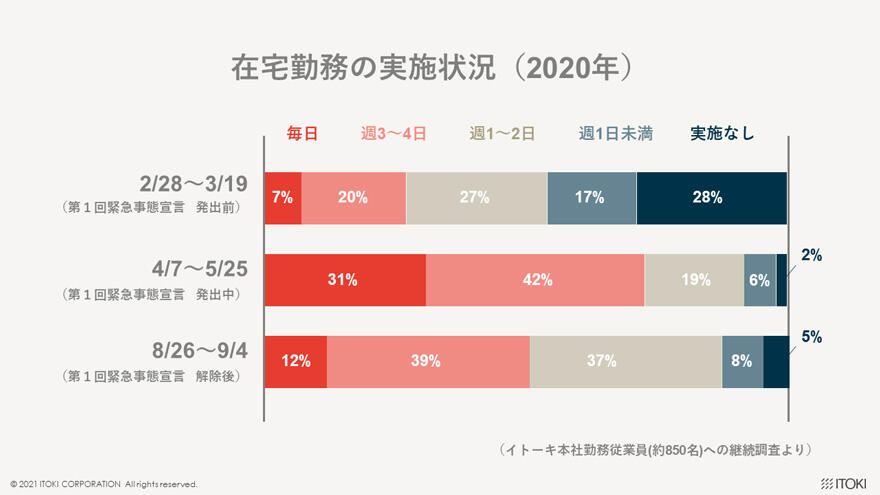
2020年にITOKI TOKYO XORK(現ITOKI DESIGN HOUSE TOKYO) のワーカーを対象に実施した調査でも、「ABWをオフィスで実践していたことで、在宅勤務の移行がスムーズにできた」「特に不便を感じなかった」という声が多く聞かれました。その要因としては「モバイル端末やペーパーレスに仕事ができる環境が既に整備されていた」、また前述したように「分散して働くチームのコミュニケーションやマネジメントに既に慣れていた」などが挙げられます。オフィス内でABWを実践するのと在宅勤務を行うのでは、単に働く場所が異なるだけ。業務を進めていくのに必要なIT環境やマインドに大きな差はなかったのです。
Even after this pandemic subsides, BCP will always be a corporate issue in Japan, where natural disasters are common. If you have a system in place that allows you to work anywhere, you won't have to go to work exhausted on a typhoon day or wait for a train that doesn't arrive for hours because of an accident.
Employee collaboration is only half-way there
On the other hand, when it comes to collaboration between employees, the percentage of workers who answered that "it's easy to share knowledge and ideas" is 63.4%, which is a big improvement from before the relocation, but the numbers are still sluggish. Regarding this result, we speculate that although the collaboration that was previously necessary has become much easier, the amount of collaboration itself has not increased.
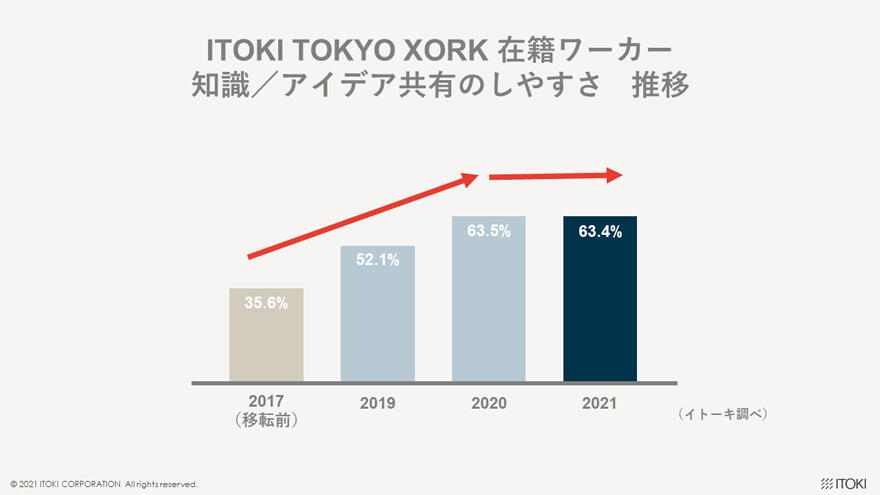
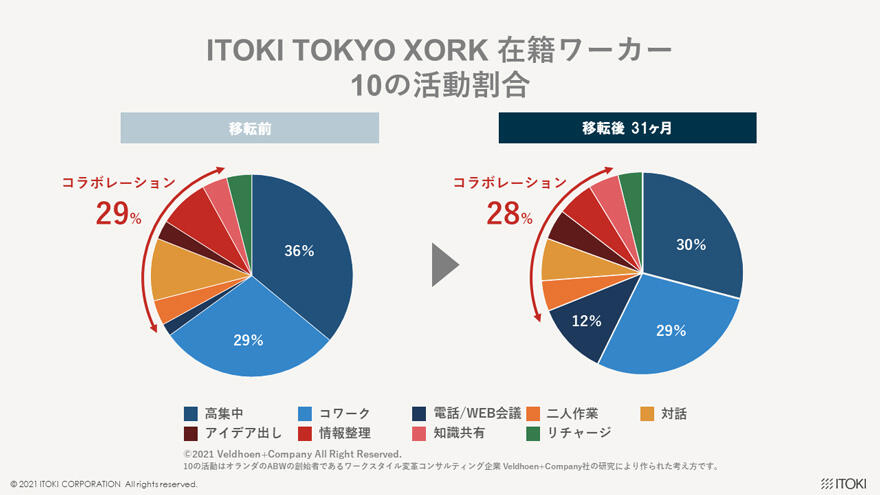
There are two reasons for this. The first is that there has been no significant change in the percentage of 10 activities *1 since before the relocation, and the second is that there are still many workers who do not feel that collaboration-related activities are necessary.
Below is a graph showing the percentage of the 10 activities before and after the relocation in 2021. Looking at this, we can see that the percentage of collaborative activities ("Duo," "Dialogue," "Create," "Coordinate ," and "Inform") has slightly decreased. Of course, it is possible that work remotely has replaced face-to-face conversations and collaboration with phone calls, but we believe it is safe to say that "collaboration has not increased significantly."
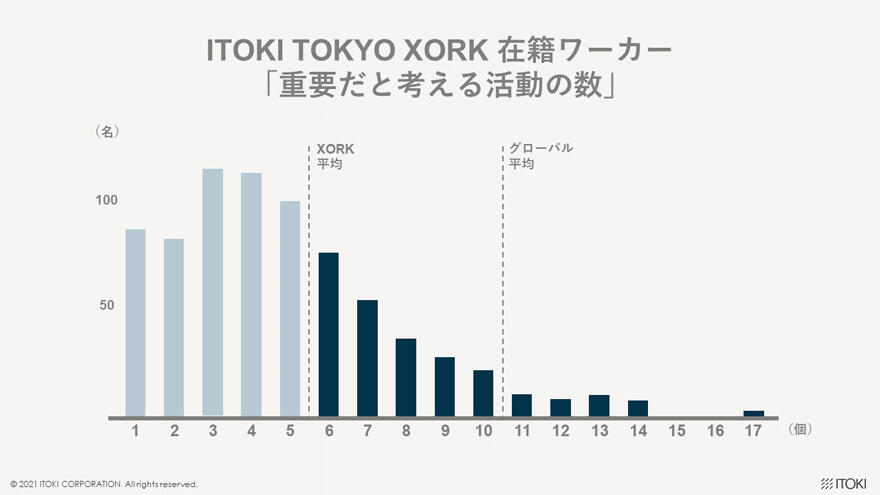
Regarding the second point, "workers do not feel that collaboration activities are necessary," we would like to explain it. In our regular questionnaire surveys to measure effectiveness, we focus on "how many activities workers consider important for their work." Of the 21 types of activities in the Leesman Survey that we use, the global average is 10.2, while the average for XORK workers is 4.9 before the relocation and 5.5 after the relocation, both of which are low levels.
The top five activities that workers most frequently choose as necessary are "personal focused work at a desk," "personal regular work," "scheduled meetings," "phone calls," and "collaborative creative work." This shows that workers generally consider personal work, phone calls, and regular meetings to be important. In other words, it is likely that they do not need collaboration in the first place, or do not recognize that collaboration leads to better results. This is an issue that also relates to the assignment of work to workers, and we believe it is a problem that cannot be solved overnight.
Organizational solidarity requires further examination
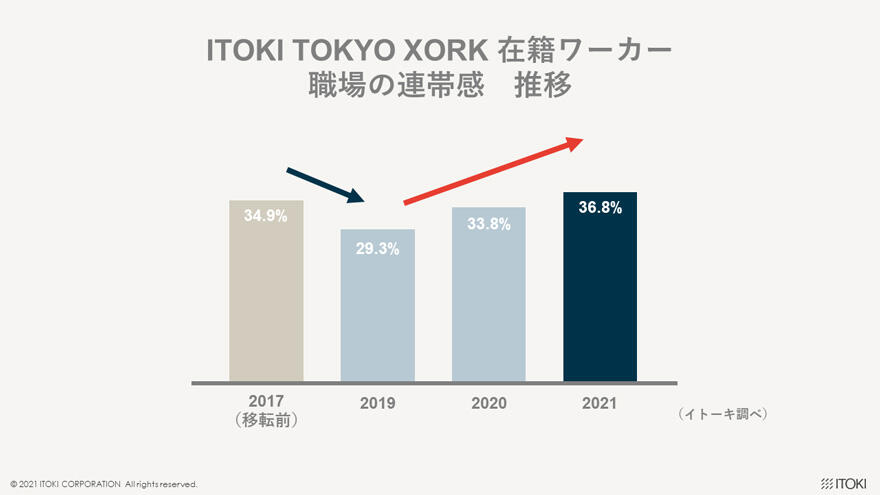
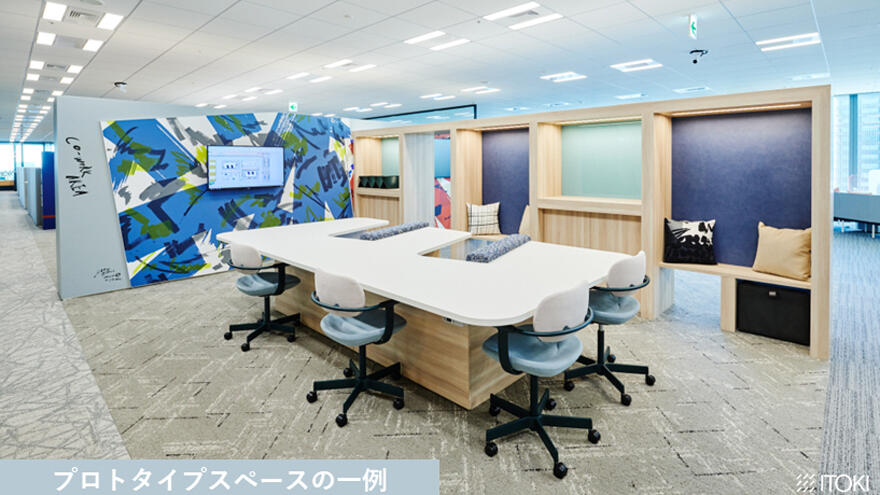
Regarding the sense of solidarity within the organization, the number dropped once after the relocation, but in 2021 it exceeded the level before the relocation, but it still remains at a low level. From the beginning, we have been aware of this issue, and we positioned the office as a "place to foster solidarity," and created a prototype space where teams can gather and work comfortably. However, as the pandemic has continued for longer than expected, there have been long periods of situations where "even when you come to the office, there are hardly any colleagues there," and we cannot deny the possibility that a negative force is at work on the sense of solidarity. We believe that this is an area where we will need to reconsider and verify measures once the infection has subsided.
How are workers feeling now in the post-COVID era?
今までお伝えしてきた通り、ITOKI TOKYO XORK(現ITOKI DESIGN HOUSE TOKYO) でのABWの実践によって大きく成果が得られた領域もあれば、思ったような成果が出ず伸び悩んでいる領域もございます。それを踏まえてアフターコロナに向けて現在働いているワーカーがどのような意識を持っているかを調査し、下記のポイントが浮かび上がりました。
- Demand for flexible work styles even after COVID-19
- More than 60% of workers feel that their quality of life has improved since their previous working style
- Practicing flexible working practices motivates employees to continue working for the company
- Intention to do activities at the office/home varies depending on the activity
- While they prefer face-to-face communication, they do not want a significant increase in people coming into the office
こちらの詳細については後編で詳しくご紹介いたします。ITOKI TOKYO XORK(現ITOKI DESIGN HOUSE TOKYO) では万全の感染防止対策を行い、オフィス見学を受け付けております。ぜひご検討くださいませ。