


November 25, 2026
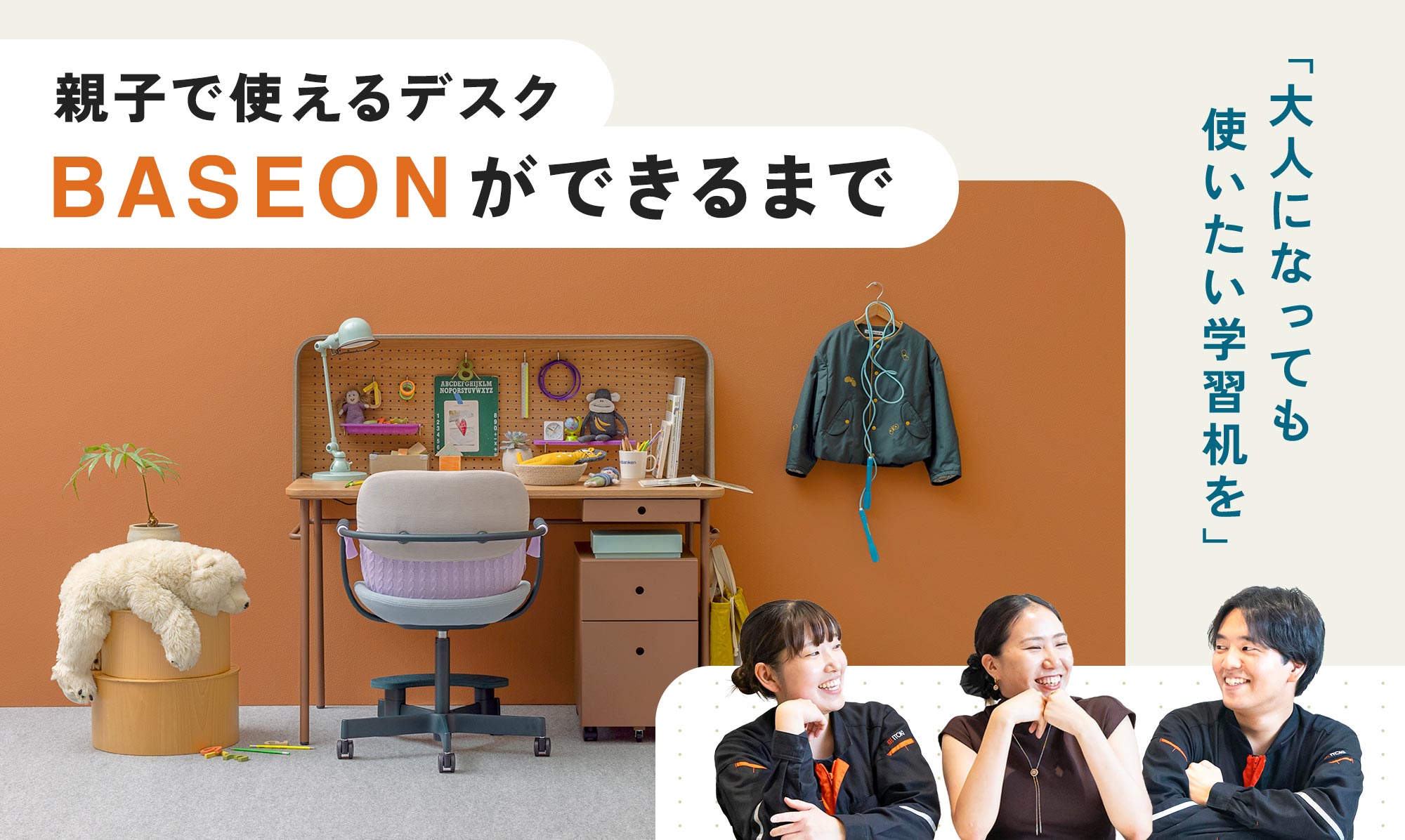
A study desk that children will want to take with them when they become independent. The story behind "BASEON," a desk that can be used by both parents and children.


With children's learning styles changing, is a study desk really necessary anymore?
With the spread of learning using tablets and computers, study locations have diversified, including living rooms. Meanwhile, a survey by Itoki found that children who use study desks tend to spend more time studying than those who use the living room table.
Taking these changes in learning styles and lifestyles into account, Itoki has newly developed "BASEON," a study desk that can be shared by parents and children. Product designer Fumie Shibata and Itoki's planning and design team aimed to create "a new form of study desk that suits the modern era."
Re-examining the conventional image of a study desk, what thoughts and ingenuity went into creating "BASEON"? We spoke to the three people involved in its development to hear the story behind it.

Product Development Team, Product Section, Marketing Department, Web Business Division ITOKI CORPORATION
Yume Katsukawa
Joined the company in 2023. Responsible for planning, development, and design of educational products and web-based products.

ITOKI CORPORATION Production Headquarters, 1st Development and Design Division, 2nd Development and Design Department, 1st Development and Design Office, 1st Team
Ryu Bomura
Joined the company in 2023. Responsible for development and design, primarily focusing on cabinets.

ITOKI CORPORATION Production Headquarters, 1st Development and Design Division, 1st Development and Design Department, Chair 2nd Development and Design Office, 1st Team
Yuriko Nozawa
Joined the company in 2023. Responsible for chair development and design.
- The departments, positions, and systems mentioned in the text are based on information available at the time of the interview.
Contents
- From "children's study desks" to "family desks": A new form of learning.
- What is "BASEON," the new study desk that can be used by both parents and children?
- How did they translate the idea of "sharing as a family" into a tangible form?
- Tested with a total of 80 children. Trial and error to realize the ideal design.
- A study desk where children's and adults' time intersects, allowing you to watch them grow over time.
- Product designer Fumie Shibata talks about "BASEON"
From "children's study desks" to "family desks": A new form of learning.
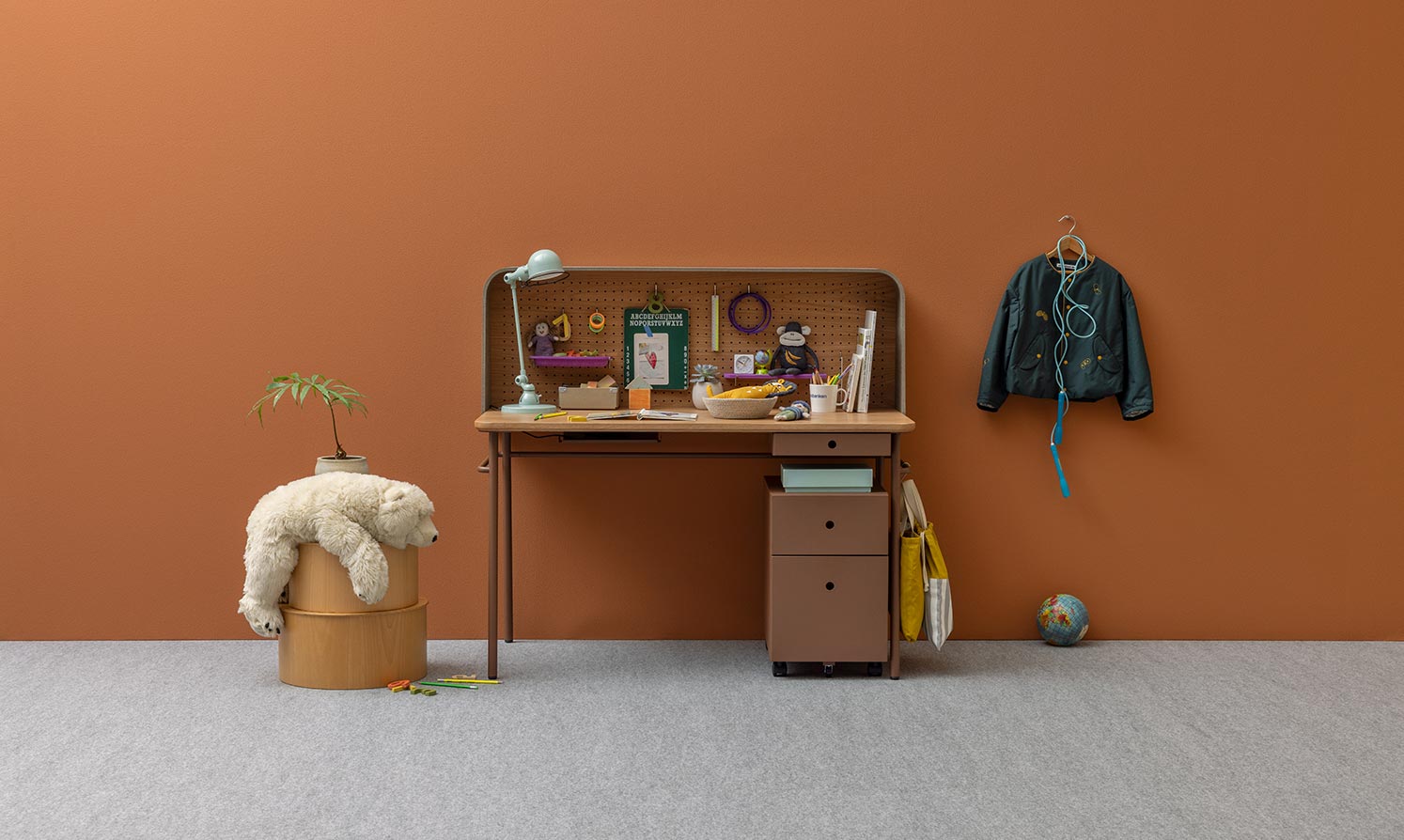
"BASEON" and "vertebra03 kids" are learning furniture sets designed for long-term use by parents and children, adapting to children's growth and changing lifestyles.
"BASEON" is a desk that can be customized to suit different learning styles and uses by freely combining options such as wagons, storage, and boards. Its design is characterized by its versatility, making it suitable not only for children's studies but also for adults' work and hobbies.
On the other hand, "vertebra03 kids" is a dedicated option for the adult work chair "vertebra03" that adds a child-sized cushion and footrest. It can be adjusted as the child grows, and once the child outgrows it, the parts can be removed and the chair can continue to be used as an adult chair.
What is "BASEON," the new study desk that can be used by both parents and children?
Many people associate study desks with Itoki. This new "BASEON" model is said to be a little different from conventional study desks. What kind of product is it?
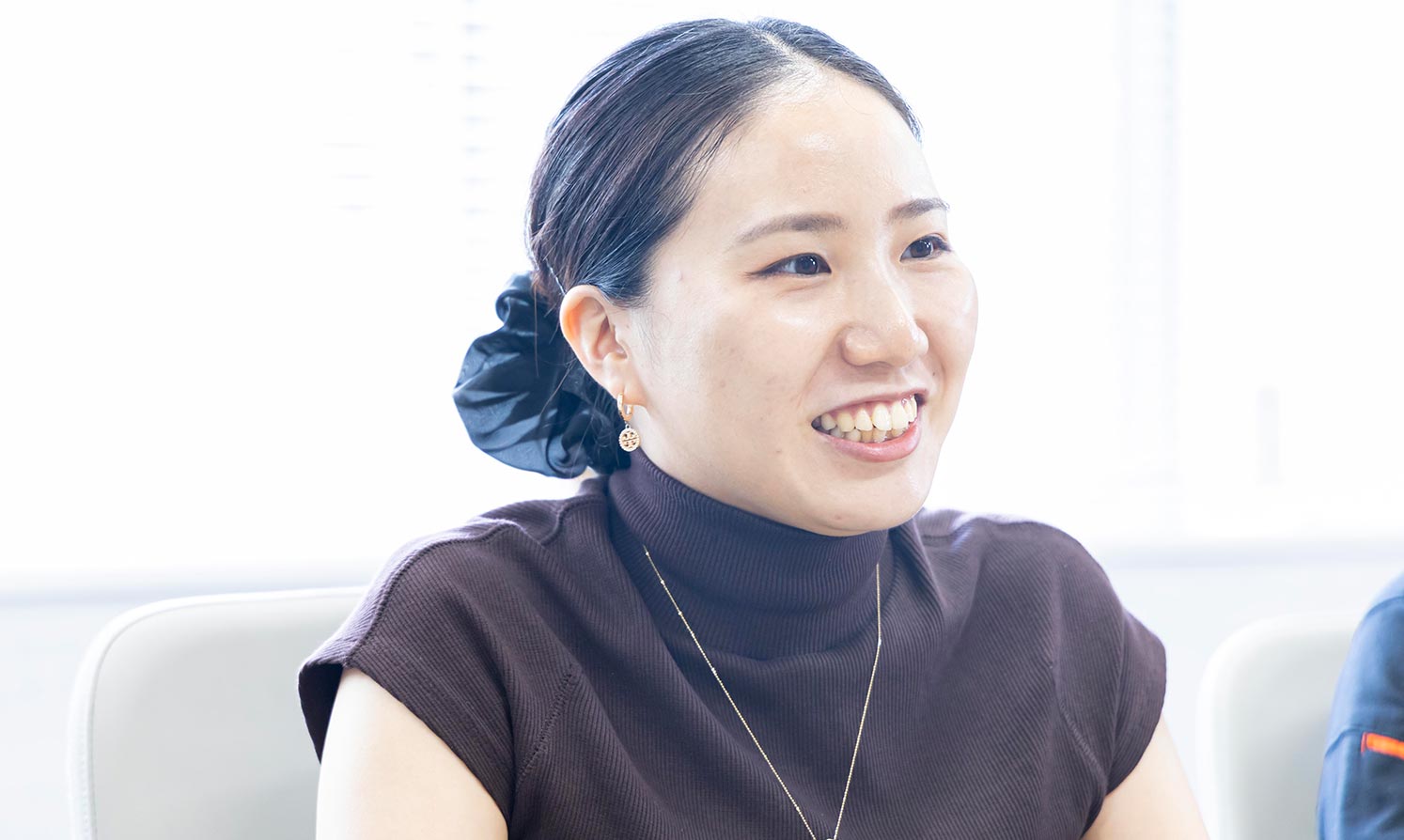
Katsukawa (Planning): "BASEON" is a shared study desk for parents and children, where adults can work work remotely during the day and children can study at night. By attaching optional parts such as a backrest and footrest to the "vertebra03" work chair, which transcends the boundaries of WORK-Style and "living," we have achieved a comfortable user experience for both adults and children. One of its features is that it can be used for a long time, even into adulthood, by adjusting the optional parts as the child grows.
—Why did you decide to develop a study desk that parents and children can share?
Katsukawa (Planning): In a survey on children's home learning environments conducted by Itoki on February 9, 2025, coinciding with "Study Desk Day," we found that 53.2% of children who use study desks study for more than one hour a day, compared to only 28.1% of children who use the living room table—a difference of about double. Children who study at study desks tend to study for longer periods, which reinforced our understanding of the importance of creating an environment where children can concentrate on their studies.
On the other hand, the way children learn is changing. It has become commonplace to use tablets and computers in addition to paper textbooks. Yet, traditional study desks often have many drawers and shelves for storing books and printouts, are made of wood, are heavy and bulky, and have designs that can make a room feel cramped.
I also had concerns about how easily the use of a study desk became fixed. Ideally, it should be a place where you can draw, read books, or use a computer, but it ends up being limited to just a place to study. It's well-made and built to last a lifetime, but it can't be called a lifelong item. The traditional "study desk" becomes "that desk from back then" the moment you become an adult.
—So you thought about rethinking not only the way of learning, but also the very nature of the study desk itself?
Katsukawa (Planning): That's right. Itoki was the first company in Japan to release steel desks for general households in 1962. Because we were the company that helped popularize study desks in Japanese homes, we felt it was important to reconsider what a study desk should be like in today's era.
Furthermore, during our research for development, we discovered that some parents work in their children's rooms. We found that about half of people who work from home are doing work remotely from their children's rooms.
While working from home has become widespread, not all households have a dedicated study room. This led to the idea of a shared study desk that can be comfortably used by both children and adults.
How did they translate the idea of "sharing as a family" into a tangible form?
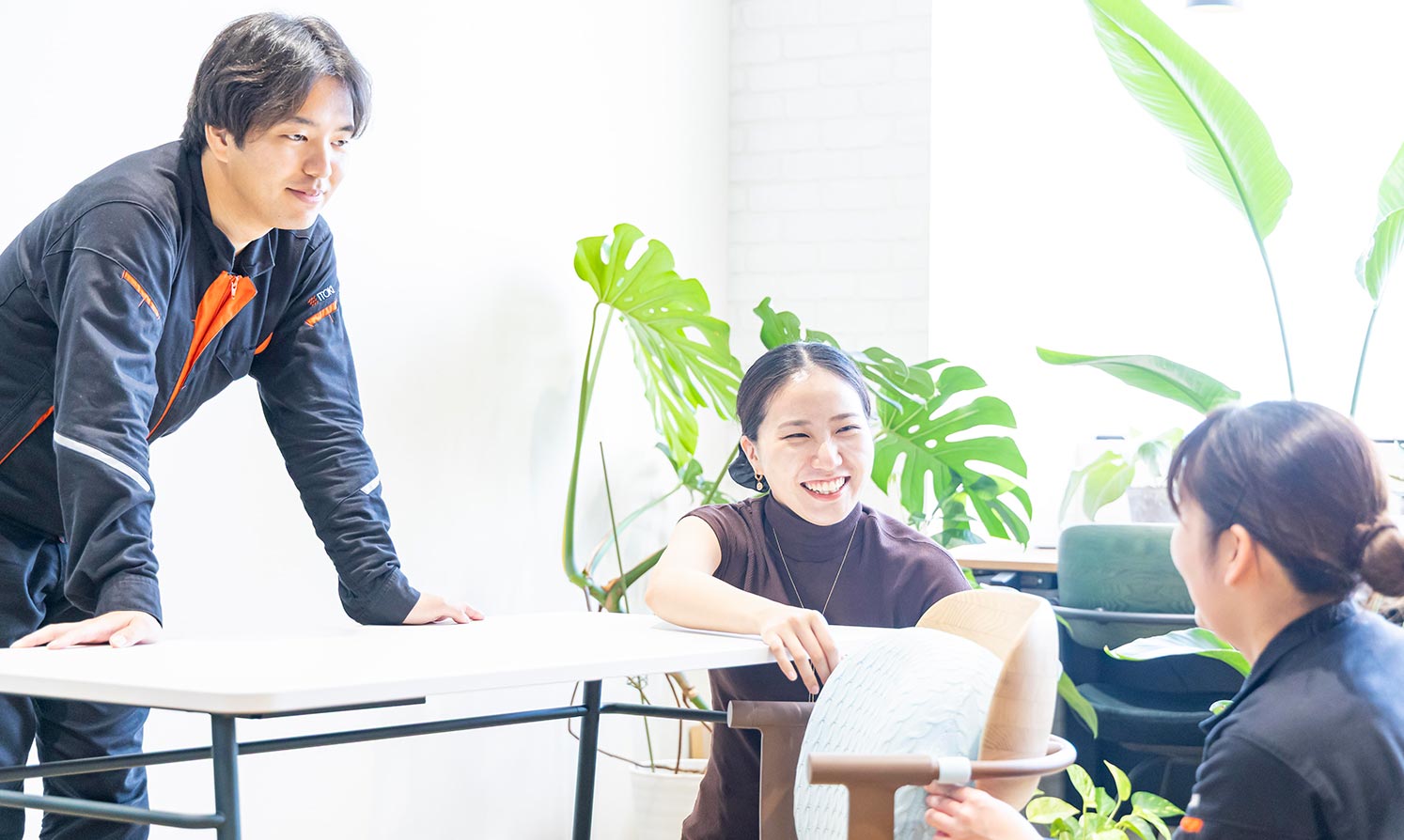
—What aspects did you prioritize when turning the concept of "sharing between parents and children" into an actual product?
Katsukawa (Planning): First and foremost, we aimed to create furniture that combined design and durability, something that people would consider a "lifelong investment." We wanted to create furniture that children would want to take with them when they eventually become independent.
Furthermore, because it's something that both children and adults will use, we wanted to prioritize safety, ease of use, and design.
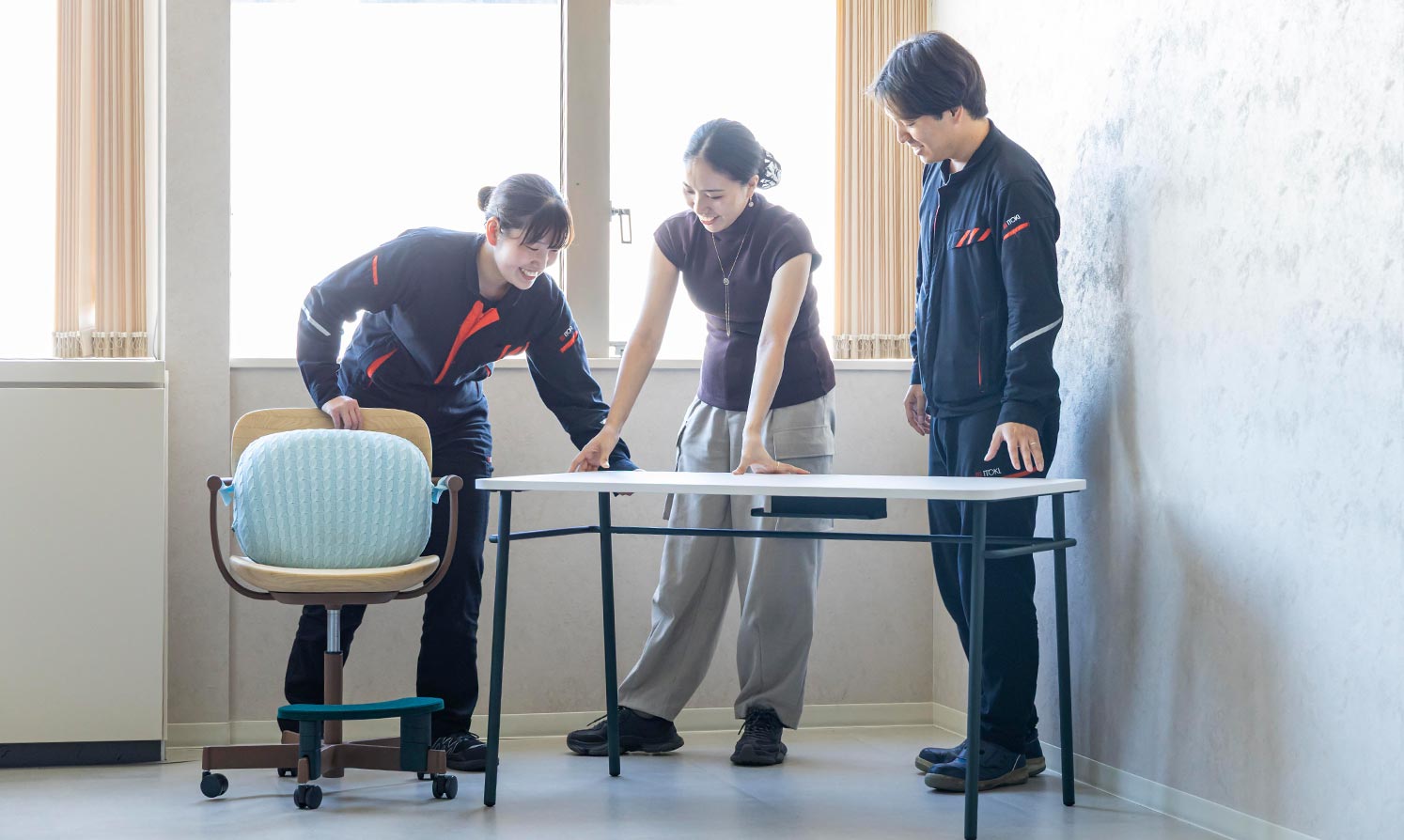
—Children and adults have different physiques, so how did you plan to balance that?
Katsukawa (Planner): Actually, initially we envisioned using a combination of a main table, a sub-table, adult chairs, and children's stools.
Using desks and chairs that don't fit properly can be tiring, but incorporating too many adjustment features can compromise the design. I thought the only way to satisfy safety, ease of use, and design was to separate furniture for adults and children.
At that time, product designer Fumie Shibata suggested, "We should be able to manage with just one desk and chair. Let's give it a try!"
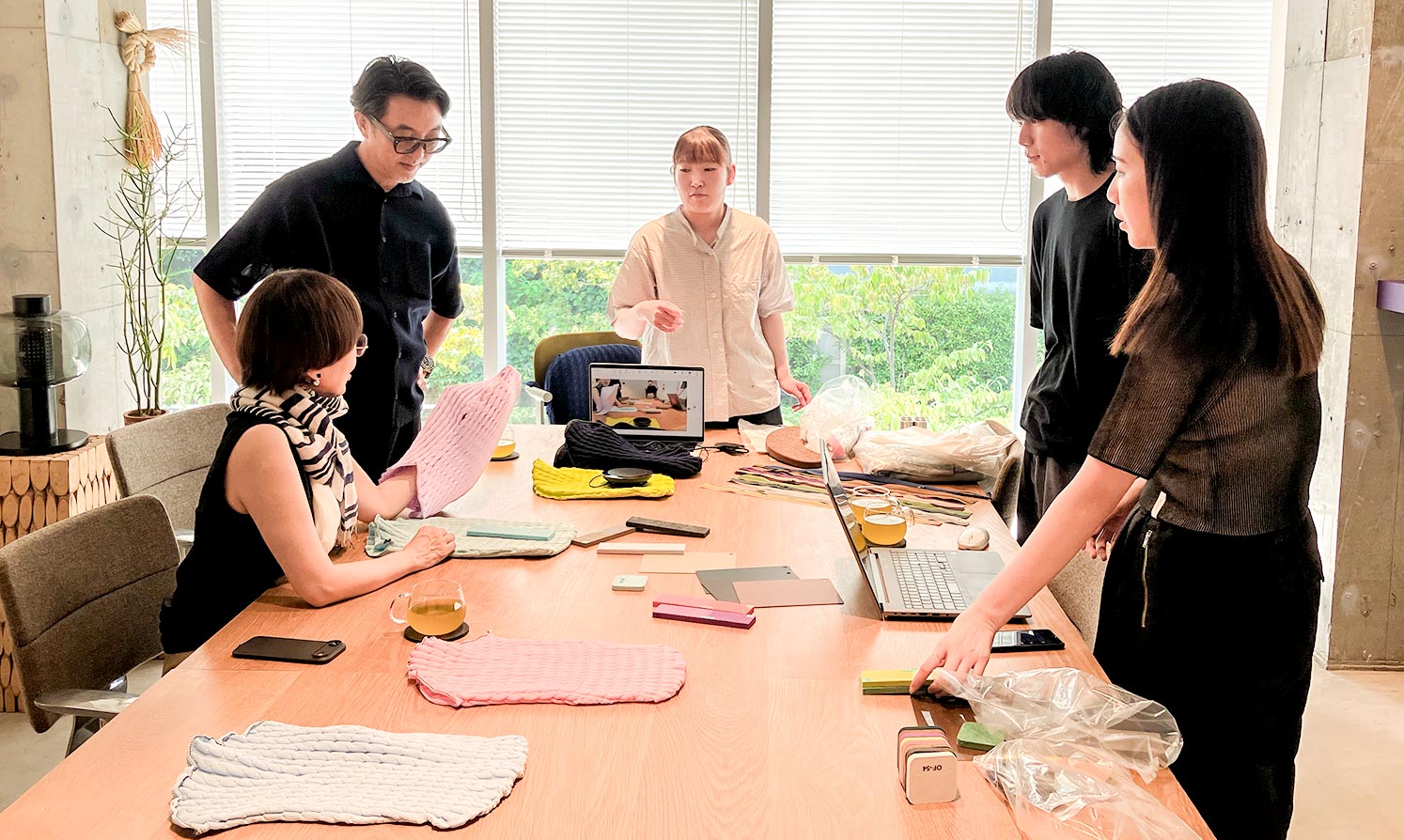
The key to this was the optional "backrest" and "footrest" parts that attach to the chair. We realized that by using an adult-sized work chair as a base and making it adjustable to suit a child's physique, we could create a chair that is easy for both children and adults to use, without compromising on design.
Until then, I thought we had no choice but to buy separate furniture, so Ms. Shibata's suggestion suddenly opened up a whole new world of possibilities. I thought, "I'd never thought of that!" and it felt like I could see the path we should take from here.
Tested with a total of 80 children. Trial and error to realize the ideal design.
—What challenges did you face in turning Mr. Shibata's ideas into actual products?
Katsukawa (Planning): The biggest challenge was to make the chairs usable by children while retaining the design aesthetics of the existing chairs.
The "vertebra03," a flagship work chair from Itoki, was created with the concept of "working as you live," making it a chair that seamlessly integrates into your daily life. Since there were many requests for it to be used as a study chair, we thought it would be a perfect fit for a new study desk.
Nozawa (Chair Designer): We had already decided to add a backrest and footrest, so the important thing was how to make it fit children while utilizing the comfort and usability of the "vertebra03." The "vertebra03" is designed for adults, so when a child sits in it, there is a large gap between the backrest and the seat, and their feet dangle without touching the floor. Poor posture leads to fatigue and decreased concentration, which is the same for both children and adults.
First, to measure children's physical size data from scratch, we created a measuring device and verified what values would allow them to sit correctly. With the cooperation of our employees' children, we ultimately had a total of 80 children try it out.
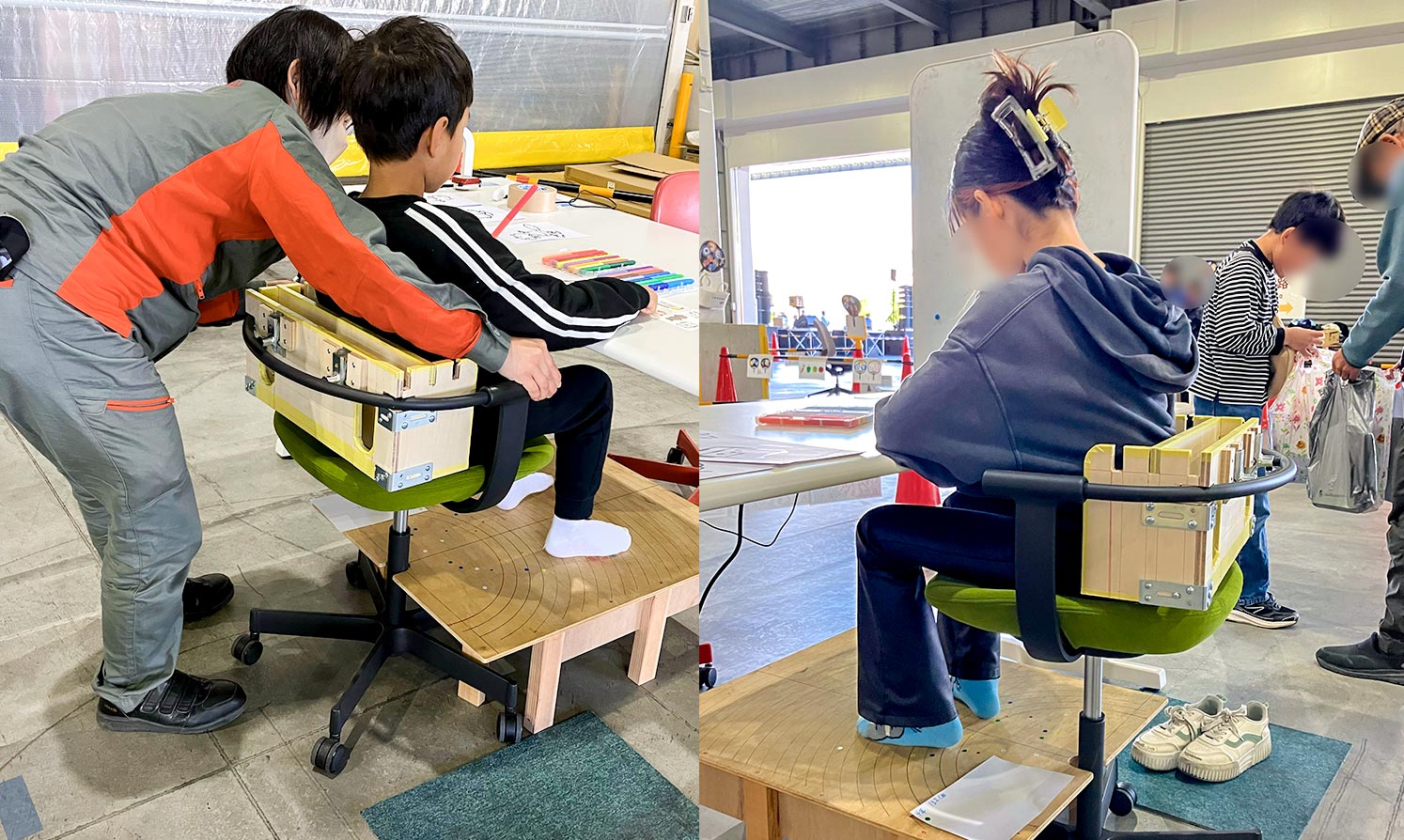
This image shows the process of collecting body size data through hands-on activities at the Shiga factory's Family Day event, in order to develop chairs tailored to children's body sizes.
Then we realized that even with the "backrest" and "footrest" features, it would be difficult to cover a wide range of ages, from first grade to upper elementary school. So we came up with the idea of adding an adjustment function so that the "backrest" could be adjusted in two stages and the "footrest" in three stages to accommodate the child's growth, but this proved to be more difficult than we anticipated...
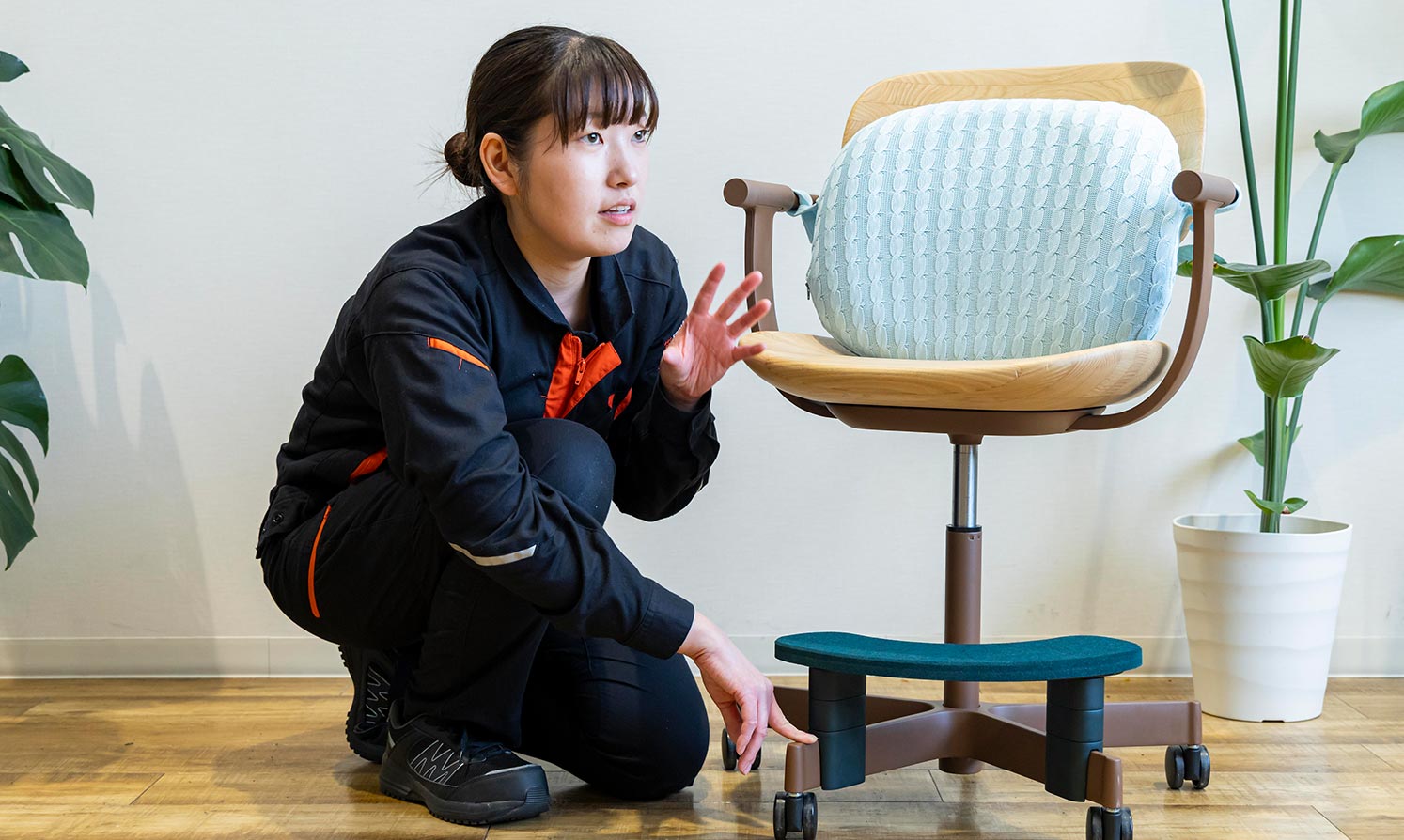
—What aspects did you find challenging?
Nozawa (Chair Designer): The biggest challenge was the "backrest adjustment function." We put two layers of cushioning inside the backrest cover, and designed it so that one layer could be removed to match the wearer's body size. However, removing a cushion created a difference in thickness, which caused wrinkles in the cover.
That would compromise the beautiful design of "vertebra03." We had many discussions between the design team, who didn't want to compromise on the design, and the engineering team, who were particular about seating comfort. It was difficult to convey with words and sketches, so we even made actual prototypes to show them. We absolutely did not want to give up on either functionality or the beauty of the design.
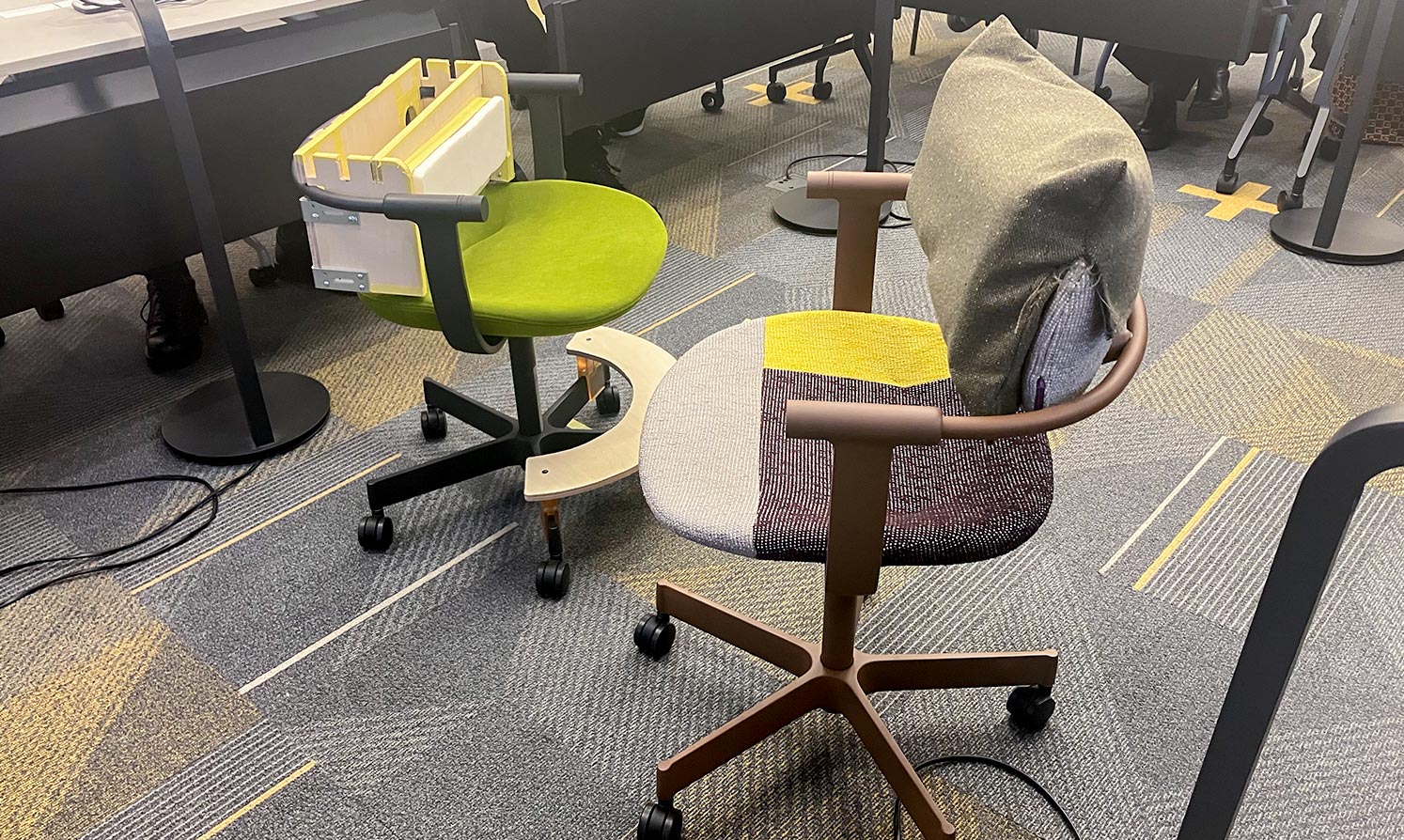
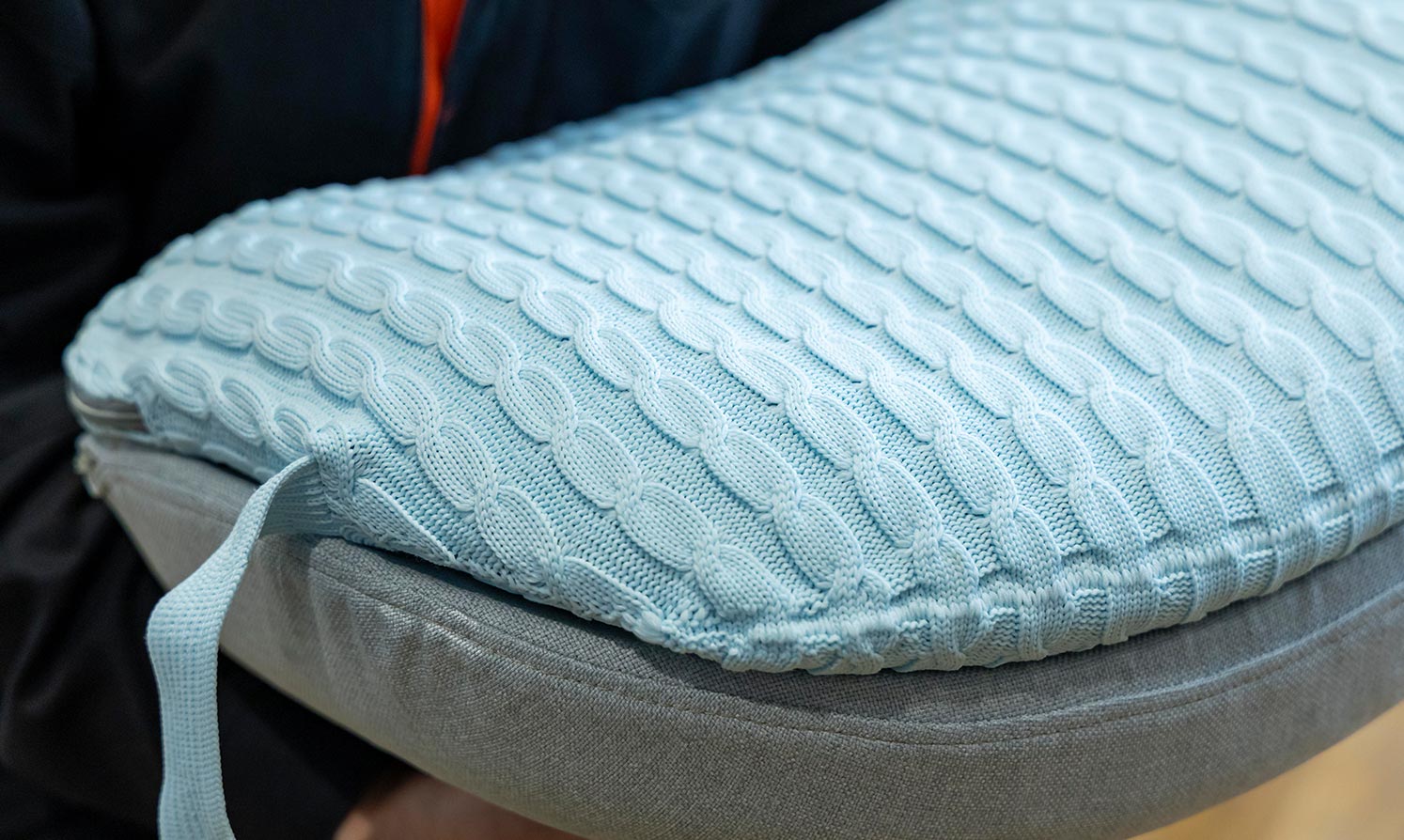
In the prototype stage, removing the cushion resulted in wrinkles (left), but the adoption of whole garment technology resulted in a beautiful appearance (right).
Amidst all this, we discovered "WHOLEGARMENT®," a stretchy knit material that is knitted three-dimensionally without seams. It was a technology that Itoki had been researching in advance, and we thought we could take advantage of the soft expression unique to WHOLEGARMENT that woven fabrics (cloth) cannot offer. By adopting this for the backrest cover, we were able to create a design that does not affect the appearance even when the cushion inside is removed.
- "WHOLEGARMENT®" is a registered trademark of Shima Seiki Mfg. Ltd.
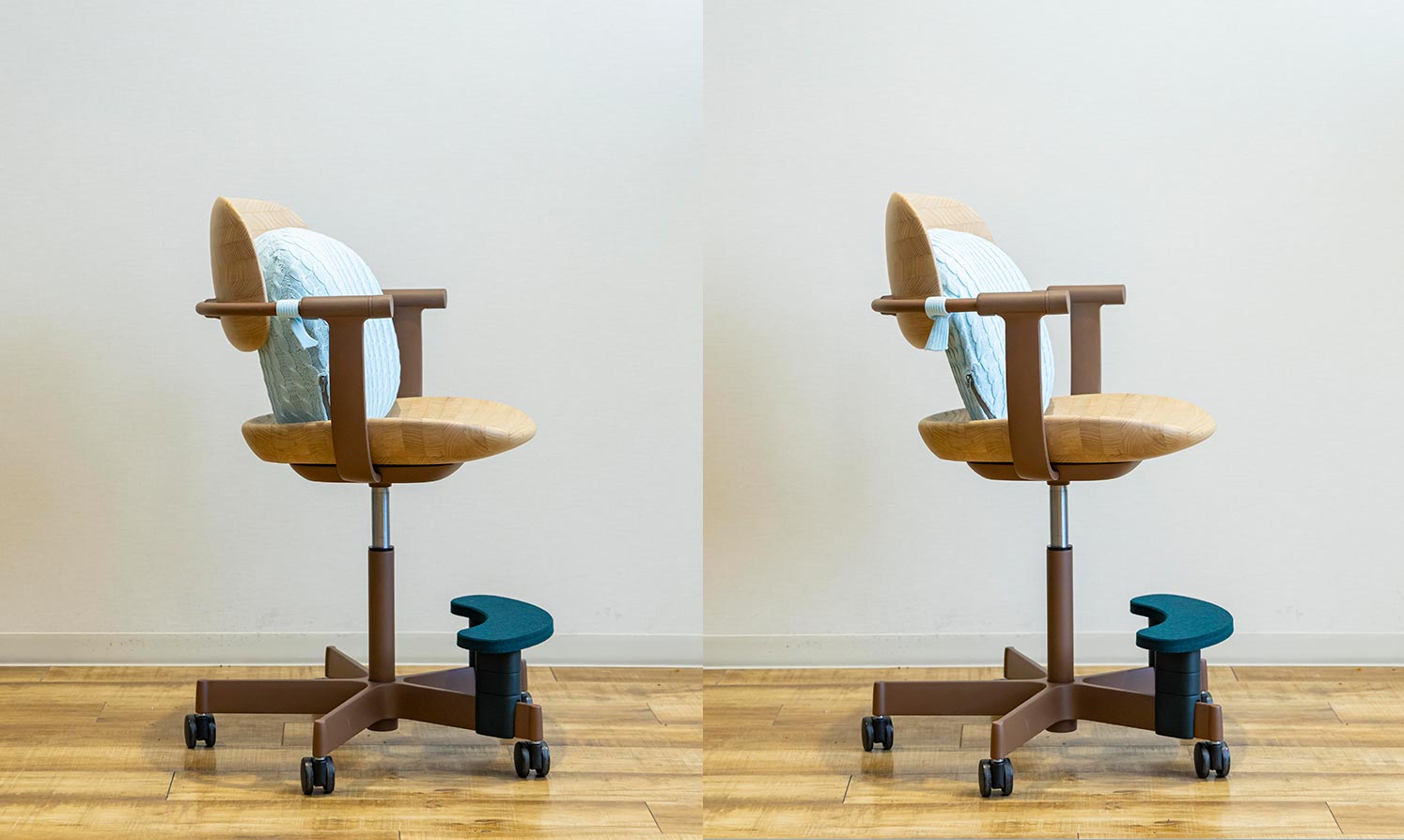
The finished backrest. The design allows for a beautiful appearance even when the number of cushions is reduced from two (left) to one (right).
—On the other hand, what were some of the things you focused on when designing the desk?
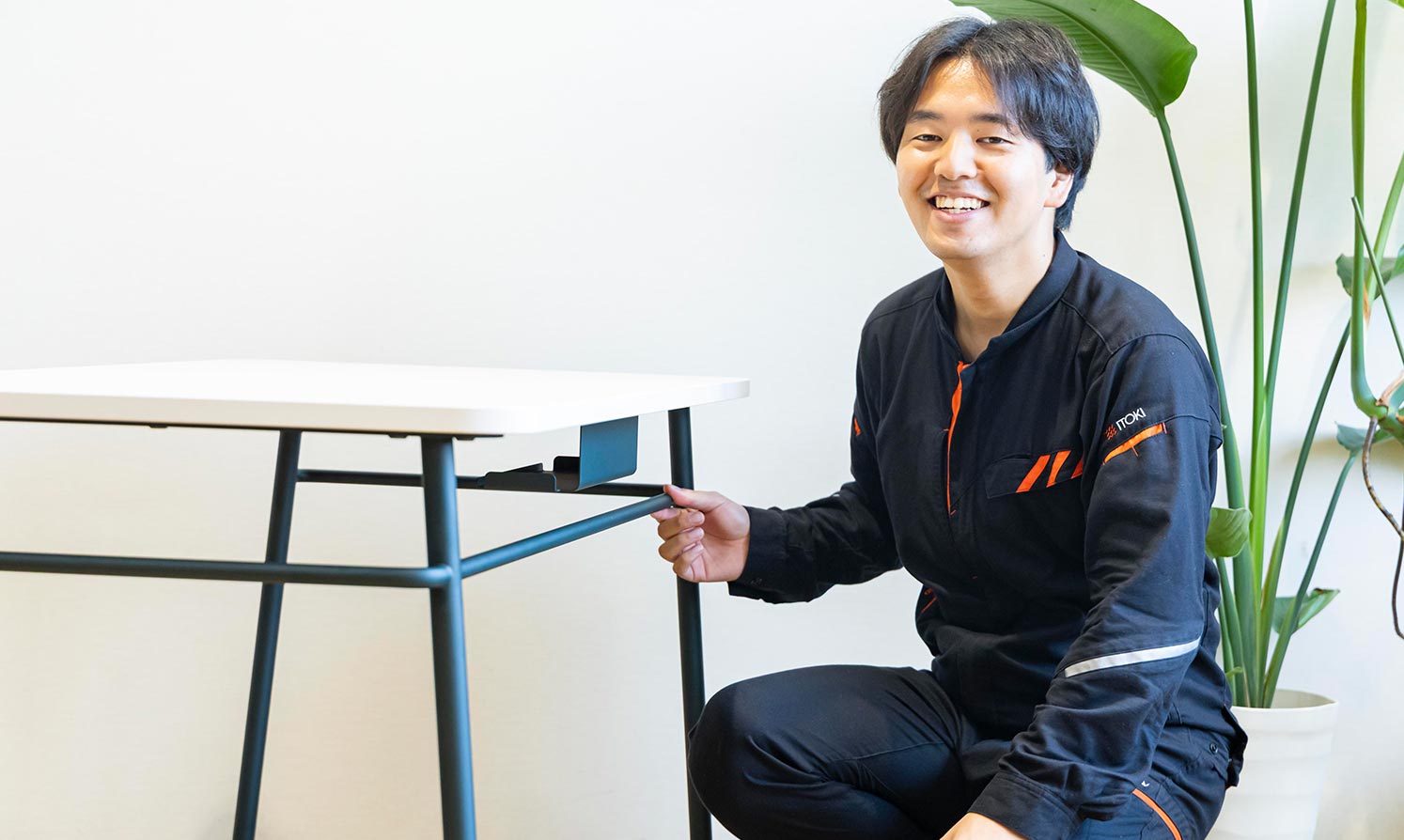
Katsukawa (Planning): The goal was to create "slender yet sturdy legs." A desk must not wobble from side to side, but with such thin legs as in this design, ensuring stability is extremely difficult. Therefore, I believe the design team faced a very challenging task.
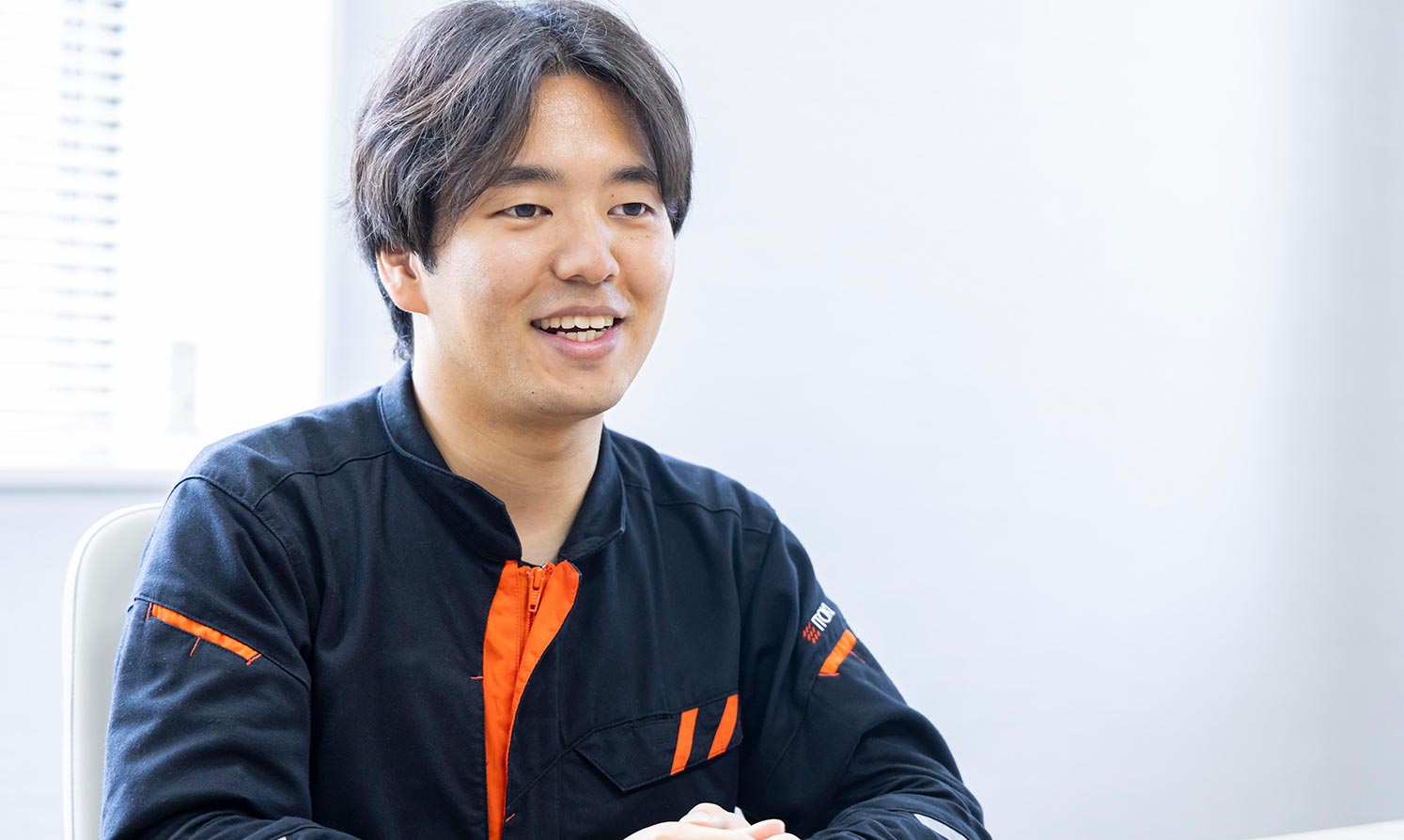
Bomura (desk designer): Thinking back to my childhood, I remember feeling uncomfortable when the desk shook when I erased writing forcefully with an eraser, and I incorporated that into the design. To maintain a beautiful appearance while increasing strength to prevent shaking, I repeatedly experimented with changing the thickness of the legs.
—So, it's not just about the aesthetic appeal, but also about the thoughtful details of how it feels to use.
Bomura (desk designer): That's right. For example, we made sure that the back of the desk was as flat as possible.
I remember often touching the underside of the desks in the classroom during lessons (laughs). In the initial model that Mr. Shibata drew for us, there was a single structural support on the underside, so we made repeated fine adjustments to eliminate the resulting step as much as possible. We also focused on making the joints between the pipes look neat. There are different types of welding methods, so we had experts show us several patterns and chose one while considering the cost. Since it's a study desk, we also wanted to make the box that would be delivered to the home as small as possible, so we considered how to make the parts that are connected with screws and bolts as invisible as possible, while still leaving some parts connected with screws and bolts.
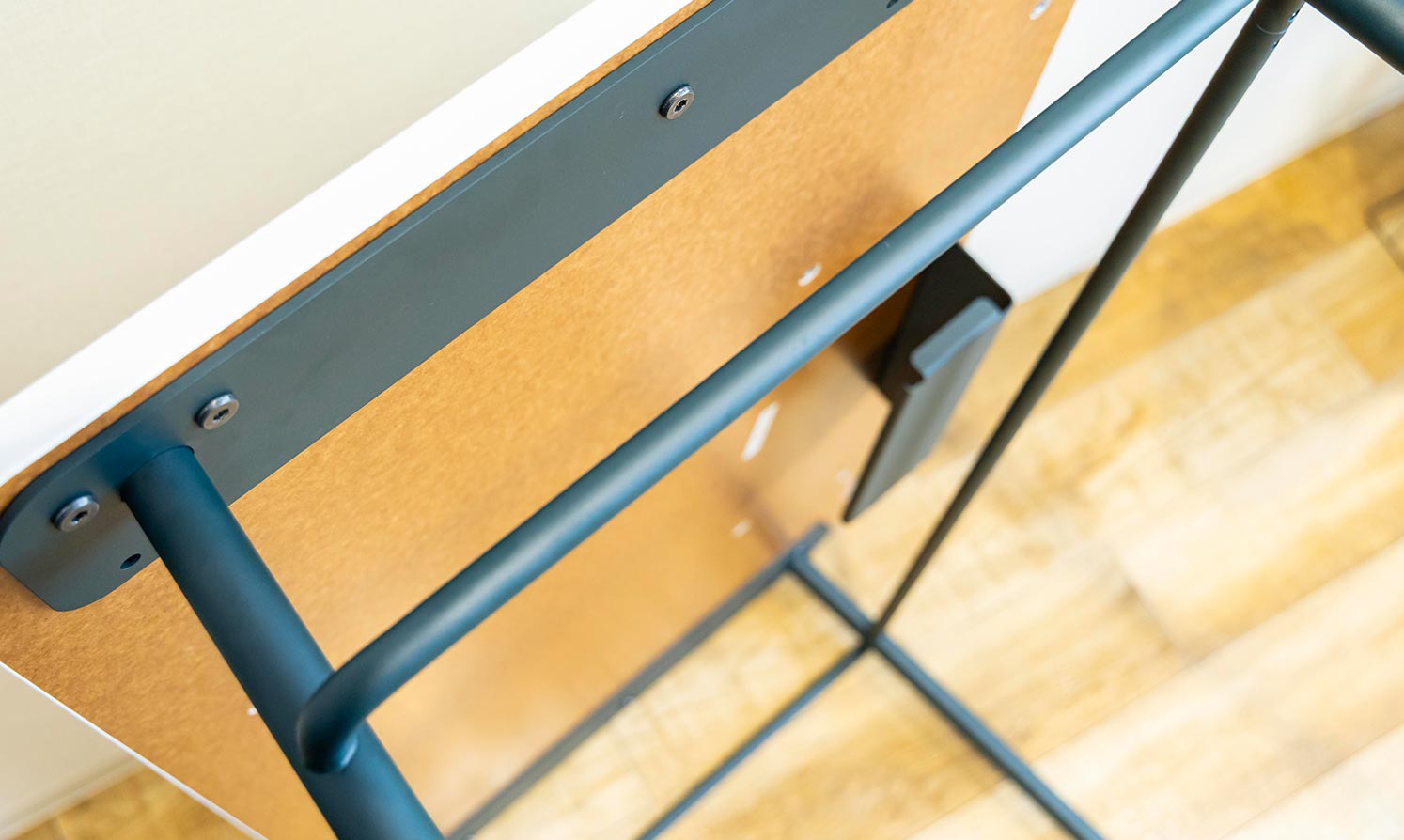
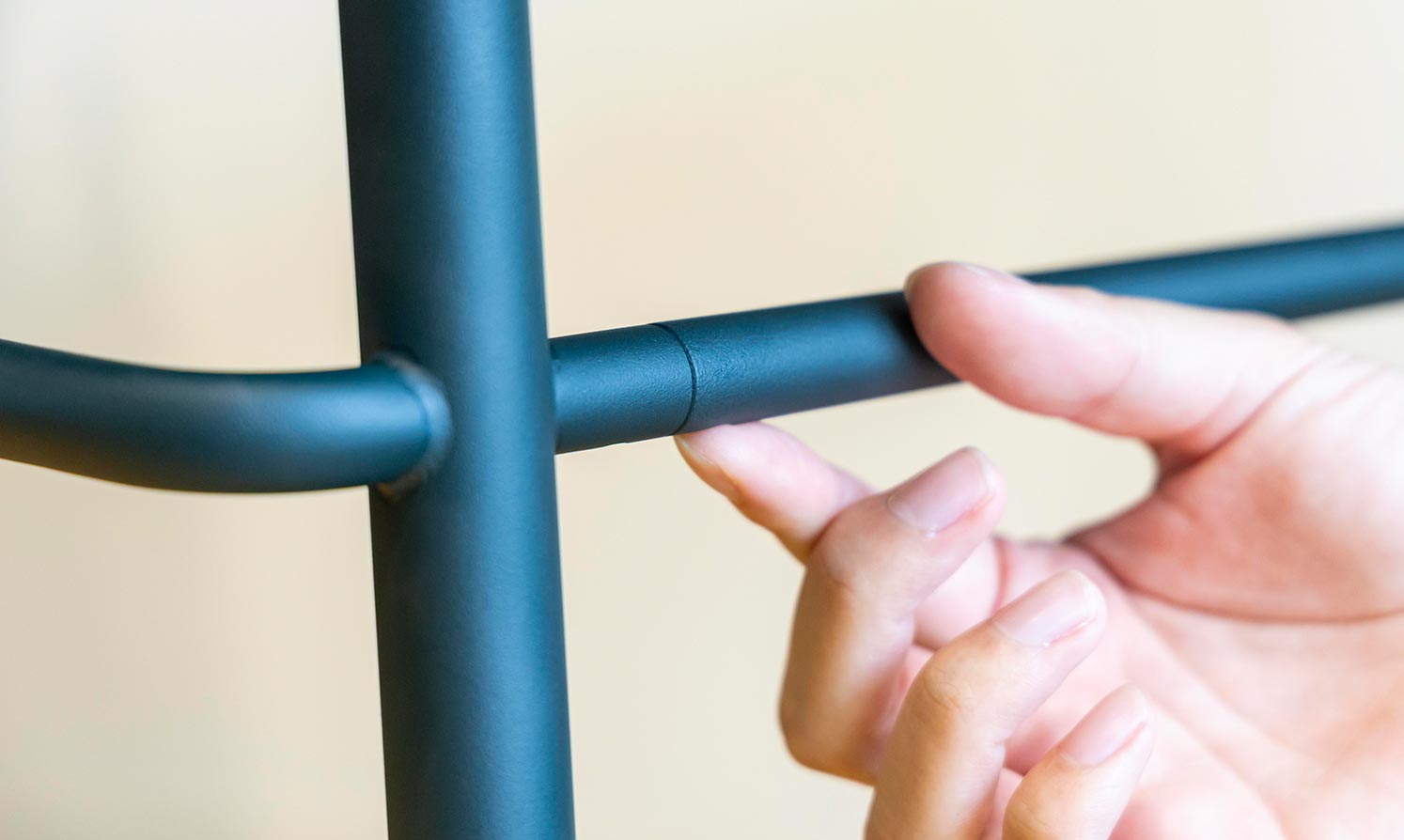
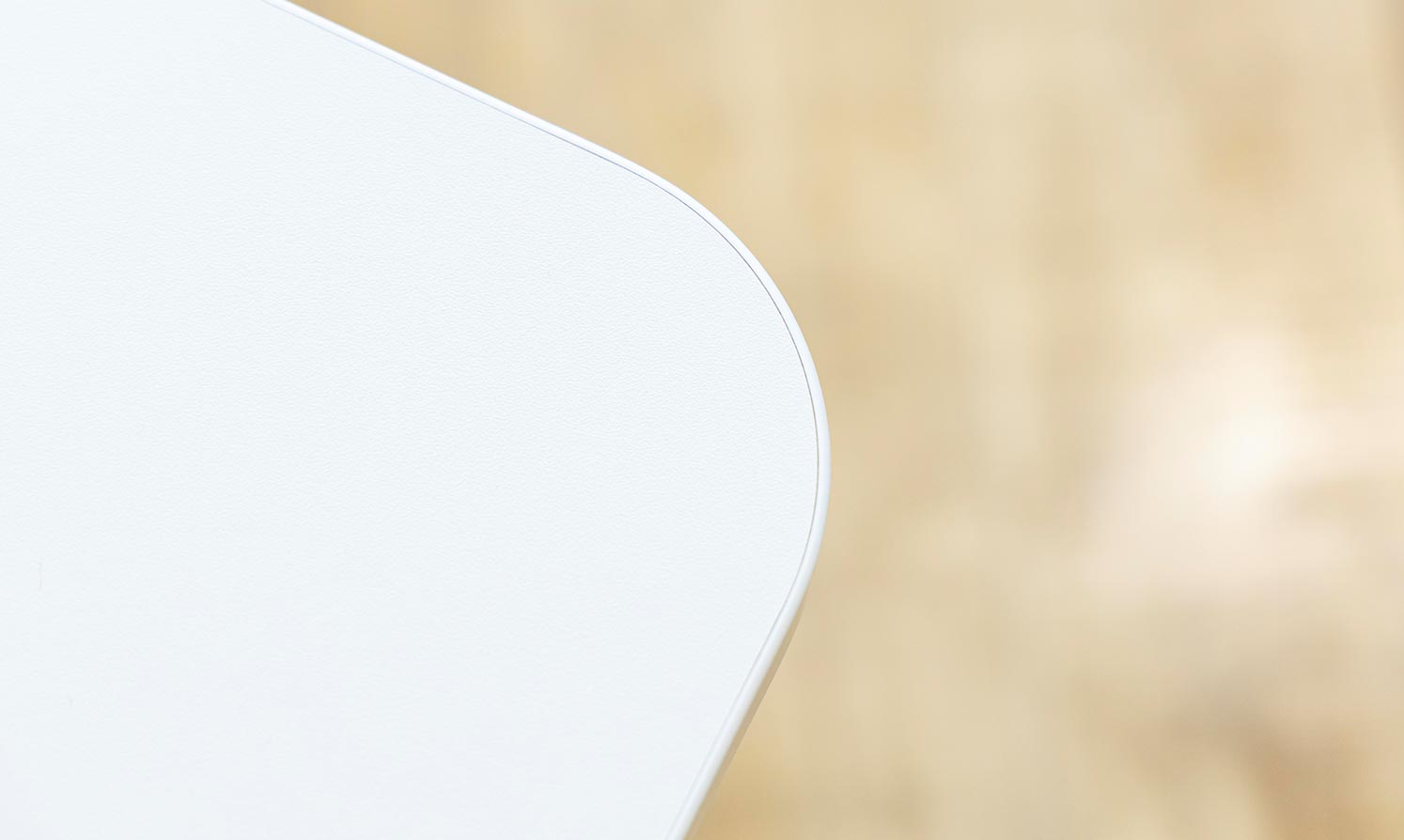
Designed to minimize unevenness on the underside of the desk (left), aesthetically pleasing pipe joints (center), and rounded corners for child safety (right).
Katsukawa (Planning): Since this is something children will use, we made sure that safety features were taken into consideration, such as rounding the corners of the desk. The two of them usually work on designing office furniture, and have cultivated the knowledge and skills to meet stringent quality standards. I feel that by putting that experience to use in this study desk, they have created something that is meticulously crafted in terms of both quality and safety.
Designing a study desk to be shared by parents and children was truly challenging, but Ms. Shibata showed the way with her design, and the design team faced difficult challenges without compromise and brought it to life.
A study desk where children's and adults' time intersects, allowing you to watch them grow over time.
--BASEON was completed after much trial and error. Could you tell us about the meaning behind the product name?
Katsukawa (Planning): When we first asked Shibata-san to design it, I was impressed when he said, "I want to create a desk that's like a secret base for adults and children." The "BASE" in "BASEON" has various meanings, such as a "base" that everyone who uses it can return to, a "starting point" for the future of study desks, and a "secret base" that can excite both adults and children. And the "ON" represents our hope that people will combine their favorite things and cultivate it into a desk that is uniquely their own.
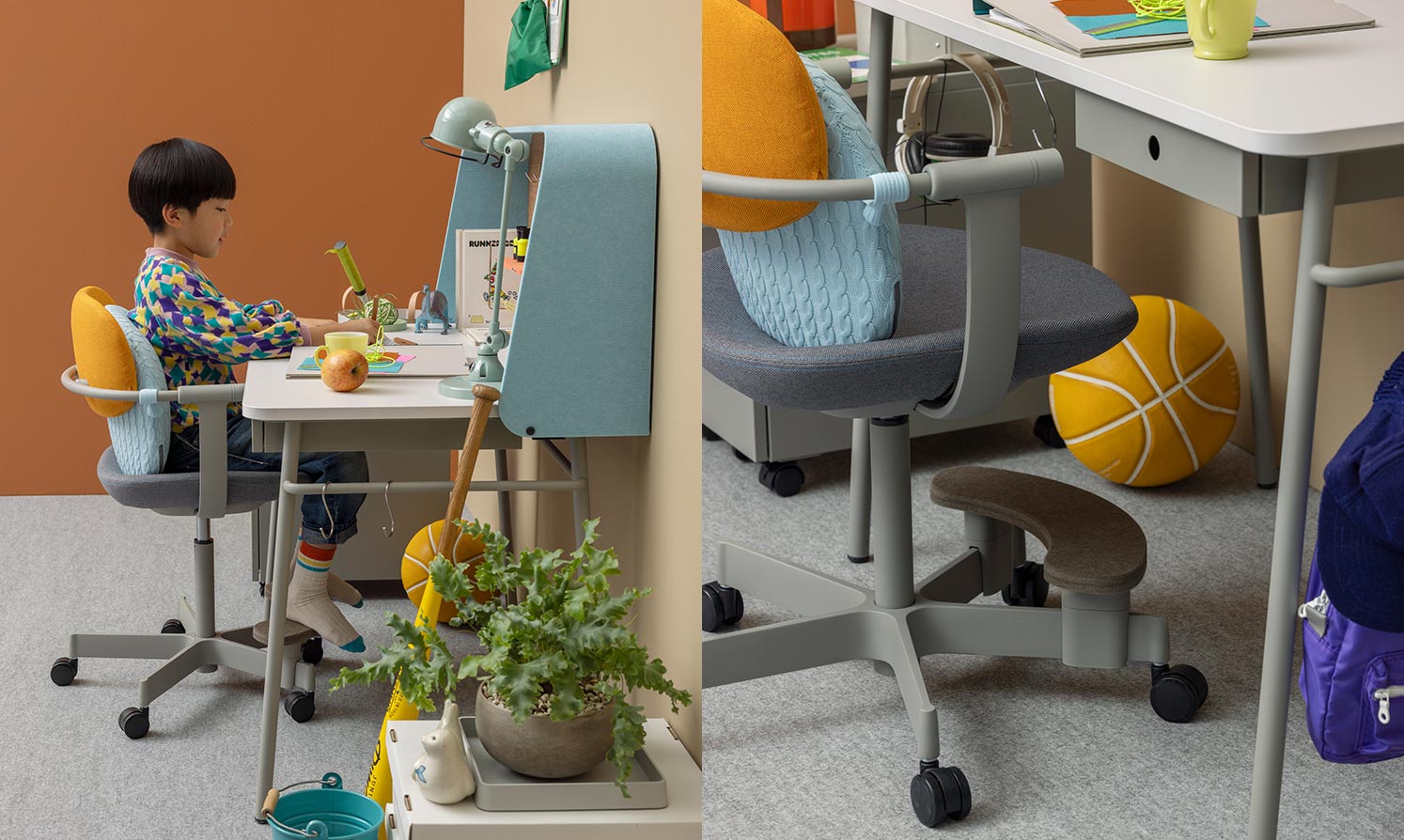
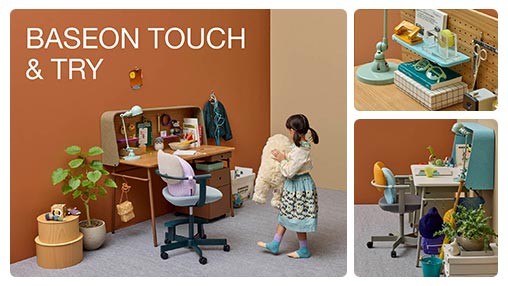
"BASEON" offers optional accessories such as pegboards, drawers, wagons, and igloos that completely cover the desk, allowing for over 2,000 combinations, whether you choose your favorite colors or create a colorful, playful look. The desk itself features modern colors that blend seamlessly into any home, while the customization options allow you to incorporate your child's favorite colors as accents. Designed for shared use by parents and children, it's filled with features that will satisfy both.
—So the desk changes to suit the user and their growth, right?
Katsukawa (Planning): I think of "BASEON" as a study desk where the time of children and adults intersects. Within a day, when parents and children use the same desk, it creates vertical connection time. For example, when you see the footrest for children, you might think, "They were studying here just a moment ago," and picture your child working hard. Over many years, as children continue to use it until they become adults, it creates horizontal connection time. I think it's a study desk that allows you to watch over their growth, both within a day and over a long timescale.
—What kind of time would you like children and families to spend through "BASEON"?
Katsukawa (Planning): We want children to have time to learn freely and in their own way. And we want families to cherish their children's learning without sacrificing their own lifestyle and comfort.
For example, families without a dedicated children's room may struggle with where to place a study desk. "BASEON" blends seamlessly into living rooms and other spaces, serving as both a learning area for children and a workspace for adults. We hope it becomes a place where both parents and children can feel comfortable and at ease.
ITOKI is a company that "designs work," and we believe that learning and working are interconnected. Children learn and grow into adults who then begin working. We want to provide solid support not only for their learning time, but also for their working time as adults through "BASEON."
Product designer Fumie Shibata talks about "BASEON" and "vertebra03kids"
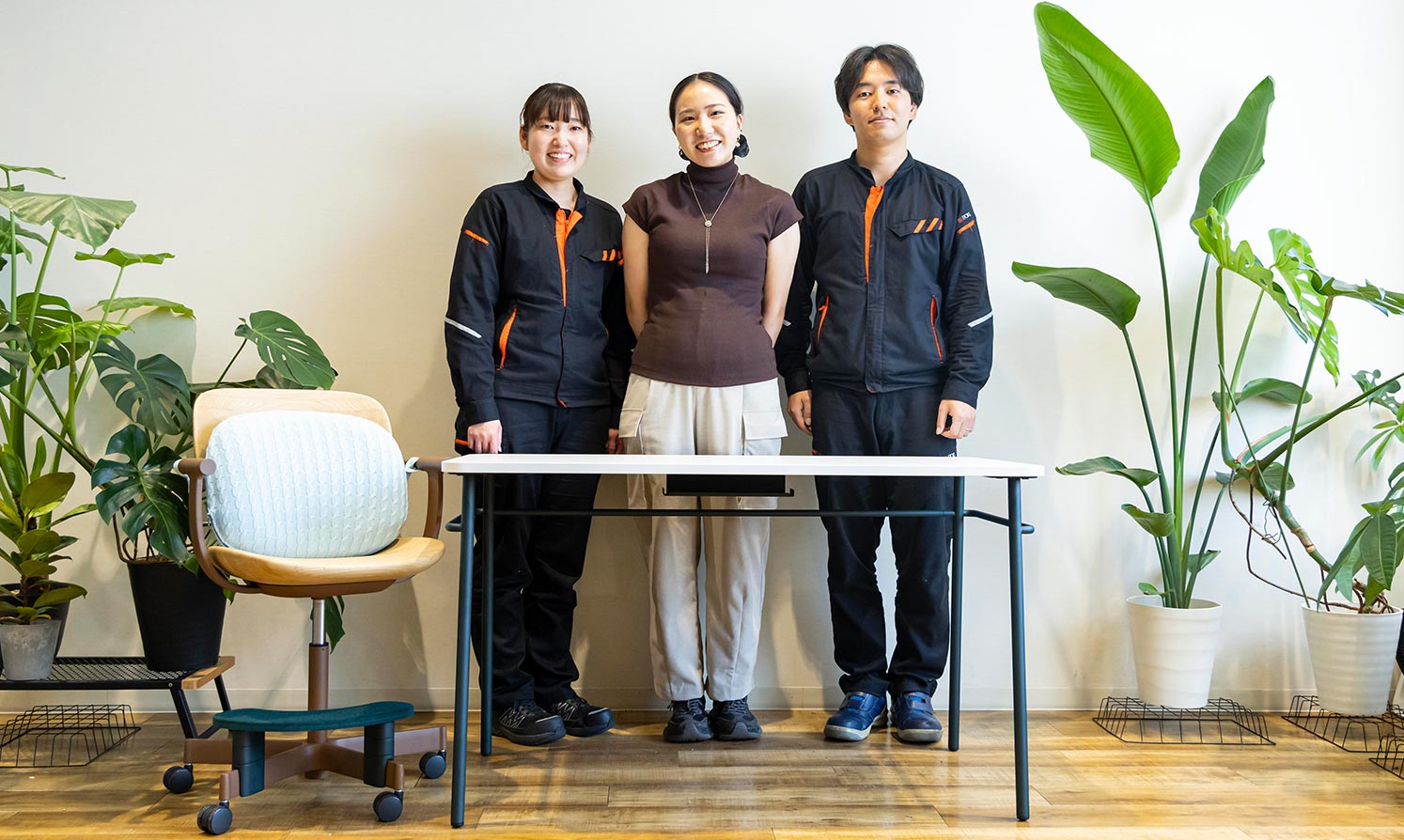
The development team aimed for "a new form of study desk suited to the modern era." Product designer Fumie Shibata brought this vision to life as a single design. Finally, we asked Ms. Shibata about the thoughts she put into the designs of "BASEON" and "vertebra03kids."
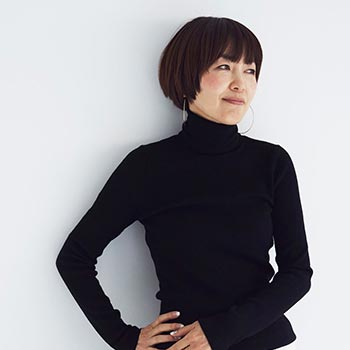
Product Designer
Fumie Shibata
Mr. Miss.
For today's children, a study desk is not just a place to study; it's also a place to put their favorite things, enjoy their hobbies, and spend time in a way that reflects their personality.
As children grow, their height, interests, and preferences change. This product is designed to adapt to these changes, allowing them to freely combine parts to create their own unique space.
We aimed to create a desk with a long-term timeframe, one that nurtures individuality in childhood and can be naturally used even into adulthood.
What I'd like you to pay particular attention to is how adding parts to a desk can create a completely different look.
With the addition of parts, it becomes a fun space that stimulates children's imagination, and when removed, it returns to a clean and simple desk. We prioritized creating a desk that, while being a single unit, greatly expands its possibilities to suit each child's individuality and growth.
I believe that the trust we had built with Itoki through our previous development projects allowed us to exchange opinions frankly and without reservation.
In particular, during the development of the "vertebra03 kids," which features optional back cushions and footrests, there were many instances where the ideas of the planning team members were invaluable.
Because everyone deeply understood the intent behind the design, we were able to not only realize the physical form but also consider the children's experiences that would follow.
I believe that this shared understanding led to better product development.
Related article
- The department, position, and system are those at the time of the interview and may differ from the current information.
Recommended Articles
-
August 18, 2026
"Selling aggressively" isn't the only right answer. The true essence of sales, as taught by setbacks.
-
July 21, 2026
How to overcome growth barriers? Tips for growth discovered by designers.
-
May 8, 2026
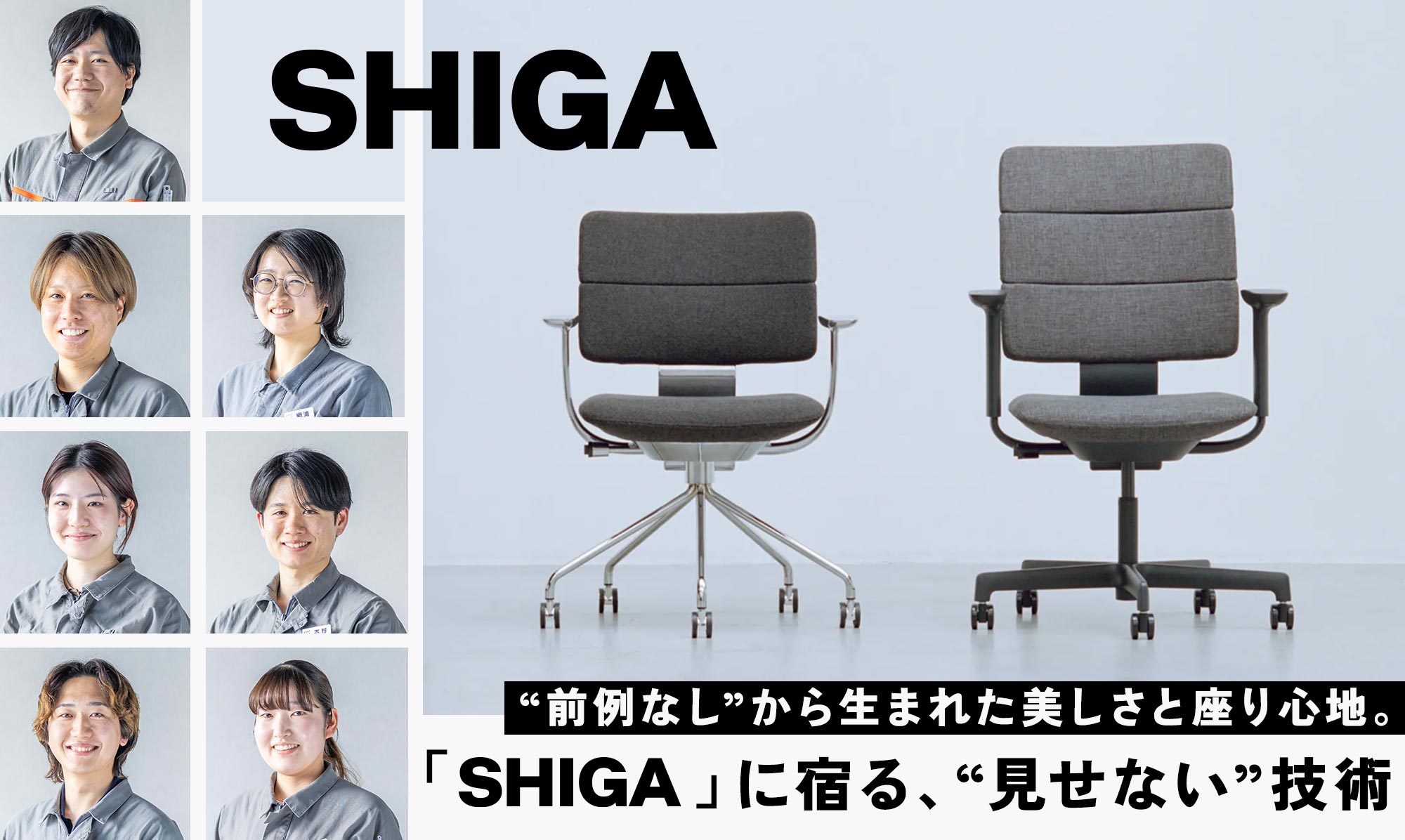
Beauty and comfort born from "unprecedented" design. The hidden technology behind "SHIGA" [Behind the scenes of SHIGA development - Part 1]
-
November 26, 2025
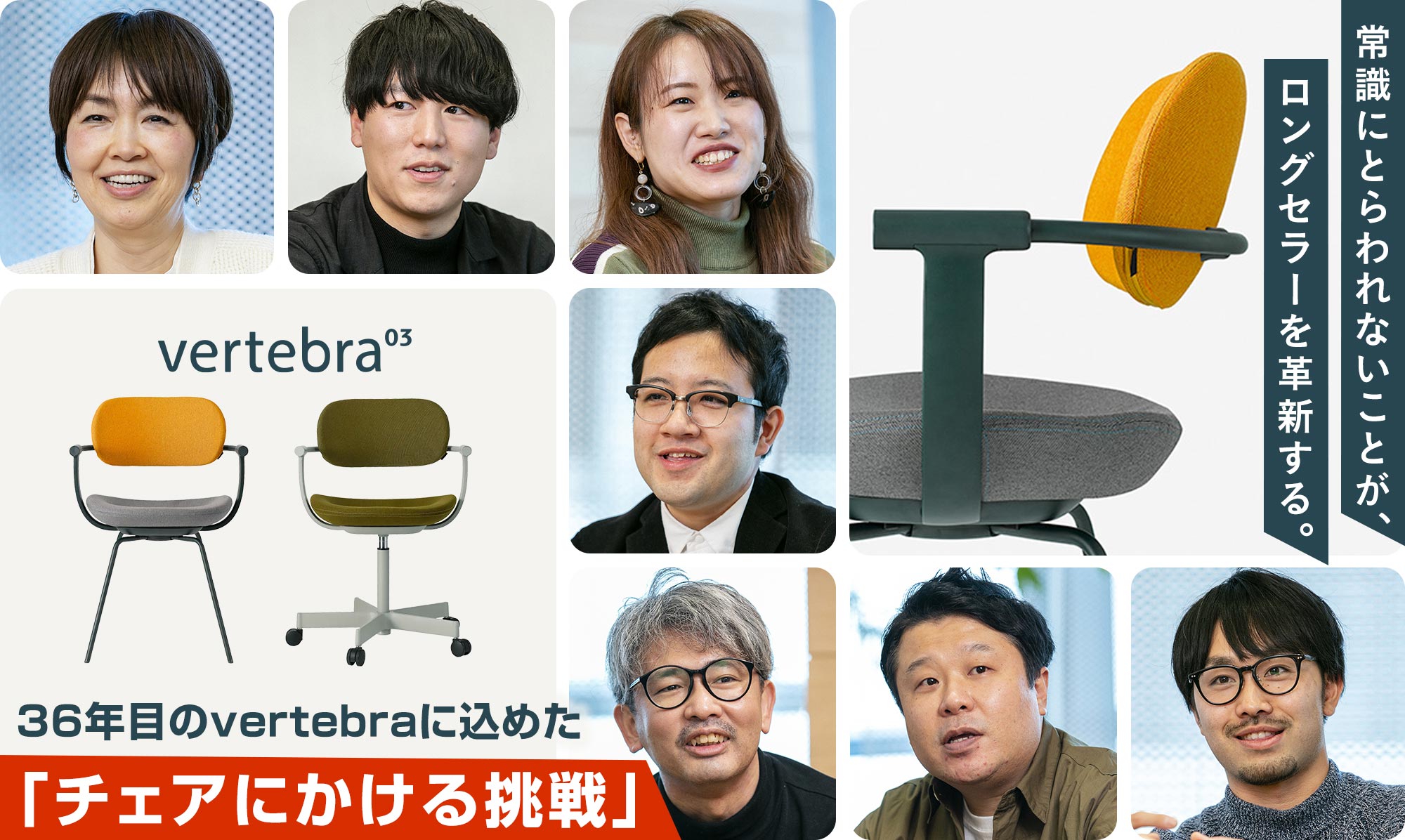
Not being bound by conventional wisdom revolutionizes a long-selling product. The "challenge to chairs" that embodies the vertebra in its 36th year
-
September 29, 2025
Behind the scenes of the skilled techniques that support quality. Manufacturing professionals who are responsible for the advanced TIG welding that cannot fail.