


November 12, 2026
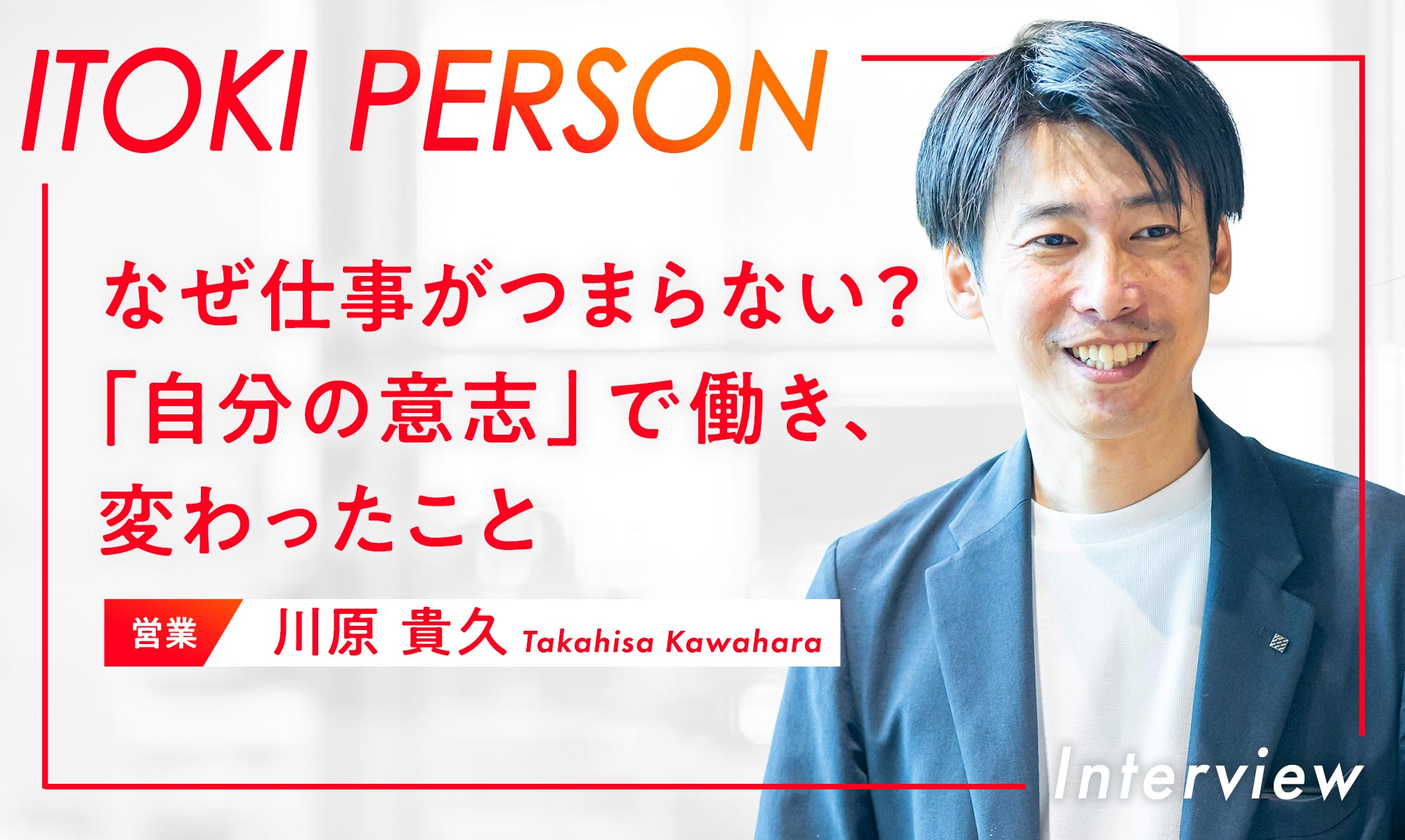
Why is my job boring? How things changed after I started working "of my own free will".


Workplace Business area, which supports the creation of offices and working environments, now leads a sales team in the Equipment Business Division that handles automated warehouse systems for logistics sites. Throughout his career, he has achieved a solid track record in sales, including receiving the President's Award twice. Now, he is eager to take on new challenges, leveraging his position in sales where he can directly hear customer feedback and incorporate that feedback into product development.
On the other hand, in his twenties, he spent his days feeling disappointed in himself because he wasn't seeing results. He says he couldn't even do the basics expected of a working adult and was just going through the motions at work.
What changed for Ms. Kawahara, from days when she found her job boring to days when she began to enjoy it? We explore hints from Ms. Kawahara's experience on how to approach work with your own will and enjoy it in a positive way.
ITOKI CORPORATION, Equipment and Machinery Division, Systems Equipment Sales Department, Sales Team 1, Sales Section 1
Takahisa Kawahara
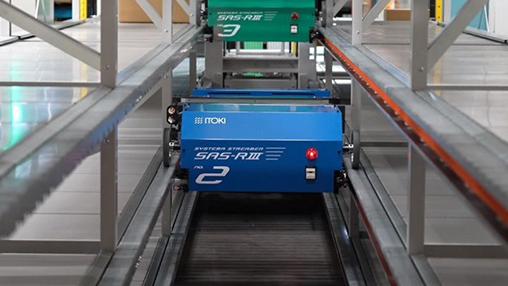
After joining the company in 2004, I was assigned to sales for Workplace, a company that supports the creation of offices and working environments. After eight years of sales experience, I transferred to the Equipment Business Division. Currently, I lead sales teams for products such as "SAS-R," an automated picking and sorting system for logistics sites, and "DAP with MediMonitor," an automated drug picking system for pharmacies.
- The departments, positions, and systems mentioned in the text are based on information available at the time of the interview.
Contents
- "I wish the day would pass quickly." A 20-something working out of inertia.
- "Work is about willpower." A single sentence from my boss that finally resonated with me at the age of 30.
- I started taking action of my own volition. This led to two President's Awards.
- If you find your job boring, the first step is to take a step forward.
"I wish the day would pass quickly." A 20-something working out of inertia.

When I first joined the company, I remember being simply happy to be able to work at Itoki. When I visited alumni during my student days, I was really drawn to the fact that, contrary to the image of a smart furniture manufacturer, they were doing down-to-earth sales that involved "getting close to people." It wasn't just about selling products, but about getting close to customers yourself and creating business through your own efforts. That was the image I had. I was excited about what I would be doing from then on.
But I felt something was off soon after starting work. Not with the job itself, but with myself as a working adult. I couldn't do even the most basic things. I was late for appointments with clients. I was afraid of getting yelled at, so I lied to my boss and said I had done it. It's just unbelievable, isn't it? I was even called a "bad salesperson" by a client. Naturally, if you can't do such basic things, you can't achieve results. I was shocked by how pathetic I was, but as it went on and on, I even got used to being shocked.

I was constantly haunted by the feeling that "no matter what I do, it's all pointless," which was like cutting off my own possibilities. And yet, when I saw my juniors achieving results, I couldn't help but feel incredibly frustrated. I knew I had to work harder, but I felt so miserable because I couldn't take action, and I was caught in a negative spiral of getting depressed more and more.
Before I knew it, my motivation for work had decreased, and I started working while thinking, "How can I make the day go by faster?"
"Work is about willpower." A single sentence from my boss that finally resonated with me at the age of 30.

Back then, I had a boss I didn't get along with. He was a strict person who would demand thorough explanations of the basis for estimates, and he would constantly nag me, saying, "Work is something you do of your own volition." However, at the time, I was a passive worker who just did what I was told, so it didn't resonate with me right away. But for some reason, the words he said to me when I was struggling are the ones that stick with me the longest, more than the things he said that made me happy.
One day, when I turned 30, there was a moment when something my boss said suddenly resonated deeply with me.
One of the triggers was feeling that the client recognized me as a partner. When I was in charge of a major project to renovate the factory office, I worked with the client for a long period of time. During that time, they consulted me on various things and didn't hesitate to scold me when I made mistakes. When I felt that "the client wanted to see this through to the end," a strong sense of responsibility sprouted within me.
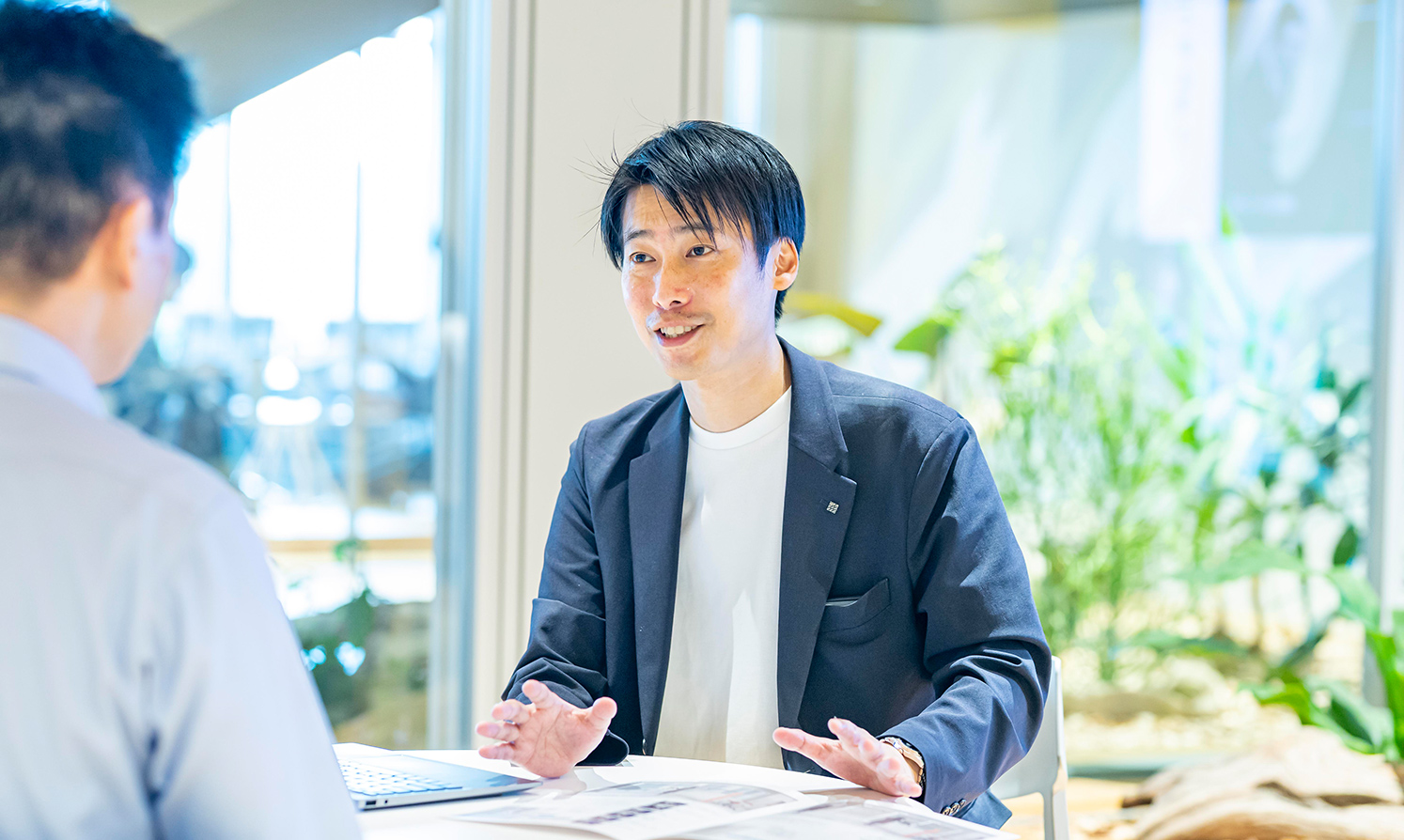
What I focused on throughout the project was proactively making suggestions. Instead of waiting for the client to tell me what to do, I made an effort to gather information myself. Even if a move seemed wasteful from an efficiency standpoint, I believed in it and did it. On top of that, as the front-line manager, I motivated those around me so that they could work comfortably. After working alongside the client for nearly a year, I felt a great sense of accomplishment when we successfully delivered the product and I was praised for it.
This successful experience became the foundation that allowed me to persevere when I moved to an unfamiliar field. To be honest, when my transfer to the Equipment Business Division was decided, I felt a bit inferior to my previous department, wondering if I was no longer needed there. Nevertheless, the fact that I had worked with determination had given me confidence, so I decided to try my best, even though I didn't know much.
I started taking action of my own volition. This led to two President's Awards.

Since my approach to work changed, I've started to enjoy my job more and more. I feel a sense of fulfillment when I acquire new clients or when clients specifically request me because "it's Kawahara-san." As a salesperson, the most rewarding thing is seeing how satisfied the customer is and how much I've been able to help them.
The reason why taking initiative makes work more enjoyable is simple. When you view work as someone else's problem, you end up working with a sense of being forced to do it, thinking, "Let's finish this quickly and go home early." On the other hand, when you take initiative in your work, you're not swayed by the environment, but instead you can take the initiative to "find fulfillment for yourself" and "research even difficult things." Of course, there will be failures and troubles. But because you have to take responsibility, you start thinking about "what to do" rather than becoming pessimistic.

I think people who are happy are free. Freedom doesn't mean you can do whatever you want, but rather that you can do various things at your own discretion. I think that's probably because it comes with responsibility.
Through my unwavering commitment to my work, I have received the President's Award twice. The first time was for the installation of the first unit of Itoki's automated warehouse system "SAS-R," which underwent a full model change for the first time in 35 years. The second time was when I secured a large-scale "SAS-R" project and successfully completed the delivery. I don't think the President's Award is something you can aim for and win, so both times were a surprise to me.
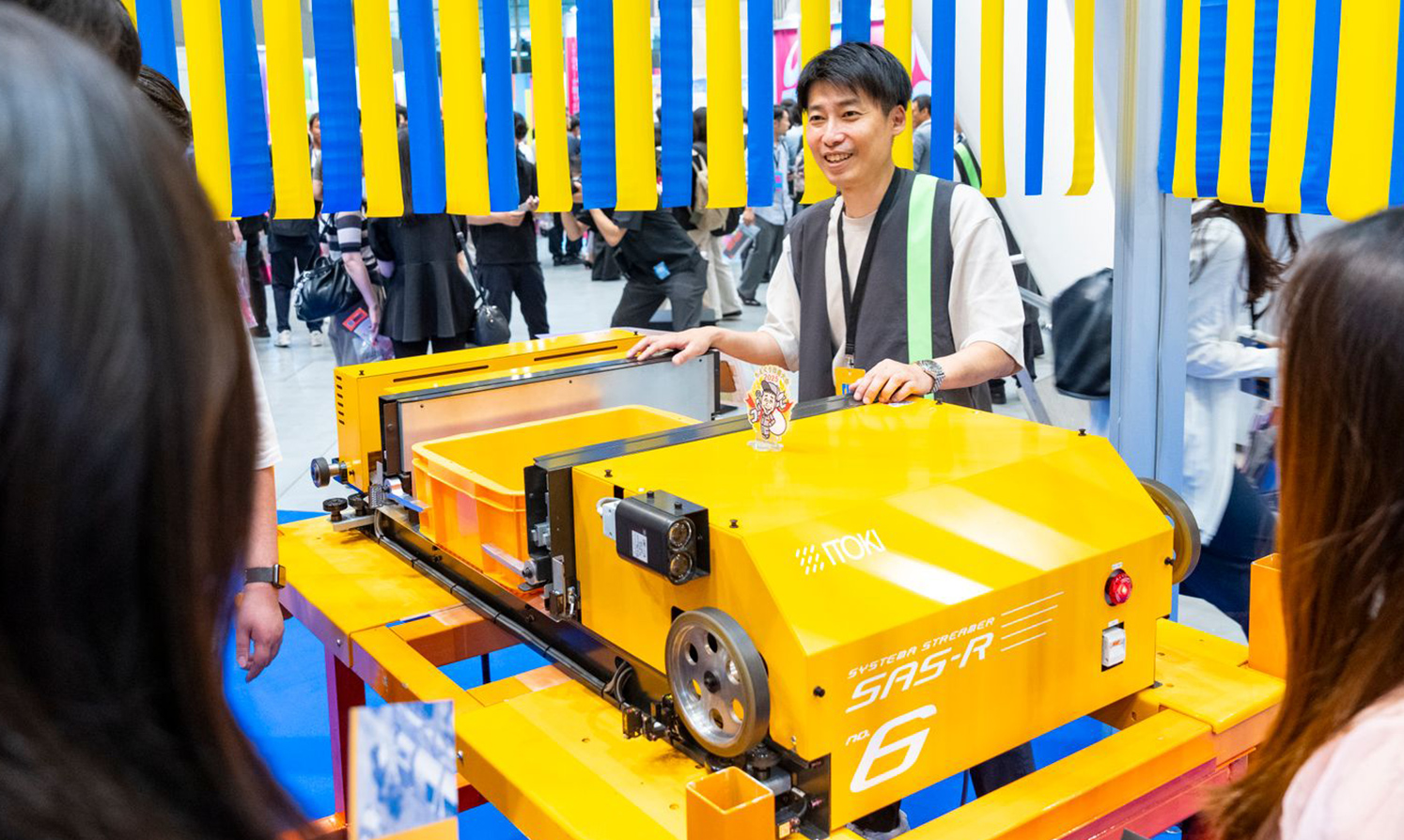

(Left) Mr. Kawahara introducing SAS-R at a booth exhibit for each department; (Right) A display of strips of paper in which members of the Equipment Business Division have written their thoughts on "challenges".
Lately, I've started to think, "Challenges are fun!"
I was reminded of this once again at "FULL of ITOKI," a company-wide event held recently as part of our internal communication efforts. Employees gathered from all over Japan and even overseas, and each organization shared their work, strengths, and future challenges. The Equipment Business Division announced its core value, "Challenging innovators," which was decided through discussions among everyone. We also displayed strips of paper on which each person had written their thoughts about their own "challenges."
True to those words, I myself want to get involved in areas I haven't experienced before, such as creating new products, rather than simply continuing what I've been doing so far.
If you find your job boring, the first step is to take a step forward.

I believe that suffering is important when you're young. Looking back in my 40s, I've mostly forgotten the good things, and all that remains are the things I accomplished through hardship. Many young people want to be promoted quickly, but when you're given a position of responsibility at a young age, you have to take on the same responsibilities as people of any age, so I get the impression that they hit a wall because their experience can't keep up.
That's why it's good to be struggling at the bottom. Besides, there will definitely come a day when you'll be rewarded. You don't know when that will be, but you just have to keep going. In hindsight, I can say now, "I'm so glad I didn't quit back then."
If you feel stuck or stuck, I urge you to talk to someone you trust—whether it's your boss, a senior colleague in another department, or even someone outside the company. In the past, I couldn't talk to anyone because I was afraid of being scolded or feeling miserable if I showed weakness. But if you keep everything bottled up inside, you'll lose motivation and your ability to see a way forward. I can't even begin to describe how much encouragement I would have received if I had just had someone to talk to back then.

Now, as a team leader, I make it a point to take the initiative to bring out the best in my team members. I take the lead in getting them to agree with what my superiors have told me, so that they fully understand and accept it. I'm 45 now, but I still do cold calls. I think it's too arrogant to just tell younger people to "do it." They might not be watching my example closely, but I figure it would be hard for them to refuse if their superiors were doing it, so I take the lead (laughs).
There's a junior colleague on the team who's been with the company for four years, and he's working harder than anyone else to promote our new product. We brainstorm together about "how to sell this product," and he always accompanies me on my sales calls... he might have been doing it reluctantly (laughs). But then, one day, without me even asking, he started reporting to me things like, "This is what we did for the customer," and "This is what we'll be doing in the future."
At company-wide events, she takes initiative, even declaring, "I'm going to sell the most of this product!" I don't think I did anything special; I think she gained confidence through experience. Perhaps what people in their 20s need is the confidence that comes from accomplishing something, no matter how small.
Taking initiative at work isn't about talent, it's about determination. To make something your own, take the first step: research, learn, and ask others. Once you gain a clearer understanding of what you're doing, you'll find enjoyable work waiting for you.

Related article



Related products/solutions
- The department, position, and system are those at the time of the interview and may differ from the current information.
Recommended Articles
-
August 18, 2026
"Selling aggressively" isn't the only right answer. The true essence of sales, as taught by setbacks.
-

July 21, 2026
How to overcome growth barriers? Tips for growth discovered by designers.
-

May 8, 2026
Beauty and comfort born from "unprecedented" design. The hidden technology behind "SHIGA" [Behind the scenes of SHIGA development - Part 1]
-

November 26, 2025
Not being bound by conventional wisdom revolutionizes a long-selling product. The "challenge to chairs" that embodies the vertebra in its 36th year
-

September 29, 2025
Behind the scenes of the skilled techniques that support quality. Manufacturing professionals who are responsible for the advanced TIG welding that cannot fail.