


August 28, 2026
Corporate value can be transformed starting with people. The "corporate communication strategy" behind the recovery in performance.


Itoki faced a major turning point in 2019 and 2020, when it posted net losses for two consecutive periods and its employee engagement score remained in the 40% range. Since then, it has promoted various reforms, mainly in management and human resources, achieving record-high sales and operating profits, and its engagement score has recovered to over 80%.
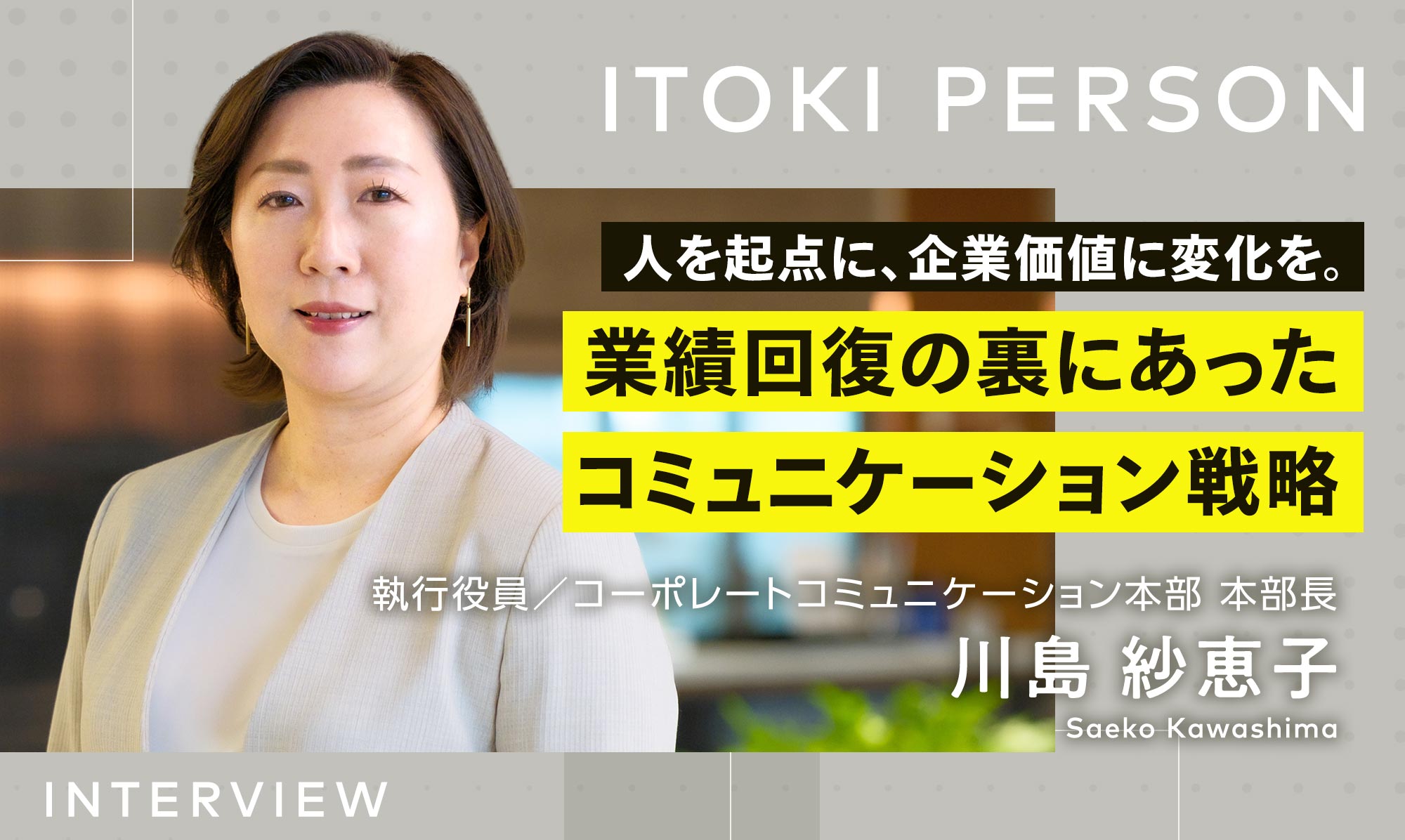
One of the key figures in this effort was Saeko Kawashima, who was appointed Head of Public Relations and Investor Relations in 2019. We spoke with her about the role that corporate communications, which integrates media communications, internal communications, and investor relations, has played in enhancing corporate value, and about her approach and practices.

Executive Officer and Head of Corporate Communications Division, ITOKI CORPORATION
*As of August 2026
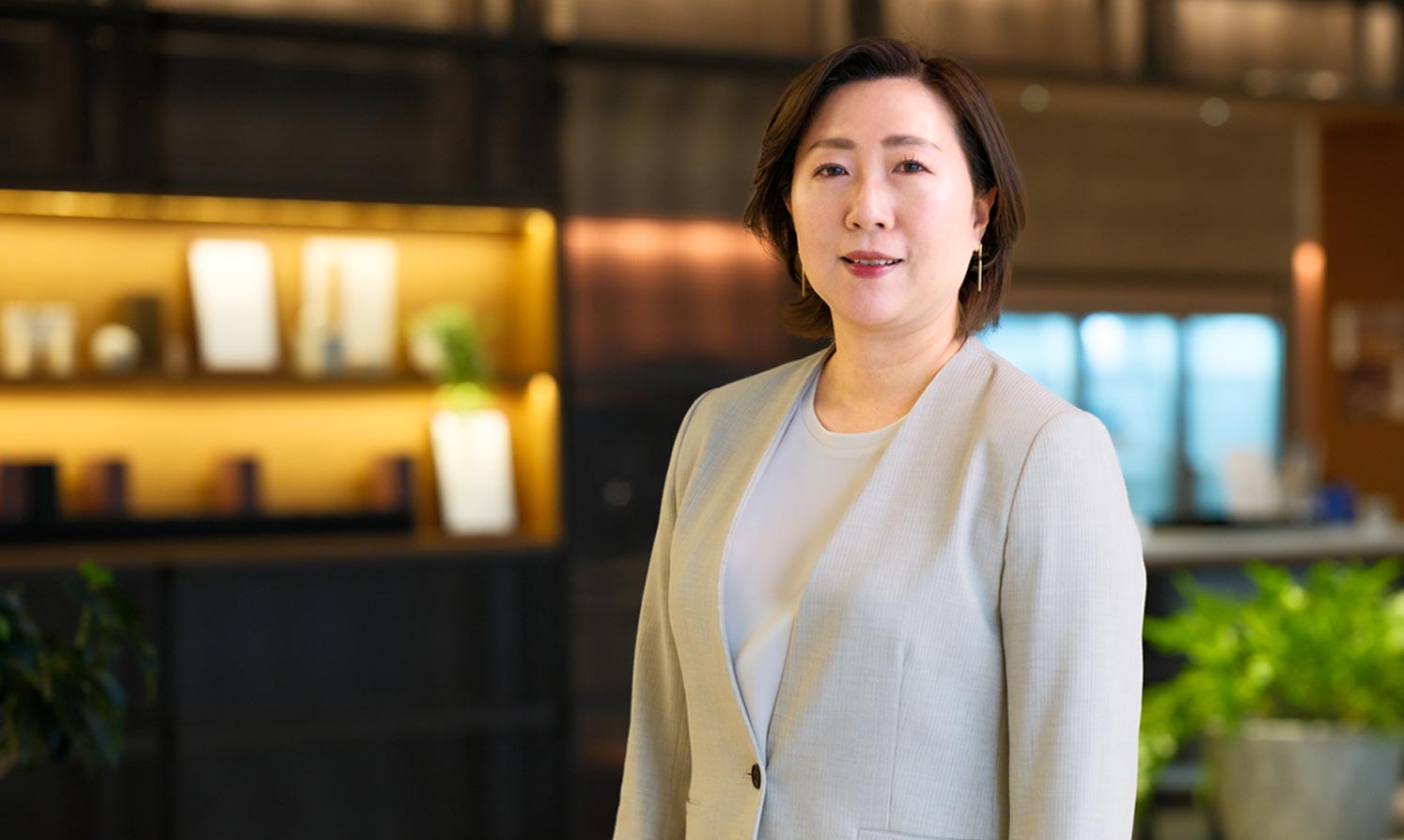
Saeko Kawashima
After working for a major credit card company and a marketing research company, she joined Itoki in 2019. She is broadly responsible for corporate communications, including public relations and investor relations. She works to build relationships with stakeholders from various angles.
*The department, position, and system are those at the time of the interview and may differ from the current information.
Contents
- Faced with a company crisis, a reform of corporate communications has begun.
- The first pillar is internal. The importance of deepening employee understanding and empathy.
- We deliver the value we discover within the company to society through the media.
- Towards investor relations that accurately communicate corporate value and build trust with investors.
- From a furniture company to a company focused on "people": What strategic corporate communication has achieved.
Faced with a company crisis, a reform of corporate communications has begun.

—When you joined Itoki in 2019 as the head of public relations and investor relations, what challenges did you perceive in the field of corporate communications?
When I joined the company in 2019, neither public relations nor investor relations (IR) were actively engaged in any kind of work, and there was absolutely no coordination with the sales promotion team within the same department. IR hadn't received a proper handover due to the departure of the person in charge, and internal public relations was overwhelmed with creating the company newsletter. At the time, business performance was sluggish, and there was limited news that PR could disseminate externally. That's why I felt it was necessary to strategically review our entire corporate communications.

—Given the fragmented nature of departments and tasks, where did you begin the reform process?
First, we conducted interviews with the team members to identify the issues. What became clear was that job descriptions and roles were ambiguous, and the scope of each individual's responsibilities was not clearly defined.
Therefore, we restructured the organization so that corporate communications, B2C communications, and investor relations (IR) are handled by the Public Relations & IR Department, while product communications and sales promotion for B2B businesses are handled by the Sales Promotion & PR Strategy Planning Department. We also clarified each member's responsibilities and changed the system so that each member is responsible for a single project from start to finish. Furthermore, to ensure that all members have a shared understanding, we also shared fundamental concepts such as "What is media communication?", "What is internal communication?", and "What is investor relations?".
I believe that reform is like the game of Othello. At first, you can only flip one piece at a time, but if you implement policies while thinking several moves ahead, there will inevitably come a moment when you can make a big comeback. That's why I started with small things right in front of me and steadily built a solid foundation.
The first pillar is internal. The importance of deepening employee understanding and empathy.
──Where did you begin with your corporate communications reform?
No one will pay attention to us, no matter how hard we try with PR and IR, as long as our performance isn't improving. So the first thing we tackled was internal communication. Unless the management's philosophy and vision are properly communicated to the employees, and each individual is working towards the same goal with a positive attitude, the company's performance will not improve.
Therefore, we believe the ideal approach is to first deepen employee understanding and empathy through internal communication, then communicate the initiatives and values created within the company to external parties through media communication, and finally connect the feedback to investor relations (IR).
—So you started with internal communication. Specifically, what did you begin with?
The first thing we did was a communication survey. At the time, Itoki was struggling with low employee engagement, so we started by listening to what employees were thinking and what kind of information they wanted.
As a result, many comments were received such as, "I don't understand what the higher-ups are thinking," and "The production floor lacks energy." Furthermore, because Itoki's sales and production departments were once separate companies, it became clear that a significant, invisible wall exists between the sales and manufacturing departments, which also became a clear issue.
—Based on the challenges that have emerged, what measures have you taken to transform the organization?
The first initiative we launched was the "Factory Ambassador" program, designed to empower the people working on the production floor, where we felt the greatest challenges. As "on-site public relations representatives," they collaborated with us to brainstorm projects that spotlighted those working on the production floor and events to liven up the workplace, and then promoted these ideas within the company. Our aim was to boost morale on the production floor while simultaneously fostering a cycle of mutual understanding and respect across departments, where people feel, "You're selling what I made," and "I'm selling what you made."
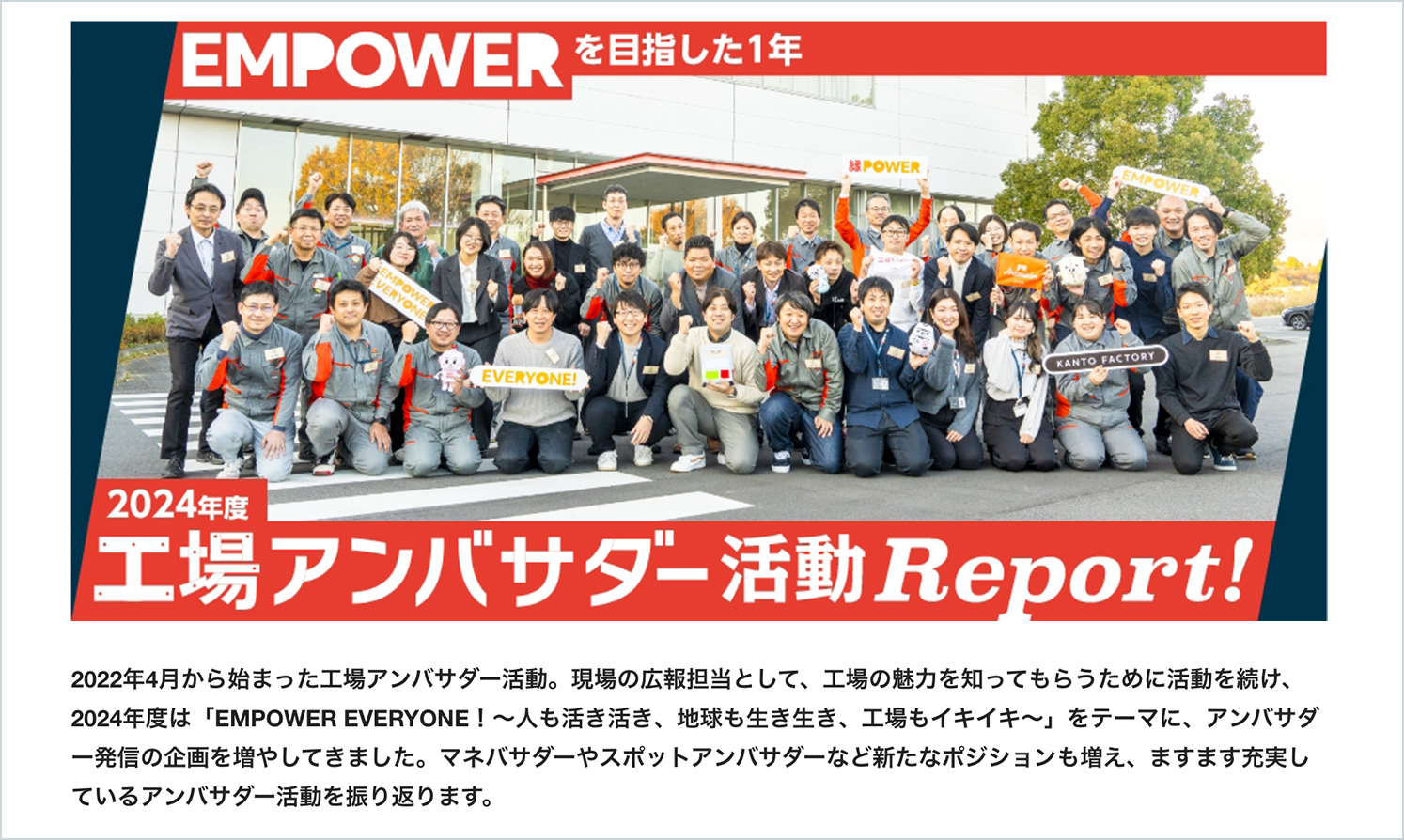
A report article on factory ambassador activities in the company newsletter "iTalk"
Members were recruited from each factory, and in the first year, they learned things like how to take photographs and how to write articles for the company newsletter. From the second year onwards, spontaneous projects such as wrapping the factory shuttle buses and creating novelty items began to emerge one after another, and these were introduced in the company newsletter, "iTalk." Through these accumulated efforts, an awareness of "let's take the initiative to communicate" spread throughout the production site.
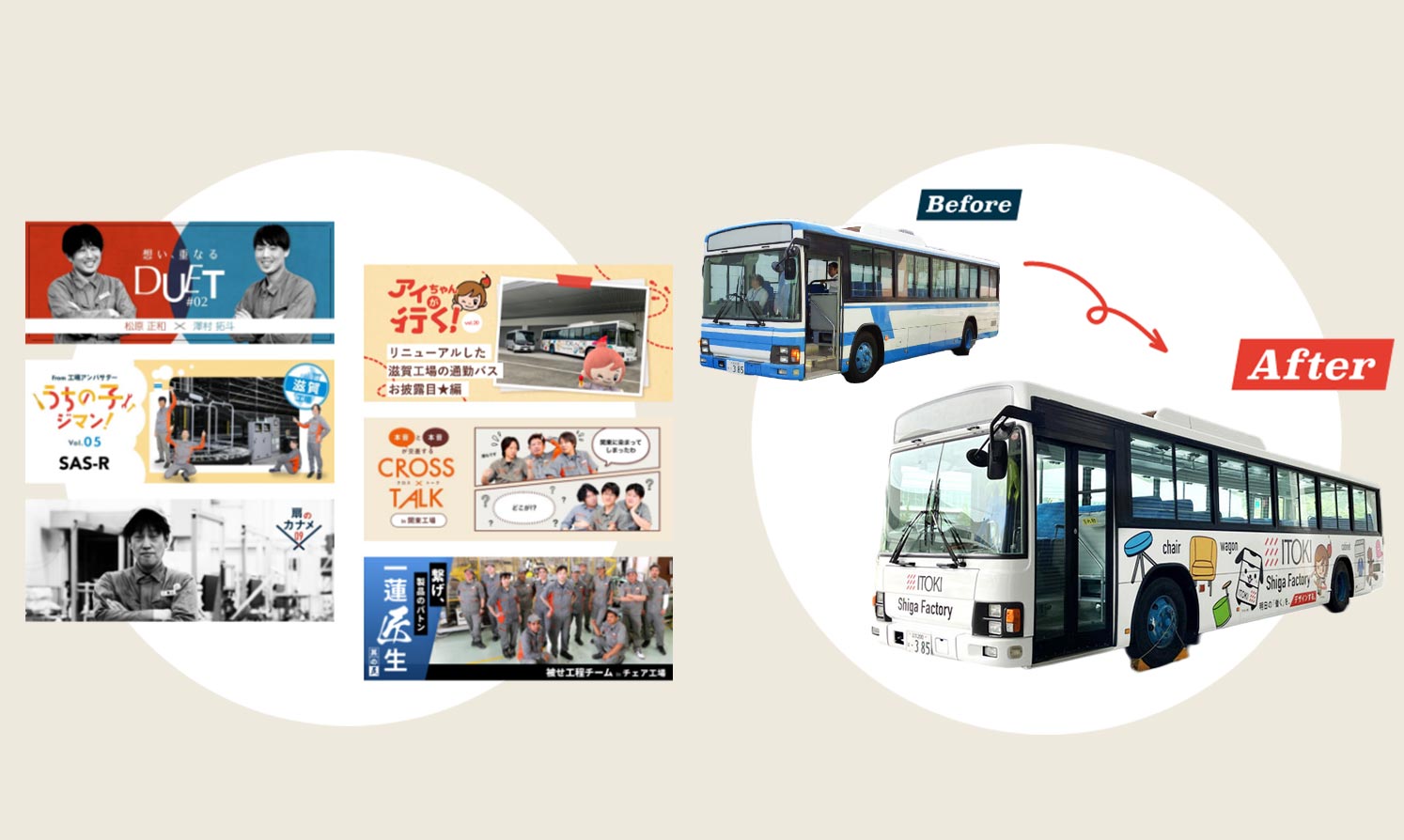
(Left) An example of a section from the company newsletter "iTalk", (Right) Before and after of a wrapped bus used for factory shuttle service.
—It must not have been easy to get people on the ground involved in this new initiative, was it?
When involving people within the company, the most important thing was to make them feel like it was their own responsibility. Instead of saying, "We need your cooperation," I patiently continued to explain from the perspective of the people on the ground, "This is how we can make things better." As results gradually began to appear, a relationship of trust developed with them, and they started to speak to me honestly.
We also created an opportunity for the president to directly convey to employees that "you are truly important to the company." While management messages are disseminated in various ways, many employees are too busy with their daily tasks to actually read them. That's why it's important to focus not just on "being conveyed," but on "being understood." I believe that's crucial in internal communication.
We deliver the value we discover within the company to society through the media.
—I hear that your company newsletter, "iTalk," has grown into a media outlet that now receives over 400,000 page views annually. What kind of projects did you develop to showcase the unique qualities of each employee?
Through our factory ambassador activities, we've come to see the appeal of our employees, and we wanted to share that with a wider range of employees. That's how we launched "Ogi no Kaname," which introduces employees with masterful skills on the manufacturing floor, and "Itoki no Kao," which introduces sales staff and designers who are active on the front lines. By conveying each employee's thoughts and pride in their work through emotional stories, we've fostered a culture of mutual recognition, with the president and executives themselves clicking the "like" button, and comments and praise spreading among employees.
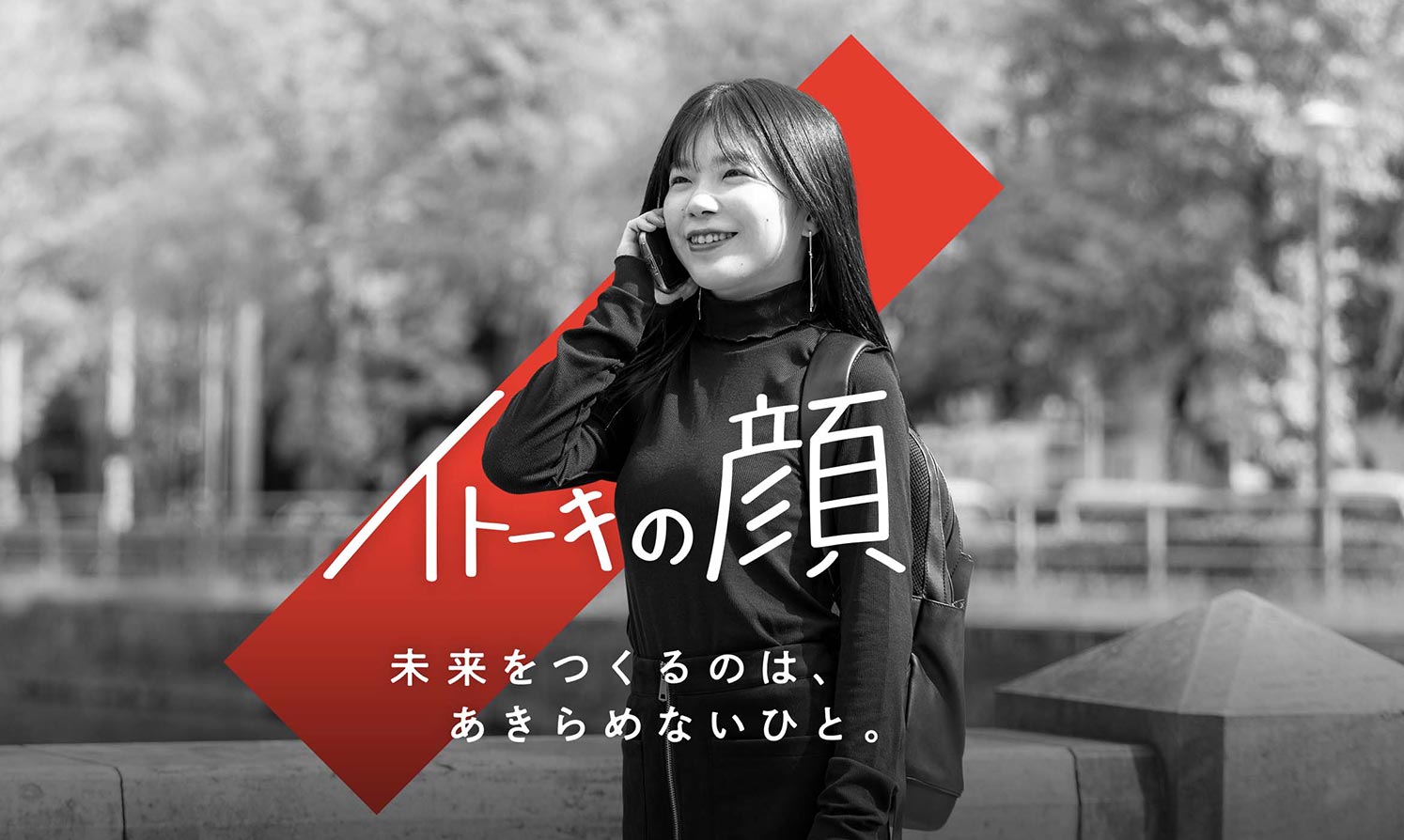
Eventually, voices began to emerge saying things like, "I want to appear in it too," and "I want to introduce that person's work," and it transformed from a project where PR unilaterally disseminated information to one created together with employees.
Through these ongoing efforts, we have gathered a wealth of valuable information that had not previously been made public, including not only our business, products, and services, but also the challenges and passions of the developers and employees behind them. We now use this information for media communication, adapting our approach to the characteristics of each medium, and delivering stories centered on the challenges and aspirations of our employees to society.
—Among the information you've uncovered within the company and shared with the media, are there any cases that particularly stand out in your memory?
One particularly memorable moment was when Itoki was featured on a major business program. The program showcased many of our employees working on the front lines. After the broadcast, we received a tremendous amount of feedback from outside the company, including customers and business partners. Many people expressed their appreciation not only for the company's initiatives but also for the attitudes and aspirations of our employees. I feel that it was a moment when we were able to convey to society the challenges and passion for work of each and every employee that we had seen through internal communication.
On the other hand, there was a huge response within the company. Many employees were featured, and more than half of the employees watched the program in real time. In the internal survey conducted after the broadcast, almost 100% gave it a high rating.
In fact, it's the employees who pay the most attention to our company's media exposure. By reaffirming the value of our company and our work through the media, employee engagement and pride in our company have increased, and we've even started receiving new information from within the company, with requests like, "We want our own initiatives to be shared as well."
By disseminating the information gathered in this way back to society, new evaluations are generated, and even more information is gathered. This virtuous cycle is the corporate communication we aim for. And this accumulation leads to increased trust from stakeholders, including investors, and an improvement in corporate value.
Towards investor relations that accurately communicate corporate value and build trust with investors.
—How did the process of communicating the value created within the company to society connect to investor relations and communication with investors?
Media coverage also increases investor attention. In today's environment where human capital management is emphasized, investors are paying attention not only to the numbers but also to "what lies behind them."
Therefore, it has become important for investor relations (IR) to not only accurately convey financial information, but also to communicate corporate value through the efforts of employees and the organization. At Itoki, we feel that by sharing the stories of each employee, we have been able to convey the company's strengths and appeal in a more multifaceted way that cannot be conveyed by numbers alone.
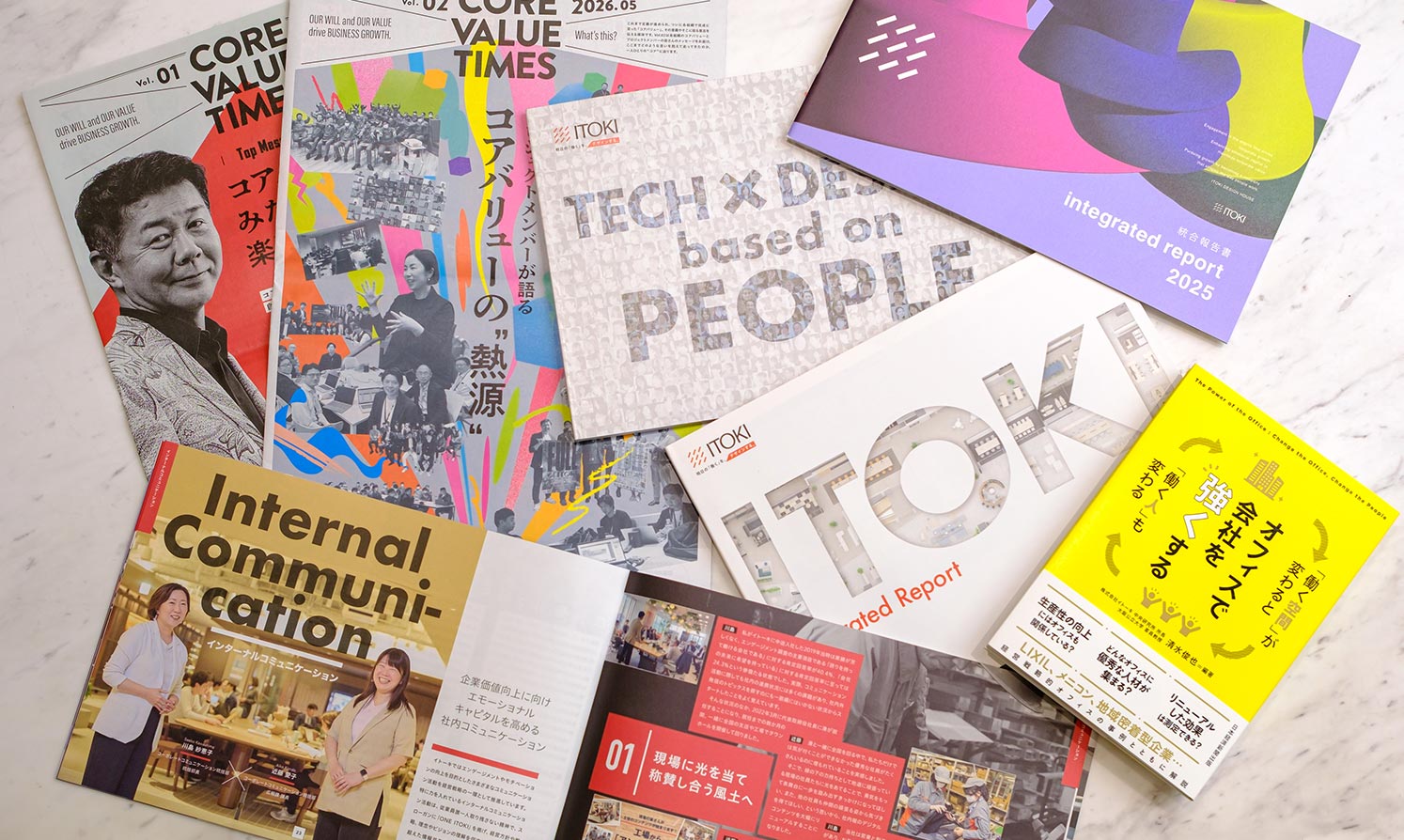
Content produced and distributed through corporate communications reform
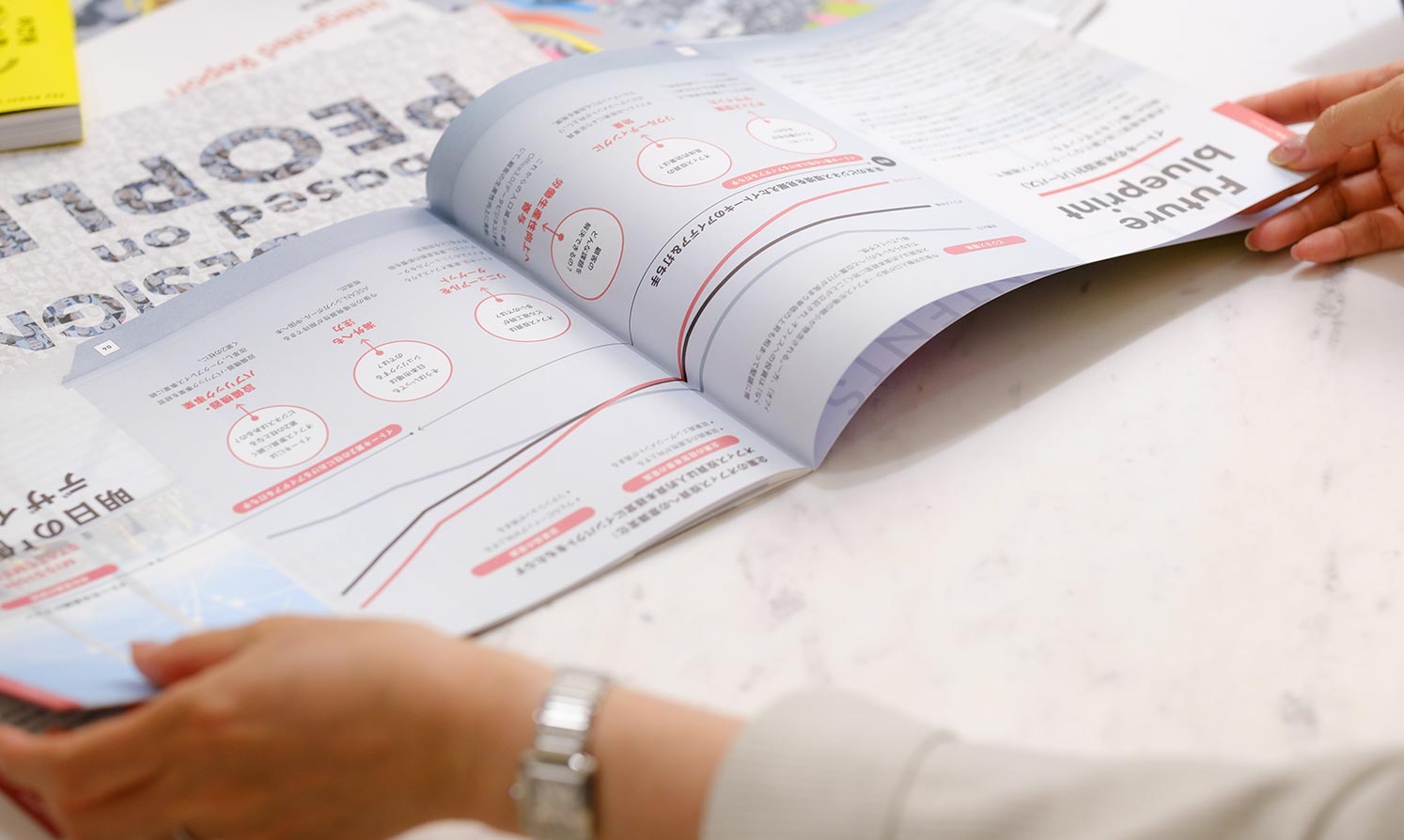
—The integrated report has also been significantly revamped. What were some of the things you focused on during that process?
We adopted the concept of "Itoki's Guidebook." Just reading a travel guidebook is exciting, isn't it? Of course, as an investor relations company, we will continue to convey accurate numerical information and management challenges, but we also aimed to create an integrated report that conveys the essence of Itoki by emphasizing "people" above all else.
While integrated reports are primarily for investors, they are also an important communication tool for employees. When employees and projects they are involved with are featured, the reports become engaging content that makes them want to read, fostering a deeper understanding of and pride in their company.

—So, by designing internal communications, media communications, and investor relations (IR) as an integrated whole, you're creating synergistic effects from each of them, right?
That's right. We consider internal communications, media communications, and investor relations (IR) not to be separate activities, but rather a series of communications.
Even though the target audience may differ, the corporate value we want to convey remains the same. The important thing is to add the right "seasoning" to suit each stakeholder. By adapting the presentation depending on the audience—employees, the media, investors, etc.—a single piece of information can generate value multiple times, and each form of communication can positively influence the others. We believe that this accumulation of efforts leads to an increase in corporate value.
From a furniture company to a company focused on "people": What strategic corporate communication has achieved.
—How do you feel Itoki has changed through this series of reforms?
While this wasn't achieved solely through corporate communications, the cumulative reforms implemented throughout the company resulted in an improvement in employee engagement scores from 40.4% in 2019 to 81.9% in fiscal year 2025.
The biggest change I've personally noticed is how people perceive Itoki. Previously, we were primarily seen as "a company that makes office furniture," but now I feel we're becoming recognized as a company that enhances corporate value by focusing on its people. I think it's a significant change that people now associate Itoki not just with furniture, but also with the faces of our employees and their passion for their work.
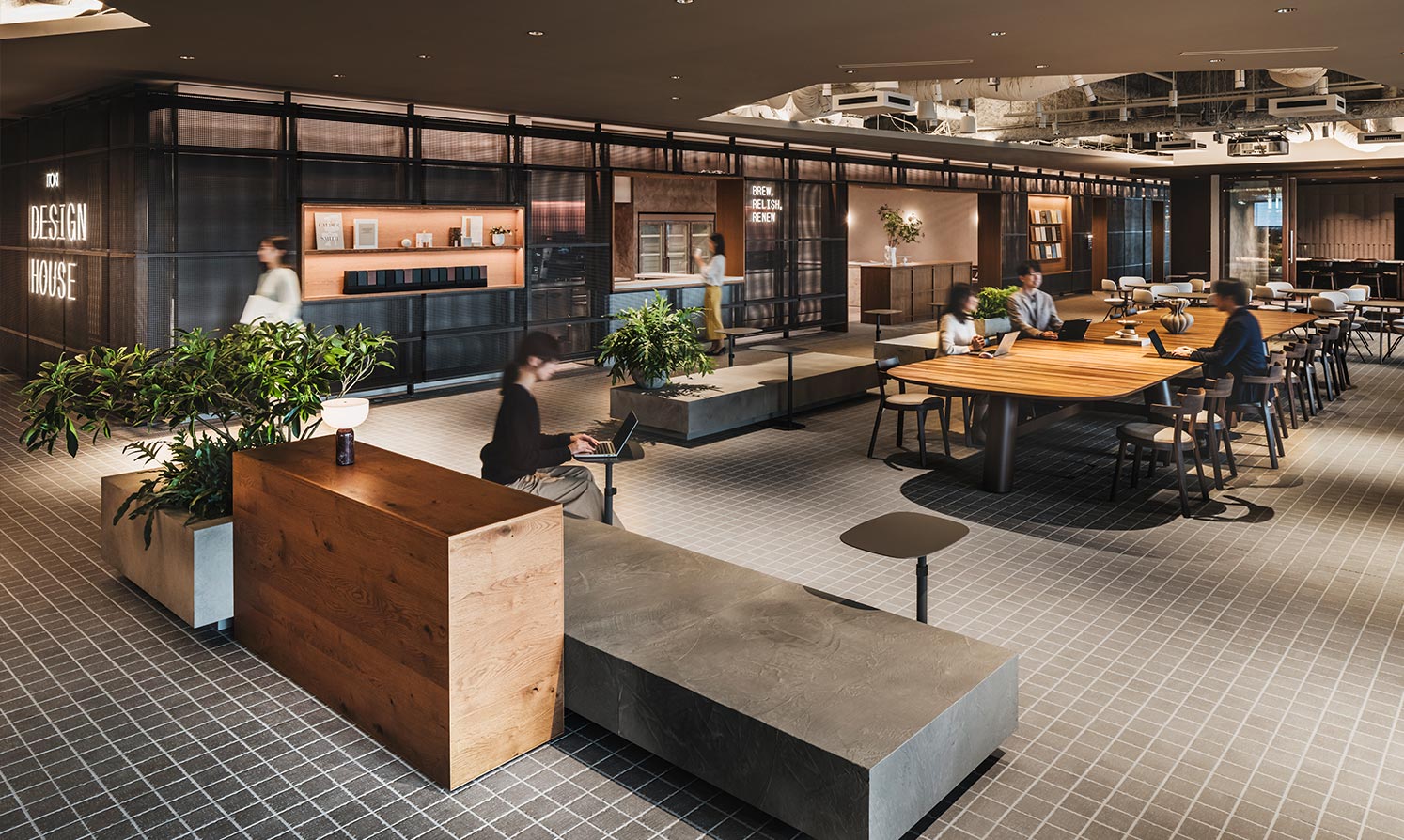
Starting in 2025, showrooms, which serve as real-world points of contact with customers, have been added to the Corporate Communications Division. We aim to extend the communication philosophy we have cultivated so far to these real-world experience spaces as well.
—What do you hope to achieve through corporate communications going forward?
As a "producer" at Itoki, I want to promote a more integrated communication strategy. Beyond simply disseminating information, I want to connect it to improving employee motivation and enhancing corporate value, thereby creating new value in return. I believe our role is to create such a positive cycle.
──Finally, could you tell us what you value most when working with people both inside and outside the company?
What I focus on is creating an environment where people feel like they want to participate and try things out. In the process of past reforms, I've seen initiatives that started with just a few people spread to others through someone's actions or praise, eventually becoming a large network. Instead of "forcing" people to do things, I create an environment where people "want to try." And I respect the strengths and aspirations of each individual, connecting them to create a greater force. That's what I value when working with various people, both inside and outside the company.
Related article
Related products/solutions

- The department, position, and system are those at the time of the interview and may differ from the current information.
Recommended Articles
-
July 8, 2026
"This can't go on like this." What was the breakthrough that the sales team found amidst their struggles?
-
June 3, 2026
Work methods that keep the workplace running. A "common language" that everyone can understand drives the whole operation.
-
![Beauty and comfort born from "unprecedented" design. The hidden technology behind "SHIGA" [Behind the scenes of SHIGA development - Part 1]](/company/itokistory/column/2026010/assets/img/recom_img_02B.jpg)
May 8, 2026
Beauty and comfort born from "unprecedented" design. The hidden technology behind "SHIGA" [Behind the scenes of SHIGA development - Part 1]
-
March 3, 2026
The first to take maternity and childcare leave at a manufacturing site. Creating a workplace where "balancing work and childcare" is the norm.
-
January 29, 2026
Outside the company, outside the world: The perspective of ITOKI space designers broadens through exposure to different cultures