



Due to the impact of the restrictions on driver working hours that came into effect in April 2024 (commonly known as the "2024 problem") and the worsening labor shortage caused by the increase in logistics demand in recent years, the logistics industry is in urgent need of improving operational efficiency and reducing the number of workers.
In this article, we will explain the background to the shortage of human resources in logistics fields and its social impact, and introduce the importance of improving the efficiency of logistics operations, specific measures, and labor-saving systems that are currently attracting attention.
Background of the shortage of human resources in the logistics industry

First, let's look at the reasons why the labor shortage in the logistics industry is accelerating.
Difficulty in securing human resources
The logistics industry is facing a chronic shortage of truck drivers and warehouse workers. In addition to the decline in the working population due to the low birthrate and aging population, the logistics industry is perceived as hard work, and there seems to be a tendency for few young people to apply for the industry. This labor shortage is expected to become even more serious in the future, and urgent measures are required.
Expansion of the EC market and increased demand for logistics
On the other hand, with the expansion of the EC market, the demand for logistics is increasing year by year. This growth has created an urgent need to improve the efficiency of logistics operations, but a shortage of human resources is preventing this from happening.
In order to keep up with the ever-increasing demand for logistics with limited human resources, it is essential to improve operational efficiency across the industry.
Impact of the 2024 logistics problem on society
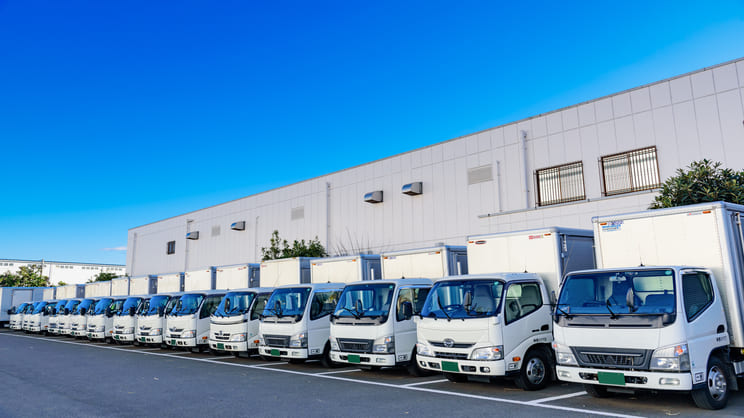
Starting in April 2024, the Work Style Reform Act will limit truck drivers' overtime work to 960 hours per year. This will reduce the number of hours worked per driver, and it is estimated that there will be a 14.2% shortage in transportation capacity in 2024 and a 34.1% shortage in transportation capacity in 2030.
Here we will explain the impact that the labor shortage in the logistics industry caused by the 2024 problem will have on society.
Reference: Policy package for logistics innovation (Decided at the Ministerial Meeting on Innovation in Japan's Logistics on June 2, 2023)
https://jta.or.jp/pdf/member/policy_package.pdf
Rising logistics costs
The restriction on truck driver working hours will significantly reduce the transportation capacity of the logistics industry. To compensate for this, transportation companies will be forced to increase costs such as labor costs, and will likely ask shippers to raise freight rates to cover the increased costs.
Shippers will have no choice but to pass on these price increases to product prices, which will ultimately lead to an increased burden on consumers.
Logistics stagnation
If the driver shortage cannot be resolved, logistics by truck will be disrupted.
This could disrupt the entire supply chain, causing problems such as "factories not receiving necessary parts" and "products not being able to be delivered to stores," and could lead to a stagnation of economic activity. There are concerns that this could have a serious impact on the distribution of goods that cannot be delivered late, such as fresh produce.
How to improve the efficiency of logistics sites
In order to address these 2024 issues, in addition to resolving the driver shortage, the key is to improve the efficiency of logistics operations in order to reduce drivers' "waiting time" and "loading and unloading time."
From here, let's take a look at some specific methods for achieving efficiency in logistics sites.
Review of business processes
To improve the efficiency of logistics operations, it is important to first review the work process. By analyzing the current work flow and identifying unnecessary work and areas for improvement, work efficiency can be improved.
For example, by changing the layout of the warehouse and optimizing work flow, shipping procedures can be clarified and made more efficient.
Promoting digitalization
Digitalization of operations is also essential to streamlining logistics sites. The transition from paper slips to digital data and the use of cloud systems will enable centralized management and sharing of information.
This will increase the visibility of operations, making on-site issues and areas for improvement clearer. Understanding information in real time will enable quick decision-making and flexible responses.
Review of human resource utilization
In order to utilize limited human resources effectively, it is necessary to reconsider human resource utilization. It is necessary to assign the right person to the right position according to the skills and experience of the worker, and to flexibly allocate personnel by promoting multi-skilled workers.
Furthermore, to improve worker motivation and retention rates, it is essential to have a good education and training system and to create a comfortable working environment.
Introduction of labor-saving systems
Introducing a labor-saving system is an effective way to resolve labor shortages while also improving work efficiency.
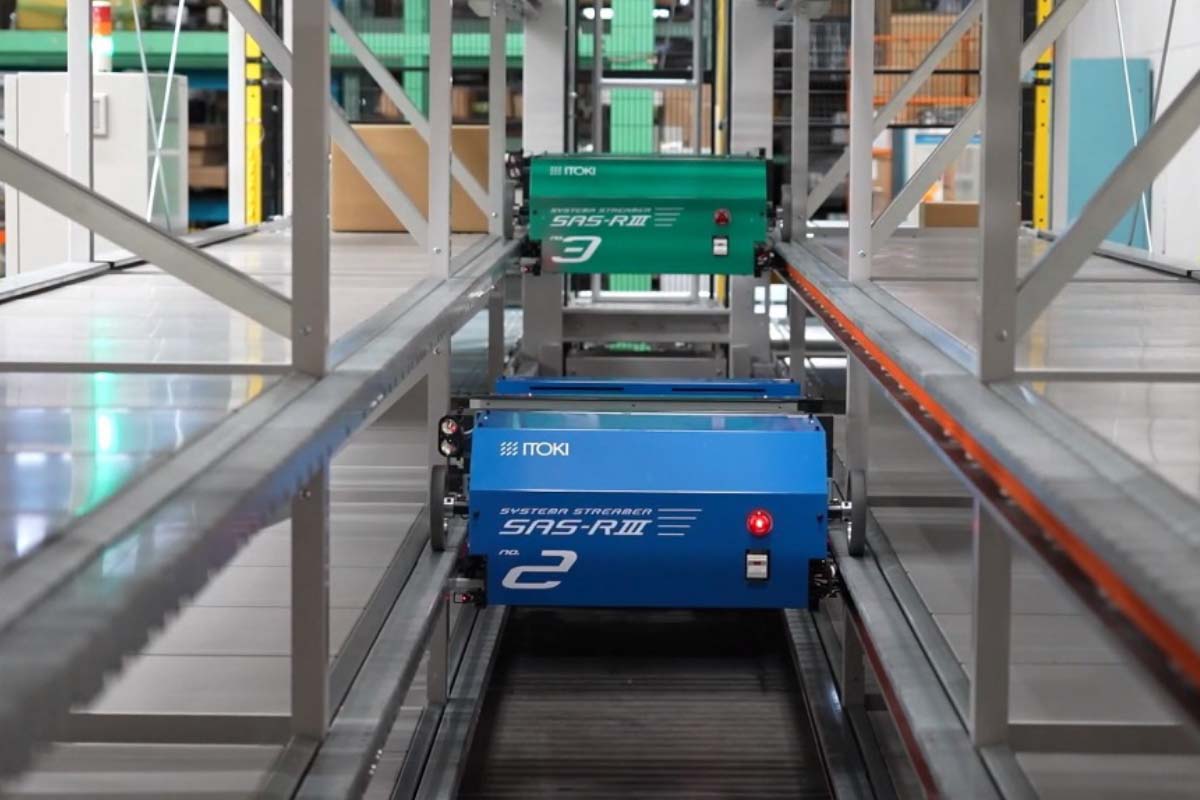
In recent years, there has been a rise in the introduction of labor-saving systems such as "AGVs," transport robots that automatically transport packages at logistics sites, "Warehouse Management Systems (WMS)," which streamline various tasks within warehouses and centrally manage inventory and incoming and outgoing shipments, and "SAS," an automated warehouse system that enables high-density storage and high-speed picking.
To efficiently reduce the number of people required at logistics sites, it is important to select a system that suits the scale and circumstances of the site.
What is "SAS", the labor-saving system for logistics operations?
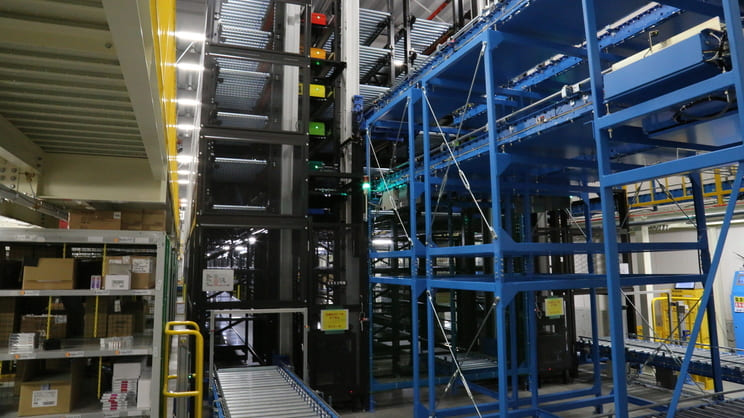
Itoki has delivered its automated warehouse "SystemaStreamer SAS," a powerful tool for achieving efficiency and labor savings in logistics sites, to numerous logistics centers.
We will explain in detail what functions and features SAS has, what advantage it offers, and its effects.
Systema Streamer SAS Functions and Features
- With ultra-high speeds that are among the highest in the industry, it performs tasks such as sorting, packing, and picking in place of humans.
- The layout can be flexibly constructed to suit the purpose, work content, and space of the logistics site.
- As an automated warehouse manufacturer, we have delivered approximately 700 units to date, and our products are highly reliable.
Advantage of SAS
Introducing SAS brings the following advantage:
- By automating and streamlining operations, you can achieve high productivity even with limited human resources.
- This reduces costs such as inventory, transportation, and labor.
- This improves delivery accuracy and speed, resulting in higher customer satisfaction and a competitive edge.
SAS is a reliable system that realizes labor saving and optimization of logistics operations. It solves various logistics issues such as resolving labor shortages, reducing costs, and improving services.
Click here for the "Systema Streamer SAS" product overview document
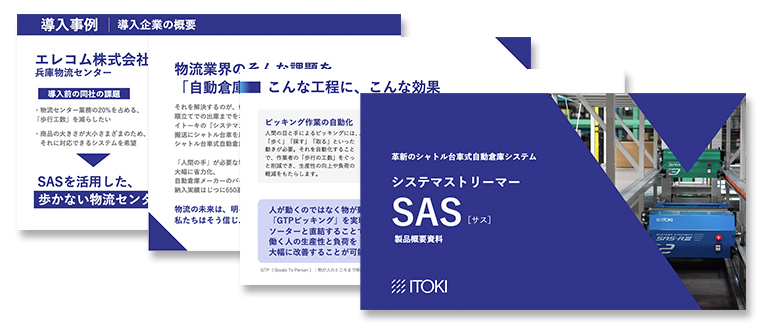
The product overview document for the automated warehouse "Systema Streamer SAS" can be downloaded from the following page. This document provides an easy-to-understand introduction to the overview of SAS and implementation examples with visual explanations.
- Overview of SAS and its advantage
- Specific examples of SAS use cases
- Itoki's support system (analysis, verification, proposals)
Please feel free to use this to solve problems in the logistics field.