


June 3, 2026
Work methods that keep the workplace running. A "common language" that everyone can understand drives the whole operation.


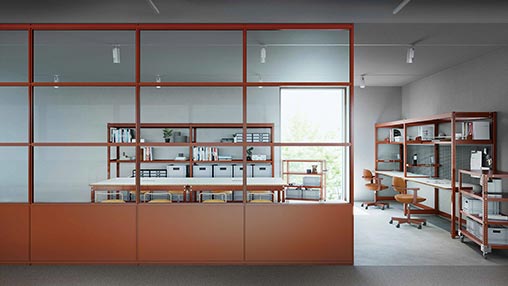
Mr. Wakabayashi is responsible for the entire process of manufacturing and delivering partitions, from the design drawing stage to delivery, handling everything from manufacturing arrangements to on-site management. Because he is intimately familiar with the characteristics of steel partitions*, he is able to complete the optimal construction for each unique site.
He's the true command center, translating the client's requests and the designer's vision into feasible plans and managing the process. We delve into the challenges and future of Wakabayashi, who constantly keeps the ideal and reality in mind and delivers on time.
- Steel partition: A movable metal partition.
Engineering Division, Engineering Management Department
Building Materials Design and Supervision Department East Japan Building Materials Design and Supervision Office
Team 1
*As of April 2026
Kaoru Wakabayashi
Attracted by the environment that allows me to be involved from design to on-site work, I joined the company as a new graduate in 2014 and have consistently been involved in the construction supervision of partitions. After taking a leave of absence of about three years for maternity and childcare leave, I returned to work. I am currently in this position.
*The department, position, and system are those at the time of the interview and may differ from the current information.
As the command center for manufacturing, I draw blueprints that everyone can understand.
I am responsible for the entire process of supplying steel partitions to offices, from design and planning to cost estimation*1, creation of construction drawings*2, procurement planning*3, logistics arrangements such as manufacturing and purchasing, progress management and inspection during construction, and maintenance after handover. My work is diverse, but my role is that of the command center for manufacturing partitions.
- Cost estimation: Calculating the necessary materials and labor costs to determine the total cost.
- Construction drawings: Detailed drawings necessary for actual work to be carried out on site.
- Procurement planning: Managing the ordering and delivery schedules for materials.
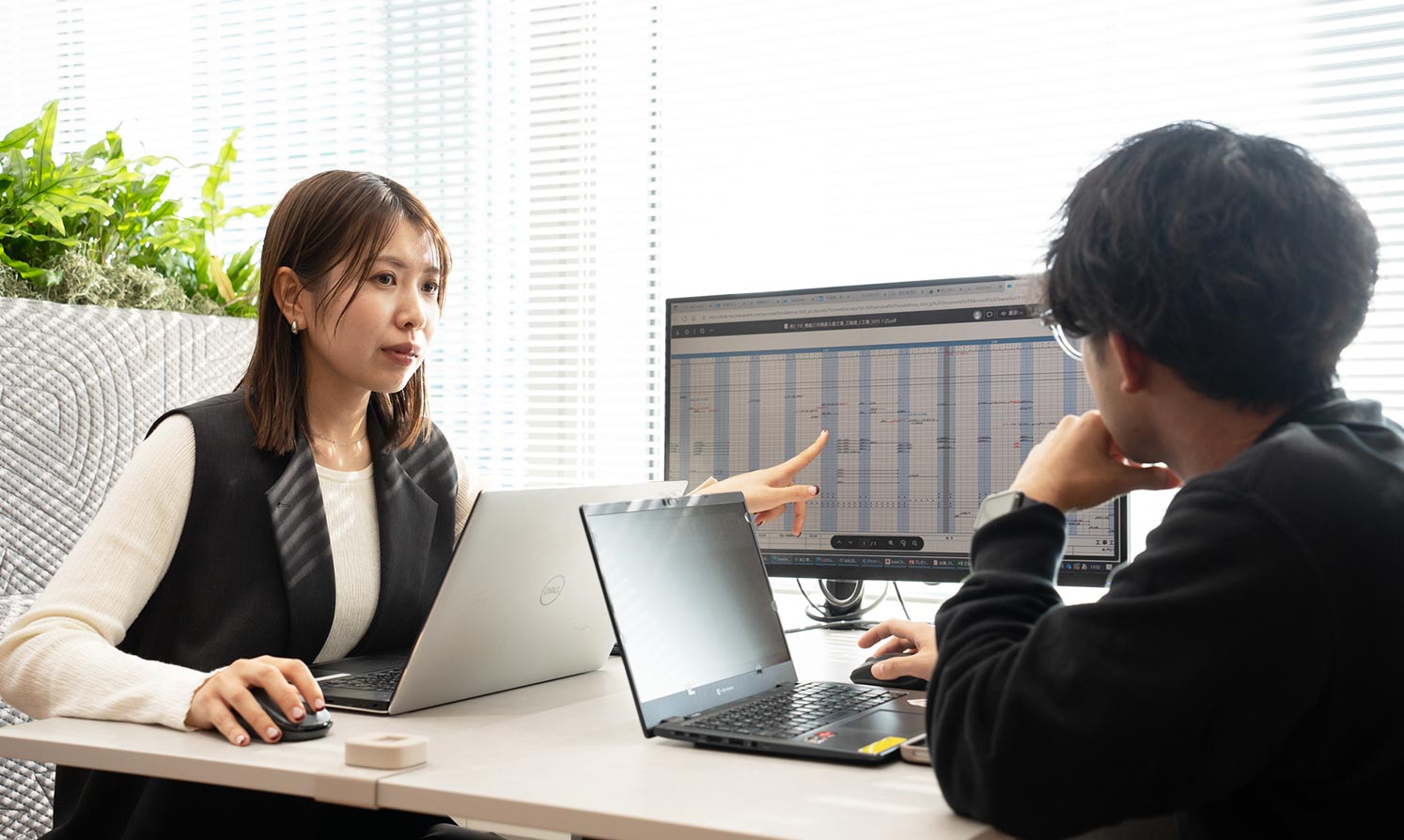
To guide reality toward the ideal, we create construction drawings to ensure smooth operations on site.
In the initial stages of a project, it's crucial to accurately grasp the client's requests and the designer's specific preferences. However, construction may not always be feasible based solely on the basic design drawings provided by the designer.
We create the construction drawings (*4) by comprehensively considering factors such as the actual site conditions, budget, and construction period.
- Manufacturing and Construction Drawings: Drawings that provide more detailed information and dimensions for manufacturing components in the factory and for construction work at the building site.
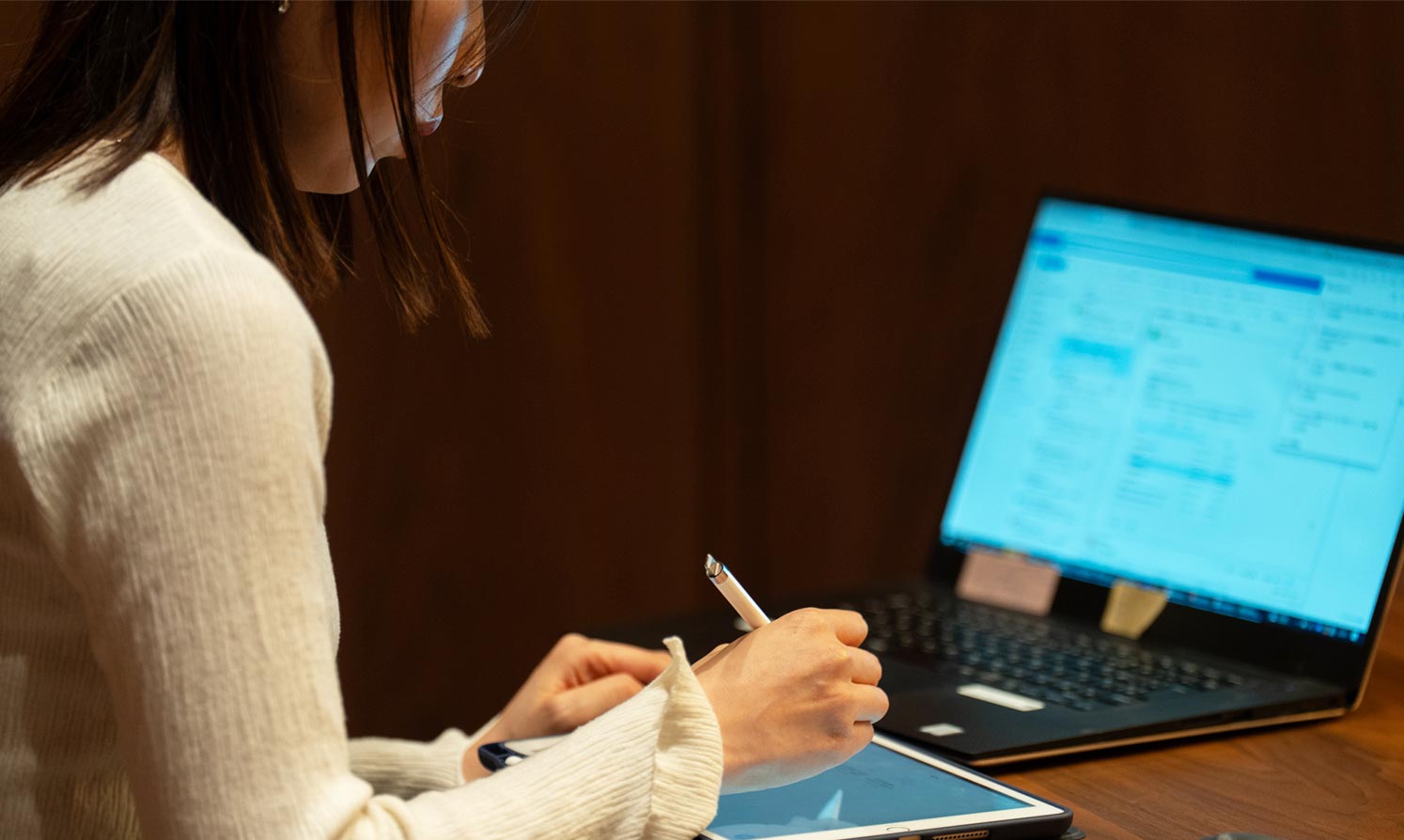
I find satisfaction in meticulously planning and ensuring that projects run smoothly on-site.
These manufacturing and construction drawings are used by various people as a basis for judgment until delivery is complete, so they need to be written clearly and in a way that is easy to understand as a common language. Maintaining quality while avoiding unreasonable designs, reducing the burden on subsequent processes, and sometimes accommodating special order designs*5 are also important tasks, as is adjusting within the budget.
- Special Order: Products that are not available as standard items or are not in the product lineup, made to order.
Once we move into the actual construction phase, coordination with factories and partner companies becomes essential. We carefully adjust the schedule to prevent accidents and ensure strict adherence to deadlines. I feel a great sense of accomplishment when we successfully deliver on time.
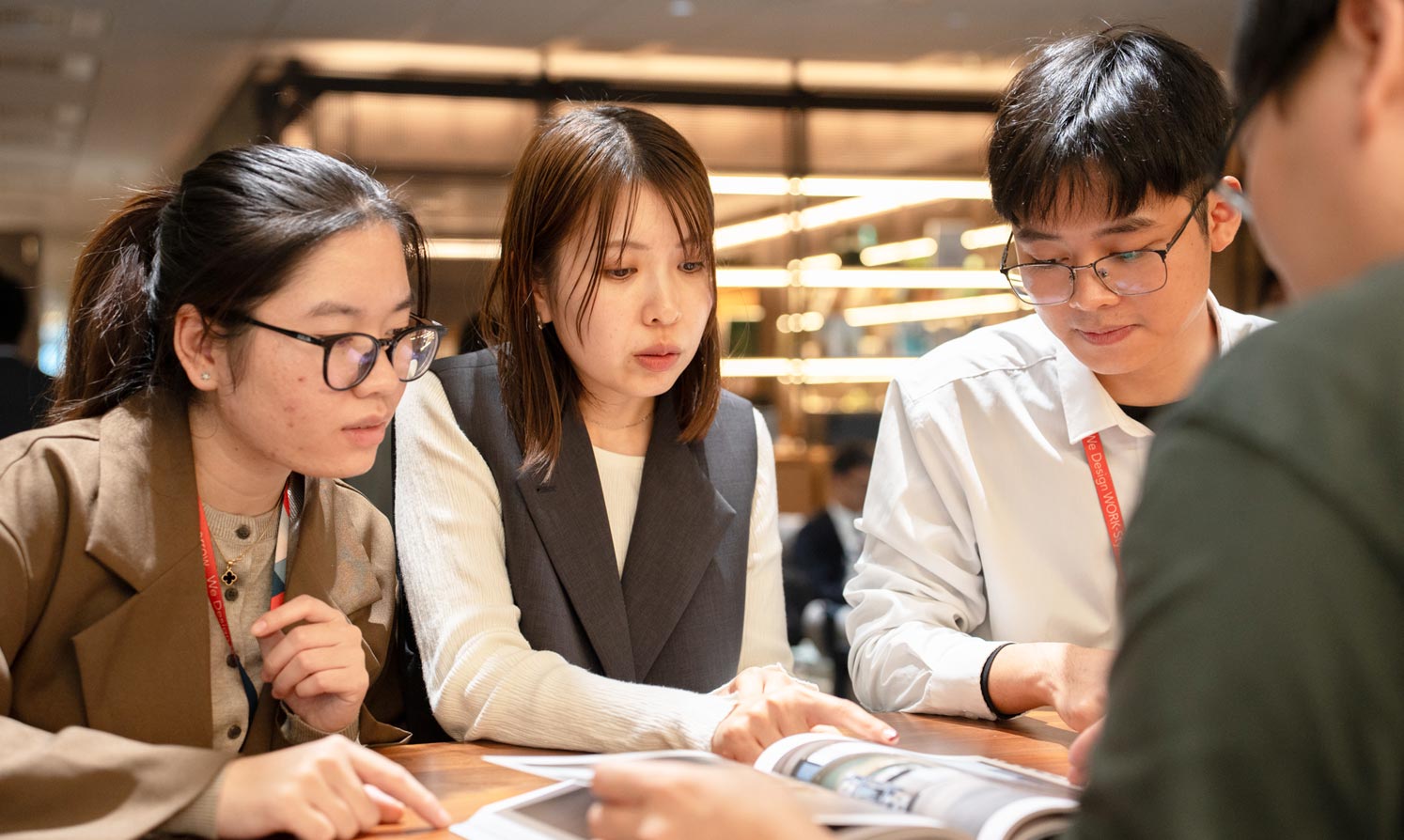
With planning and flexibility, we keep the work going.
Planning from the design stage, considering the balance between "quality," "ease of construction," and "cost," is crucial to keeping construction work running smoothly.
During my second year at the company, I was assigned to a project of a scale I had never handled before, and I was bewildered by the constant stream of unexpected events. However, I decided to prioritize "facing the task at hand." I set priorities and tackled each problem one by one, solving them as I went.
I remember my respected boss telling me, "There's no project that never gets finished." Gradually, I developed the ability to anticipate what might happen if something unexpected occurred.
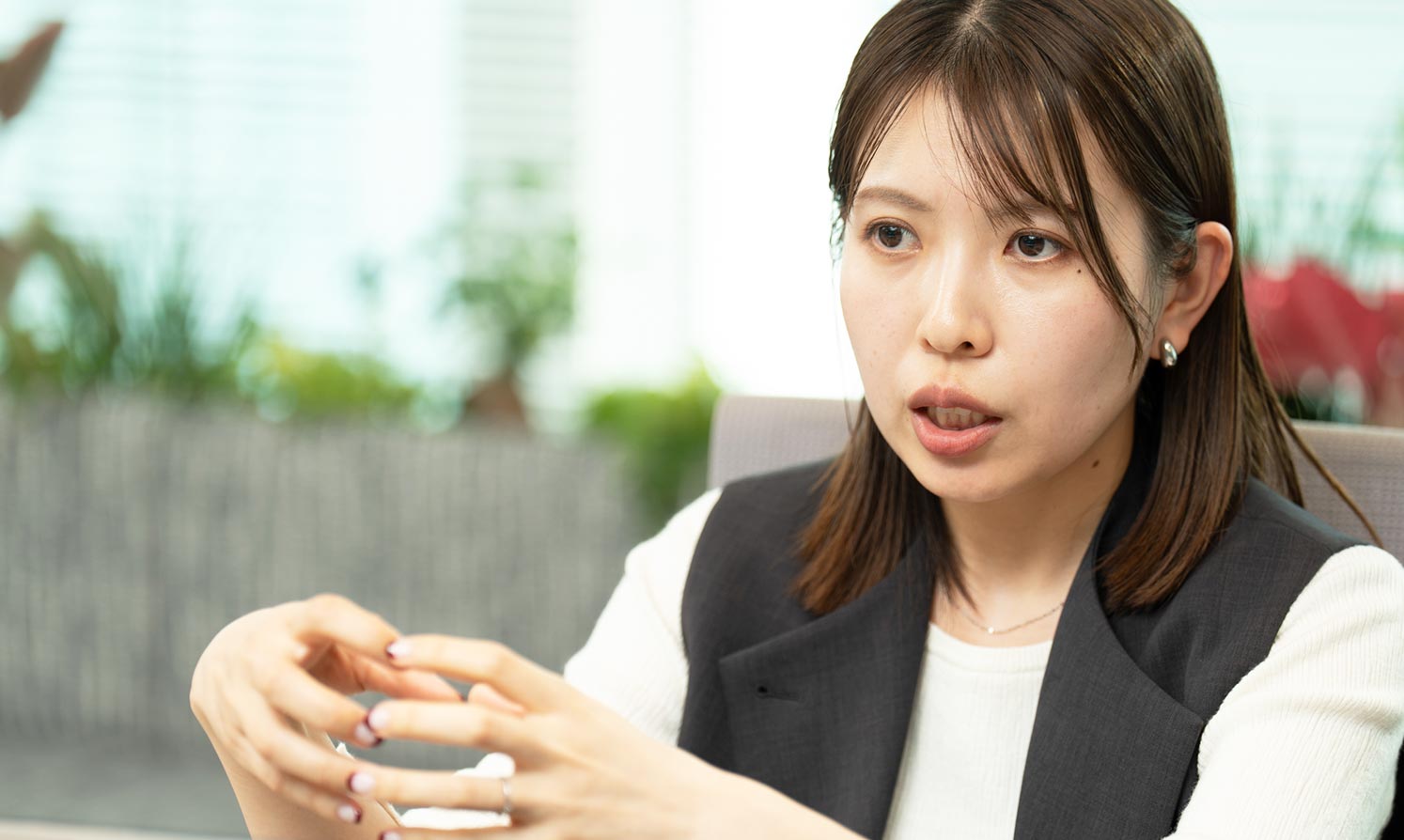
Because so many people are involved, it's important to be prepared for unexpected situations and to be flexible.
We value flexibility just as much as planning. Once construction actually begins, site characteristics that weren't apparent from the drawings sometimes become clear. Also, during busy periods, we often have multiple projects running concurrently. To respond flexibly, it's necessary to maintain close communication with all relevant parties on a daily basis.
This is a job that I could never complete by myself. That's why I want to support my colleagues by providing clear instructions, a well-defined plan, and the ability to recover from unexpected situations.
Pair work ensures both quality and diverse working styles.
In my current job, we use a pair work system, where two people work together to handle a property. As someone who balances childcare with flexible working hours and reduced hours, this is a very comfortable work environment for me.
We believe that pair work has the potential to further standardize the work of the Engineering Division. Previously, each person was in charge of one project, but there was a problem in that it was difficult to recover when a problem occurred with the person in charge.
However, working in pairs means that if one of you has an urgent matter to attend to, there's no need to worry about stopping work. To achieve this, it's important to share project information regularly and, while dividing up the roles, to maintain a sense of ownership over "the project you're in charge of."
I hope that by sharing my knowledge with my partner, even just a little, I can contribute to raising the overall level of the team.

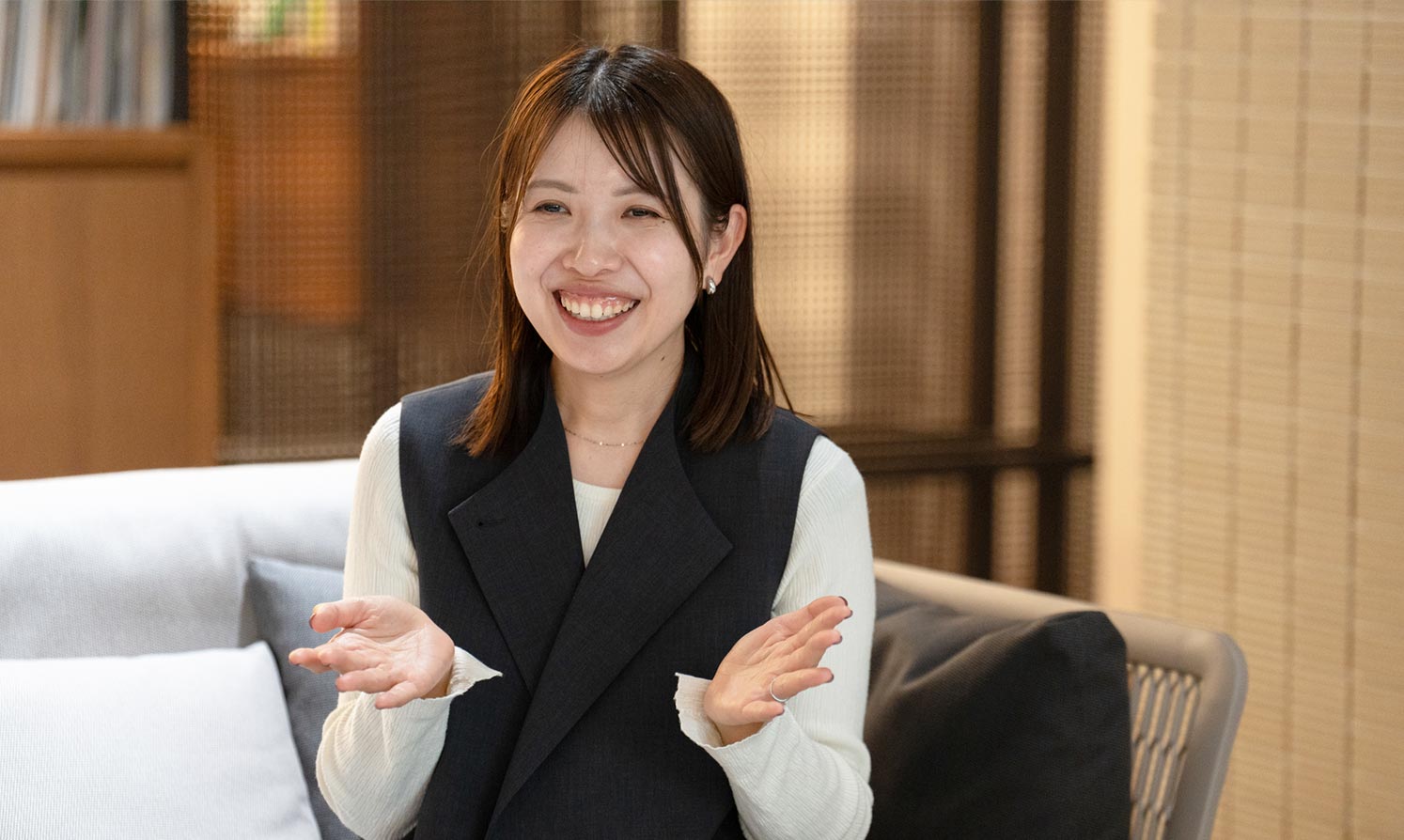
We want to create role models that inspire colleagues with diverse circumstances and aspirations to work vibrantly.
Engineering is a job that involves working with many people. In order to make people think, "I'm glad I entrusted this to them," I would like to utilize my Class 1 Architectural Construction Management Engineer qualification to further strengthen collaborations and take on more large-scale projects.
As my skills improve, that benefit my teammates as well. We have an environment where that's possible. At Itoki, colleagues with various family circumstances and aspirations, not just those raising children, can work vibrantly. I hope to become one of those role models.
Related products/solutions

- The department, position, and system are those at the time of the interview and may differ from the current information.
Recommended Articles
-
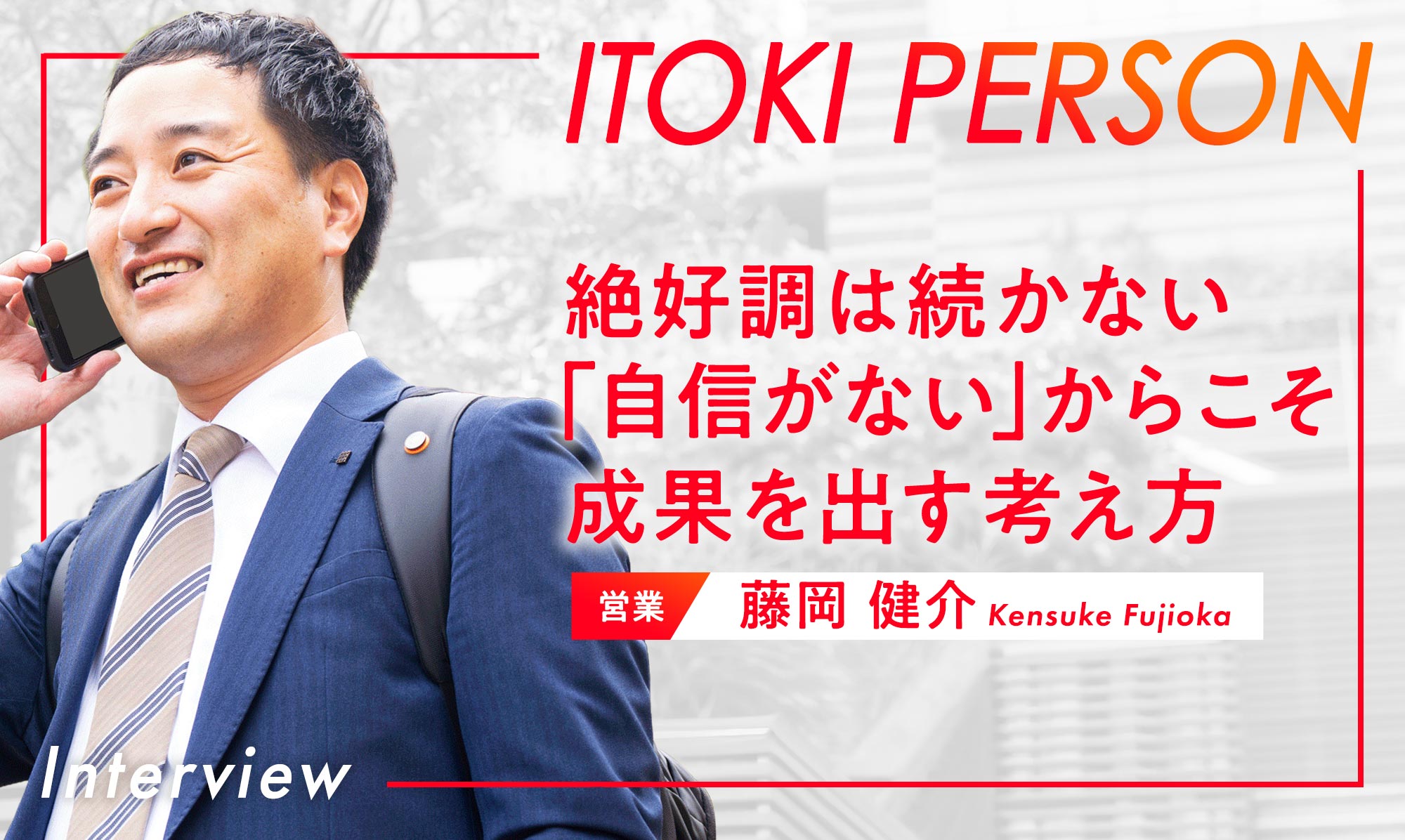
April 7, 2026
"Great plays don't last": A salesperson's mindset that has turned a lack of confidence into a strength to achieve results.
-
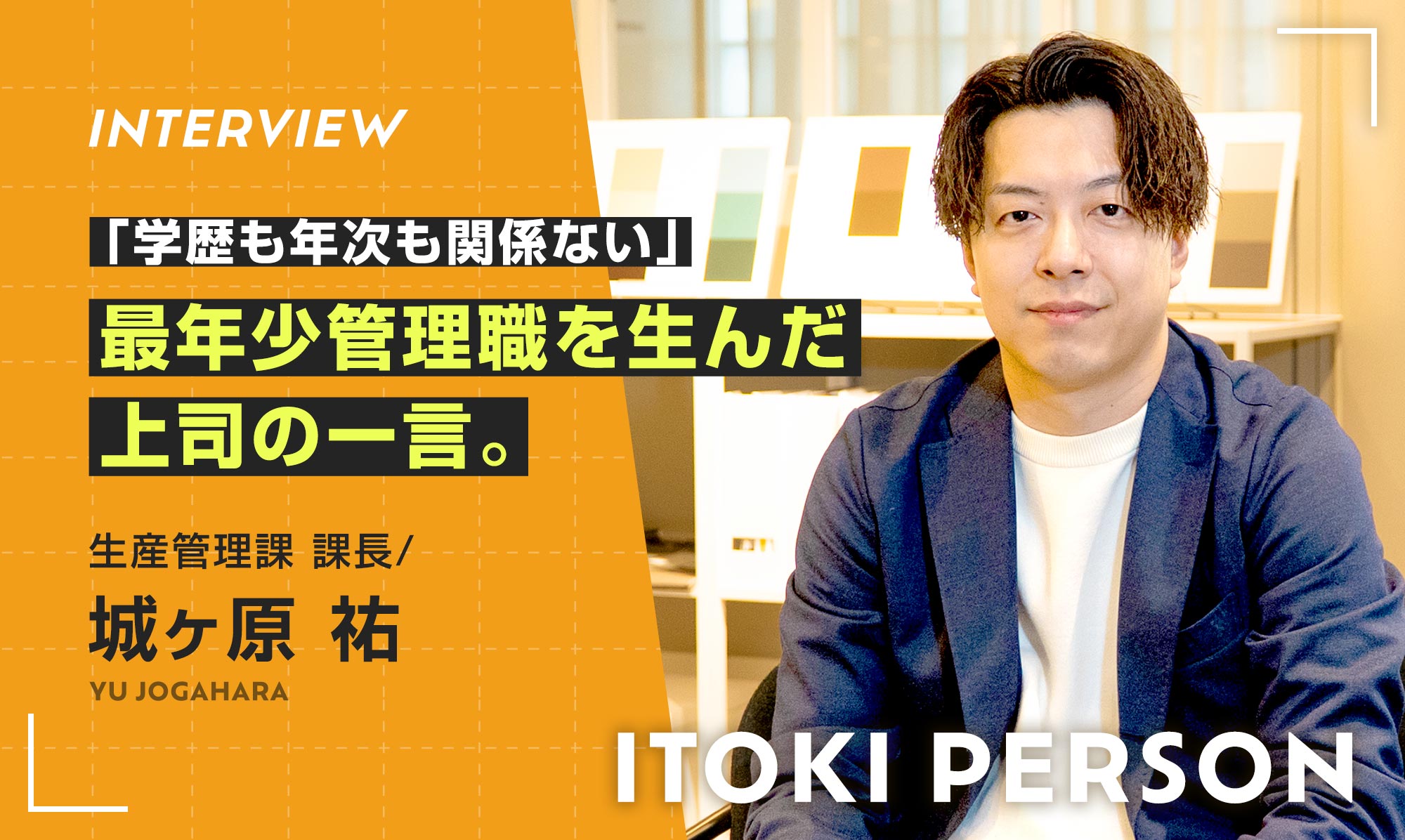
March 31, 2026
"Educational background and years of experience don't matter": The youngest manager at Itoki's career was shaped by a single comment from his boss.
-
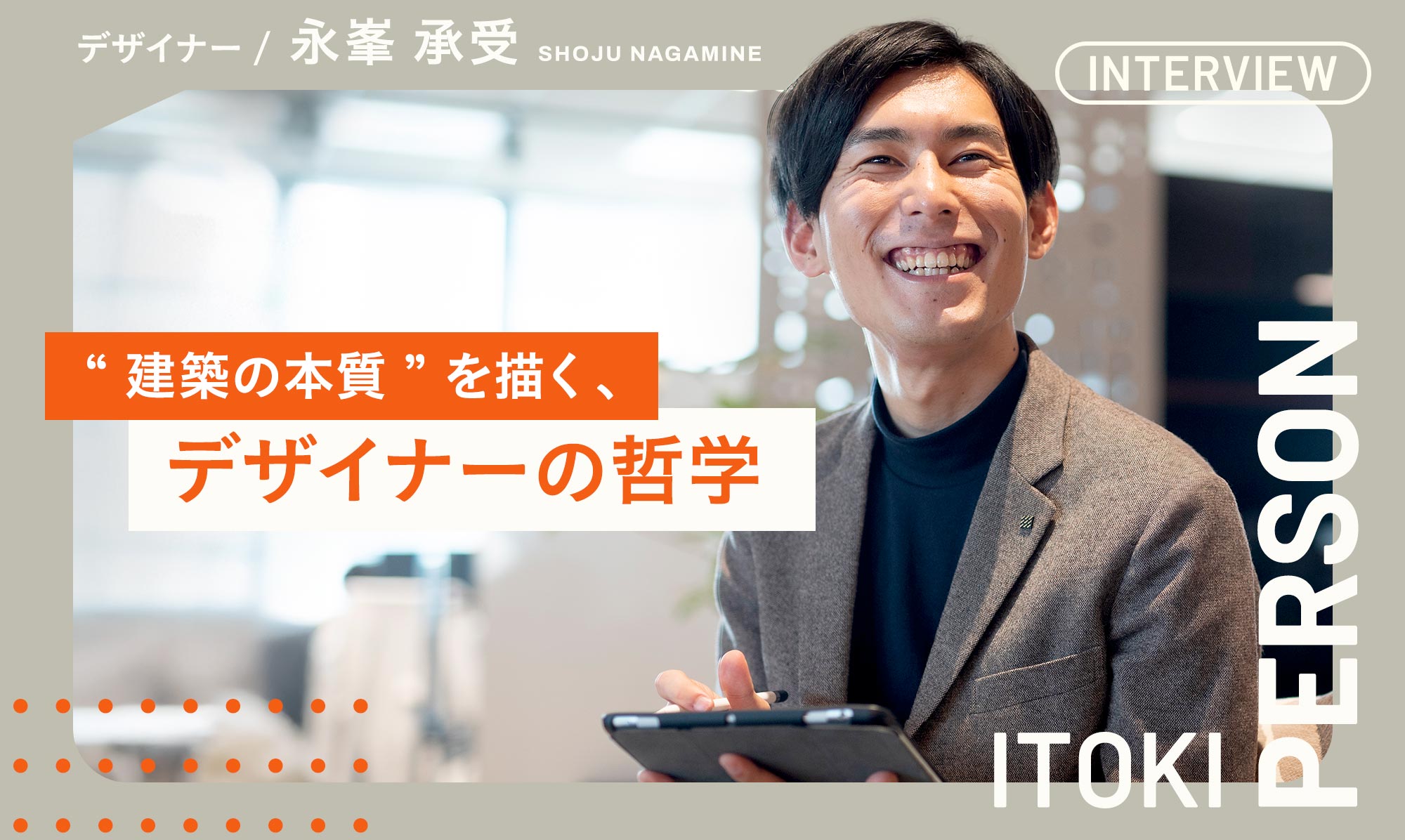
December 11, 2025
"I want to deliver what is truly needed" - the designer's philosophy based on the "essence of architecture"
-
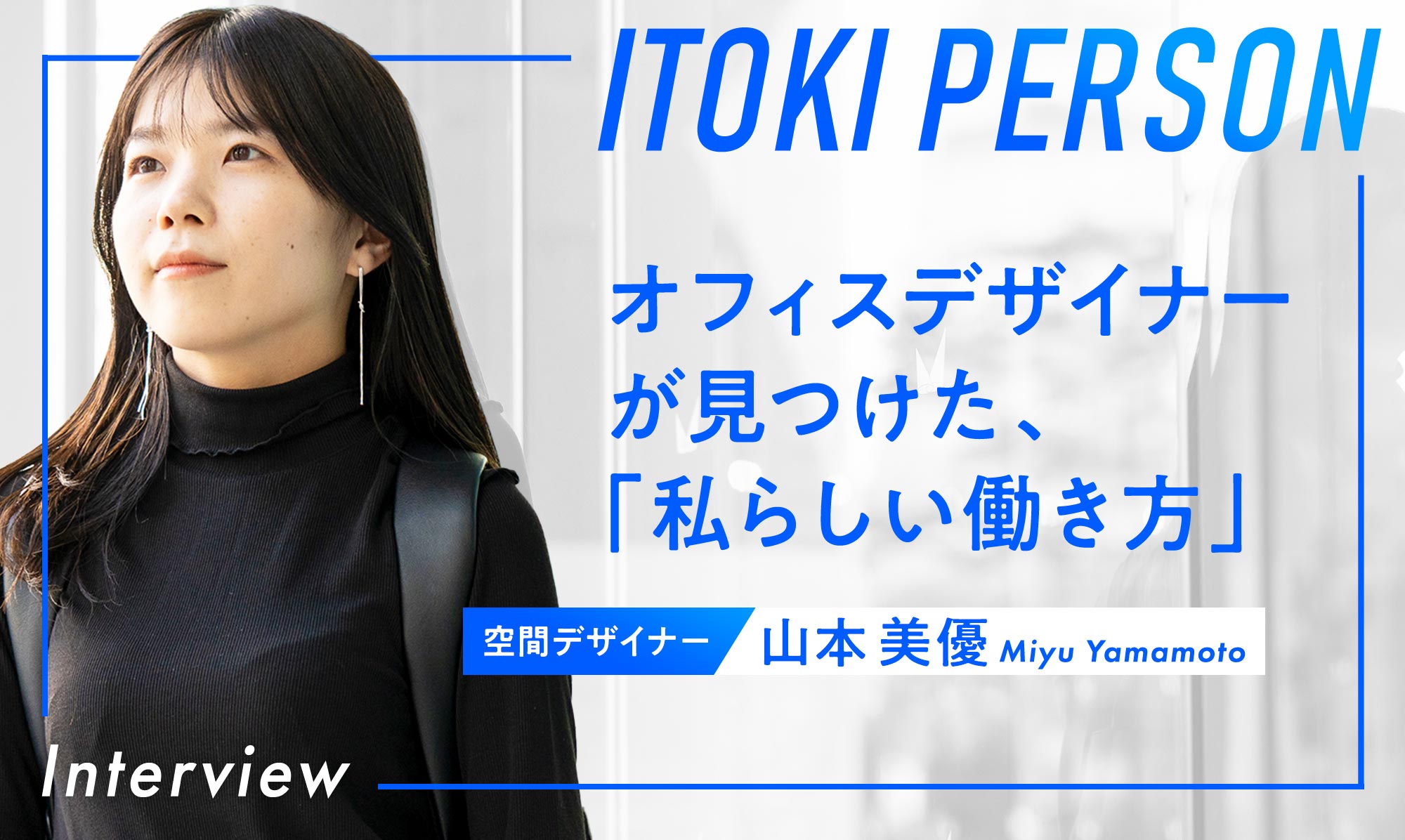
September 29, 2025
Continuing to ask "why" and sticking to one's own principles: An office designer discovers "a way of working that suits me"
-
September 29, 2025
It's interesting because I've never done it before. I found fulfillment in an unknown field.