


May 29, 2026
How to hone your expertise? A career philosophy from a wood specialist who is still active on the front lines at the age of 60.
Econifa is a solution that utilizes domestically produced wood to create comfortable working spaces in Japanese offices. Since joining the company, Isamu Kojima has dedicated his career to working with "wood," from launching Econifa and developing solid wood products to researching sustainable materials.
When Econifa was first established, the use of wood in office furniture was not yet common, so everything started from scratch. Mr. Kojima learned from wood suppliers and researchers, and through trial and error, gradually expanded his knowledge and network. Armed with the expertise he built in this way, he continues to take on challenges on the front lines, even now at the age of 60, by utilizing the re-employment system.
Mr. Kojima has now built such expertise that he is known as a "wood" specialist in the industry. Behind this success has always been a sense of curiosity and a willingness to take on challenges, always believing "I can do this."

ITOKI CORPORATION Production Division, Materials Research Laboratory / Product Development Division, Product Development Management Department
Part-time lecturer, Department of Architecture and Design, Faculty of Environmental Studies, Hiroshima Institute of Technology
*As of May 2026
Isamu Kojima
In 2007, while stationed in Shanghai, he joined Itoki as a mid-career hire. After serving as the head of the design department there, he returned to Japan in 2010. After returning to Japan, he participated in the launch of "Econifa," a solution utilizing local timber. In 2012, Itoki Tokyo Innovation Center "SYNQA" was established, and Econifa received a Good Design Award. Since 2017, he has been engaged in product development utilizing solid wood in the Product Development Division. Since 2020, he has been participating in research on office wood utilization, office environments, and Activity-Based Working (ABW) related projects in collaboration with universities. To date, he has received a total of 28 Wood Design Awards, including the Minister of Economy, Trade and Industry Award at the "Wood Design Award 2022" for the office table "silta."
*The department, position, and system are those at the time of the interview and may differ from the current information.
Contents
- "I might be able to do the kind of development I want to do"—a turning point that occurred while I was stationed in Shanghai.
- Our first attempt at using wood in the office. Building "connections" by sincerely engaging with each individual.
- What motivates us to take on challenges is the belief that "we can do it."
- I decided to approach my work as if I were a junior employee.
"I might be able to do the kind of development I want to do"—a turning point that occurred while I was stationed in Shanghai.
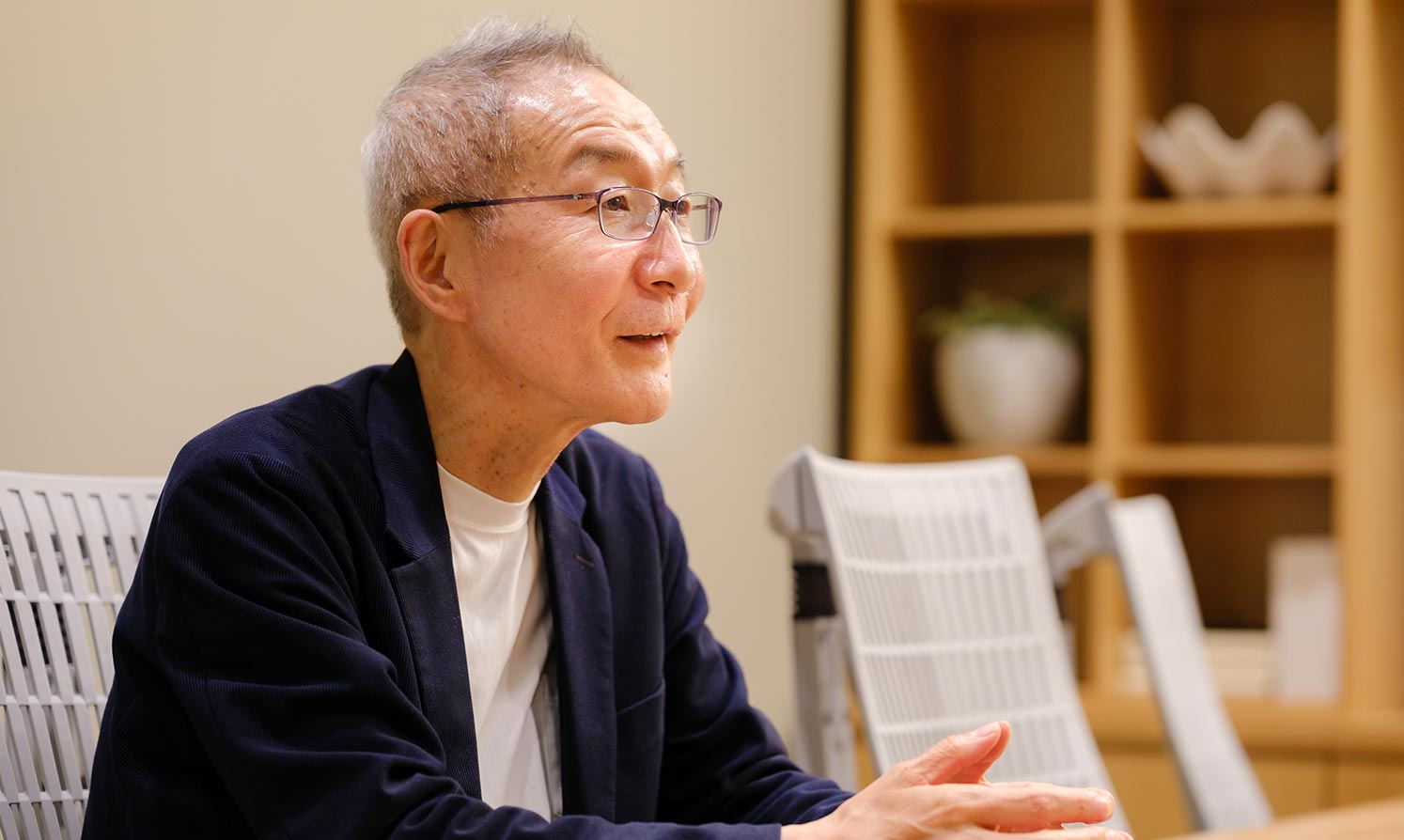
My current work involves developing products using domestically produced timber and promoting "Econifa," a solution utilizing domestic timber. I am also conducting research in collaboration with a university on the relationship between the use of wood in offices and improved employee performance.
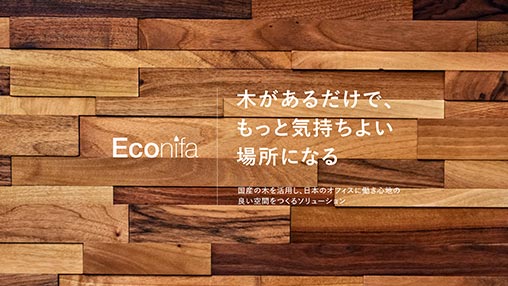
"Econifa" is a solution that started in 2010. It aimed to promote the use of wood in office spaces, with the goal of promoting forest sustainability and revitalizing local industries. Initially, it promoted the use of locally sourced materials, but now it is undergoing a rebranding effort to promote the widespread use of domestically produced materials as a solution for the new era, and to emphasize creating comfortable working spaces in offices.
Recently, we've also been working on using waste materials that would otherwise be discarded, such as coffee grounds, in our furniture. In Japan, with the increase in coffee consumption, the amount of coffee grounds that are discarded has also increased, but by using them in furniture, we have been able to transform waste into upcycled products.
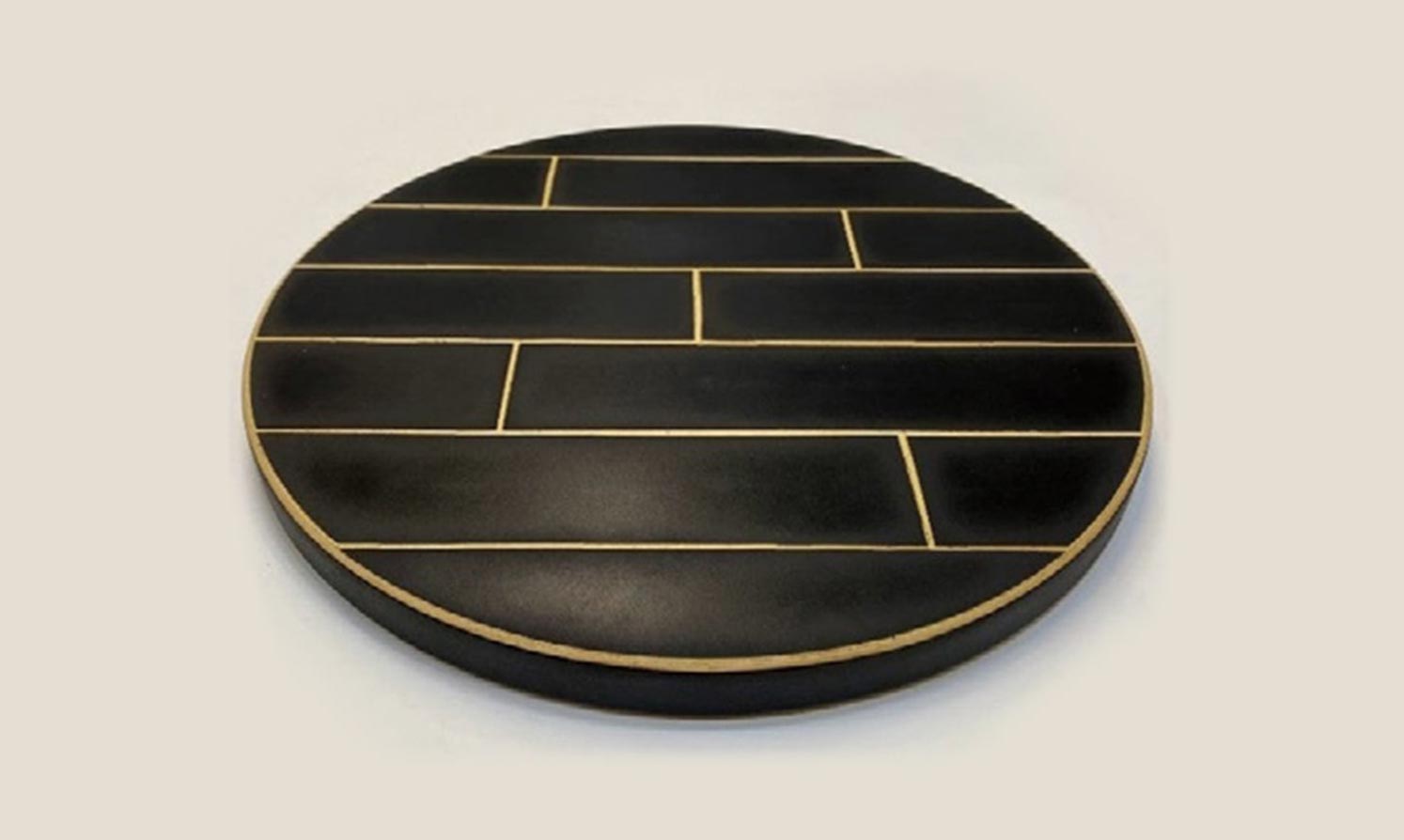
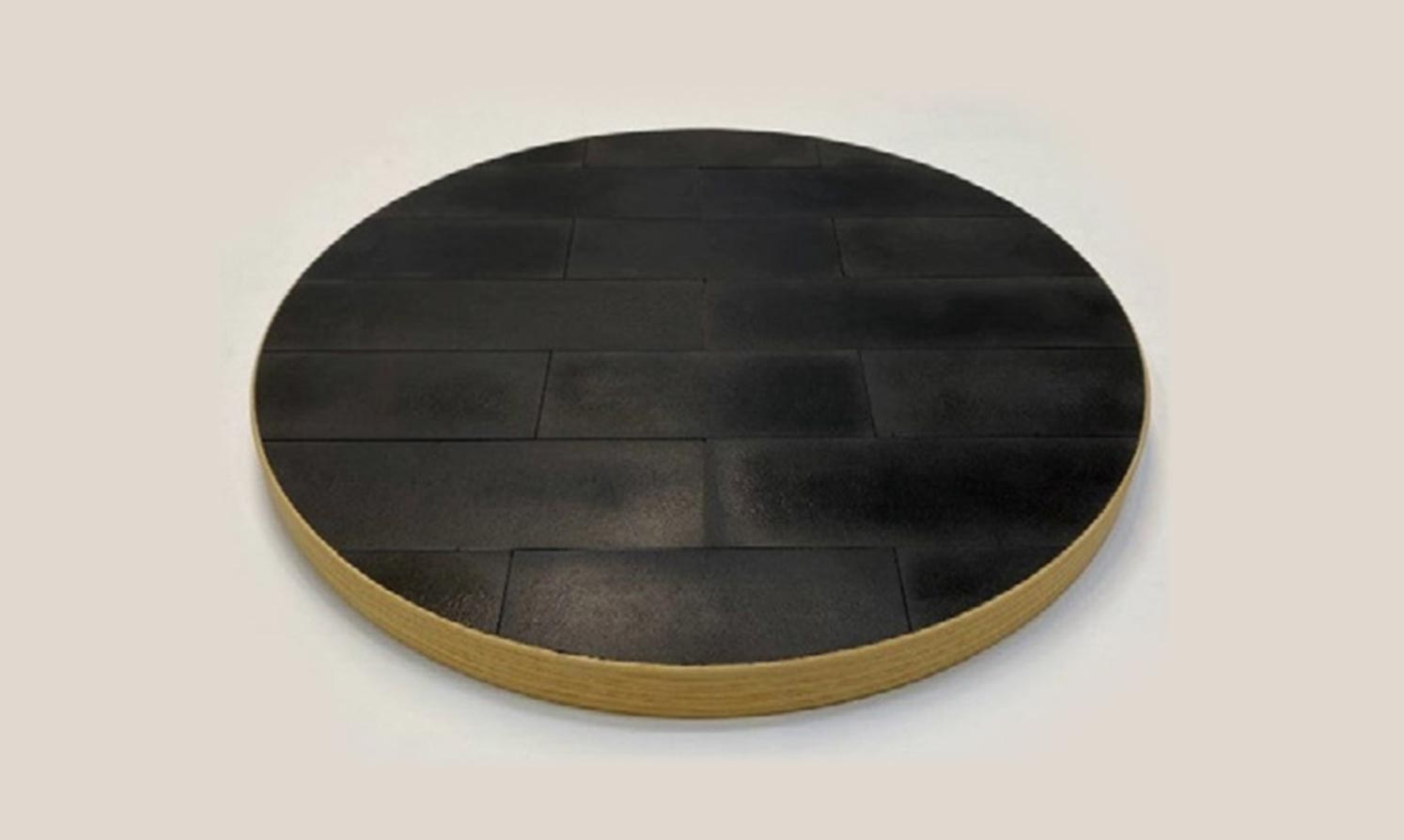
These plates are made from recycled coffee grounds. They are molded using only natural materials, without the use of petroleum-based resins. The core material to which the plates are bonded is also wood, making the entire product a plant-derived "all-biomass plate."
I'm sometimes called a "wood professional," which is quite an honor, but wood has always been a familiar part of my life since childhood. I was born in a remote mountainous area in the countryside. If I didn't run into the mountains, I'd be forced to help out in the fields, so I was always playing in the mountains (laughs). I'd build hideouts, slide down forest paths on a sled, and dig holes.
Since entering the workforce, I have always worked in furniture-related fields as an engineer. The reason I joined Itoki was because I was approached while I was stationed in Shanghai for my previous job. At that time, many Japanese companies had expanded into Shanghai, and I found a senior colleague who I had worked with before at Itoki, which had also expanded into Shanghai.
Actually, at that time, I was feeling the limitations of contract manufacturing work. I decided to join Itoki because they had their own factory, and I thought that I might be able to do the development I really wanted to do there. Also, based on my previous experience, I thought I could contribute to expanding their business in China.
Our first attempt at using wood in the office. Building "connections" by sincerely engaging with each individual.
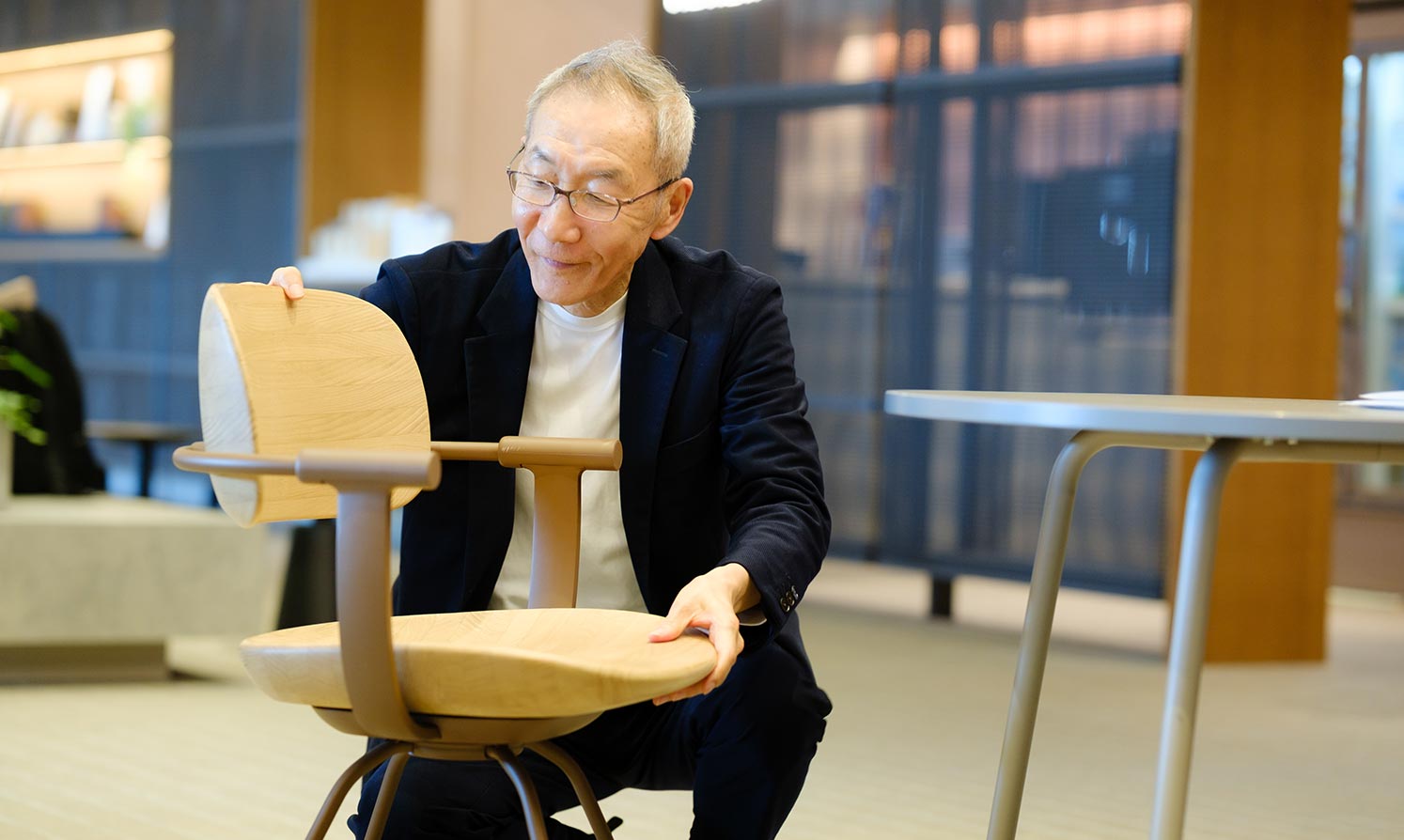
After returning to Japan, I became involved in the launch of "Econifa." I had the opportunity to talk about wooden furniture with the previous head of "Econifa," and he said, "If you know so much about it, I'd love to work with you."
That said, even though I say I'm knowledgeable, I'm really just a slightly more experienced amateur. My knowledge of wood was limited to what I learned at a vocational training school after work hours at my previous job, and some experience working with veneers used on the surfaces of high-end furniture.
At the time, wooden office furniture was rare, and even what was considered "high-end furniture" mainly used thin veneer made from sliced solid wood on the surface, with industrialized chipboard used for the interior. With virtually no expertise in wooden furniture making, it was my first experience working with wood in the true sense of the word.
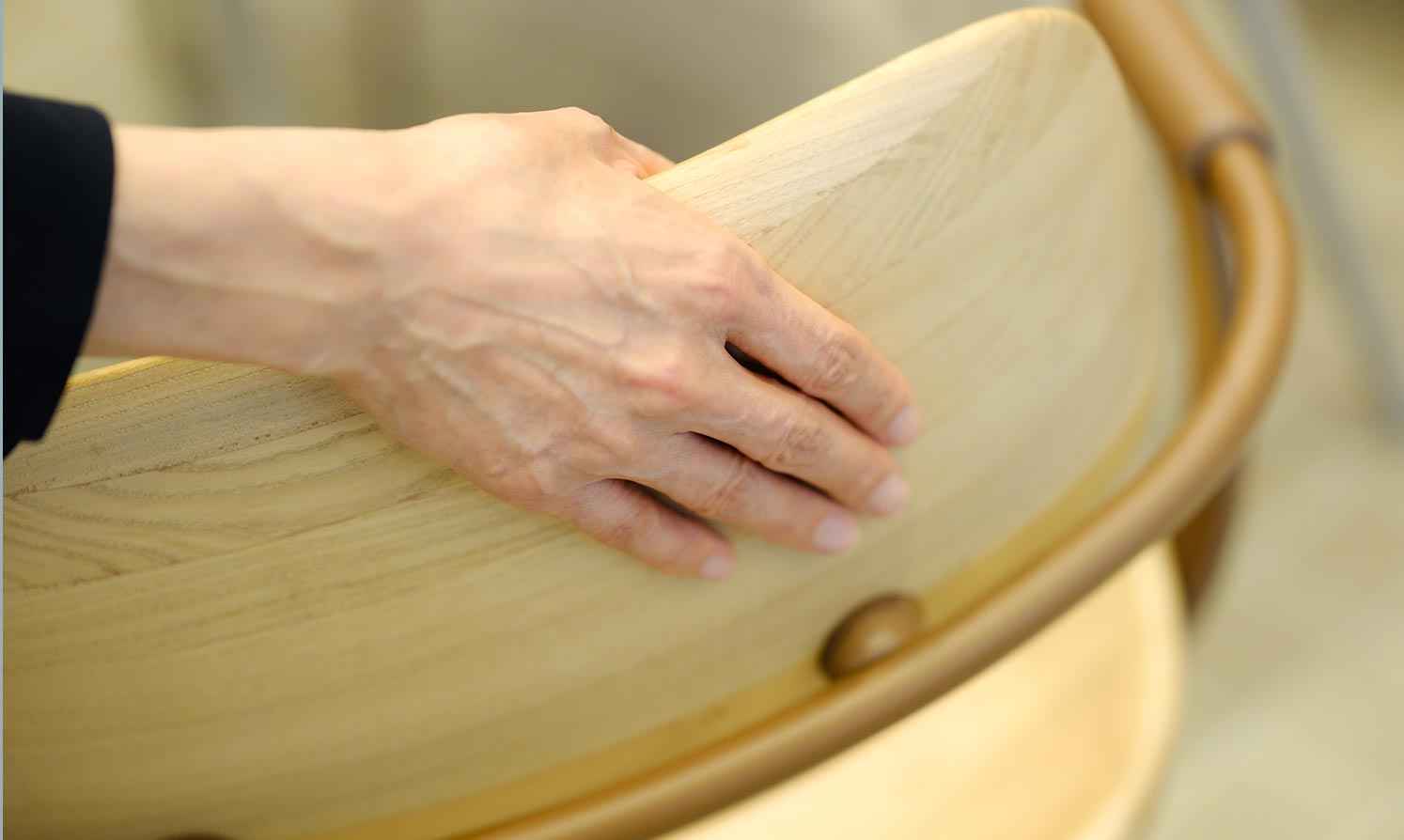
vertebra03WOOD. The back and seat are made of domestically produced chestnut wood.
Furthermore, when we first started Econifa, a major challenge was how to harden soft, easily damaged cedar and cypress wood. We went through a lot of trial and error, trying various methods such as hardening with paint and compressing the wood.
It took many steps to be able to leverage the soft characteristics of the wood as an attractive feature. We had no choice but to explore the possibilities of processing and product development for each tree species, while learning from timber businesses and researchers.
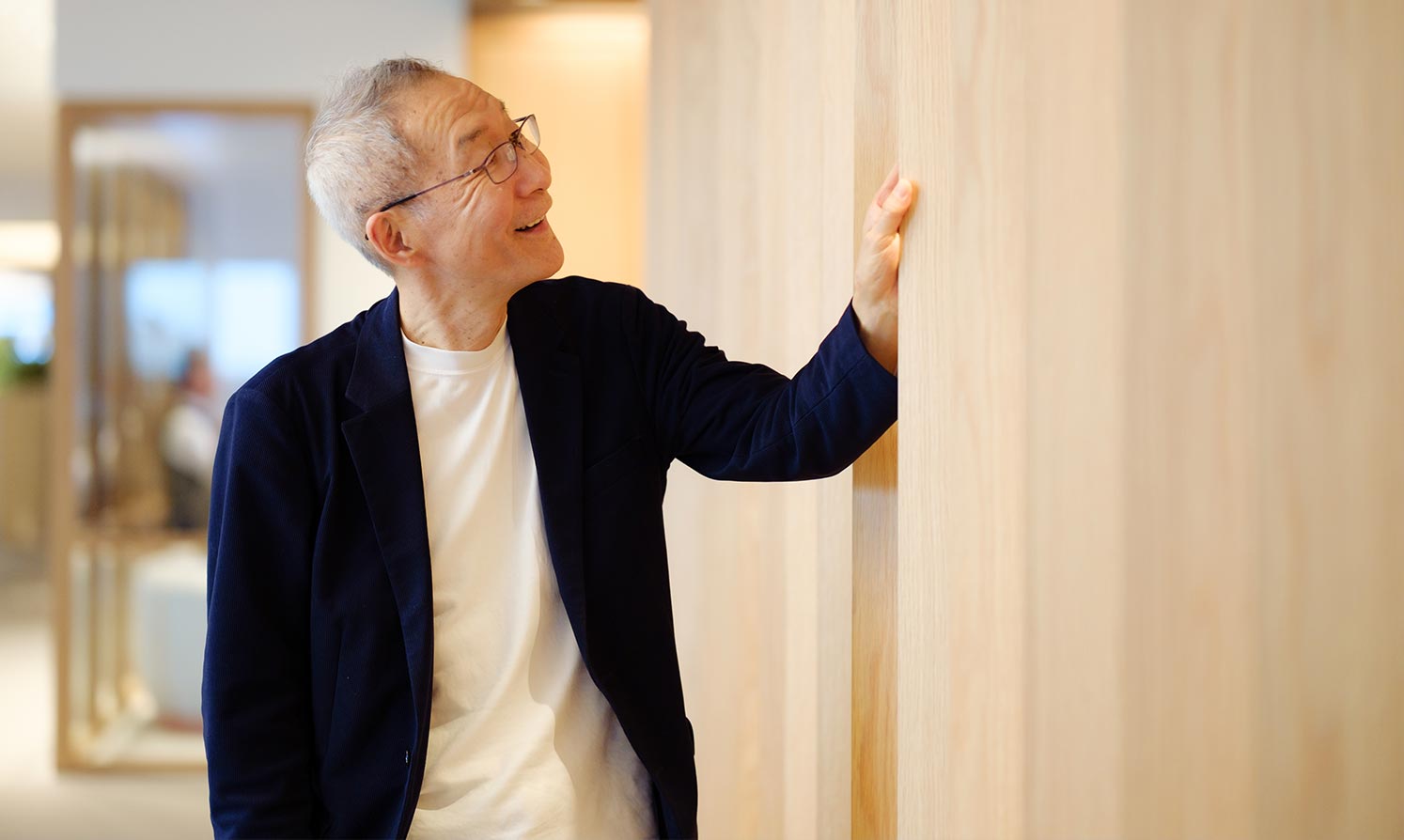
We also had trouble sourcing timber. Logs felled in the forest are usually distributed through market auctions, but only registered businesses can participate in those auctions.
In other words, in order to reliably secure materials that met our needs in terms of quantity, quality, and delivery time, it was essential to build trusting relationships by directly interacting with sawmills that handled the logs that were auctioned off.
Furthermore, at the Itoki Tokyo Innovation Center "SYNQA," which opened in Kyobashi, Tokyo in 2012, we were the first to use cedar flooring in an office.
However, when I initially consulted the sawmill, they refused, saying it was inconsiderate to use their office with shoes on.
After carefully explaining the situation and gaining their understanding, we were able to verify each aspect, including direct application to the raised access floor, cleaning methods, and how the floor gets damaged by shoes, by actually checking them in person.
The knowledge gained through this process not only proved useful in subsequent practical work, but I also feel it strengthened our collaboration with sawmills and led to the expansion of our procurement network.
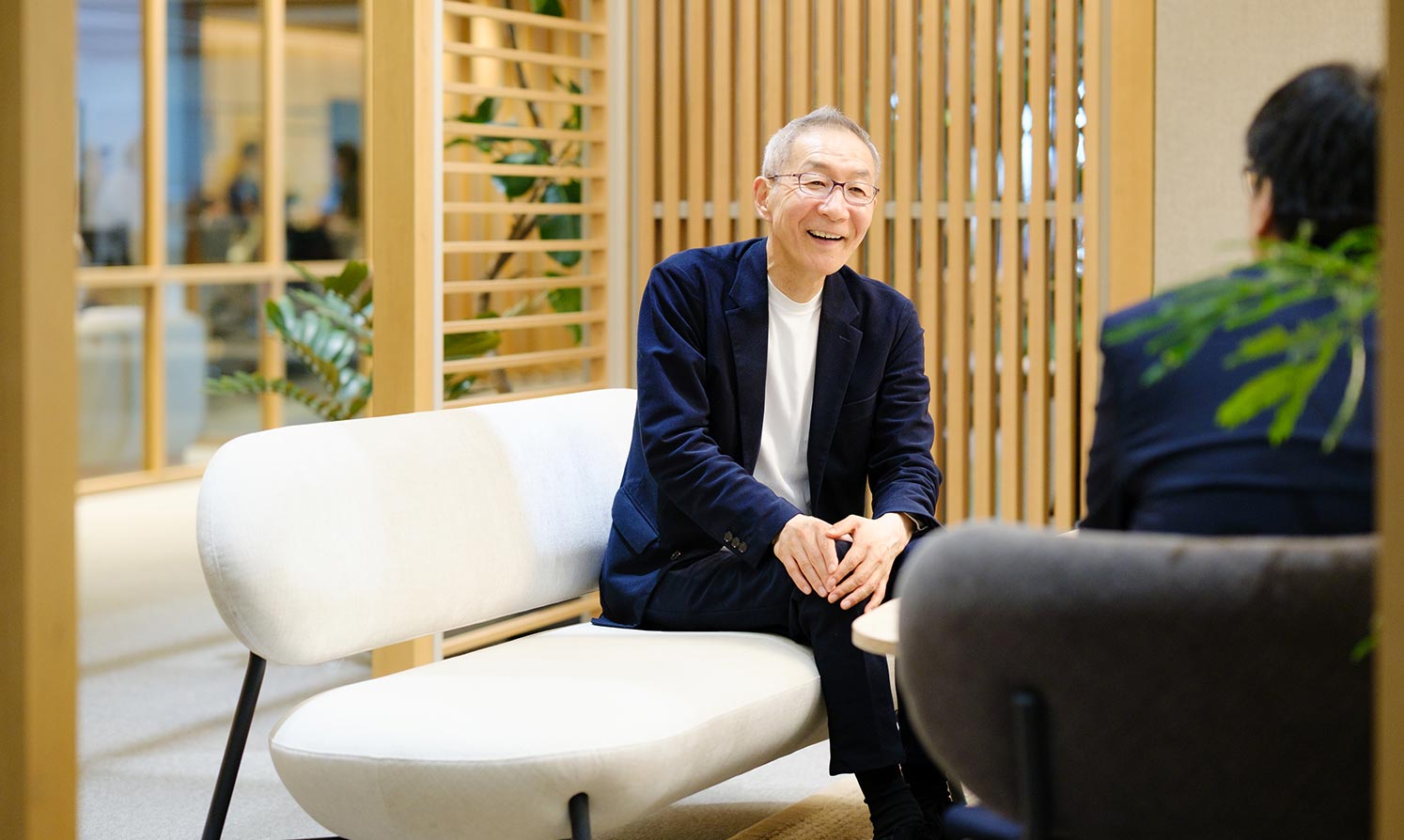
I believe that the reason I was able to build my expertise is because I learned so much from experts and business people like them. I have a long career as a developer, but I was practically a beginner when it came to wood. That's why I valued having an open mind and being willing to ask questions and learn from everyone.
In building trust, I made sure to "pay fair price." For example, even a single sample involves dozens of steps in the painting process. It's sanded, smoothed, colored, sanded again, and then top-coated. Even a small sample should never be taken for free.
Since then, whenever I have a problem, I remember this person and contact them without hesitation, thinking, "This person might know the answer." And when they ask me something, I generously share my knowledge. Through respectful, two-way giving communication, I built trust one case at a time.
Before the pandemic, we used to hold an "Econifa Year-End Party," which started with about 10 people, mainly from within the company. Eventually, it grew to include 70 people from all over the country, including people from outside the company. Researchers and experts related to wood, forestry cooperatives, timber businesses, and more—connections expanded rapidly through introductions from acquaintances to acquaintances. It was truly a case of building connections step by step.
What drives the challenge is the curiosity that says, "I think I can do it."
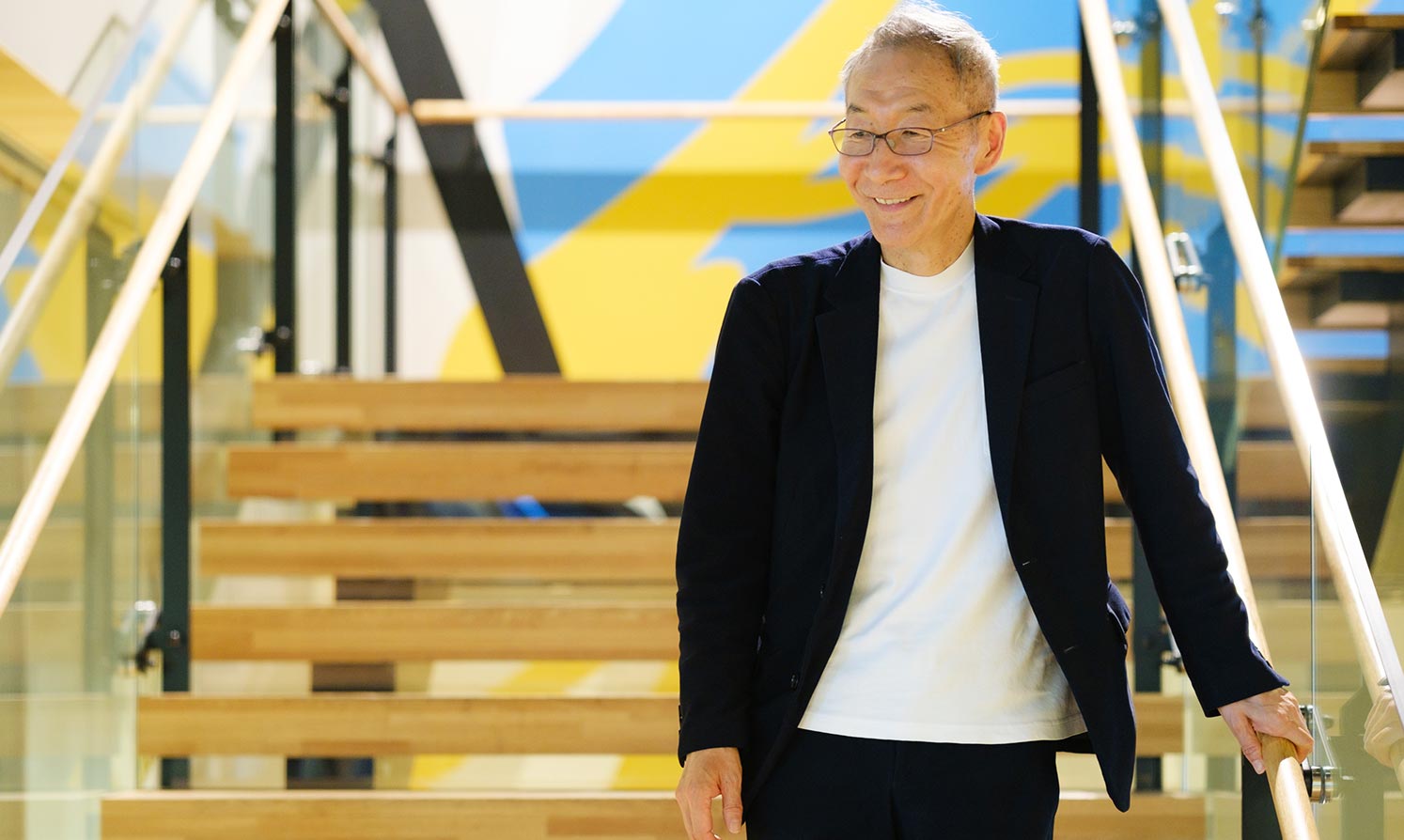
The staircase at ITOKI DESIGN HOUSE TOKYO also uses wood selected by Mr. Kojima.
What's great about working at Itoki is that they support you in pursuing what you want to do. I don't remember ever being stopped by my superiors; in fact, they kept asking me, "When are you going to do it?" (laughs).
I feel that there's a culture of accepting and supporting new things, and that the "the Pioneering spirit" that's in the company's philosophy is deeply rooted. I think it's because there's an environment where you're allowed to try anything that I myself have been able to focus and develop my expertise.
Whenever I try something new, I always have this feeling that "I can do this." My idea of using coffee grounds started with me saving some for personal use. I wondered, "What would happen if I dried this? How could I make it stick together?"
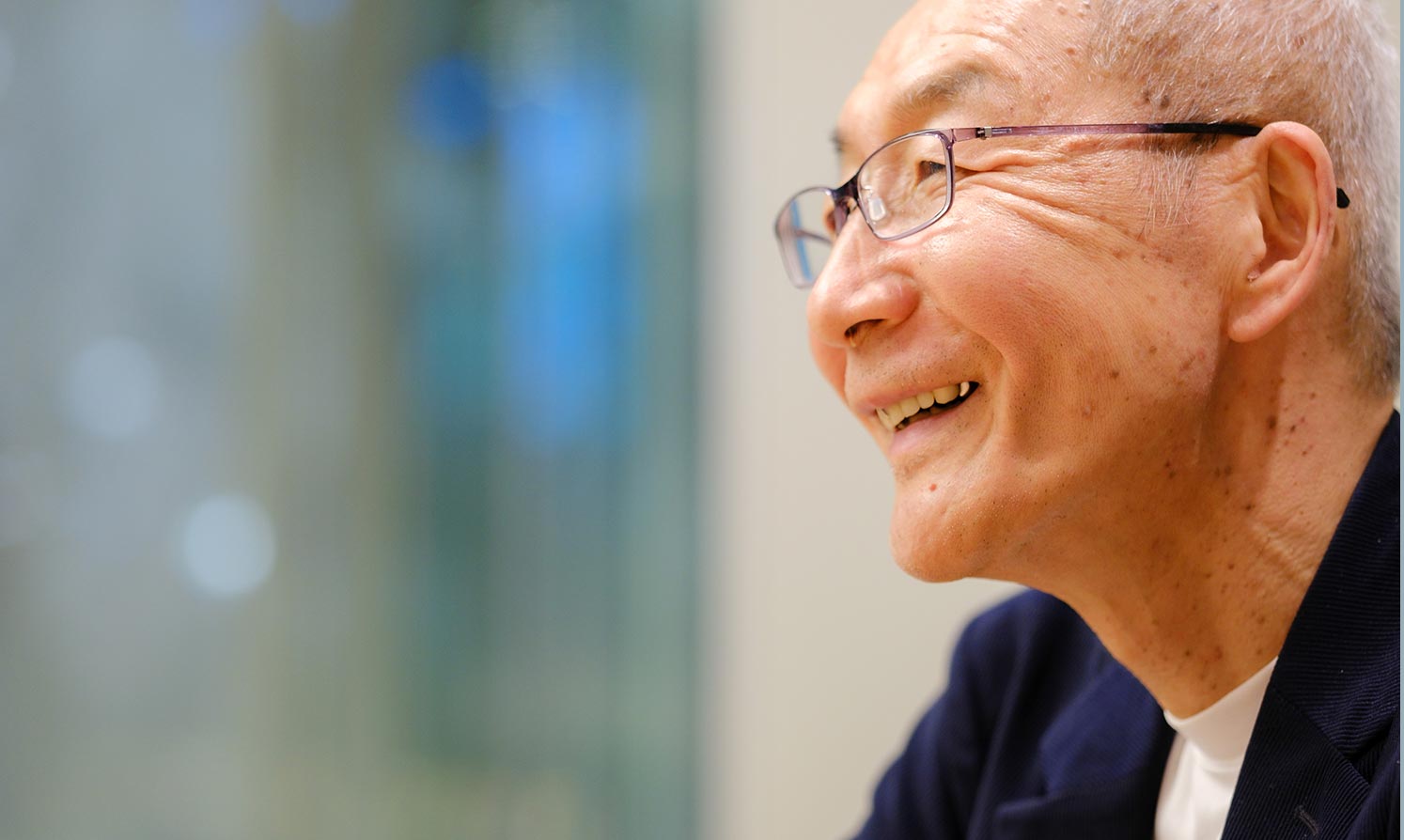
Particleboard, used as a core material for wood, is made by coating the surface of fine chips with adhesive and compressing them with heat. This led me to think that if I followed a similar process, I could make something similar from bean husks. Perhaps this kind of thinking is a sensibility that can only be born from nearly 40 years of accumulating various experiences and failures.
With childlike curiosity, I try out whatever ideas come to mind. This experience of "turning fantasies into reality" is unique to Itoki. The process of turning fantasies into reality is fascinating. For example, wood is incorporated into the office just as I envisioned, or new types of wood are adopted.
Of course, there are tough times and times when you hit a wall. But I also really love the serendipity that arises during those times.
This happened when I was involved in the development of "silta," a large tabletop table made of solid chestnut wood and an aluminum core.
We aimed to create a structure where the large tabletop could be supported solely by the legs, without any reinforcement, so that the tabletop wouldn't sag. We repeatedly prototyped with the development team. However, the tabletop still sagged no matter what we did...
The members were about to give up and decided to dismantle the prototype, placing it on temporary legs. At that moment, the sagging of the tabletop disappeared! It was then that we realized the position of the legs was related to the sagging of the tabletop. "That's it!" we all exclaimed, clapping our hands in joy.
It's also impressive that "silta" won the Minister of Economy, Trade and Industry Award at the "Wood Design Award 2022".
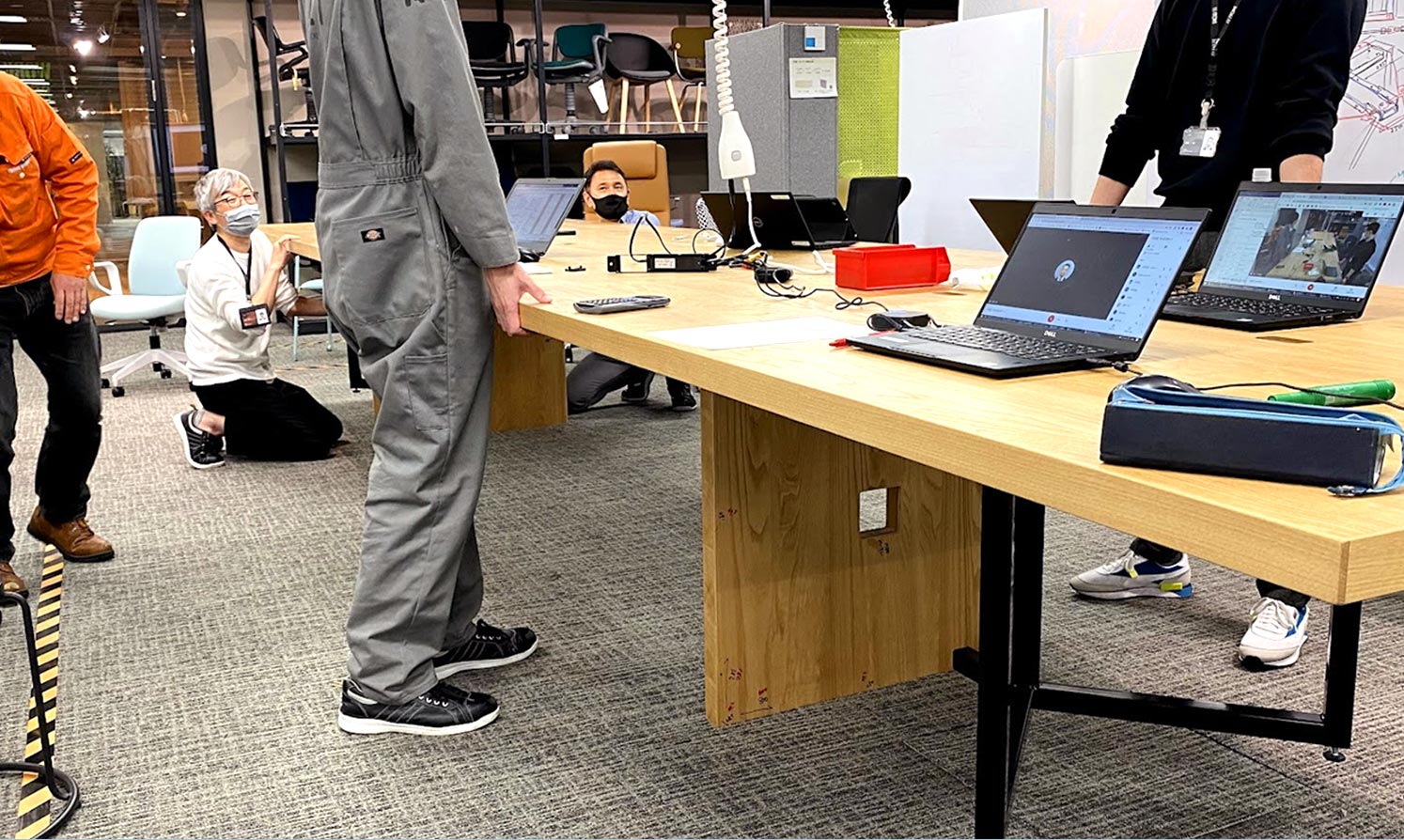
When I placed it on temporary legs for dismantling, the sagging of the tabletop disappeared. That was the moment I realized the relationship between the sagging and the position of the legs.
I decided to approach my work as if I were a junior employee.
When I reached retirement age at Itoki and took advantage of their re-employment program, I had absolutely no hesitation. I'm still being entrusted with work just as before. In fact, the scope of my responsibilities might even be wider than before.
When I turned 60, I decided to approach my work as if I were still young. As you get older, your knowledge increases, and you might feel like you know everything, but if you become arrogant like that, you stop listening to others, and people stop pointing out your mistakes.
However, if you think of yourself as a junior member of the team, you can honestly say, "Please give me some time to look into it," when there's something you're not familiar with, and you can also accept questions from younger people without judgment.
I want our younger and mid-career employees to never assume that their own knowledge is always correct, and to value advice from various people. I myself have the same stance; I want to be open to asking questions about things I don't know and to accept criticism.
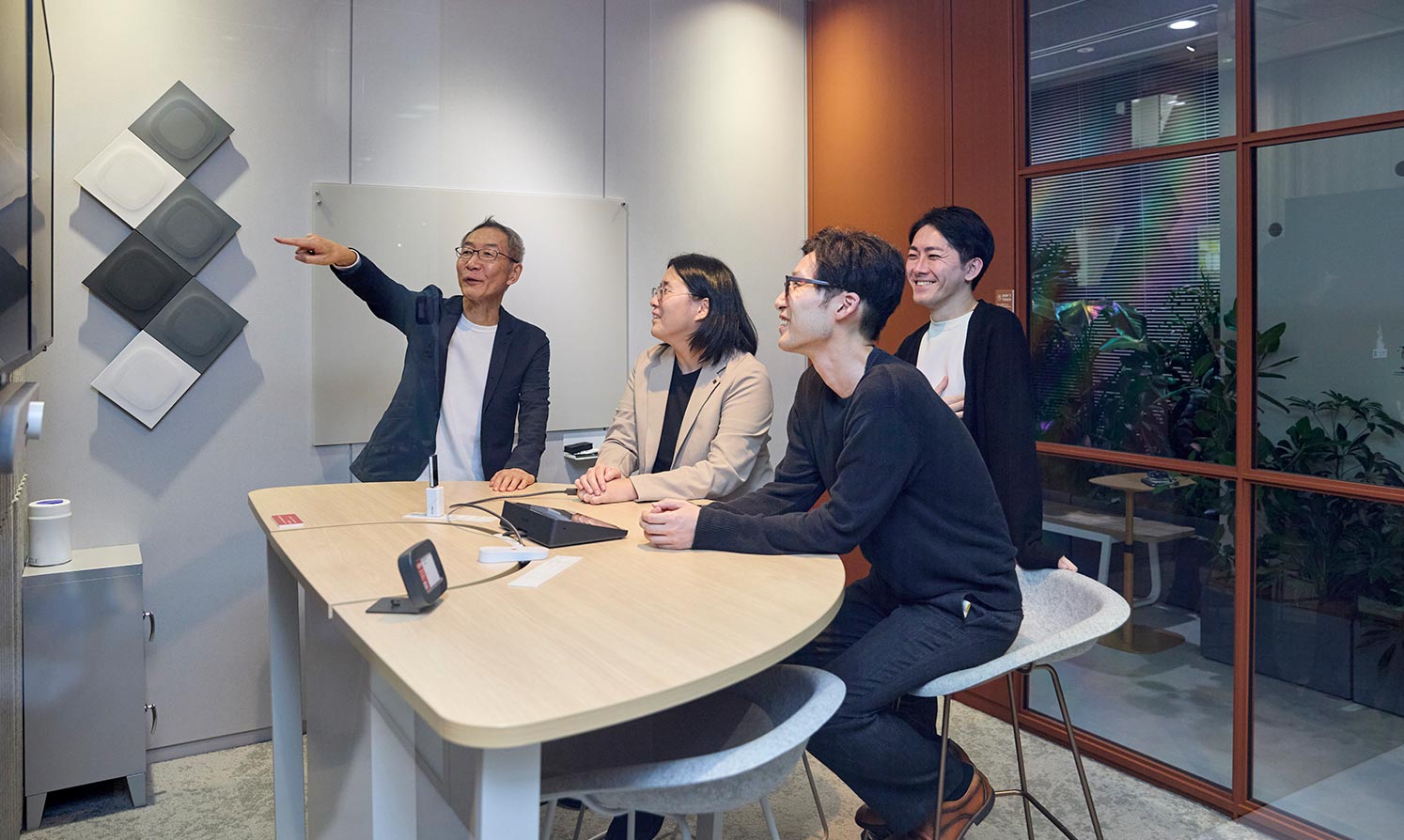
Looking ahead, we want to continue making great products. In December 2025, we also signed an agreement with the Ministry of Agriculture, Forestry and Fisheries to promote the use of wood in buildings, and it was decided that we would use 3,250 cubic meters of domestically produced timber over the next five years. We want to increase the number of spaces where employees can feel "glad to be working at this company" while contributing to the cycle of forest resources. To that end, we want to make use of a wider variety of wood and continue to take on new challenges while leveraging the connections we have built so far.
Recently, as part of this initiative, we have been conducting collaborative research with Professor Yuko Tsunetsugu of the Graduate School of Agricultural and Life Sciences, University of Tokyo, who has been researching the effects of using wood in interior design for many years. In May 2026, as part of this effort, Itoki planned, designed, and created the space for "co-niwa Econifa," a co-creation space utilizing domestically produced timber, at the University of Tokyo. The space aims to be a place where students and faculty can naturally gather, fostering interaction and the creation of new value, and it incorporates furniture and interior design using domestically produced timber.
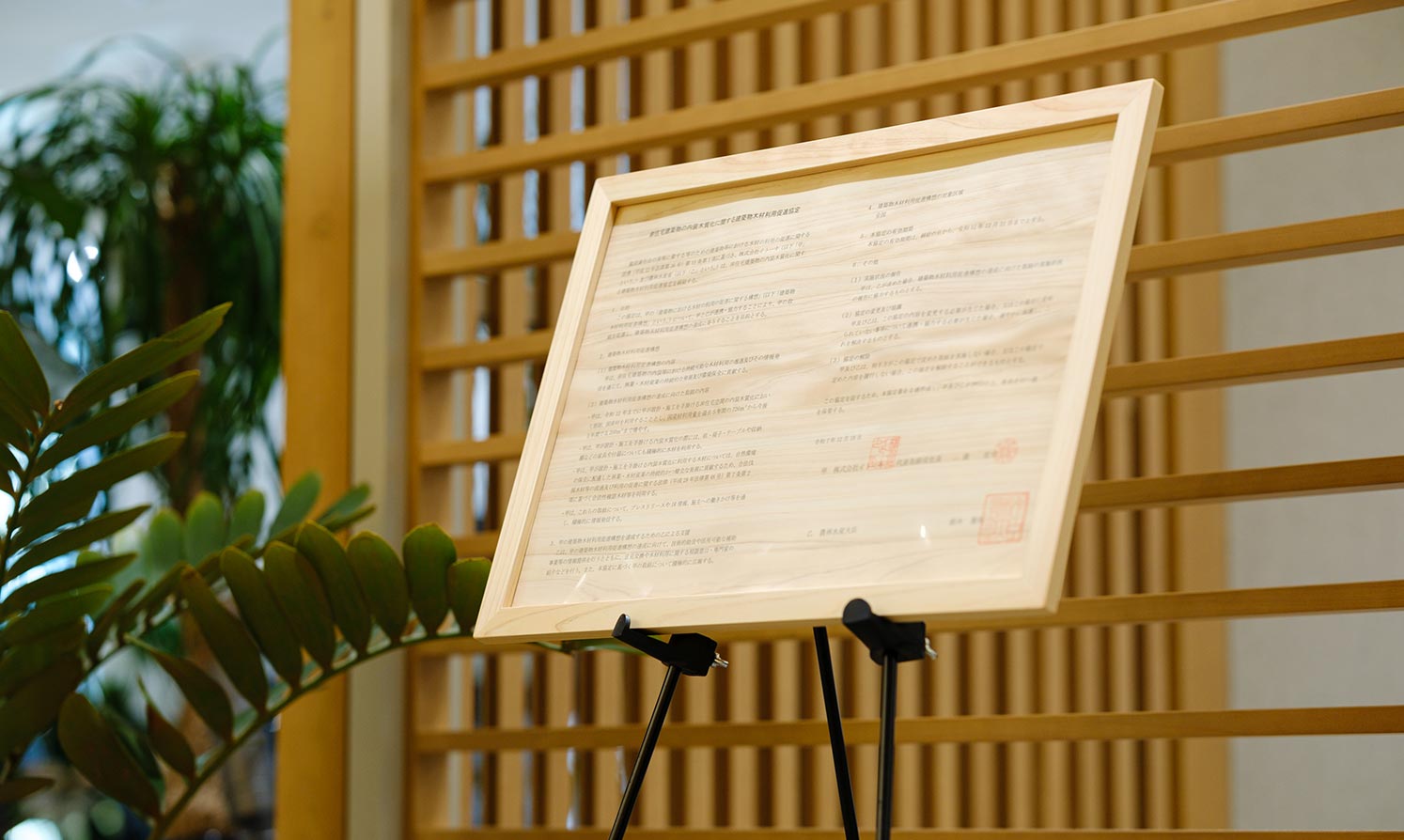
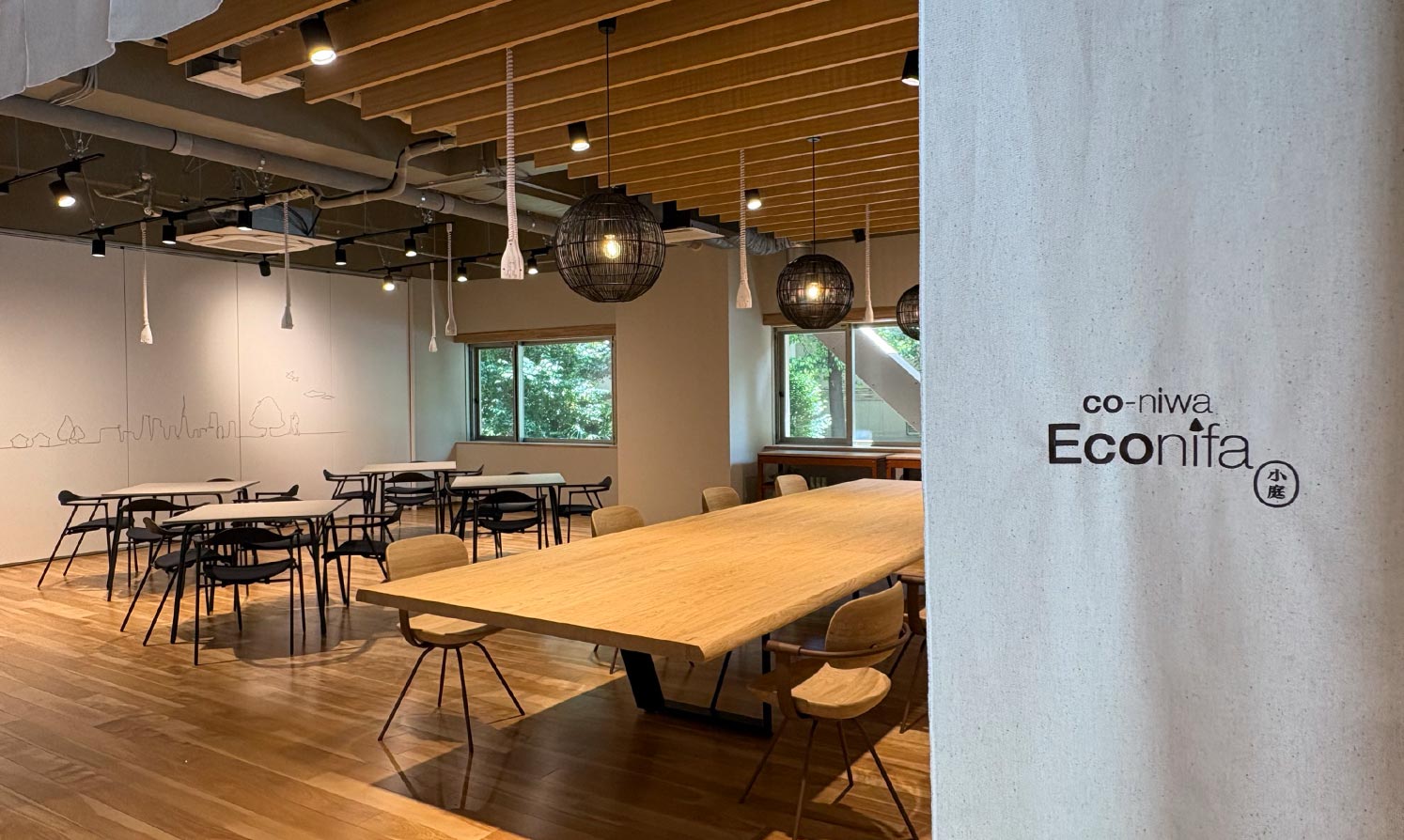
(Left) "Agreement to Promote the Use of Wood in Buildings" concluded with the Ministry of Agriculture, Forestry and Fisheries in December 2025; (Right) University of Tokyo's "co-niwa Econifa"
I also have a personal dream of one day owning an Itoki forest. I want to create products using wood, use the sales revenue to plant trees, and create sustainable forests. I want to leverage our strength of being able to handle everything from timber procurement to product manufacturing in-house, and continue to create products for which we take responsibility in every stage of production.


Related article
Related products/solutions

- The department, position, and system are those at the time of the interview and may differ from the current information.
Recommended Articles
-
July 8, 2026
"This can't go on like this." What was the breakthrough that the sales team found amidst their struggles?
-
June 3, 2026
Work methods that keep the workplace running. A "common language" that everyone can understand drives the whole operation.
-
![Beauty and comfort born from "unprecedented" design. The hidden technology behind "SHIGA" [Behind the scenes of SHIGA development - Part 1]](/company/itokistory/column/2026010/assets/img/recom_img_02B.jpg)
May 8, 2026
Beauty and comfort born from "unprecedented" design. The hidden technology behind "SHIGA" [Behind the scenes of SHIGA development - Part 1]
-
March 3, 2026
The first to take maternity and childcare leave at a manufacturing site. Creating a workplace where "balancing work and childcare" is the norm.
-
January 29, 2026
Outside the company, outside the world: The perspective of ITOKI space designers broadens through exposure to different cultures