



May 20, 2026
"Let's think of something new": A young team with an average age of 27.7 takes on the challenge of "manufacturing from scratch" [Behind the scenes of SHIGA development - Part 2]
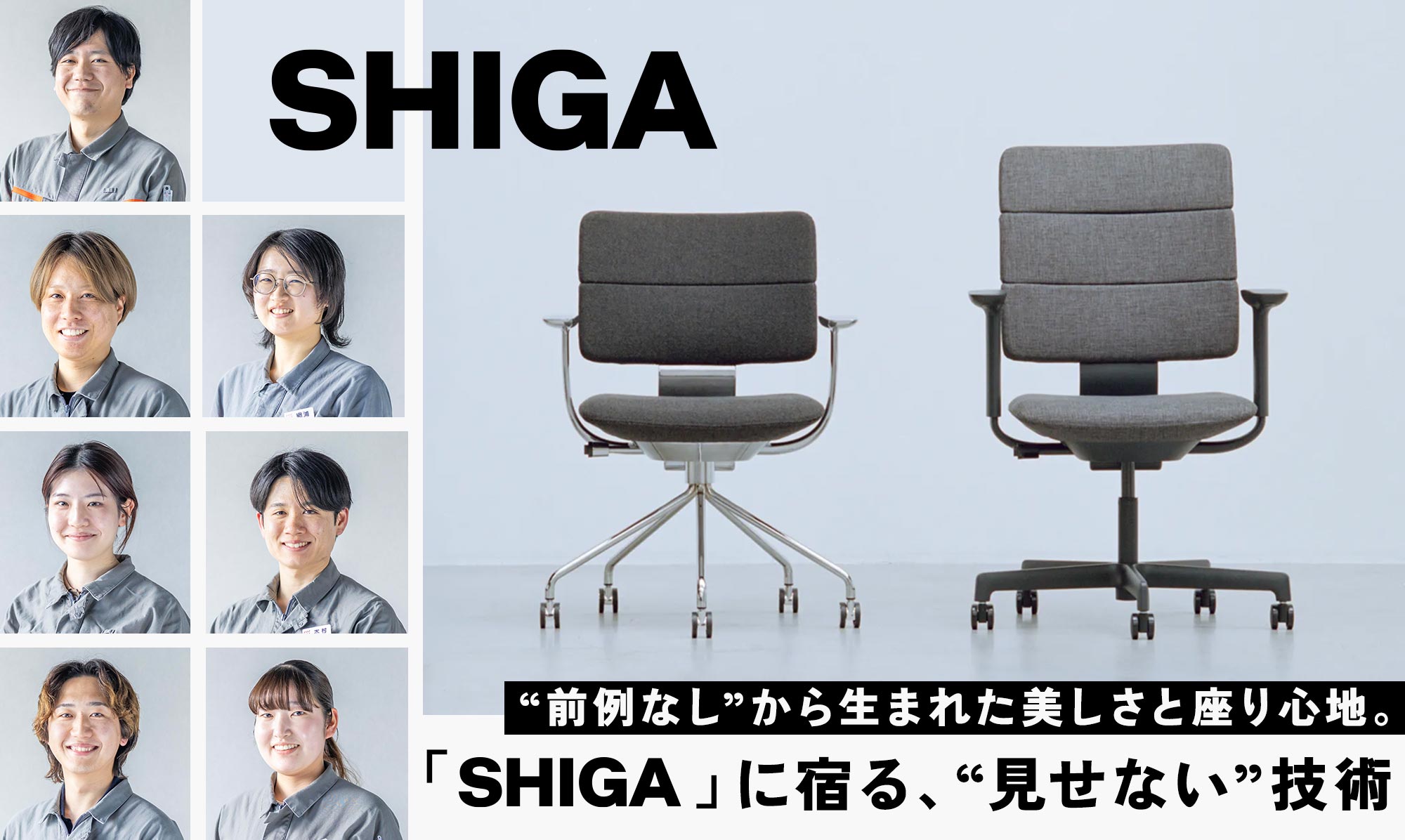
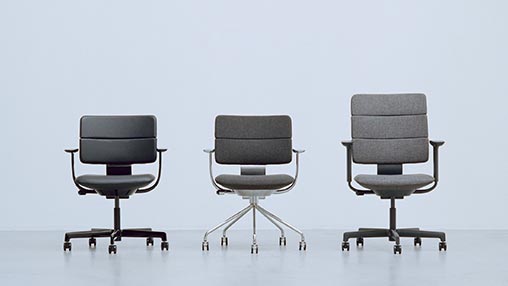
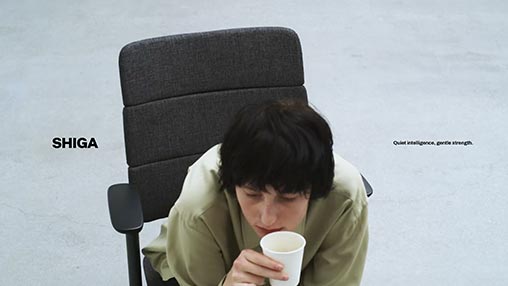
Designed by product designer Fumie Shibata, the "SHIGA" work chair combines minimalist beauty with modern furniture design, responding to the new way of working in this era.
In the first part of this interview, we asked the design team to talk about the features of "SHIGA" and the attention to detail that went into it.
The design team that worked on the development was a young team with an average age of 27.7, but apparently, flat discussions took place throughout the project regardless of seniority. We spoke to the seven design members to find out how they tackled the difficult challenge of "designing every part from scratch" and how they grew as a result.
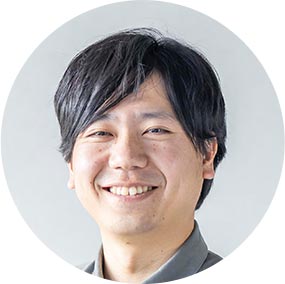
Production Headquarters, 1st Development and Design Division, 1st Development and Design Department, Chair 2nd Development and Design Office
Takeshi Yokoyama (Development Leader / Professional Engineer (Mechanical Engineering: Mechanical Design))
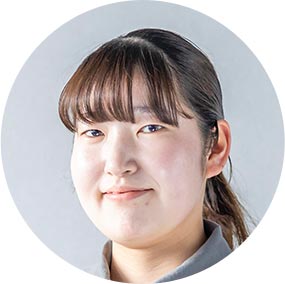
Production Headquarters, 1st Development and Design Division, 1st Development and Design Department, Chair 2nd Development and Design Office
Yuriko Nozawa (Za Design)
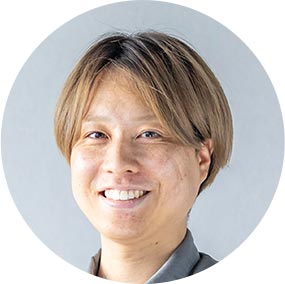
Production Headquarters, 1st Development and Design Division, 1st Development and Design Department, Chair 2nd Development and Design Office
Ao Yamaoka (Leg Design)
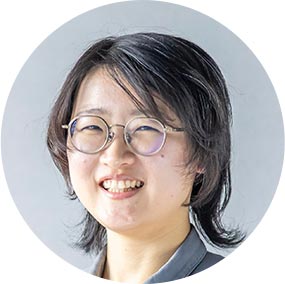
Production Headquarters, 1st Development and Design Division, 1st Development and Design Department, Chair 1st Development and Design Office
Ariko Amiura (back design)
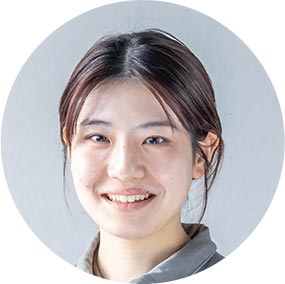
Product Development Division, Product Development Management Department, Design Department, Product Design Office
Kaho Okumura (Hiji Design)
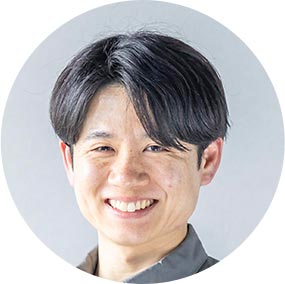
Production Headquarters, 1st Development and Design Division, 1st Development and Design Department, Chair 2nd Development and Design Office
Sho Kimura (Mechanical Design)
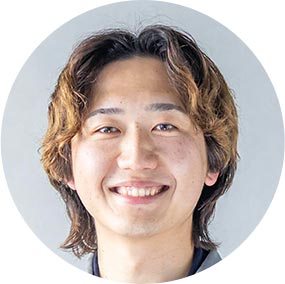
Production Headquarters, 1st Development and Design Division, 1st Development and Design Department, Chair 1st Development and Design Office
Yusuke Ban (Mechanical Design)
- As of May 2026
- The department, position, and system are those at the time of the interview and may differ from the current information.
Contents
- An unprecedented design from scratch. From "anxiety" to "excitement."
- "Let's think of something new." Flexible idea generation techniques shown to me by my seniors and superiors.
- You can't create something good if you compromise. Turn the pressure into growth.
- "We can turn 'Wouldn't it be great if...' ideas into reality. What young employees find interesting about working at Itoki."
An unprecedented design from scratch. From "anxiety" to "excitement."

—Could you tell us your honest feelings when you were chosen to participate in the "SHIGA" production project?
Nozawa (Za Design): I was really excited! I was confident that it would become a product that would attract attention.
Yamaoka (leg design): I was excited too. I remember feeling strongly that we absolutely had to make this a reality when we all got together and saw the design model.
Ban (Mechanical Design): At the time, I was in my second year at the company and the youngest member of the team, so I was very anxious at first. But as I continued, I started to enjoy it, and eventually, I began to have enthusiastic discussions with Kimura, who was also in charge of mechanical design, writing ideas on a whiteboard every day.
Kimura (Mechanical Design): That time was really fun, wasn't it? I had just told my boss that I wanted to work on mechanical designs, so I was thrilled to be appointed as the designer for a new mechanical design, the first in 13 years. There was pressure, but I was grateful to be in an environment where I could do what I wanted to do.

Yokoyama (Leader): To achieve the minimalist design and functionality of "SHIGA," it was essential to design each part from scratch. While it's common to use the same mechanics as past products and only redesign the backrest and seat, this was the first time in about 13 years, since 2012, that we designed all parts from scratch.
Therefore, we formed a team where each person could focus on one body part, resulting in a team of seven young members. We decided who would be in charge of which part based on their background and future career plans.
"Let's think of something new." Flexible idea generation techniques shown to me by my seniors and superiors.

—In an environment primarily composed of younger people, were there any specific things you were conscious of to ensure that discussions could take place without any忖度 (忖度 - unspoken considerations or忖度)?
Yokoyama (Leader): To encourage active exchange of ideas, we increased the number of design review meetings. Normally, we meet once or twice a month, but for this project, we met two to three times a week, and in the latter half, we set aside time for about two hours each day to exchange ideas with the team members. Also, the general manager and department heads would often directly ask "How's it going?" or oversee our work.
Ban (Mechanical Design): I made a point of proactively initiating conversations. My ideas were never rejected, and I feel that this contributed to my motivation and the final quality of the product.
Nozawa (Seat Design): Actually, at first we were thinking of reusing the seat mounting method from past products. But at a review meeting, the department head said, "Since we're creating a new product, let's try thinking of something new."
I've come to realize that I can think more freely, rather than being trapped by past theories. I came up with various ideas, and my superiors and senior colleagues accepted them without rejecting them, which made it easy to express my opinions.

Okumura (Hiji Design): At first, I felt nervous because the department head, section chief, and other team leaders were all present at the design review meetings. However, the veterans would take the lead in suggesting seemingly impossible ideas, and that contributed to a sense of psychological safety. I realized it would be a waste to not offer ideas just because I assumed they were impossible from the start, so I became more willing to express my opinions.
Amiura (Back Design): At ITOKI DESIGN HOUSE SHIGA, where the chairs are manufactured, the fact that design and manufacturing/technology are all in the same place is a big advantage. To be honest, I think there were a lot of difficult challenges from the manufacturing side, but everyone shared the common goal of "making the product better," so it was easy to speak up.
Yamaoka (Leg Design): When the prototype of the pipe leg design broke, I was impressed by how the general manager and department head stepped in to help. They taught me perspectives and processes for finding solutions, which made it enjoyable to take an active role in the project, even though I was completely clueless at the time.

You can't create something good if you compromise. Turn the pressure into growth.

—What aspects of your personal growth do you feel you achieved through this project?
Kimura (Mechanical Design): I think I've developed the ability to negotiate and convince the manufacturing side. In the process of finding the optimal balance between the design and manufacturing sides, I've become able to explain things with justification, such as "because it's safe" or "because it allows for a cost-effective manufacturing method." I feel that building a good relationship will be valuable in future projects as we continue to work together for a long time.
Ban (Mechanical Design): I had many opportunities to speak in front of people, such as explaining things to department heads, introducing products to the president, and meeting with clients. I feel that I grew as a businessman, including my ability to withstand pressure.
Yamaoka (Leg Design): When the test fails, it's easy to panic, but I learned that if you have a recovery plan in mind beforehand, you can smoothly take the next step. It was very helpful when my seniors told me, "It happens all the time, so don't worry."
Amiura (Back Design): While designing, there were times when the thought crossed my mind that maybe we should compromise here, but seeing the team members contribute ideas and move forward without compromising made me realize once again that "you can't create something good if you compromise."

Okumura (Elbow Design): I feel that my sense of responsibility and mental strength were honed the most. Since there was only one person in charge of each part, I was constantly battling the pressure of "if I don't do it, it will be an unfinished product."
Nozawa (Za Design): I learned to shift from the preconceived notion that "it has to be this way" to the idea that "it's okay to be more free." I also learned a lot by watching how the members effectively communicated their intuitive ideas to people with diverse backgrounds.
Yokoyama (Leader): Because it was a product with a significant impact on the business, I felt a heavy burden of pressure to complete it by the deadline. However, in the latter half, I started to view it positively, as a sign that people had high expectations of me. Now, I even find that I find work with pressure more rewarding.
"We can turn 'Wouldn't it be great if...' ideas into reality. What young employees find interesting about working at Itoki."

──Finally, could you tell us what you find interesting about working at Itoki?
Yokoyama (Leader): I think it's the ability to truly handle product development from start to finish. We start talking with the planning team even before the first design is released, we coordinate the design with the designers and planners, incorporate our own preferences, communicate with the people on the factory floor during mass production preparations, and are involved in dealing with initial defects after the product is released.
Also, I volunteered to participate in this project because I wanted to. I think the company and department have a policy of letting employees try a variety of things.

Ban (Mechanical Design): I never imagined I'd be involved in a project of this scale at the age of 24, so the best thing about this job is that there's an environment where young people can thrive.
Kimura (Mechanical Design): Since various departments such as design, manufacturing, and production technology work together on a project, we have an environment where we can actually create things and discuss them together. As a designer, it's rewarding to see what I've designed take shape.
Yamaoka (Leg Design): I feel like I'm doing what I've always wanted to do: creating products that are close to people. It's really interesting to be able to take on the entire manufacturing process as an all-rounder.

Amiura (Back Design): Sometimes things proposed by the design team become actual products, and I like the company culture where anyone can say, "Wouldn't it be great if we had something like this?" and then we create a process to turn that into reality.
Okumura (Elbow Design): I feel that when an idea comes up, the speed at which it can be turned into a tangible product is very fast. First, you make it and check how it works. I feel that this is something unique to Itoki.
Nozawa (Za Design): Some people carefully consider things in their heads, while others just try making something once. We can create a product by leveraging the strengths of each individual's style. There is a place to express your own opinions, so it's an interesting place to work.
Regardless of seniority, members of the team brainstorm various ideas and work on development through trial and error. It was clear that they were enjoying the process of creating, even while facing significant challenges along the way. We encourage you to experience the "SHIGA" work chair, a product filled with the dedication and passion of these team members.


Related products/solutions
- The department, position, and system are those at the time of the interview and may differ from the current information.
Recommended Articles
-
July 8, 2026
"This can't go on like this." What was the breakthrough that the sales team found amidst their struggles?
-
June 3, 2026
Work methods that keep the workplace running. A "common language" that everyone can understand drives the whole operation.
-
May 8, 2026
Beauty and comfort born from "unprecedented" design. The hidden technology behind "SHIGA" [Behind the scenes of SHIGA development - Part 1]
-
March 3, 2026
The first to take maternity and childcare leave at a manufacturing site. Creating a workplace where "balancing work and childcare" is the norm.
-
January 29, 2026
Outside the company, outside the world: The perspective of ITOKI space designers broadens through exposure to different cultures