


March 19, 2026
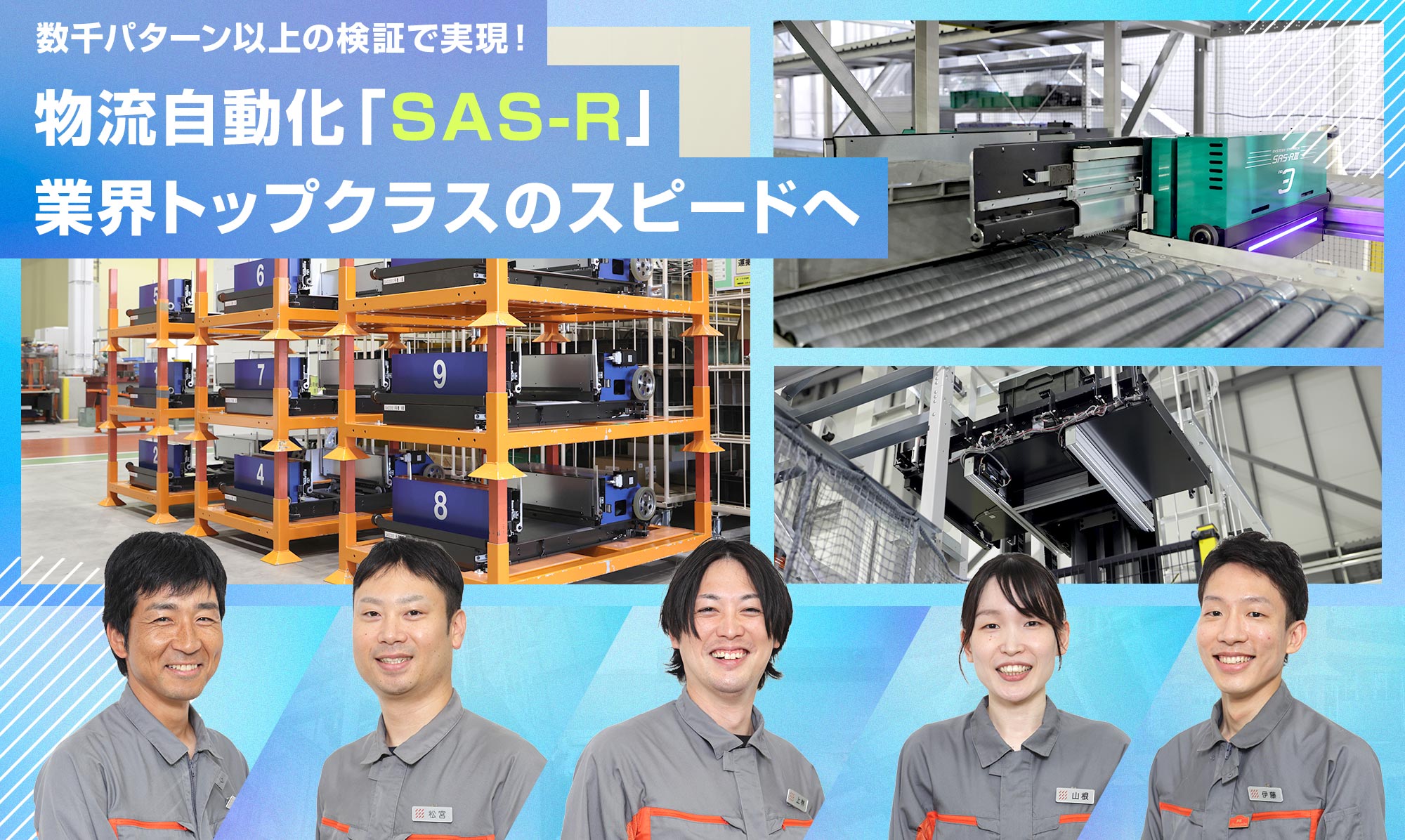
Achieved through testing thousands of patterns! SAS-R: A challenge to achieve industry-leading speed in logistics automation.
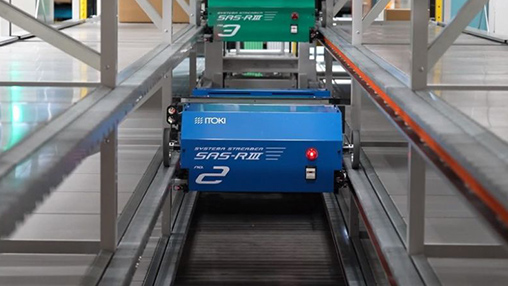
Itoki's "Systema Streamer," a shuttle-type automated warehouse system with a history of over 40 years since its development and release, is automated equipment used in warehouses such as logistics centers and factories. Further improvements in speed and compactness were achieved, and it was released in 2020 as "SAS-R."
Development, manufacturing, software, and materials teams worked together as one to create prototypes and make improvements that met the needs of the distribution field. We delve into the dedication and teamwork behind this endeavor.
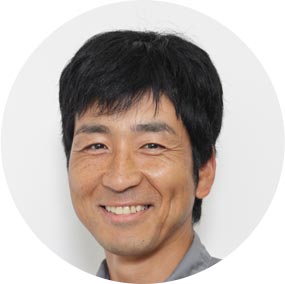
Equipment and Machinery Business Division, Electronics Products Department, Product Development Section
Hiroki Watanabe (Development)
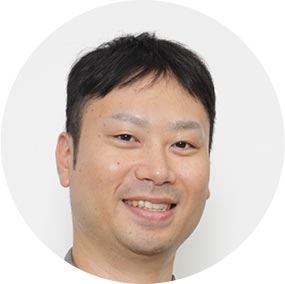
Equipment Business Headquarters Electronic Equipment Product Department Electronic Equipment Manufacturing Section
Jun Matsumiya (manufacturer)
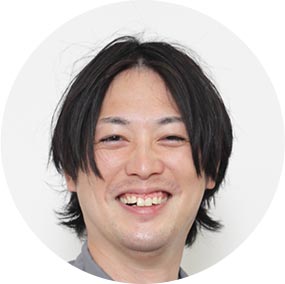
Equipment Business Division, Electronics Products Department, Software Design Section
Kon Kambayashi (Software)
Equipment Business Headquarters Electronic Equipment Products Department Electronic Equipment Engineering Section
Tomoko Yamane (Materials)
Equipment Business Division, Electronics Products Department, Software Design Section
Shunsuke Ito
*The department, position, and system are those at the time of the interview and may differ from the current information.
Collaboration takes shape. Advanced technology meets the needs of the distribution industry.
Ito: Could you tell us about the features of "SAS-R," which Itoki develops and sells, and the situations in which you were involved?
Watanabe (Development): SAS originally existed as an Itoki product from 1985. It is a groundbreaking system that automates tasks in logistics that would otherwise require human intervention, such as sorting, picking*1, and shipping. However, with the increase in competing products, it became necessary to work on further increasing processing capacity and making it more compact. However, there were several hurdles to overcome in terms of the mechanism*2 with the technology available at the time, so we began to challenge ourselves with prototyping alongside manufacturing.
- Picking: The process of retrieving a specified number of items from inventory based on a shipping order.
- Mechanism: This refers to the hardware involved in the "movement mechanisms" and "working processes" inside a machine.
Matsumiya (Manufacturing): Just looking at the diagrams on a desk doesn't tell you things like where tools won't fit during assembly or where the assembly is too complicated, so I talked with Mr. Watanabe almost every day. Based on the assembly drawings we received from the development team, we made prototypes and compiled a list of areas with manufacturing concerns. This would be something like, "This is possible," "This is not possible," or "This is difficult to implement."
For example, the workbench was adjusted to be neither too high nor too low, and the space was made large enough to accommodate various sizes when assembling.
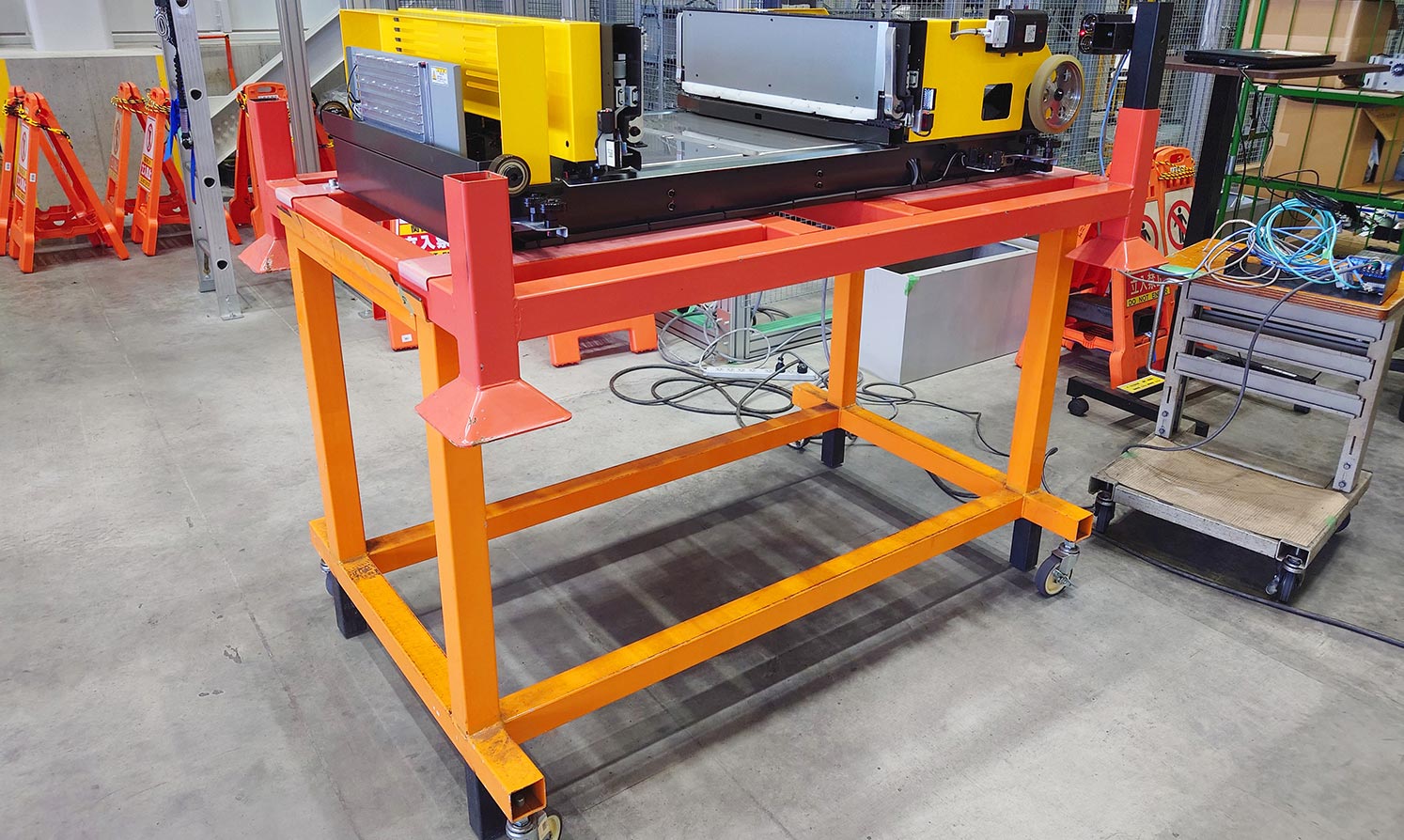
We also ensure that the manufacturing environment is fully utilized, by providing ample space and adjusting the height to a comfortable working environment.
Watanabe (Development): Miniaturization was incredibly difficult. We had to pack the parts in with as little space as possible, but that meant we couldn't get our hands in, making assembly difficult. Even if it looked fine on paper, we couldn't fasten screws in places we couldn't reach. We had to go back and forth with the manufacturing team many times to find that perfect balance. I think it has one of the highest part counts of any Itoki product.
Kamibayashi (Software): It took nearly a year because we needed to rebuild the software after thoroughly understanding the existing software. We made the program, which was created about 30 years ago, more versatile so that it could be used in the future. We changed the microcontroller boards*1 to PLCs*2 for the horizontal travel cart (dolly) and vertical lifting device (reservoir), etc. Therefore, each had a person in charge, and three of us worked together to write the software. Many devices work in a complex coordinated manner, so one operation greatly affects the operation of others. We tried thousands of different patterns.
- Microcontroller board: An electronic circuit board equipped with a small computer that controls the operation of a device. It is used for relatively simple control applications.
- PLC (Programmable Logic Controller): A controller specifically designed for controlling industrial machinery. It offers high reliability and expandability, making it suitable for complex control and long-term operation.
Yamane (Materials): From the prototype stage, we received parts lists from the design and development teams, and we were constantly thinking about where to purchase them and by when they could be delivered. Since parts were subject to change until development was complete, we were negotiating with various partner companies on a daily basis.
Ito: So, you were collaborating across departments right from the initial stages of prototyping!
These meticulous details are the culmination of repeated prototyping.
Ito: Could you tell us about the unique features of "SAS-R," which has a large number of components and is quite complex?
Watanabe (Development): We had a lot of trouble with the vertical lifting mechanism (reservoir). To increase processing capacity, we needed to double the top lifting speed*1 and triple the lifting acceleration/deceleration speed*2 of the conventional model. Naturally, this increased the mechanical load, leading to problems such as damage to parts and increased vibration of the lifting mechanism itself. We solved each of these problems one by one and were able to complete a lifting mechanism that boasts industry-leading speed.
- Lifting top speed: The maximum travel speed that the lifting device can reach.
- Elevation/Deceleration: Values indicating how quickly something accelerates or decelerates during ascent or descent.
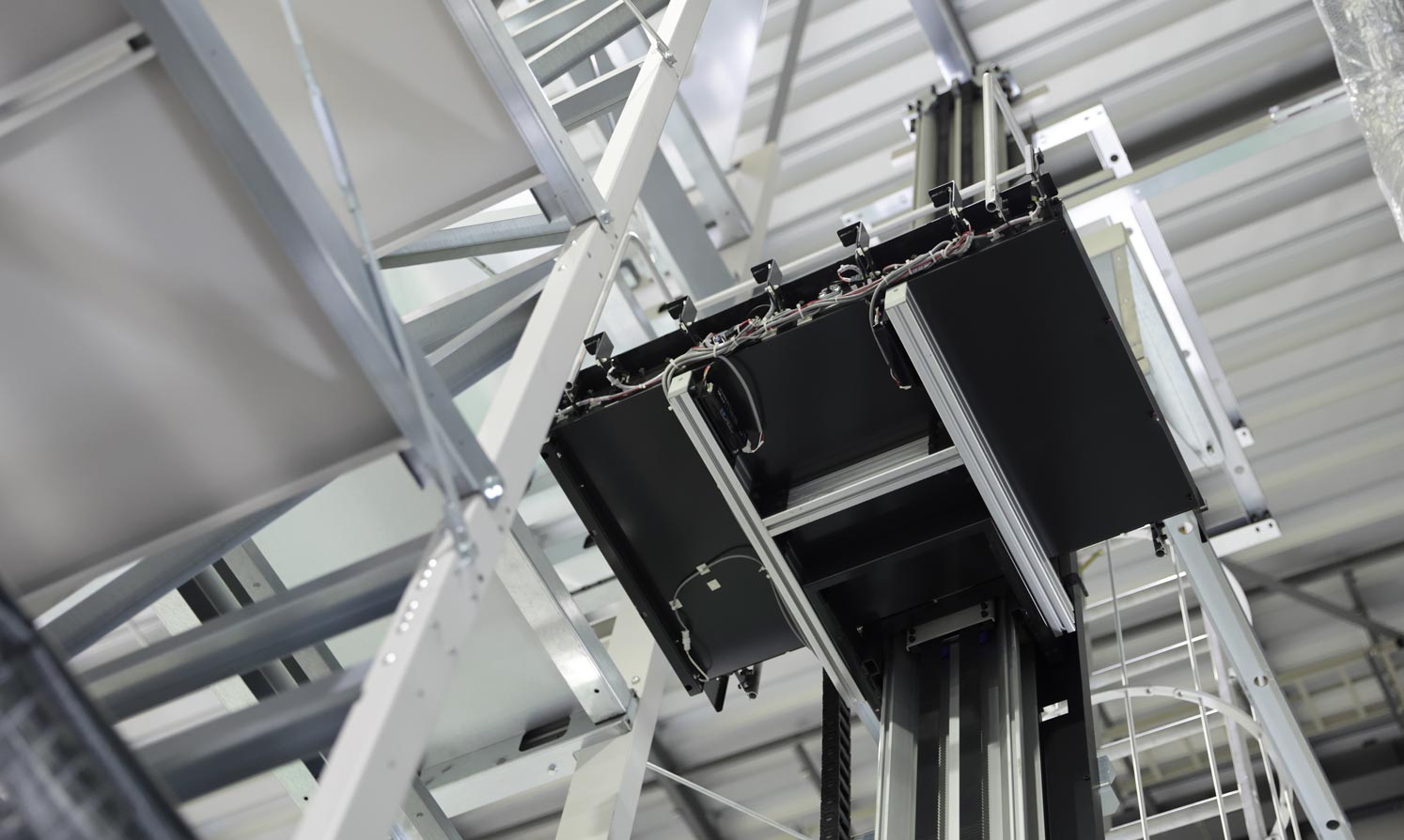
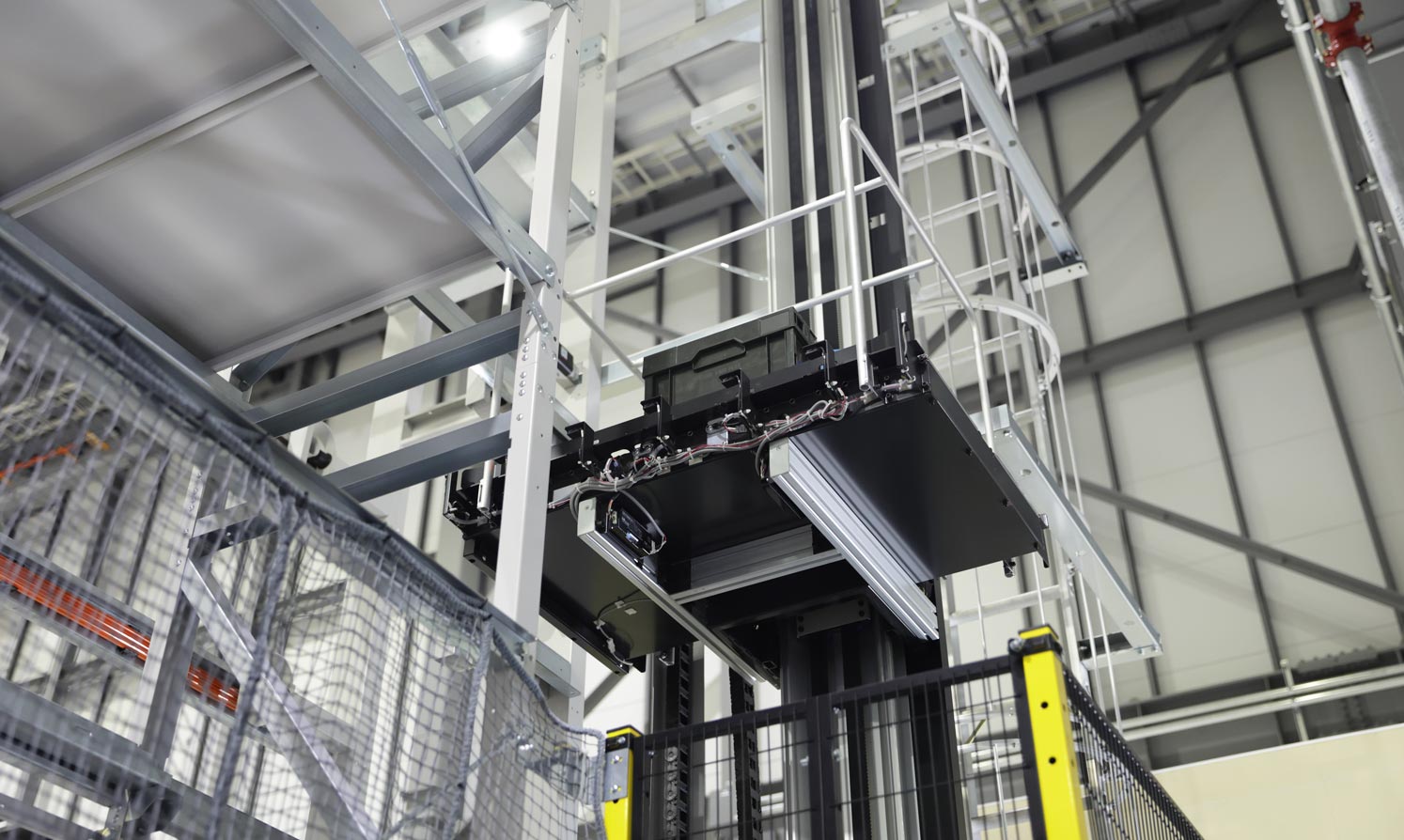
An elevator that moves vertically up and down at lightning speed.
Matsumiya (Manufacturing): A large number of parts means a corresponding increase in the number of processes. The work becomes more complex and requires a variety of skills. Along with that comes a number of minute specifications where even a few millimeters of error is unacceptable... However, if there are differences in skill, it becomes impossible to continue supplying products stably. Therefore, we have reviewed the manufacturing process in detail and clarified the role of each process. We have established a system that allows us to manufacture with stable quality by clearly defining the parts that can be handled regardless of differences in experience.
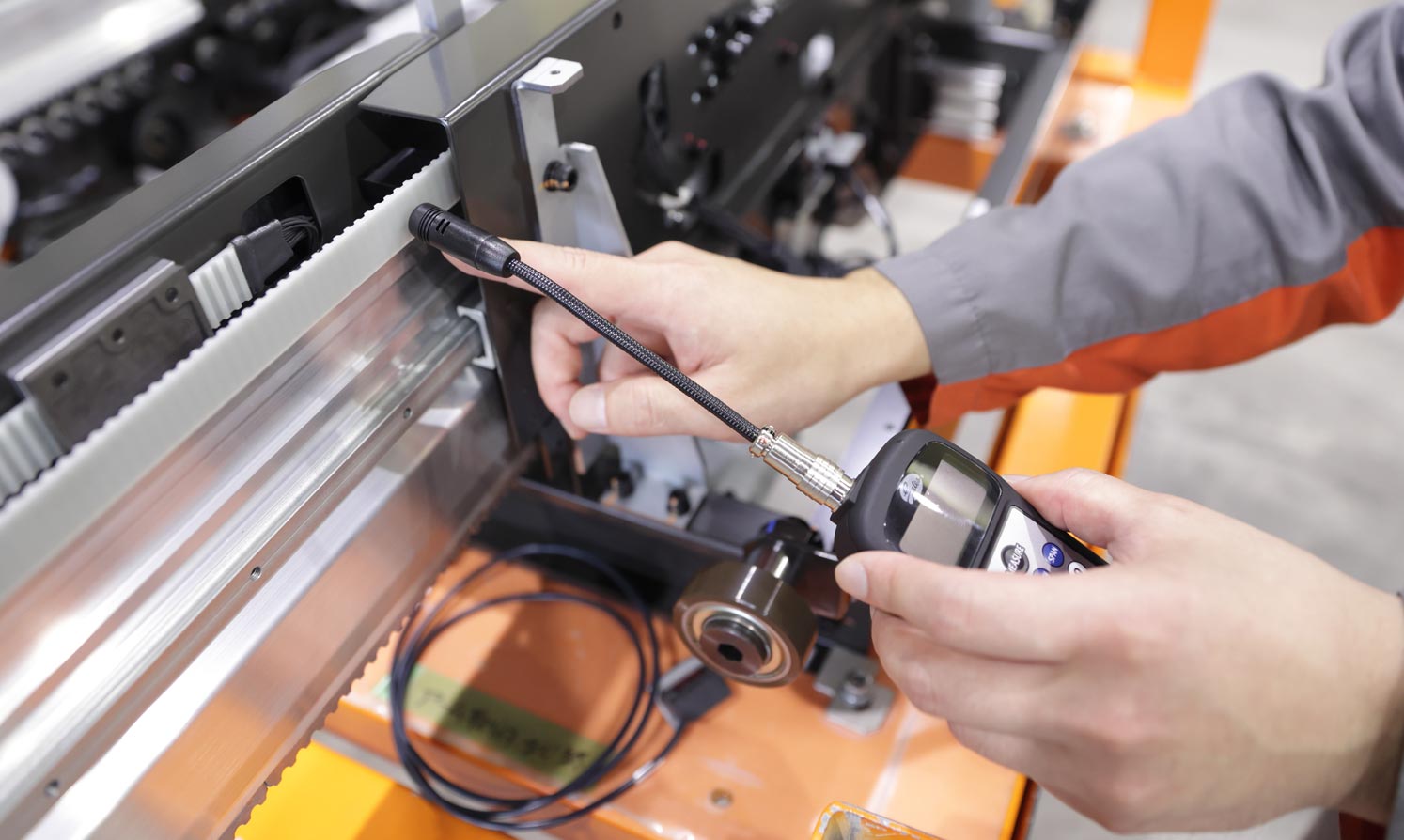
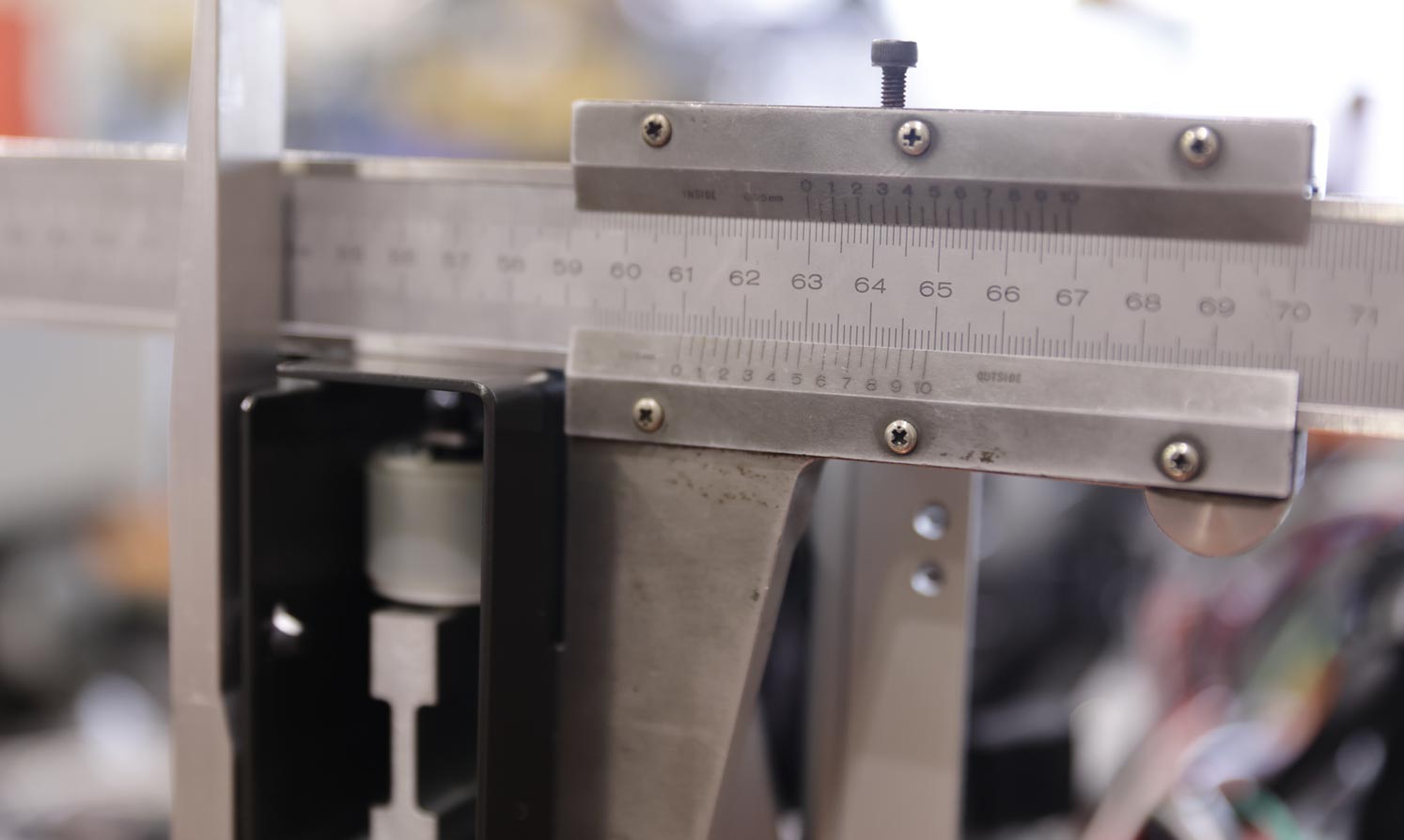
This manufacturing process demands precise adjustments. Adjustments are made repeatedly until the desired value is achieved.
Kamibayashi (Software): One of the development goals was to increase the movement speed of horizontally traveling carts and vertical lifts. Therefore, we focused not only on increasing the speed, but also on reducing the lag* in each instruction programmed into the machine. In addition, although the instruction for the next operation is normally given after the previous operation is completed, we adjusted it so that the instruction to the next machine is given once it has moved to the position of the reservoir, in order to make it move more smoothly.
- Lag: The "delay" or "holding" time between a sensor reacting and the machine actually taking action (stopping or accelerating).
Ito: It's like you start running even before you receive the baton in a relay race. So that's the secret behind your dynamic speed!
Yamane (Materials): We also had trouble gathering materials for the electrical control components*. For "SAS-R," we needed to gather materials from two areas: the electrical control components themselves, and the mechanical parts that support them.
- Electrical control components: A general term for components that manipulate electrical pathways or send signals to make a machine "operate as intended."
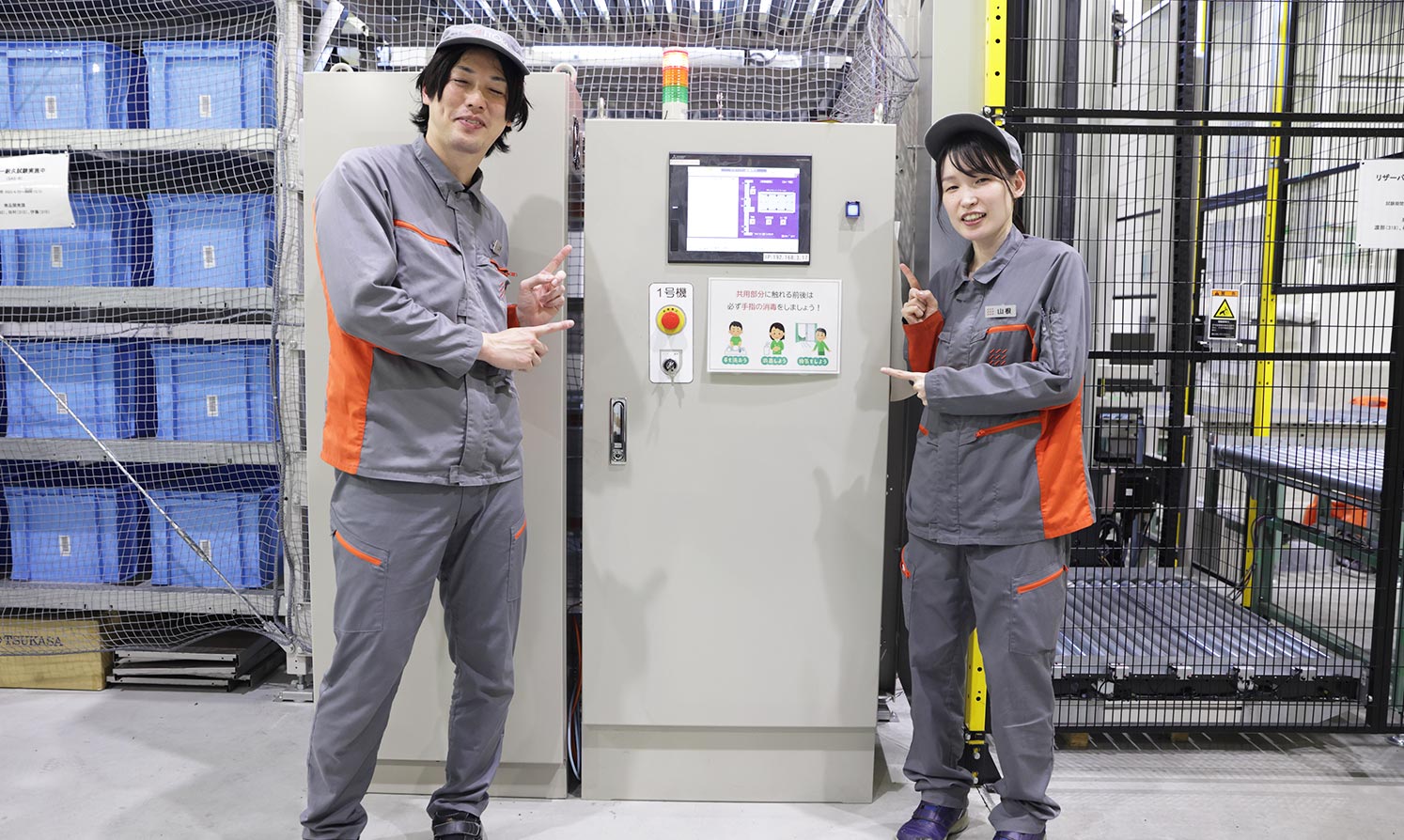
A meticulously designed LCU (Local Control Unit) for monitoring and controlling equipment.
Taking on diverse orders with specialized knowledge! The unique "SAS-R" shines through.
Ito: As a manufacturer, could you tell us what you're proud of about "SAS-R" and what you'd like us to pay attention to?
Matsumiya (Manufacturing): Since these are precision products, we want to minimize the number of times they need to be moved... That's where our workbench comes in handy. Being able to transport everything to the construction site on a single table is something we're very proud of!
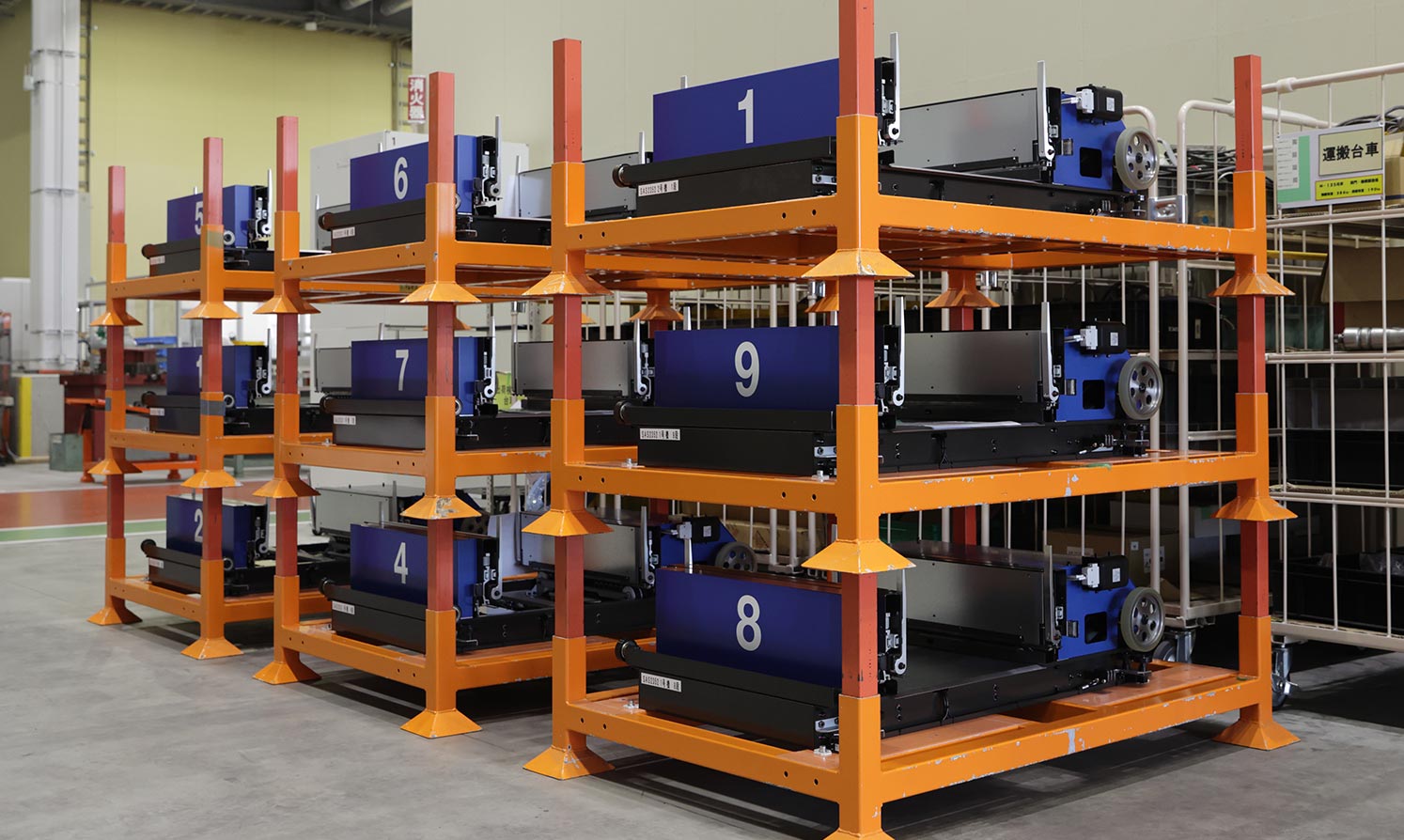
Finished products are lined up. There are rows and rows of orange workbenches.
Yamane (Materials): When you think of Itoki, you probably think of office furniture, right? That's why we want as many people as possible to know that Itoki makes the "SAS-R." From development to manufacturing, everything is made by Itoki. The rows of "SAS-R" lined up in the warehouse after delivery are truly impressive. We're also proud that we can offer special orders where the covers can be customized to your company's corporate colors. The "SAS-R" has the versatility to meet any order.
Watanabe (Developer): I also think the appeal of "SAS-R" lies in the special order aspect tailored to the user. For example, some models have LED lighting that shines even in the dark. It has a somewhat futuristic and cool feel to it.
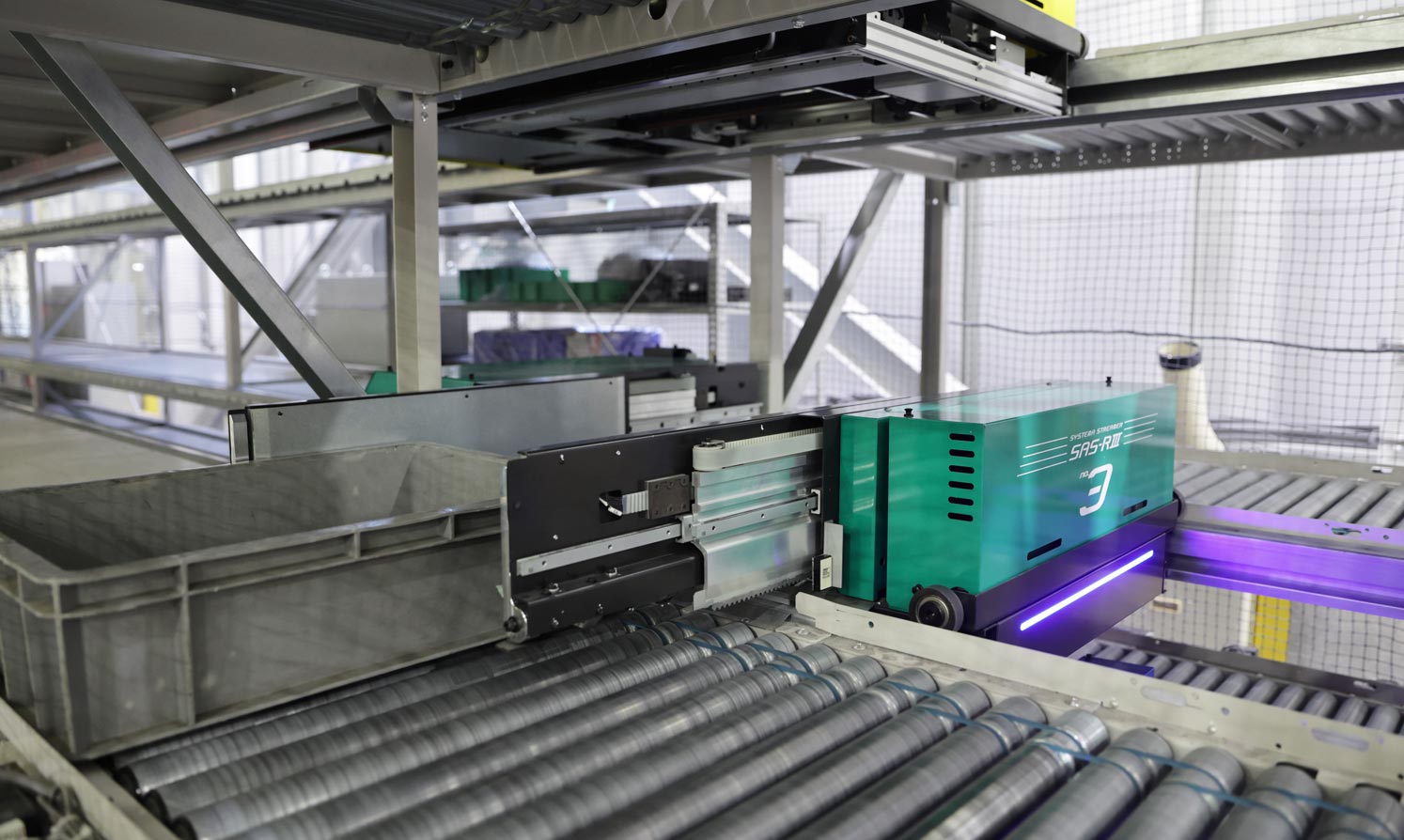
The specially ordered, bluish-white LEDs look like something out of science fiction.
Kamibayashi (Software): I'd like you to see it in action, not just in one place. The way it sorts, picks, and ships items smoothly and without disruption is all thanks to our meticulously designed software!
Ito: That sense of speed is something that can only be truly appreciated by seeing the actual movements. I highly recommend you watch it.
\Experience the actual ultra-high-speed loading and unloading capabilities in this video!/
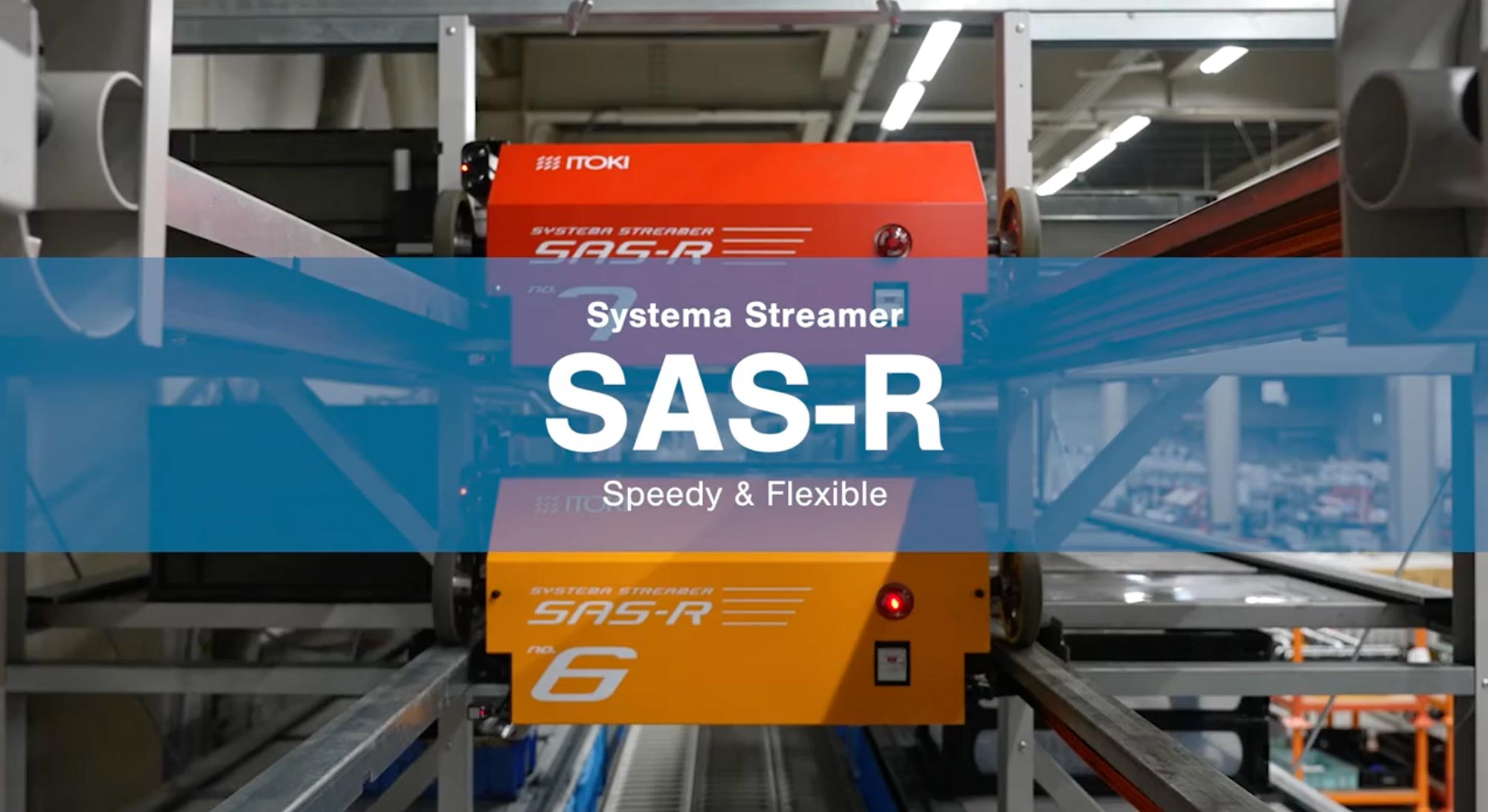


Related article
Related products/solutions
- This article is a revised and republished version of content originally published in our company newsletter in September 2024, in March 2026.
- The department, position, and system are those at the time of the interview and may differ from the current information.
Recommended Articles
-
April 7, 2026
"Great plays don't last": A salesperson's mindset that has turned a lack of confidence into a strength to achieve results.
-
March 31, 2026
"Educational background and years of experience don't matter": The youngest manager at Itoki's career was shaped by a single comment from his boss.
-
December 11, 2025
"I want to deliver what is truly needed" - the designer's philosophy based on the "essence of architecture"
-
September 29, 2025
Continuing to ask "why" and sticking to one's own principles: An office designer discovers "a way of working that suits me"
-
September 29, 2025
It's interesting because I've never done it before. I found fulfillment in an unknown field.