
News room



[Office workers Awareness Survey 2025] "When do you feel like working?" For those in their 20s, it's relationships; for those in their 30s, it's discretion; for those in their 50s, it's results and significance
Itoki Central Research Institute analyzes the"structure of motivation to work"that differs by generation and the impact of the workplace environment on psychology and behavior among approximately 5,000 office workers
ITOKI CORPORATION (Headquarters: Chuo-ku, Tokyo; President and CEO: Koji Minato) conducted the "Office workers Awareness Survey 2025 - Toward Redefining Diversifying Workplace Motivation and the Value of Commuting to Work" targeting 5,296 office workers nationwide. Amid a growing range of workstyle options, this survey explored a wide range of "people-centric" aspects, including work styles, attitudes toward commuting to work, reasons for wanting to work, and conditions for wanting to continue working. Furthermore, an analysis of how these psychology and behaviors relate to perceived supportive environments, such as focus, collaboration, growth, and work efficiency, suggested different motivation structures by age group and a chain of relationships that connects environment → psychology → behavior. The results confirmed a tendency for workplace conditions to be broadly linked to motivation and performance, with self-assessed productivity increasing by up to approximately 10 times in supportive environments.
*The results of this survey are correlations and trends, and do not establish causal relationships.
Research highlights
The ideal is to "return to the office," but 40% of people honestly feel that "there are times when I don't want to go to the office."
・"When do you feel like working?" In your 20s it's about relationships, in your 30s it's about discretion, and in your 50s it's about results and meaning
・The number one reason people don't want to work is "stress from relationships"
・Feelings of support can increase productivity by up to 10 times
・"Drivers of willingness to continue working": "Flexible work style" for those in their 20s and 30s, "Trust and meaning" for those in their 40s and 50s
・The conditions for increasing a sense of belonging are "salary + relationships + environment," while people in their 20s place more importance on "growth and a comfortable work environment"
*Click here to download the detailed survey results
Office workers Awareness Survey 2025 - Toward a redefinition of diversifying work satisfaction and the value of coming to work -
1. The ideal is to return to the office, but 40% of people honestly believe that "there are times when I don't want to go to the office"
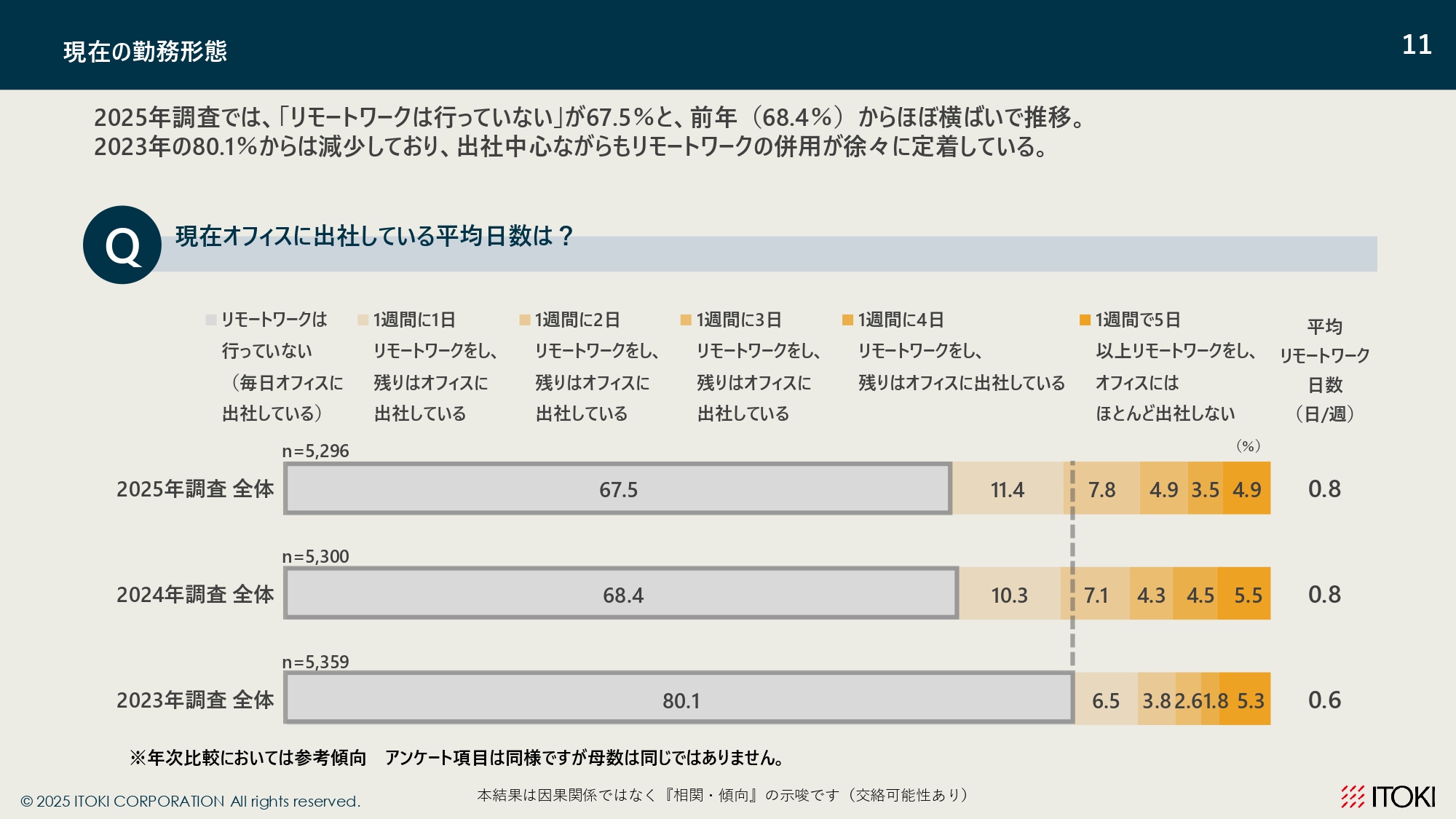
Regarding current working styles, 67.5% of respondents said they "do not work work remotely" accounting for roughly two-thirds of the total. This is a decrease of more than 10 points from 80.1% in 2023, suggesting that working styles that primarily involve coming into the office but also combining work remotely are gradually becoming more widespread.
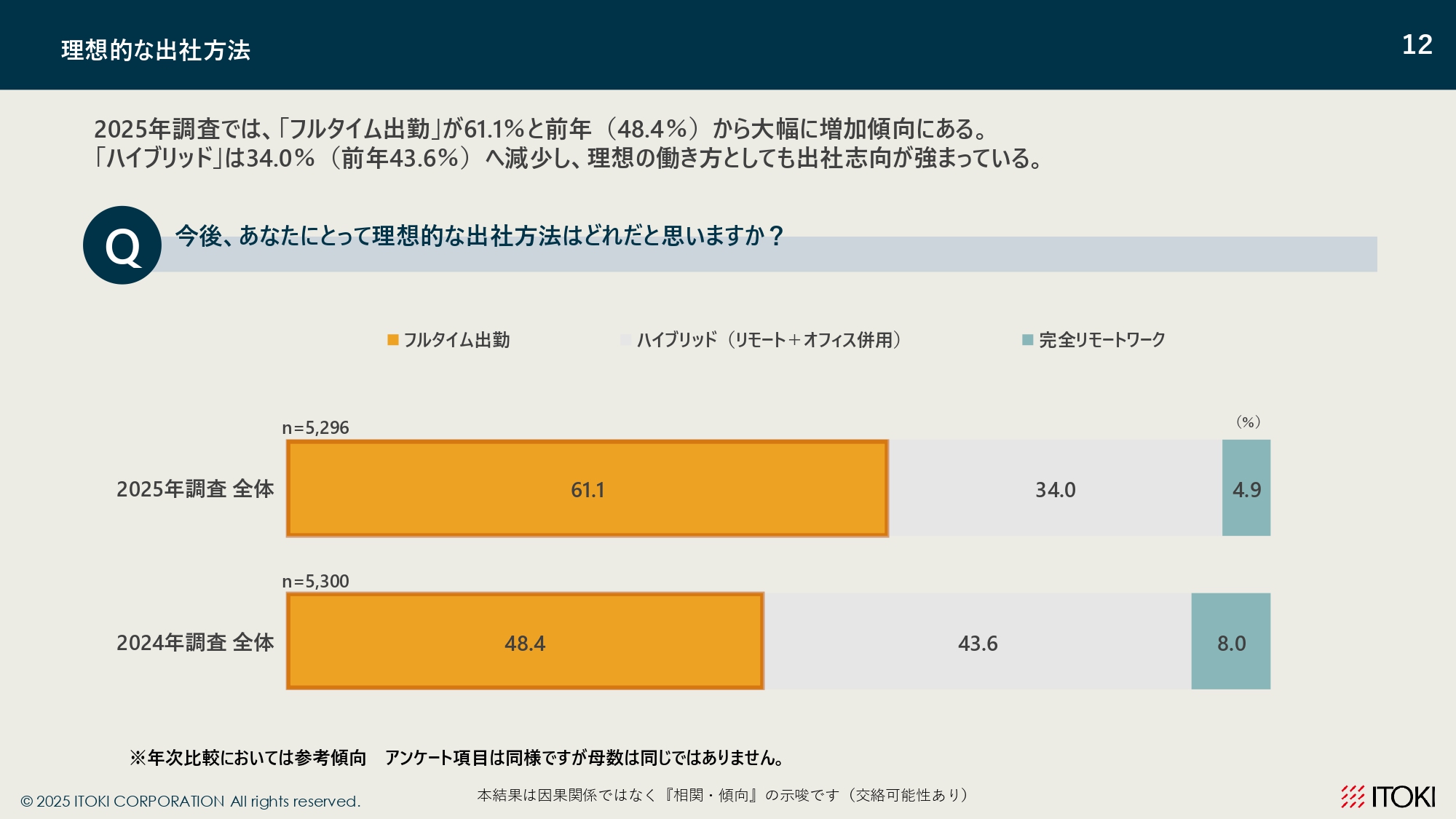
When asked about their ideal way of coming to the office, "full-time attendance" rose to 61.1%, a significant increase from the previous year (48.4%), while "hybrid (remote work + attendance in the office)" fell to 34.0% (43.6% last year). In reality, work remotely has become established to a certain extent, but the number of people who prefer a work style that is centered around coming to the office as their "ideal" is increasing.
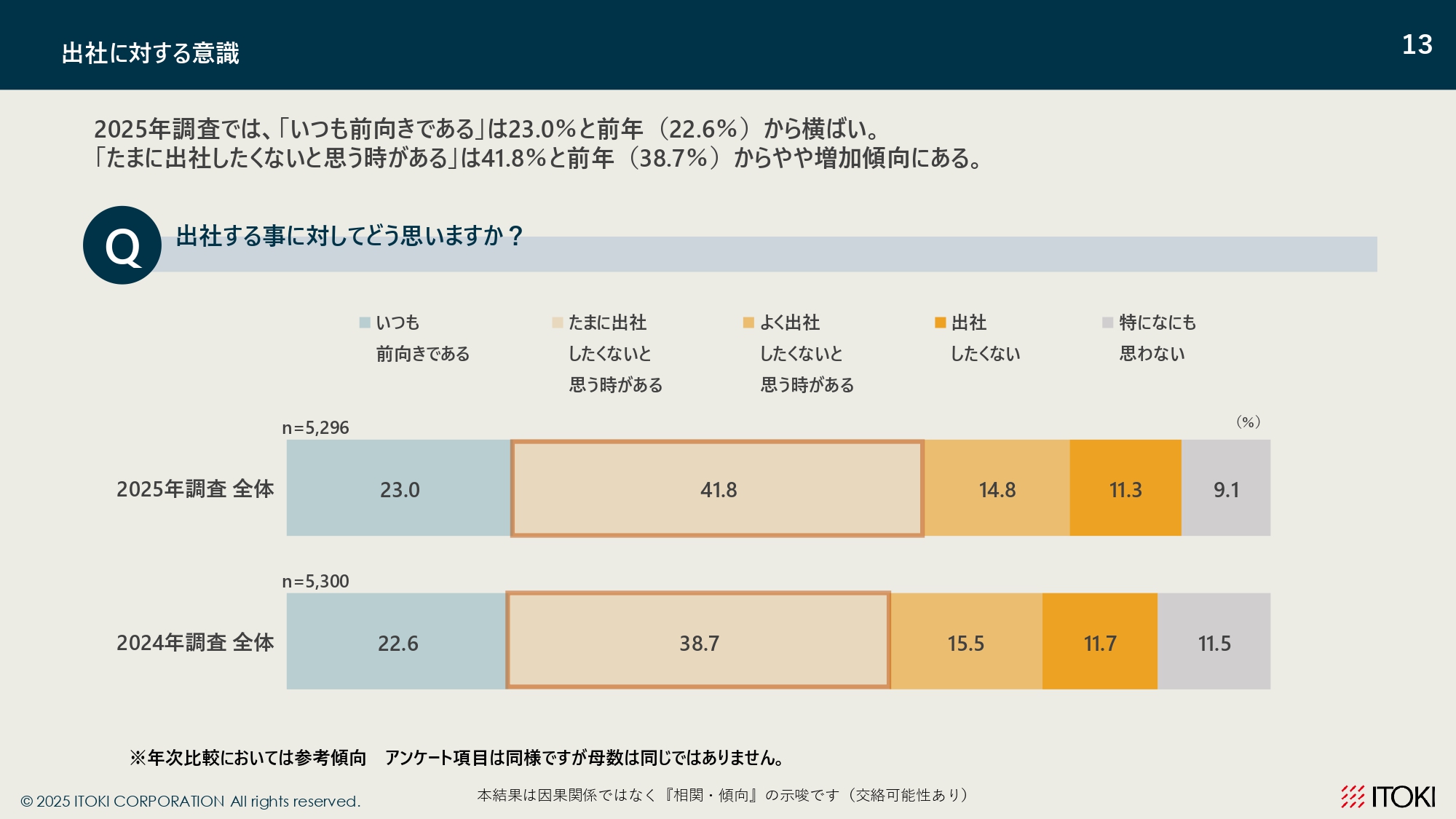
Looking at attitudes toward going to the office, 23.0% of people said they are "always positive," remaining stable from the previous year (22.6%), while 41.8% said they "sometimes don't feel like going to the office," a slight increase from the previous year (38.7%). While the value of going to the office itself remains, we can also see a glimpse of people's true feelings that "it's not always possible to go to the office in a positive way," due to factors such as the burden of commuting and the fit with the work. Rather than discussing the frequency of going to the office in a uniform manner, it is important to consider the perspective of designing "what kind of experience will make people want to come to the office."
2. "When do you feel like working?" In your 20s it's about relationships, in your 30s it's about discretion, and in your 50s it's about results and meaning
When comparing "when they feel like working" by age group, the main factors cited overall were "when they are working on meaningful work," "when they can produce results," and "when they can work autonomously." However, when it came to "when they most want to work," the results showed clear differences in priorities depending on age group.
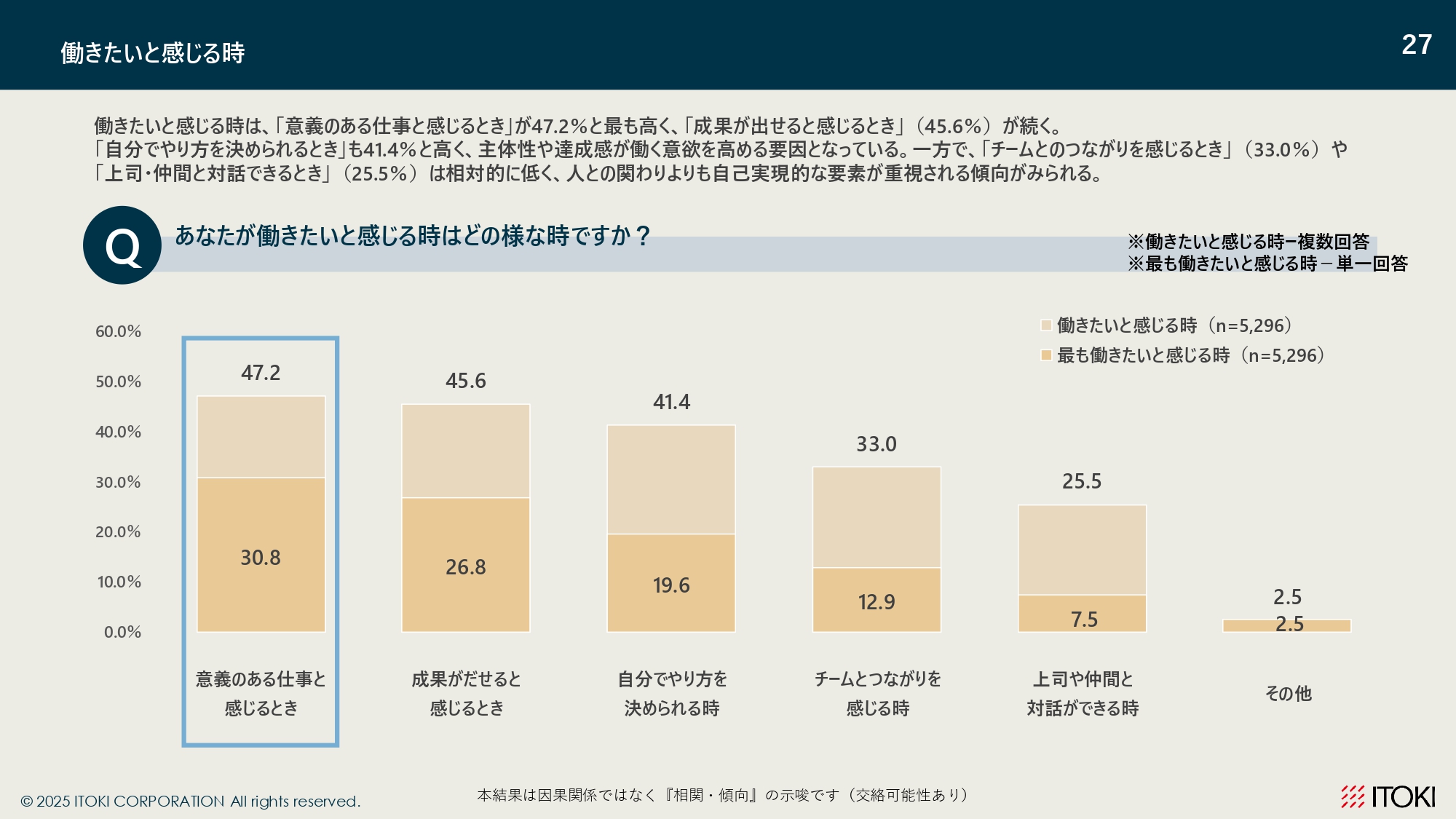
Those in their 20s were strongly aware of interpersonal relationships, such as "when I feel connected to my team" and "interpersonal relationships with my boss and coworkers," as the foundation of a comfortable work environment, while those in their 30s felt the greatest need for discretion, such as "when I can act independently," compared to other age groups. Those in their 40s considered "the feeling that they can produce results" to be particularly important among all generations, while those in their 50s, in addition to results, "the feeling that their work is meaningful" was the main factor supporting their desire to work.
These results suggest that the source of motivation to work differs depending on age, and that "what motivates" people may change at each career stage. Rather than adopting uniform motivational measures, it would be desirable to consider approaches tailored to the characteristics of each age group.
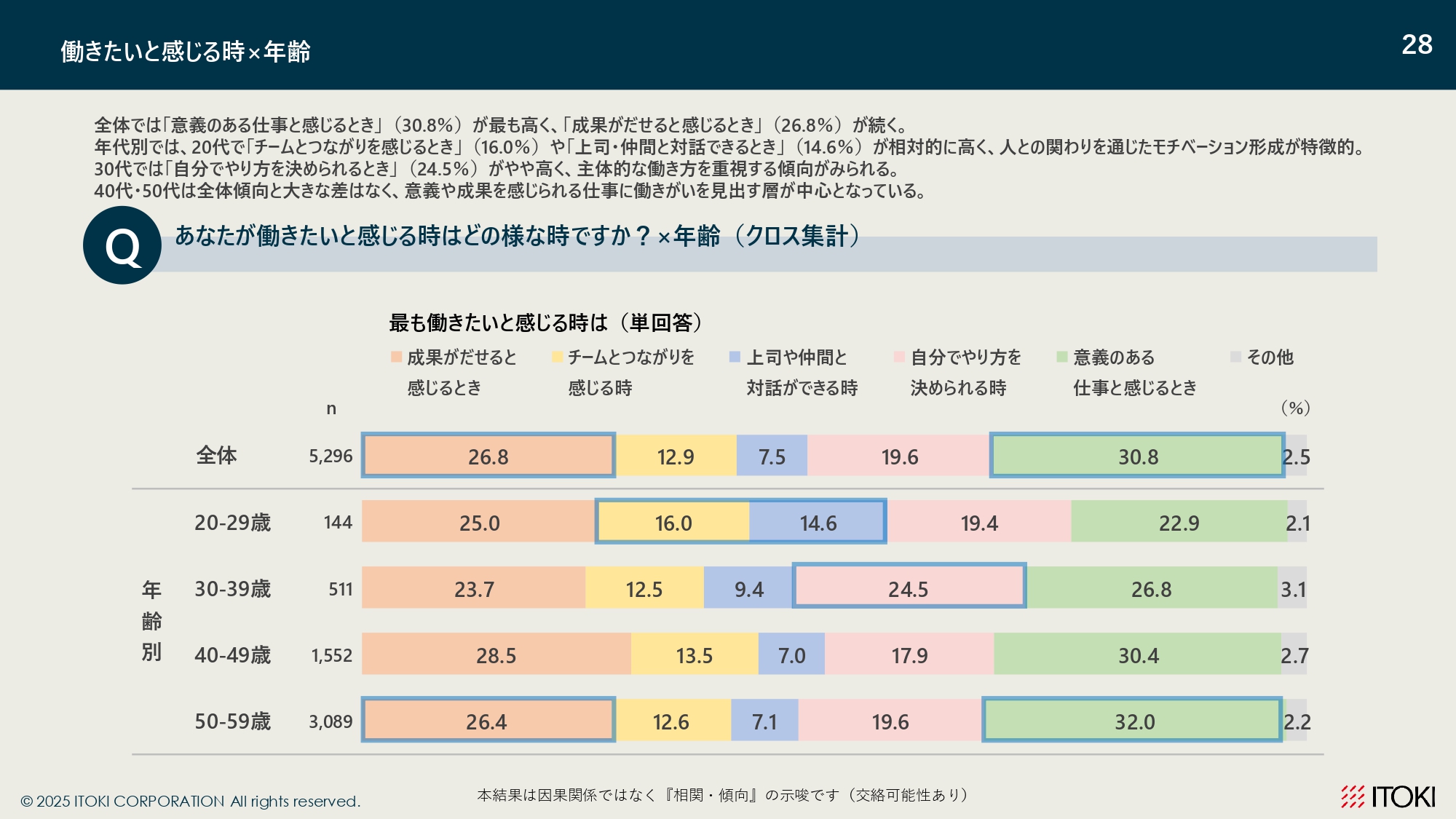
3. The number one reason people don't want to work is "stress from interpersonal relationships"
When comparing factors that make people not want to work by age and perceived productivity, "interpersonal stress" was the most common answer, accounting for about 50% across all generations and situations. This suggests that communication between superiors and subordinates, and between seniors and juniors, is the basis of motivation.
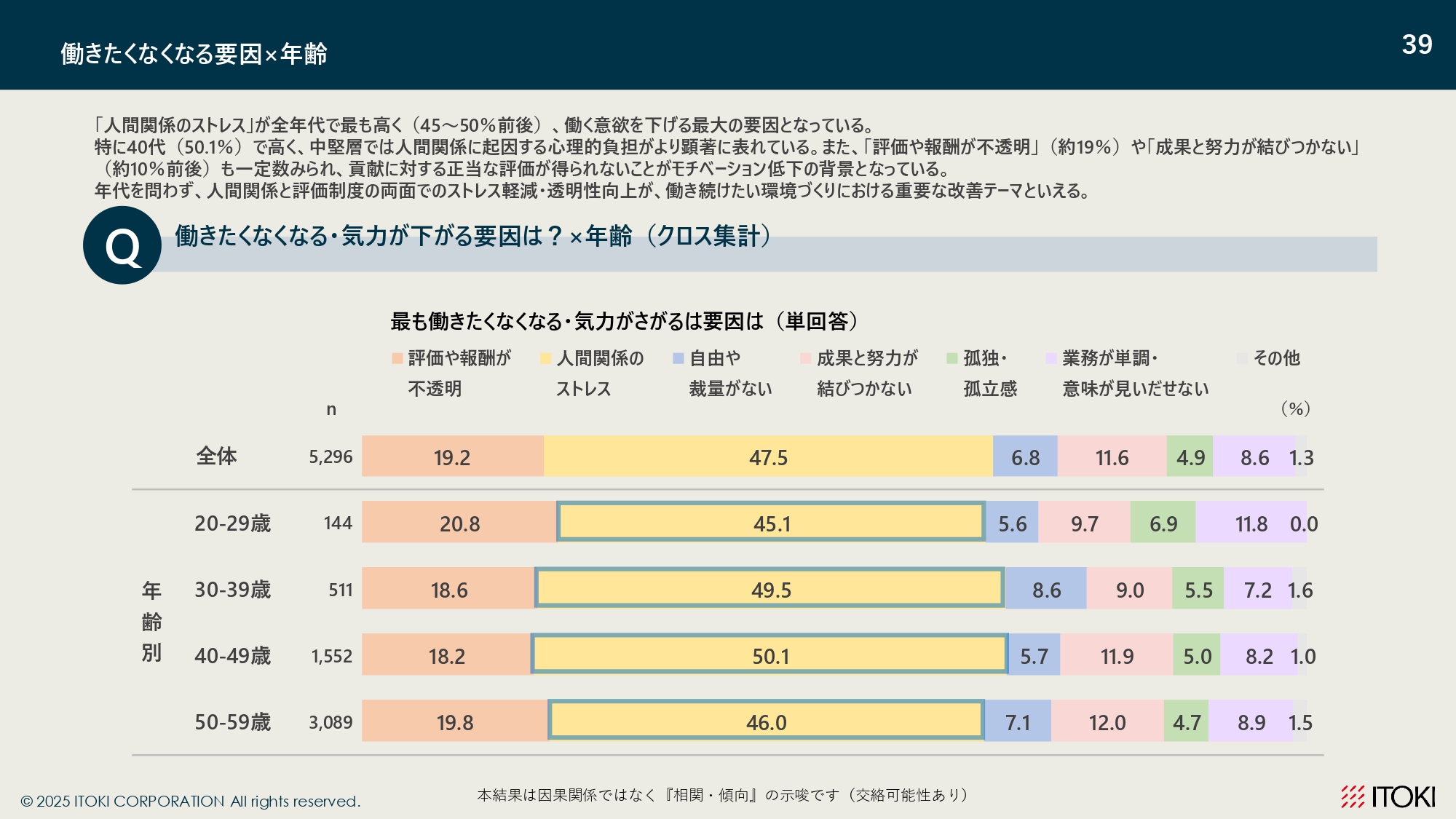
4. The perceived productivity is up to 10 times higher when people feel supported.
When we looked at the relationship between perceived productivity and a supportive workplace environment (whether or not the workplace has an environment that supports concentration, collaboration, growth, and work efficiency), we found that 82.7% of those who answered "I think so" about a supportive workplace environment also answered that their productivity is high, while only 8.2% of those who answered "I don't think so" - a difference of approximately 10 times.
We can see that the distribution of self-assessed productivity shifts toward higher levels depending on the level of support provided by the external environment, which allows employees to experience focus, collaboration, growth, and work efficiency.
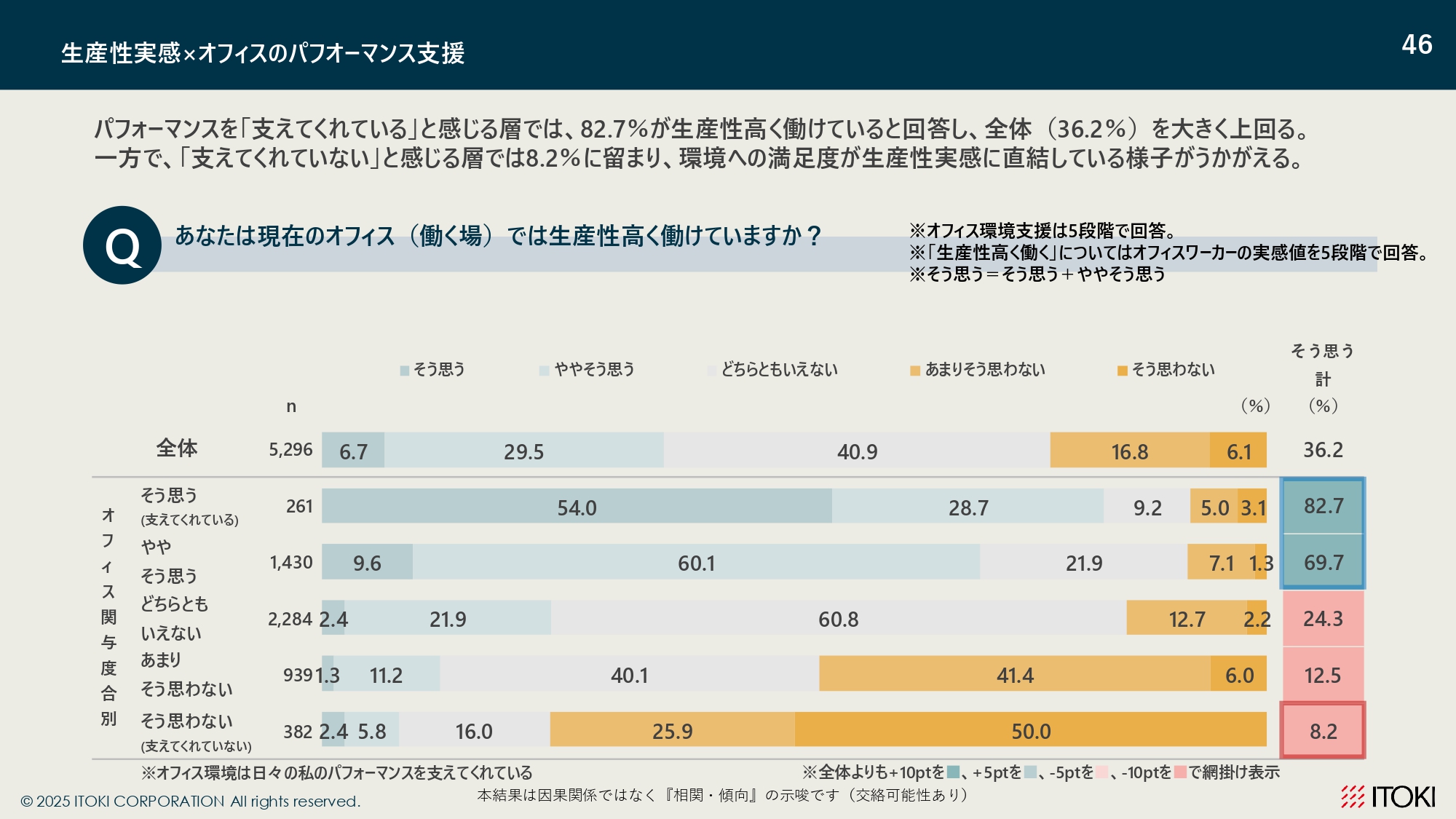
5. "Drivers of motivation to stay at work": "Flexible work style" for those in their 20s and 30s, "Trust and meaning" for those in their 40s and 50s
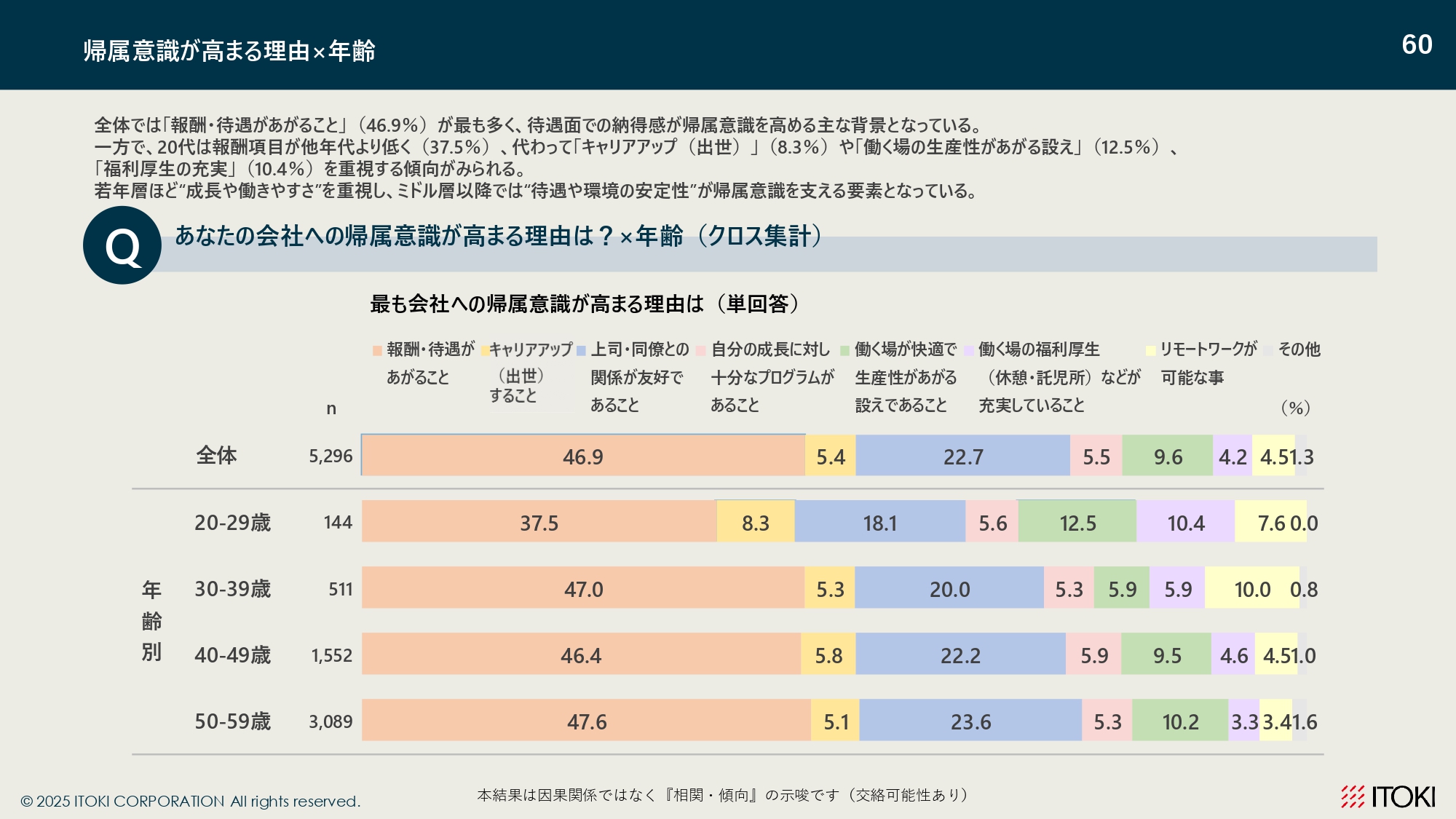
When asked about the conditions that would make them want to continue working, the most common answers overall were "being able to work with trustworthy bosses and colleagues" (24.8%) and "being able to feel the meaning and purpose of my work" (24.8%), showing that both interpersonal relationships and the meaning of work are important factors that support the desire to continue working.
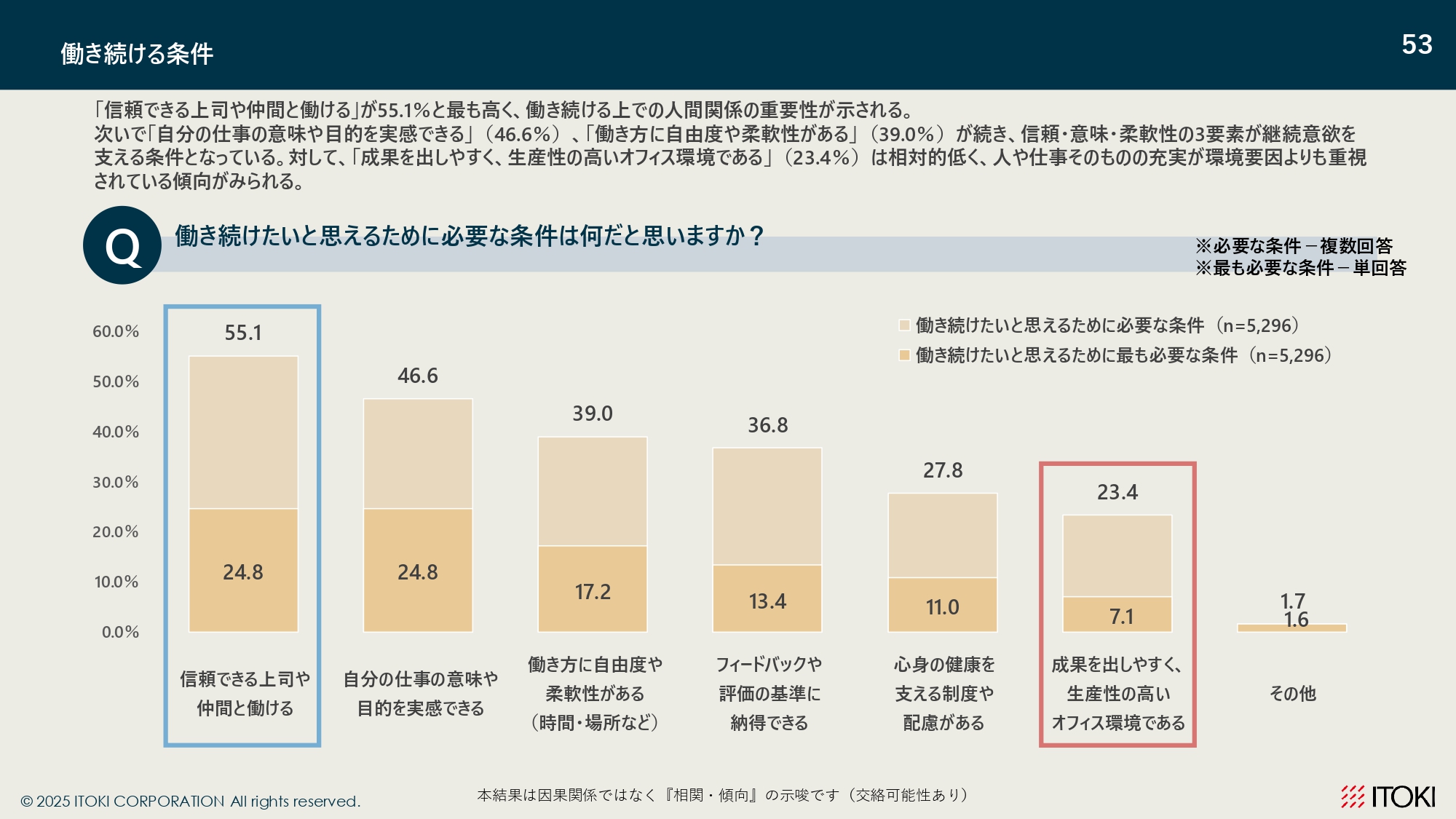
Looking at the results by age group, those in their 20s and 30s were relatively more likely to say "there is freedom and flexibility in how we work," and they tend to value being able to choose how they work to suit their lifestyle and the trial and error they go through in their early careers. On the other hand, those in their 40s were more likely to say "being able to work with bosses and colleagues I can trust," and those in their 50s were more likely to say "being able to feel the meaning and purpose of my work," suggesting a desire to continue working long-term, centered around relationships of trust with others and the meaning of their work.
These results suggest that the conditions that increase motivation to stay on the job tend to vary in importance depending on the career stage, with trust and meaning being "core" factors common to all generations, and younger generations having a stronger need for flexible working styles.When considering engagement measures, it is best to adjust the points of emphasis in line with the characteristics of each age group, rather than taking a uniform approach.
6. The conditions for increasing a sense of belonging are "salary + relationships + environment," while people in their 20s place more importance on "growth and a comfortable work environment"
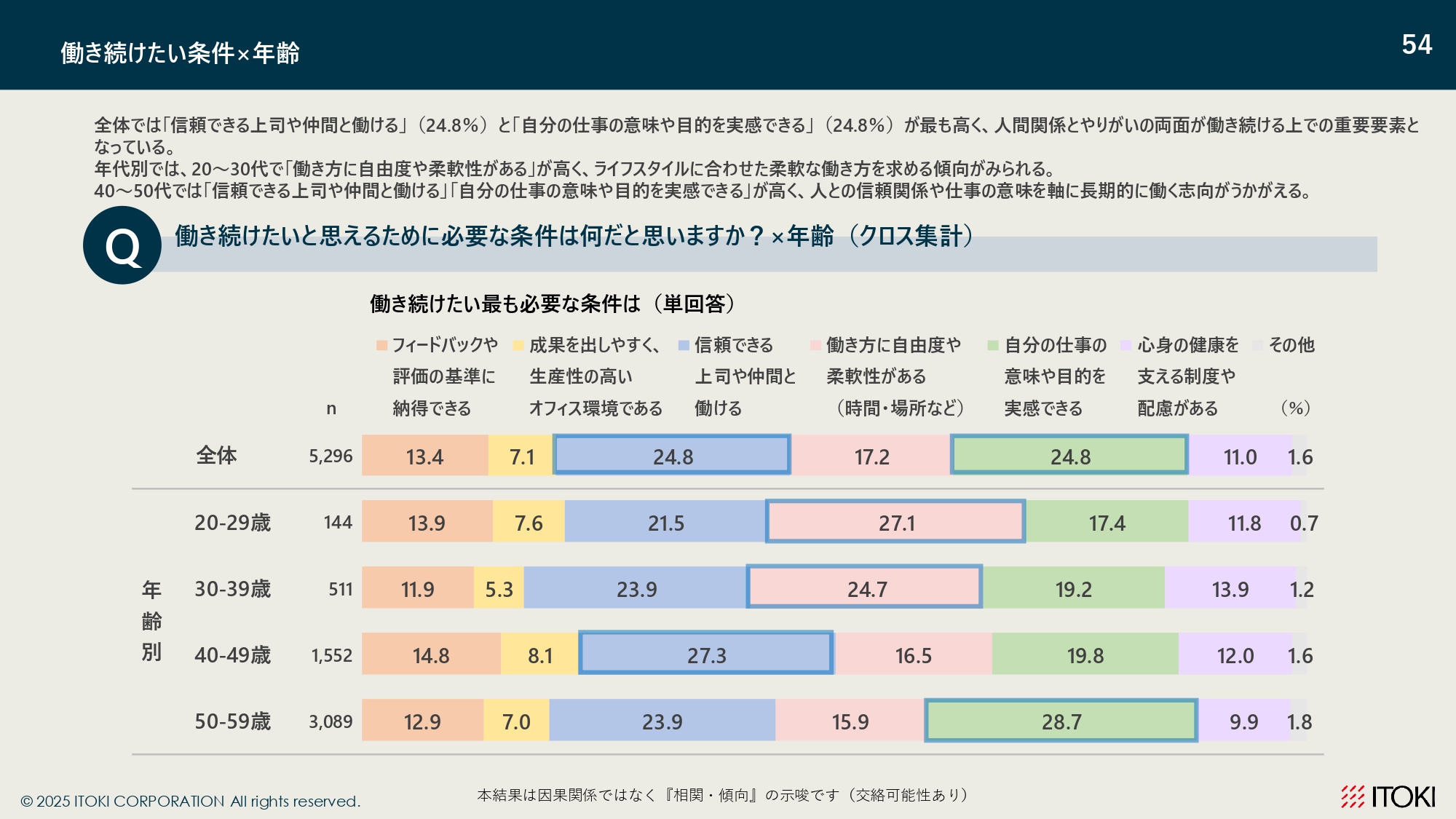
When asked why they felt more attached to their company, "better pay and benefits" was the most common answer overall at 73.2%, making it the main factor behind this. This was followed by "good relationships with superiors and colleagues" (51.3%) and "a comfortable workplace designed to increase productivity" (33.2%), with the office environment and employee benefits (20.9%) also having a certain degree of influence.
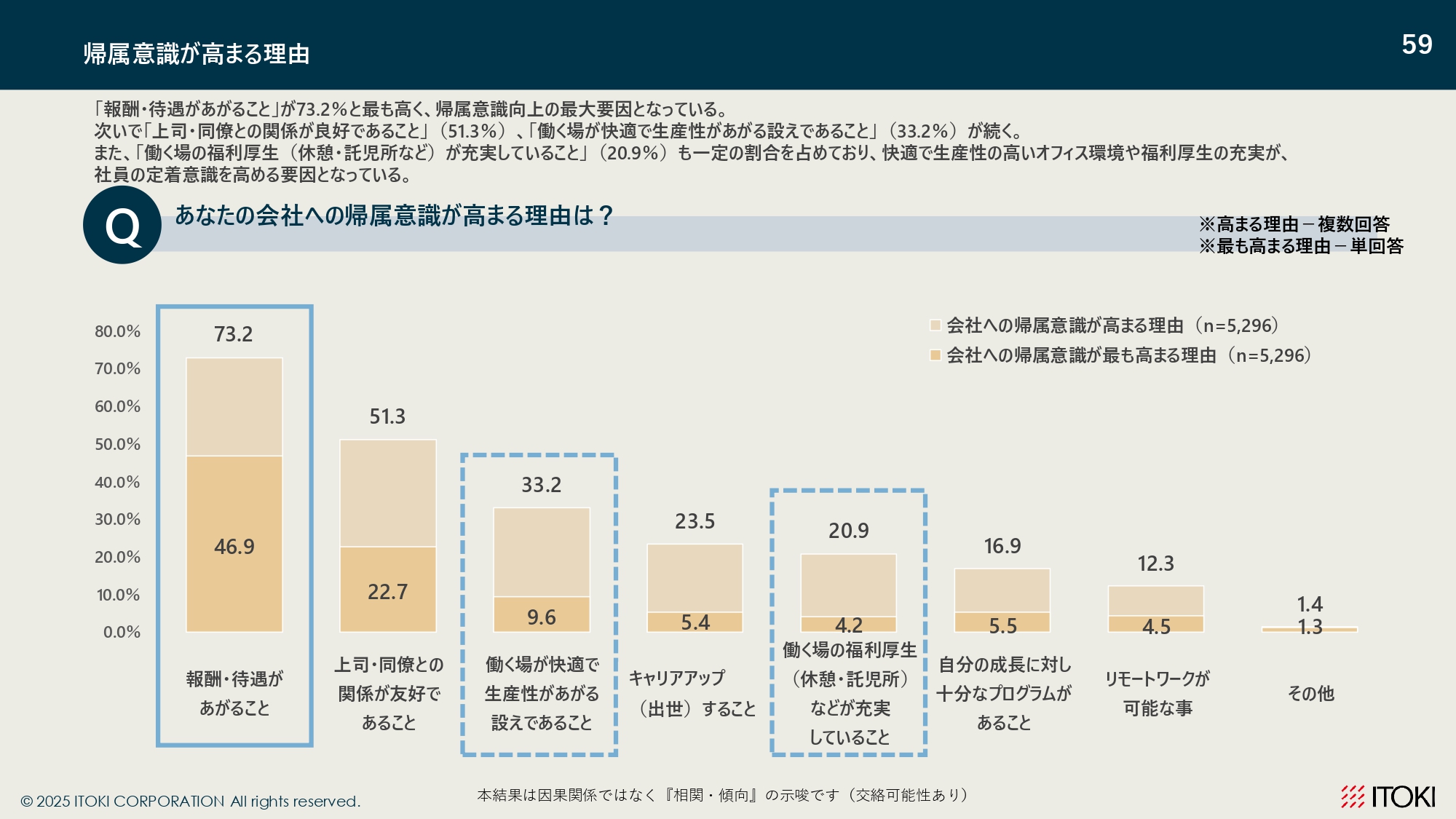
Looking at the "most important reasons" by age group, those in their 20s tended to place relatively more importance on "compensation and benefits" at 37.5%, and on items related to "growth" and "workplace productivity" such as "career advancement" and "productivity of the workplace." On the other hand, it can be seen that for those in their 30s and older, the stability of benefits and the environment acts more strongly as the foundation for a sense of belonging.
Putting all this together, we can see that a sense of belonging is likely to increase along three axes: not just "salary and benefits," but also "relationships" and "work environment." The office environment in particular is linked to a sense of psychological security and ease of working, and is thought to function as a factor that supports long-term retention.
The full survey report also includes analysis results for "environment," "psychology," and "behavior and results."
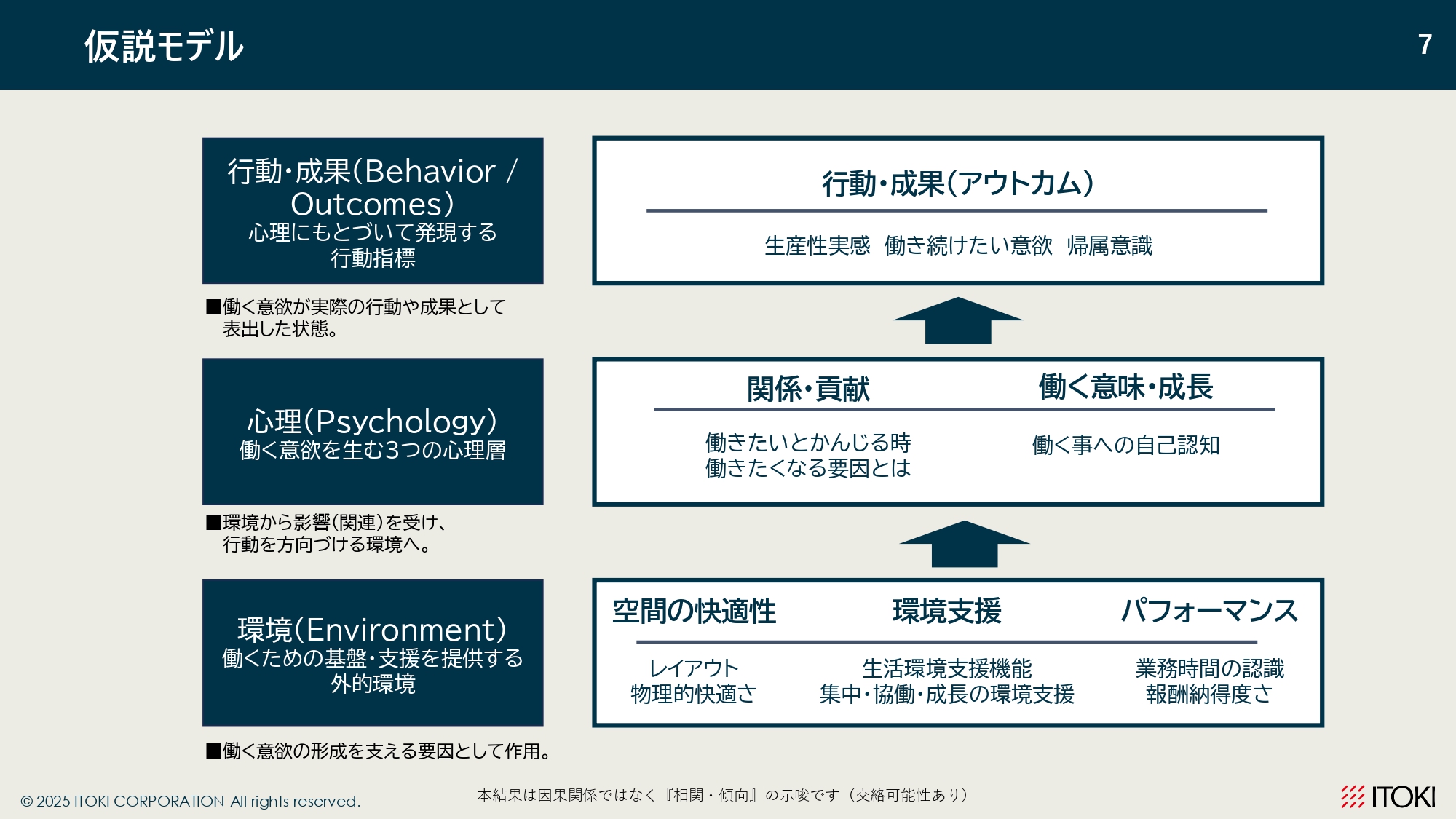
In this survey, office-related elements were organized into three layers: "environment (support for concentration, collaboration, growth, and work efficiency)," "psychology (meaning, trust, and autonomy)," and "behavior and results (productivity, motivation to continue, and sense of belonging)," and the relationships between them were analyzed.
The results of the survey confirmed that the more supportive an office environment is, the higher psychological indicators such as the meaning of work, trust in superiors and colleagues, and autonomy are, which in turn lead to a sense of productivity, a desire to continue working, and a strong sense of belonging to the company.While it is not possible to determine a causal relationship, the results suggest that "creating a good environment" and "enriching psychological experiences" form a chain that ultimately leads to behavior and results, highlighting the need to consider office design and human resource management as an integrated whole.
A detailed analysis (type of support x psychology x behavior) is available in the full survey report (PDF).
If you are considering human capital management, office design, or work style reform, please take a look.
*Click here to download the detailed survey results
Summary

Hiroaki Ninoyu, Executive Officer, Central Research Institute, ITOKI CORPORATION
This survey revealed that "people's experiences," such as reasons for wanting to work, motivation to continue working, and a sense of belonging, have different structures depending on age. The sources of motivation to work, such as interpersonal relationships, meaning, and flexibility, are not uniform but change depending on the career stage.
Furthermore, we were able to confirm a "chain structure" in which the experience of an environment that supports concentration, collaboration, growth, and work efficiency enhances psychological feelings such as meaning, trust, and autonomy, which in turn leads to a sense of productivity and a desire to continue working. We believe that these results suggest that we should simultaneously design "preparing the office environment" and "nurturing the psychology of workers." We believe that the key to future office design and human capital management will be to view environment, psychology, and behavior as a whole, rather than separating them.
Overview
| subject |
Nationwide company employees and managers aged 20-59 |
|---|---|
| Investigation period | September 2025 |
| Research method | internet research |
| The number of samples | 5,296 people |
| subject | ITOKI CORPORATION Central Research Laboratory |
About Itoki's Workplace Business
ITOKI CORPORATION was founded in 1890. With the mission statement of "We Design Tomorrow. We Design WORK-Style." the company supports the creation of a variety of "spaces," "environments," and "places" by leveraging its strengths of "Tech x Design based on PEOPLE," including the manufacture and sale of office furniture, office space design, “Space," “Environment," and “Place" consulting, and office data analysis services, as well as furniture for working from home and studying at home, and equipment for public facilities and logistics facilities.
As hybrid work becomes more common and the places and ways of working become more diverse, we are developing spatial digital transformation to enhance productivity and creativity, as well as consulting services to support optimal office operations. We are also proactively collaborating with external designers and partner companies to propose new work styles and workplaces for the future.
To this release
Contact information
イトーキ中央研究所
TEL
:
03-6910-3910
press personnel
Contact information
ITOKI CORPORATION
Corporate Communications Division
Public Relations Division
TEL:03-6910-3910
- The information posted is current at the time of publication. Please note that the information may differ from the latest information.